Matox News

Truth Over Trends, always!

Why Society Ignores Female Desire: The Paternalism We Must Overcome | Documentary

Across the United States, a complex tapestry of social issues continues to unfold, revealing how cultural shifts and demographic changes profoundly impact families, education, and communities. From the persistent neglect of female sexual health within medical curricula to the ongoing battle over reproductive rights, these struggles underscore a society grappling with its moral and ethical foundations. At the heart of these issues lies a universal desire for autonomy—whether related to sexuality, reproductive freedom, or the very fabric of cultural identity.

Consider the case of female sexual health, a domain historically marginalized within the medical establishment. As documented in the documentary The Pink Pill, the silence surrounding female libido and orgasm demonstrates a troubling disinterest rooted in paternalistic attitudes. While drugs like Viagra gained approval in the late 1990s, efforts to develop and approve female counterparts faced insurmountable hurdles, primarily due to biases and side effect concerns. The story of Addyi, often dubbed “female Viagra,” exemplifies this dynamic. Despite demonstrating benefits for women suffering from HSDD (Hypoactive Sexual Desire Disorder), the drug was plagued by regulatory obstacles, cultural resistance, and immense financial hurdles, ultimately being shelved despite patient demand.

This narrative reflects a broader societal tension: the conflict between public health progress and social skepticism. Sociologists like Dr. Naomi Wolf have pointed out that the suppression of female desire is intertwined with patriarchal notions about morality and gender roles. As healthcare providers and policymakers waver, many women find their choices constrained, a situation aggravated in the post-Roe era, where reproductive autonomy faces ongoing threats. The debate over sexual health remedies is not merely a medical matter but a fragment of a larger cultural war over whose body belongs to whom. For families and communities, this translates into a sense of disempowerment, fostering mistrust and feelings of exclusion from discussions about their own well-being.

Concurrently, the societal narrative surrounding education and social engagement reveals a youth increasingly aware of the disparities that divide. Movements mobilizing around fear of censorship and attacks on free thought reflect a generation demanding both accountability and respect. These efforts echo in the broader fight for bodily rights and social justice—a fight that many argue must be championed from within local communities, as well as national institutions. Community leaders are calling for a renewed commitment to *fostering environments where young people can explore issues like sexuality, mental health, and societal norms without fear of marginalization.* They recognize that educating future generations about ethics, rights, and personal agency is not a challenge of mere policy but of moral integrity.

In the face of this turbulent landscape, there remains hope—an enduring belief that societal change is possible through community activism, education, and the resilience of families. As social commentators like Christopher Lasch have noted, society’s true strength lies in its moral fabric, woven through generations committed to upholding the dignity and rights of every individual. The journey toward healing and equity requires confronting uncomfortable truths, but it also offers an opportunity—a chance to redefine what cultural progress means. Perhaps, in this ongoing struggle, society will rediscover the essential truth: that true liberty begins with respect for individual choice and the moral courage to protect it. Only then can society look forward, with hope, to a future where the rights of families, communities, and individuals are no longer sacrificed at the altar of outdated biases, but celebrated as the foundation of a truly free society.
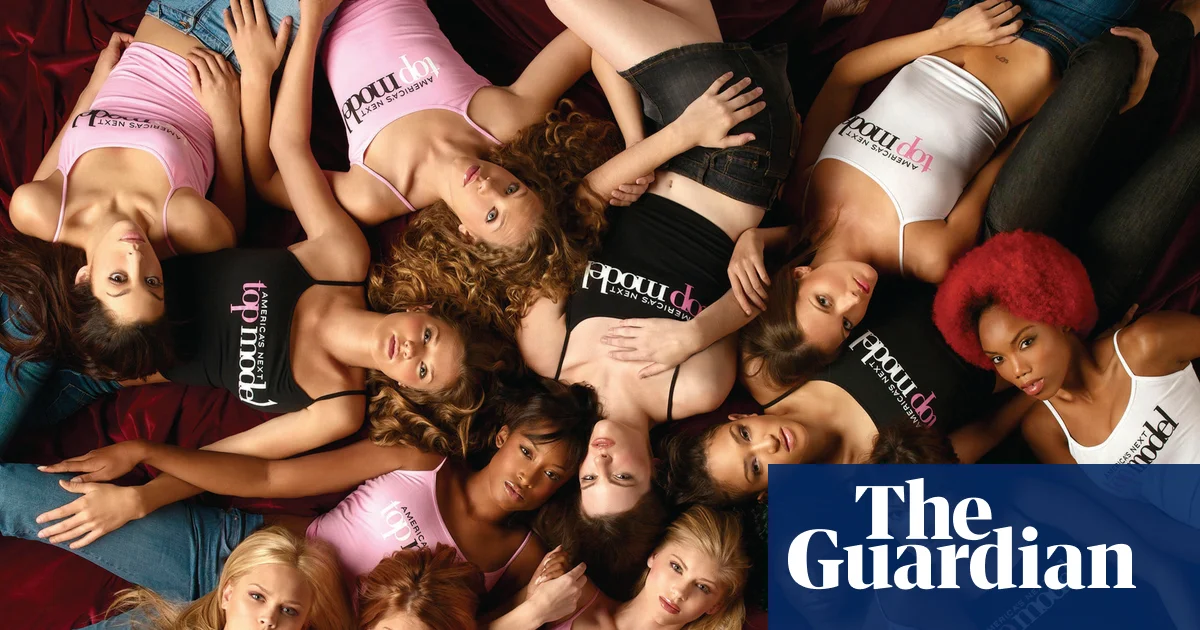
From Underestimated to Over the Line: The Rise of Toxicity in America’s Next Top Model | New Documentary

Few reality TV shows have captured the cultural zeitgeist quite like America’s Next Top Model. Launching in 2003, it became more than just a competition; it was a spectacle that showcased diversity, ambition, and the harsh realities of the fashion industry. But beneath the glamor and runway flashes lies a troubling history—an intricate web of toxicity and exploitation that now, two decades later, is being laid bare through a much-needed re-examination. A recent Netflix docuseries titled Reality Check peels back the curtain, revealing an industry that, while celebrated for its diversity, often echoed the worst traits of its time, including body shaming, racism, and even sexual misconduct. This revival raises pressing questions about the cultural impact of reality television and the shifting social relevance of such platforms in an era of social justice awareness.

Influencers, sociologists, and former insiders like Tyra Banks have publicly reflected on the show’s complex legacy. Banks, who starred as the show’s creator and host, struggled to reconcile her pioneering efforts for diversity—being the first Black woman on the covers of Sports Illustrated and GQ—with the show’s darker underbelly. She admitted that the production often prioritized sensationalism over the mental health and dignity of the contestants, many of whom were as young as 18 and subjected to harsh criticism, ridicule, and even harassment. The series, which was a global sensation, operated in an environment where public expectations of beauty and social media’s relentless scrutiny created a perfect storm of pressure and exploitation. “They started as misfits with very good intentions,” remarks co-director Daniel Sivan, noting how the show’s power dynamics shifted dangerously over its 24 cycles, culminating in a hideous descent into “bullies,” with contestants often caught in the crossfire of on-screen and off-screen abuses.

The revelations uncovered in the series spotlight how societal standards around beauty—amplified by social media—continue to influence cultural perceptions. Even with more formal **duty of care** in modern reality TV, critics argue that social media’s democratization of beauty has paradoxically deepened the obsession with physical perfection. On Instagram, the prominent images remain overwhelmingly thin, fit, and heavily surgically manipulated, creating a confusing message for impressionable youth. Fashion influencer and sociologist Dr. Lisa Hart warns that “Our own children are obsessed with makeup and filters, and that’s shaping their worldview of what beauty truly means.” It suggests that society remains trapped in a cycle where the glamorization of perfection continues to suppress authentic, diverse representations of beauty, making controversial shows like ANTM a mirror reflecting society’s unresolved tensions around identity and appearance.

Despite its troubled history, the prospect of a revived America’s Next Top Model sparks a passionate debate about whether the show can evolve or simply repeat its past mistakes. Banks hints at plans for Cycle 25, a comeback that could either be an opportunity for meaningful change or a rehash of old controversies. The docuseries emphasizes the importance of focusing on the **personality and resilience** of contestants over superficial appearances, a message many believe is crucial for the future of reality TV. However, the lingering question remains: Is society truly ready to confront and rectify the toxic shadows of our cultural icons, or are we simply craving more of the same under a new guise? As we stand at this crossroads, the next big question might be: Will this moment of reckoning lead to a genuine shift in how we define beauty and success, or will it fade into the background, leaving the cycle of exploitation intact?

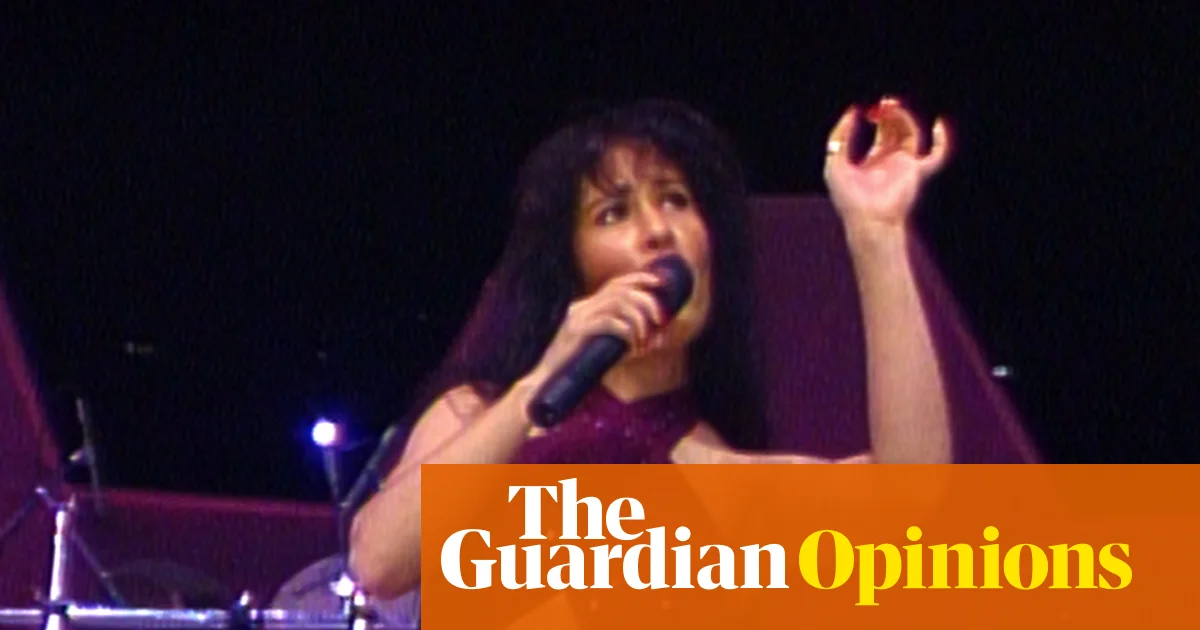
Netflix’s Selena Documentary Honors Her Inspiring Legacy While Respectfully Addressing Tragic Endings | Cultural Highlights

Remembering Selena Quintanilla: The Cultural Legacy of a Star Gone Too Soon

In the tapestry of American cultural history, few figures evoke both admiration and tragedy as poignantly as Selena Quintanilla. Her story transcends mere fandom, embodying the vital connection between culture, identity, and societal aspirations. As the Queen of Tejano Music, Selena’s ascent was a reflection of a vibrant, evolving Latin American identity in the United States—a testament to how tradition and modernity can intertwine to forge a new, powerful cultural expression. Her untimely death at just 23, murdered by her employee Yolanda Saldívar in 1995, was not merely a personal tragedy but a cultural rupture, one that left a void in the heart of her community and a question about the price of fame for those who dare to challenge societal boundaries.

Yet, Selena’s life, as documented through recent works like Netflix’s Selena y Los Dinos: A Family’s Legacy, underscores her profound influence not only as an artist but as a symbol of youthful perseverance and cultural authenticity. Director Isabel Castro’s intimate portrayal reminds us that cultural icons are not just commodities but custodians of tradition—carriers of stories that define who we are and who we aspire to be. The documentary captures Selena’s blend of raw talent and authentic charm, revealing her as a young woman who balanced the demands of burgeoning superstardom with the enduring spirit of her roots. Her early years fronting her family band, despite sacrifices like missing out on childhood friendships, echo Ortega y Gasset’s notion of the artist as a creator of reality, shaping culture through persistent effort and authentic expression.

The Power of Culture as Identity and Prophecy

  • Selena’s music was not solely entertainment but a bridge to affirm her community’s identity—reclaiming Hispanic traditions in a rapidly Americanizing landscape.
  • Her fashion and style became symbols of cultural pride, offering a modern reinterpretation of heritage that resonated deeply with her fans.
  • Her personal journey, including her pursuit of fluency in Spanish and her romantic union with Chris Pérez, exemplified the human desire to reconcile tradition with modernity—an ongoing dialogue between past and future.

Philosophers like T.S. Eliot have noted how culture mirrors inner life, serving as both memory and prophecy. Selena’s story encapsulates this duality: her songs echo the collective memory of her community, while her aspirations and personal growth hint at a future where Hispanic-American culture continues to evolve and influence the national tapestry. The tragic rupture—her murder— reminds us that the preservation and nurturing of cultural identity are fragile, yet fragile things often bear the deepest meaning. Her legacy persists not just in her music but in the cultural currents she helped shape, urging young people today to see their roots as a source of strength and innovation.

Culture as Humanity’s Living Memory

In the final moments of Castro’s documentary, Selena’s father gazes upon her museum, a shrine not just to a star, but to the enduring power of cultural memory. “They took her life,” he says quietly, “but we’re going to keep her alive through her music.” It is a reminder that culture is both a living memory and a prophecy of what humanity can achieve when rooted in tradition yet open to transformation. As Chesterton once celebrated, the true wonder of culture lies in its capacity to turn the past into a living voice, whispering to each new generation that human greatness is born from the reverent preservation of memory and the fearless pursuit of future horizons.

In this ongoing dance between memory and prophecy, Selena’s story remains an emblem of resilience. Her luminous presence, captured in song and spirit, guides us to remember that our cultural roots are not anchors of the past but rather the wings with which we reach toward tomorrow—a testament that, in the sanctuary of tradition, humanity’s best ideals are preserved, celebrated, and endlessly reborn. And so, her story—like all true culture—calls us to see that we are both the heirs and the prophets of our collective human narrative, forever reaching toward the horizon of what we might become.

Irish Labourer Buried Alive for 61 Days: The Untold Story in New Documentary

In 1968, the staggering act of Mick Meaney, an Irish laborer, captured the global imagination as he deliberately inscribed his name into history through the most extreme form of endurance: being buried alive for 61 days. This sensational stunt, staged amidst Ireland’s expatriate community in London, symbolized more than just a personal quest for fame—it echoed the relentless spirit of Irish emigrants and the broader struggles of ordinary workers in an era marked by economic hardship and social upheaval. As the world watched, this feat of endurance transcended entertainment, resonating as a testament to resilience in the face of adversity, and igniting questions about the power of individual will in a world driven by geopolitical and cultural currents.

While Meaney’s record remains a moment of youthful bravado, its significance ripples through the corridors of history, where international aspirations and national identity intertwine. Historians and analysts see in such acts a reflection of the times—a period characterized by Cold War tensions, civil rights movements, and the struggle for recognition among smaller nations. The United States, with its own history of bizarre endurance contests and spectacle-driven propaganda, especially through figures like Bill White, helped shape a culture obsessed with pushing human limits for commercial and political ends. Meanwhile, in Europe, Ireland’s diaspora was weaving its own narrative of perseverance, often through hardship and sacrifice, as exemplified by the Irish emigrants working tirelessly across the UK. The act of Meaney, staged with community support and media spectacle, can thus be seen as an emotional bridge linking individual endurance with collective identity and international perception.

More recently, international organizations and geopolitical strategists interpret such historical acts as allegories of resilience amid systemic challenges. As conflicts like the Ukraine crisis or tensions in the South China Sea dominate headlines, the enduring human desire to prove oneself and claim historical significance remains potent. Institutions such as the United Nations emphasize the importance of ‘resilience’—not merely as a trait but as a vital pillar in national security and societal stability. Experts warn that by overly focusing on spectacle or record-setting feats, societies risk neglecting their core challenges—economic development, social cohesion, and sovereignty. Like Meaney’s fleeting fame, today’s geopolitical victories often seem temporary if they lack enduring substance, leaving nations to grapple with the realization that history’s true winners are those who combine resilience with strategic foresight.

As the pages of history continually turn, the story of Mick Meaney remains a stark reminder of the human thirst for recognition amid shifting global tides. His act, once celebrated as the pinnacle of endurance, now serves as a metaphor for the relentless pursuit of national identity and international influence. As new conflicts emerge and old wounds re-open, the weight of those 61 days underground presses down—a silent testament to the enduring truth that human resolve, whether in the form of individual feats or national movements, shapes the course of history. Today, the world watches as nations carry their own burdens, hoping that their sacrifices will forge legacies in the unending, unpredictable saga of global destiny—an unfolding story where the past continually echoes into the uncertain future.

Social Media Auto Publish Powered By : XYZScripts.com