Matox News

Truth Over Trends, always!

UK economy edges up 0.1% amid Budget doubts, showing resilience in uncertain times

The recent United Kingdom economic data signals a cautiously positive outlook amidst global economic turbulence. Official figures from the Office for National Statistics reveal that the UK’s gross domestic product (GDP) grew by 0.1% in the final quarter of last year, defying expectations of a stagnation or contraction. Despite persistent economic headwinds, including consumer hesitations driven by political speculation around Rachel Reeves’ budget and the fallout from recent cyber-attacks on major industries, the UK’s economy managed to demonstrate resilience. This modest growth, combined with a 1.3% increase in 2025 overall, is seen by analysts as a sign that the British economy continues to adapt to shifting global circumstances, although challenges remain.

Global financial institutions and economic analysts have underscored that how decisions are made within the UK government—particularly around fiscal policy and national security—directly impact the broader geopolitical landscape. The late-November budget, which spurred speculation about significant tax hikes, temporarily suppressed consumer and corporate activity, highlighting the precarious balance governments must maintain between fiscal austerity and growth stimulation. The Bank of England, in its recent policy statement, chose to keep interest rates steady at 3.75%, while signaling that the decline in inflation—partly driven by cost-of-living measures tied to Reeves’ strategic budget—might pave the way for future rate cuts. This signals for markets that, despite present caution, there is confidence within the British establishment that stabilization can be achieved without aggressive monetary tightening.

The broader geopolitical impact of the UK’s economic performance and policymaking extends well beyond its borders. As one of the world’s largest financial centres, London’s resilience influences international markets, diplomatic relations, and global supply chains. The recent cyber-attack targeting Jaguar Land Rover and its subsequent economic repercussions underscore how interconnected national security and economic stability have become. While the UK attempts to navigate domestic challenges, it remains entrenched in the complex web of international competition—with analysts warning that economic stability at home is vital for maintaining influence in a shifting international order. Historical perspectives from institutions like the International Monetary Fund highlight that resilient economies tend to form the backbone of geopolitical strength and alliances in uncertain times.

  • The UK’s modest growth in late 2025 reflects cautious optimism but also exposes vulnerabilities in productivity and investment.
  • The Bank of England’s strategic hold on interest rates indicates confidence in ongoing inflation control and potential for future monetary easing.
  • Cybersecurity threats and economic shocks, such as the JLR attack, illustrate the new battlegrounds in modern geopolitics.
  • The trajectory of UK policy, especially its impact domestically and internationally, will be closely monitored as history continues to write itself in these uncertain yet pivotal times.

As the world’s eyes fixate on the unfolding dramas of economic resurgence and geopolitical maneuvering, the question remains: how will Britain, in its pursuit of stability and influence, shape the next chapters of global history? With decisions made today echoing through the corridors of power and into the fabric of society, the weight of history presses ever heavier. The unfolding story of the UK economy is not merely a tale of numbers but a testament to a nation striving to navigate the treacherous waters of an uncertain world—where every move could define the future for generations to come.
Oracle shares drop as earnings raise AI bubble doubts among young investors

Oracle’s Earnings and the Shifting Dynamics of Global Tech Power

In the wake of recent disappointing quarterly figures, Oracle, a titan in the cloud computing industry, saw its shares plummet over 10% in after-hours trading. The company’s revenue for the quarter ended in November stood at $16.1 billion, edging just below analyst expectations of $16.2 billion. Despite this marginal shortfall, Oracle’s overall revenue growth of 14%—bolstered by a 68% spike in its AI division—underscores the relentless expansion and strategic pivoting of America’s tech giants amid a tumultuous market.

What elevates Oracle’s recent developments from mere financial metrics is its strategic alliance with OpenAI, the outfit behind ChatGPT. In September, Oracle inked a deal to furnish $300 billion in computing power over five years, positioning itself as a crucial infrastructure provider in the AI race. This move has catapulted Larry Ellison into the spotlight, briefly making him the world’s richest man. International analysts have lauded this partnership as a major step in the global AI race, signaling America’s intent to maintain supremacy in this critical technological frontier. However, Ellison’s call for “chip neutrality”—buying AI chips from any manufacturer—has raised eyebrows regarding the underlying sector competition, especially with dominant players like Nvidia.

Risks, Rewards, and the Geopolitical Chessboard

Behind the veneer of growth lies a complex web of financial strategies and geostrategic maneuvers. Critics on Wall Street warn that Oracle’s substantial debt from bond sales—an unprecedented $18 billion—raises concerns over sustainability and overexposure to a volatile AI sector. As international organizations and analysts like Jacob Bourne voice caution, some experts see this as a reflection of the broader American tech sector’s pursuit of dominance at all costs. The narrative echoes tensions in U.S.-China relations, where global AI and tech leadership now serve as proxies for geopolitical influence, echoing classic competition over technological superpower status. Inner circles in Washington, as well as international think tanks, increasingly perceive these tech battlegrounds as pivotal to future global power alignments.

Meanwhile, Oracle’s political and economic initiatives include notable investments by the Ellison family, outspoken supporters of Donald Trump. Their acquisitions of Hollywood assets like Paramount and active bids for Warner Brothers Discovery reflect an intertwining of technological, financial, and geopolitical interests that stretch far beyond the data centers themselves. As historian and geopolitical analyst John Mearsheimer warns, such concentrated financial power and strategic investments bolster legacy industries while challenging the global cultural order, especially in an era where information warfare and media influence have become critical weapons of statecraft.

Implications for the Future and a Wary World

The unfolding chapters of Oracle’s ambitions and the broader AI arms race are a stark reminder that technology is now intrinsically linked to geopolitical stability or chaos. The decisions made today—whether purchasing chips from Nvidia or distributing AI infrastructure—are shaping the contours of future conflicts and alliances. International observers, from the United Nations to regional economies in Europe and Asia, watch with bated breath as these titanic shifts ripple through the fabric of global society. What remains uncertain is whether these technological pursuits will serve the cause of human progress or become catalysts for a new era of unchecked dominance and confrontation.

As history continues to unfold in this epoch of rapid innovation and rising strategic tensions, the world stands on the brink of a new chapter. The intricate dance of corporate power, political influence, and technological innovation holds the potential to forge a new global order—and just as easily, to unravel the fragile fabric of peace. In these moments, the destiny of nations is written not just in the boardrooms or server farms but in the choices of leaders who shape the future—an era where every decision echoes across decades, leaving a legacy that future generations will scrutinize and debate. The unease lingers: what new wars of influence, technological or otherwise, are already quietly taking shape in the shadows of this digital revolution?

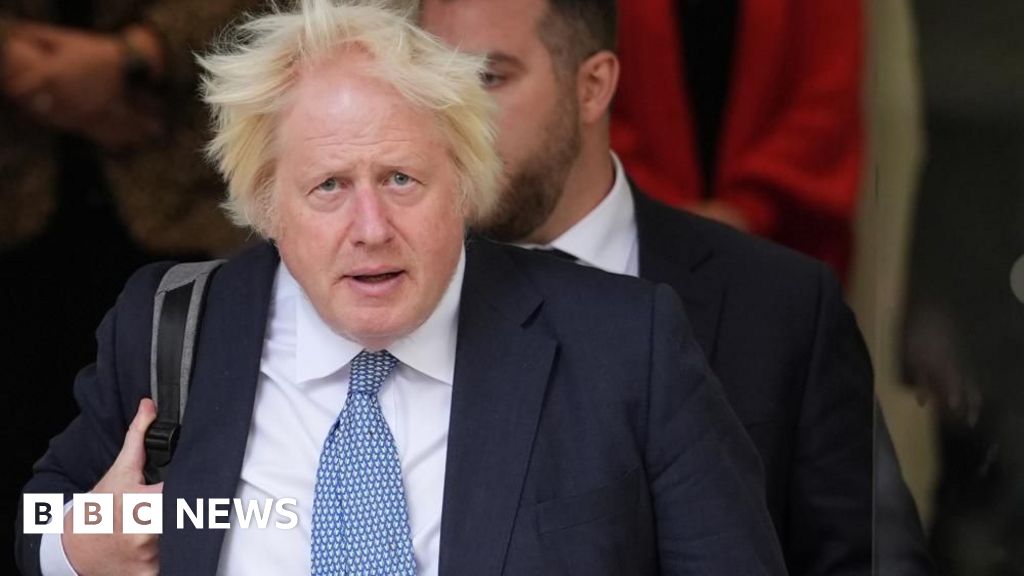
Johnson quickly exits Covid Inquiry amid growing doubts

The Lasting Fractures of Pandemic-Era School Closures on Society

In the wake of the COVID-19 pandemic, the debate over school closures has sharply resurfaced, exposing deep fissures within our communities and raising urgent questions about the social fabric and the future of families, education, and youth. As former Prime Minister Boris Johnson appeared before the Covid Inquiry, his reflections underscored a stark reality: the decision to shutter schools was more than a mere logistical step—it was a social upheaval with enduring effects. Evidence presented during the inquiry illuminated how the closure of schools, often executed without sufficient planning, has contributed to skyrocketing rates of speech and language delays, persistent student absences, and record-breaking suspension and exclusion rates, outcomes that ripple through families and communities.

Decisions Made in Chaos and Their Human Toll

This crisis reveals a worrying landscape of administrative chaos and indecision, with key social institutions failing to protect the most vulnerable. Reports show that as early as February 2020, scientific advisories warned about the potential for mass school closures, yet the Department for Education’s contingency plans rested on an assumption that schools would remain open. Despite this, the government’s inability to develop a comprehensive strategy—exacerbated by political disagreements and conflicting agendas—highlighted a fundamental neglect of the social well-being of children. Sociologist Frank Furedi cautions that such societal disruptions erode the moral fabric of our communities, intensifying the isolation of vulnerable youth and families already grappling with economic and social hardships.

The Impact on Education and the Social Contract

  • Increased demand for speech and language support demonstrates the developmental setbacks faced by children during prolonged absences.
  • The rise in school suspensions and exclusions signals a disturbing shift toward a more punitive approach to discipline—further alienating students and straining the social contract between youth and educational institutions.
  • Persistent absenteeism undermines not just individual futures but threatens the cohesion of local communities, creating a cycle of disengagement and social fragmentation.

In these turbulent times, voices like that of Anne Longfield, former Children’s Commissioner, point to an absence of clear responsibility for safeguarding children’s interests, revealing cracks in the moral leadership that should unify communities. Meanwhile, political rifts and personal conflicts—evident in leaked messages from Boris Johnson and Gavin Williamson—have compounded public distrust and deepened societal polarization. As historian David Starkey suggests, social cohesion depends on trust and responsibility; without it, society risks descending into fragmentation.

Hope Amidst Challenges

Despite these hardships, a resilient spirit of hope persists. Campaign groups like Long Covid Kids and vulnerable families rally outside the corridors of power, reminding society that behind every statistic are human lives. Society’s challenge lies in *rebuilding* a social contract that recognizes the human impacts of policy decisions—one deeply rooted in moral responsibility. As the society grapples with these consequences, the prospect remains that through collective effort, transparency, and compassion, we can repair the fractures inflicted during this crisis. Society’s true strength lies in transforming pain into purpose—restoring faith that schools are not just centers of knowledge but sanctuaries where families, communities, and the future itself can thrive, free from the shadows of past neglect.

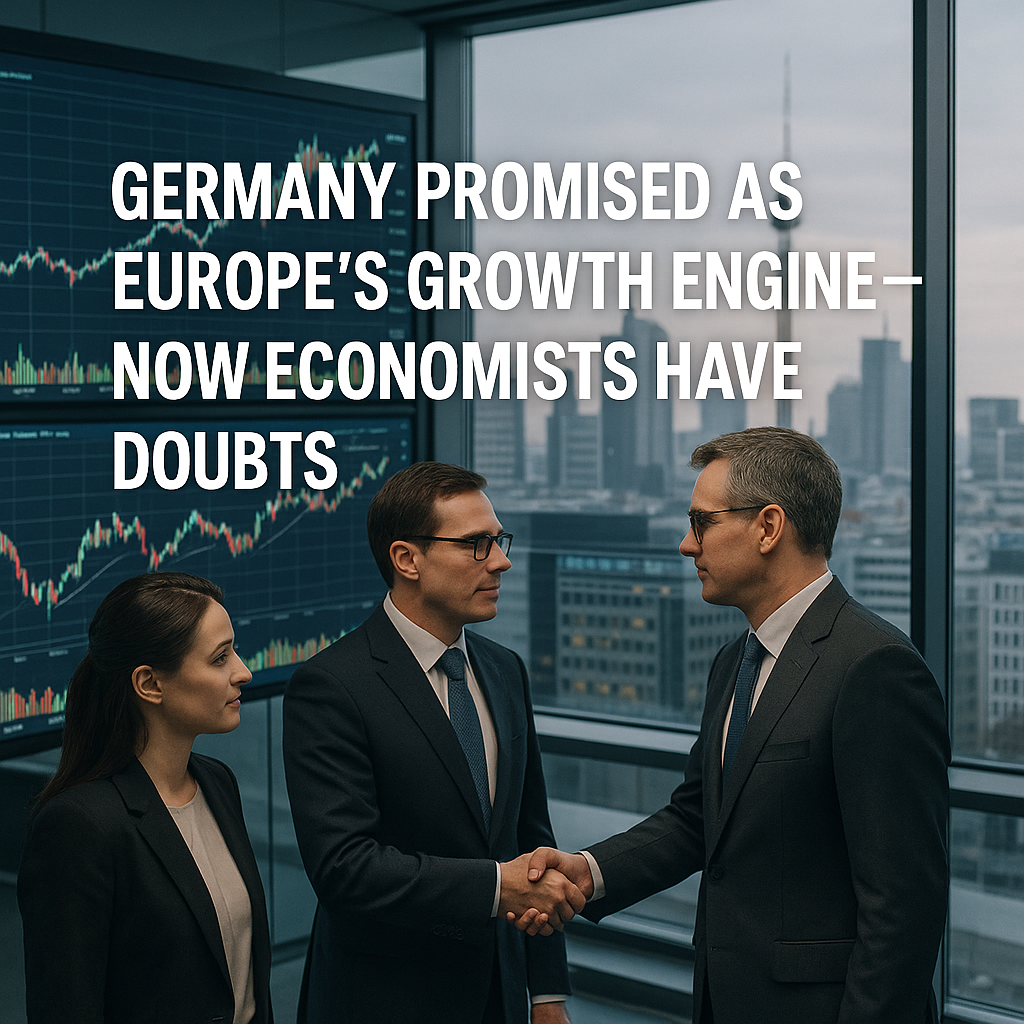
Germany Promised as Europe’s Growth Engine—Now Economists Have Doubts

Germany’s Economic Gambit: A Race Against the Clock

The global economic landscape remains a game of strategic moves, and Germany finds itself at a pivotal crossroads. Earlier this year, the nation embarked on an ambitious economic overhaul, backed by substantial fiscal reforms and record-setting investment pledges. The government aimed to ignite a domestic revival and serve as a catalyst for the beleaguered euro zone economy. Notable among these initiatives was the suspension of its long-standing debt brake, a policy that historically constrained government borrowing. This measure, combined with a €500 billion infrastructure and climate fund, seemed poised to electrify Germany’s sluggish economy and ripple positively across Europe’s markets and policies.

However, the initial optimism is now facing a sobering reality check. Despite the massive fiscal initiatives, recent data paints a subdued picture. While the first quarter of 2025 saw a modest 0.3% GDP growth, the subsequent quarter reversed course with a 0.3% contraction. These figures reveal the profound challenge policymakers face—a delayed impact of fiscal stimulus in a nation where “it takes time to spend money,” as noted by Berenberg’s chief economist Holger Schmieding. Although defense orders and infrastructure investments are witnessing a “major rise,” the actual output remains sluggish, indicating that Germany’s economy is struggling to translate promises into tangible results. The market impact is clear: investors and analysts are questioning whether Germany’s grand plan can achieve its transformative potential within the expected timeline, or if it risks falling short amid persistent structural headwinds.

Meanwhile, eligibility for fresh risks emerges from the broader policy landscape. As Franziska Palmas of Capital Economics highlights, the expansion of fiscal space—notably the additional government spending on pensions, healthcare, and social benefits—could push Germany’s deficits “much higher” than initially planned. This surge in borrowing and spending, while offering near-term growth, risks sowing seeds of long-term fiscal instability if not carefully managed. Economists warn that this expansion may be more a short-term boost than a sustainable path to prosperity, with some foreseeing a higher deficit over the coming years and a potential increase in inflationary pressures. As such, Germany’s shift toward more aggressive fiscal policies is a double-edged sword—offering an economic shot in the arm but raising questions about debt sustainability, policy credibility, and the risk of overheating an already fragile recovery.

Looking ahead, the prospects for Germany—and by extension, the euro zone—remain uncertain. Leading economic institutes have recently revised down their growth forecasts, now projecting a potential expansion of just over 1% in 2026. Berenberg and others estimate that even with the fiscal stimulus, Germany’s contribution to euro-zone growth might be modest—approximately 0.2-0.3% of additional growth—highlighting how complex and interconnected the European economy’s rebirth will be. The European Central Bank’s recent interest rate cuts and renewed optimism about Spain’s vibrant growth further complicate the picture, hinting that the EU’s recovery depends on a delicate balance of regional cooperation, fiscal discipline, and geopolitical stability. Still, the turning point remains clear: Germany’s ability to transition from a brief daze of recession to sustained growth could shape Europe’s future economic stratification and power dynamics.

As the pulse of national economies continues to beat, the global stage watches keenly—a testament to how critical short-term policy decisions are in shaping future power structures. The coming months will determine whether Germany harnesses its fiscal might into lasting prosperity or falls prey to the perils of overextension and untapped potential. In this fragile balance, the story of Germany is also the story of Europe and, ultimately, the epic quest for economic dominance in an era defined by swift change, fierce competition, and relentless innovation.

Social Media Auto Publish Powered By : XYZScripts.com