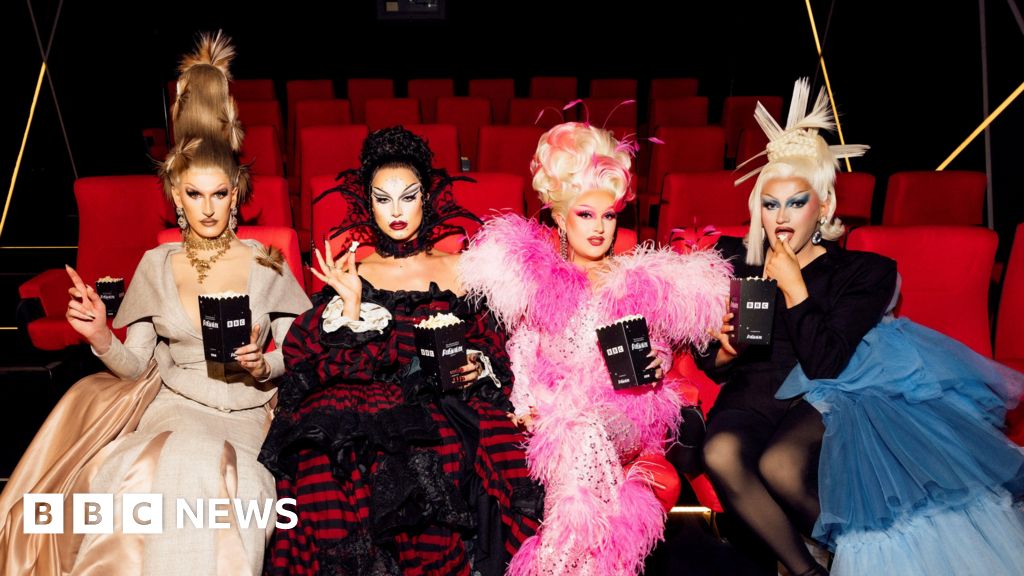

In an era characterized by rapid change and digitized chaos, the enduring significance of culture persists as the vital foundation upon which societies forge their identities. As Ortega y Gasset famously asserted, “The culture of a nation is the collective memory that shapes its future.” In this light, contemporary cultural phenomena serve not merely as entertainment but as the living record of a peuple’s values, traditions, and aspirations. The recent triumphs and innovations within cultural expression—be it art, music, or even televised art forms like drag culture—strike at the core of national and individual identity, underscoring that culture remains our most profound and personal form of history—a mirror and a prophecy.
Take for instance the spectacle of RuPaul’s Drag Race UK, which has garnered global attention yet remains intrinsically rooted in the UK’s vibrant craft of performance art. The recent series finale exemplifies how artistic performance functions as a battleground of cultural values, where beauty, self-expression, and resilience converge to challenge superficial stereotypes and to celebrate authentic individuality. Bones, crowned the series winner, embodies more than a flashy persona; she embodies a narrative of perseverance, tradition, and the reclaiming of cultural space, a testament to how artistic identity can serve as social commentary. Her journey from Soho’s underground scene to national recognition reminds us that the true power of culture lies in its capacity to foster community, affirm identity, and inspire societal reflection. As the philosopher Chesterton once observed, “Art may imitate life, but authentic art is life itself, expressed through beauty and courage.”
Nevertheless, as Tocqueville warned, the saturation of cultural products can lead to a kind of cultural exhaustion, diluting the richness of tradition in favor of fleeting trends. Critics argue that the fans’ call for greater diversity in drag—less homogeneity and more authentic representation—speaks to an inevitable evolution of a culture that must continuously refashion itself to stay vital. This is not a sign of cultural decline but a testament to its dynamic resilience. Yet, amidst this flux, the core principles of tradition—values of family, community, and authentic selfhood—must remain preserved. As G.K. Chesterton remarked, “Tradition means giving votes to the most obscure of all classes, our ancestors. It is the democracy of the dead.” In this way, culture remains a living dialogue between past and future, inspiring the youth to cherish their roots while daring to redefine them.
Ultimately, culture is both memory and prophecy—an ongoing reflection of who we have been and a vision of what we may become. The mosaic of our collective heritage guides us through the turbulent waters of modernity, reminding us that our true strength lies in honoring the principles that have sustained us. As T.S. Eliot contemplated, “We shall not cease from exploration, and the end of all our exploring will be to arrive where we started and know the place for the first time.” It is in this cyclical dance of remembering and dreaming that humanity finds its most eloquent voice—an anthem of tradition, a call to renewal, and a testament to the unbreakable unity of culture’s eternal dialogue.