
Today’s lifestyle landscape is witnessing a significant shift, especially around the way younger generations approach leisure and wellness. Once dominated by traditional spirits and wine, social gatherings are increasingly embracing a new category: THC-infused beverages. This trend is about more than just flavor—it’s about inclusivity and redefining how we connect with social norms. While the legal landscape remains complex—marijuana still faces federal restrictions—an expanding number of states have opened the door for hemp-derived THC products, making these innovative drinks more accessible than ever before. Industry projections anticipate this category will reach $370 million in the coming years, a testament to how deeply embedded these products are becoming in millennial and Gen Z routines.
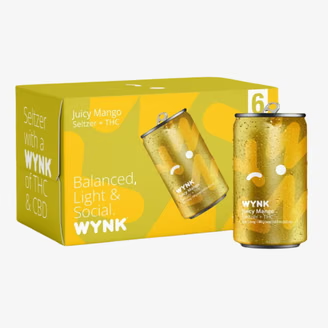
In this new era, infused drinks—ranging from seltzers to spirits—are hardly about simply getting high. Instead, they exemplify a \_shift in making wellness and leisure more thoughtfully crafted. Inspired by wellness experts such as Dr. Andrew Weil and cultural innovators like the founders of Houseplant, the focus is clearly on *quality, taste,* and *experience.* Many young consumers are replacing the excesses of traditional drinking with these low-dose, flavor-forward options. For example, brands like Wynk Juicy Mango and Cann’s Yuzu Elderflower are blending balanced doses of THC and CBD with refreshing flavors, offering a social-ready high that enhances relaxation or socializing without the usual haze or hangover.
The Leading Picks in THC-Infused Beverages
Wynk, for instance, has positioned itself as a nationwide accessible gateway into THC seltzers with its Juicy Mango flavor, a vibrant and refreshing choice that contains a modest 2.5mg to 10mg of THC, combined with CBD for a balanced experience. Its rapid onset time—roughly 10 to 15 minutes—allows users to enjoy social interactions and outdoor activities without the lengthy waiting associated with edibles. Meanwhile, brands like Cann focus on craft-flavored, *tasteful* options such as Yuzu Elderflower or Cranberry Sage, which are perfect for socializing or relaxing. With dosage ratios like 2mg THC to 4mg CBD, these drinks are engineered for a *smooth*, *mild high* that is ideal for daytime use or casual gatherings. Additionally, nonalcoholic spirits from companies like Nowadays offer flavorless, long-shelf-life tinctures that blend seamlessly into soft drinks, further expanding the options for those seeking a controlled, health-conscious alternative.
Beyond seltzers, the market has embraced nonalcoholic THC wines and spirits, such as Ayrloom Rosé, which channel the tart and bright flavors of traditional wines with the added bonus of controlled THC dosages. For aficionados seeking a genuine “spirits” experience without alcohol, MXXN’s Jalisco Agave offers a closer alternative to tequila—complete with natural flavor profiles and a 4mg THC inclusion per ounce, providing an easy way to craft nonalcoholic margaritas or tequila sunrises. Together, these options underscore a broader cultural shift \_where wellness, flavor, and social participation no longer rely solely on alcohol.\
The Legal and Cultural Shift: What You Should Know
While federal legality remains elusive, 24 states have legalized hemp-derived THC products, creating a patchwork of accessibility. From *California* and *Colorado* to *Vermont* and *Virginia*, young consumers are tapping into these legal provinces for new forms of social expression. Industry leaders hope that future federal regulations will streamline quality standards, preventing the market from being flooded with subpar or synthetic products that threaten the credibility of this burgeoning industry. Legalization is not just about compliance—it’s about integrity, safety, and ensuring that consumers can enjoy these innovative drinks confidently. As noted by wellness advocates such as Dr. Michael Moskowitz, responsible use is key, and education around dosage and effects remains paramount.
Ultimately, the rise of infused beverages represents more than a lifestyle tweak—it’s a cultural transformation. As younger audiences embrace these drinks as an inclusive way to enhance their social experiences and explore wellness, they are rewriting the traditional narratives of leisure. The ever-expanding options demonstrate that a *connected world* no longer relies solely on alcohol to facilitate community and relaxation. Instead, these products offer a pathway to *mindful enjoyment*, fostering a culture that values quality, flavor, and personal health. Lifestyle, like life itself, is a journey—an opportunity to explore, redefine, and embrace new horizons with confidence and clarity.