Matox News

Truth Over Trends, always!

UK’s Iceland Stores drops fight over name with Iceland Foods, clearing the way for consumers

In a move that underscores shifting geopolitical and economic landscapes, Iceland, the UK-based supermarket giant, has announced the end of its decade-long legal battle with its namesake in Europe. This resolution, driven by pragmatic business considerations, signals more than a simple corporate decision; it is a reflection of broader international legal and commercial tensions that have begun to reshape the landscape of global branding and national sovereignty. The company’s new approach—offering discounts to Icelandic shoppers and stepping back from its legal claims—may seem minor on the surface but bears significant implications for how nations and corporations navigate identity, intellectual property, and sovereignty.

Beginning in 2016, the government of Iceland initiated legal action against the UK retailer over its use of the country’s name, challenging the supermarket’s exclusive EU trademark rights for “Iceland.” The basis for this challenge was rooted in the belief that such rights hindered domestic companies from branding their products abroad, effectively limiting their economic freedom. The EU General Court’s rulings, reaffirming that geographical names must remain accessible for public use, struck a blow to private territorial trademarks and reinforced culturally rooted notions of sovereignty over shared historical and geographical identifiers. As analyst Helen Fry notes, this legal conflict encapsulated a broader trend: “The battle over names and trademarks often reflects deeper cultural and political struggles over national identities in an increasingly interconnected world.”

With the recent legal defeat, Iceland chose to pivot rather than persist in costly litigation. In his public statement, Richard Walker, executive chairman, revealed plans to reallocate the legal funds into offering discounts—fundamentally a strategic move to foster goodwill among local consumers in Iceland. Though he expressed concern about competitors potentially exploiting the brand’s name, the decision to step away from legal confrontation signals a wider recognition of the limits of international trademark enforcement. This episode exemplifies a global trend where sovereign nations push back against corporate encroachment, asserting cultural and economic independence in the face of universal branding practices. It also underscores the importance of international legal norms, which increasingly favor the public’s right to use geographical identifiers, rather than exclusive corporate claims.

The ramifications extend beyond law and commerce, touching on core notions of identity and statehood. The European Union‘s role, through courts and regulations, is pivotal, yet it is clear that local governments and populations are asserting a renewed sense of ownership over their historical and geographical symbols. As Dr. Tomasz Nowak, a geopolitical analyst observes, “Marking the borders of cultural sovereignty on the battleground of intellectual property rights is a sign of declining influence of supranational institutions and a resurgence of national narratives. This case, though seemingly trivial, echoes larger debates about who controls the symbols of national identity in an age of globalization.”

As history continues to unfold, the resolution between Iceland and the UK supermarket chain serves as a stark reminder of how decisions over trademarks and branding are far from mere commercial disputes—they are intertwined with the deep currents of national pride, sovereignty, and cultural autonomy. In a world increasingly shaped by international treaties, court rulings, and global economic forces, the outcome of this seemingly small legal battle hints at larger shifts in how nations assert their identities amidst the relentless tide of globalization. The pages of history are turning, and the story of geographies, brands, and sovereignty remains a compelling chapter in the unfolding geopolitical narrative.

Audible drops new ‘Standard’ plan, taking on Spotify and cutting costs for young listeners

Audible Disrupts Audio Book Industry with Strategic Price Shift and Market Expansion

In a significant move demonstrating innovative disruption within the digital entertainment space, Audible, the audio content subsidiary of Amazon, has launched a new “Standard” subscription plan priced at just $8.99 per month. This strategic extension aims to attract a broader segment of consumers, especially those labeled as light or casual listeners. The plan, announced recently, offers one audiobook per month alongside unlimited access to a curated library of Audible Originals and popular titles, including content from the soon-to-be-defunct Wondery+ platform. Such a competitive pricing model exemplifies how Audible is leveraging low-cost tier strategies to capture market share amid escalating rivalry, notably from Spotify, which integrated audiobooks into its ecosystem in 2022, fundamentally shifting the industry’s business dynamics.

The implications for industry incumbents are profound: while the premium subscriber model—where users retain ownership of their audiobooks—remains attractive for dedicated listeners, the introduction of this lower-cost tier signifies a paradigm shift. It aligns with a broader trend of monetization through volume and freemium models that are becoming standard across digital content providers. The plan’s launch in multiple countries—US, UK, Canada, Australia, Germany, and France—signals Audible’s strategic focus on international expansion, with early testing showing promising growth in member sign-ups. By simplifying access and lowering entry barriers, Audible intends to redefine consumer expectations for audiobooks, akin to the disruption seen in the streaming video industry years earlier.

The evolving landscape is further underscored by data from industry analysts such as Gartner and MIT, which suggest that disruption in content consumption models is driven by unmatched technological innovation and shifting consumer preferences. Spotify’s report of a 36% increase in audiobook listening and a 37% rise in listening hours last year, with more than half of its premium subscribers engaging with audiobooks, underscores that further industry convergence is imminent. Audible’s move to bundle its new plan with nearly 200 titles from Wondery+—which is phasing out—indicates a deliberate attempt to consolidate market influence and diversify revenue streams through strategic partnerships and diversified product offerings. Analysts warn, however, that as tech giants deepen investments into the $15 billion audiobooks market, the battle for dominance will accelerate, requiring traditional publishers and new entrants to innovate rapidly or risk obsolescence.

Looking forward, the marketplace is poised at a critical juncture. Innovation, disruption, and strategic agility will determine which companies succeed in capitalizing on the shifting landscape. With Amazon’s major push into tiered pricing and international markets, combined with Spotify’s aggressive integration of audiobooks into its broader music and podcast ecosystem, the industry is moving towards a more interconnected and consumer-centric model. As industry experts like Peter Thiel and Elon Musk emphasize, outpacing competitors involves relentless innovation and execution. Companies that embrace these trends early—shifting from traditional ownership to access-based models—will not only survive but thrive in this rapidly evolving digital economy.

In conclusion, Audible’s latest move underscores a broader imperative for stakeholders in the digital content sector: disruption is not just inevitable; it’s necessary for survival. The next few years will likely see an unprecedented collision of technology, consumer behavior, and business strategy — a landscape demanding agility, innovation, and vision. As the industry gears for this transformation, early movers who harness these trends could dominate the future of audio entertainment, reshaping how millions engage with stories, knowledge, and entertainment in an increasingly digital world.

Target drops synthetic dyes from breakfast cereals to protect our kids’ health

In recent developments reflecting a broader societal push towards healthier living, the retail giant Target announced it will phase out certified synthetic food colors from its cereal products by the end of May. This move, ostensibly driven by consumer demand for more natural options, also aligns with a mounting cultural shift prioritizing health and safety in food consumption. The decision emerges amidst increased pressure from the administration and various advocacy groups to scrutinize ingredients such as petroleum-based dyes—substances long scrutinized for their potential links to hyperactivity in children and other health concerns. This policy shift not only impacts families, who are increasingly conscious of what they feed their children, but also signals a societal reckoning with longstanding industrial practices.

Throughout history, food industry practices have often been challenged by public health debates and social movements. From early efforts in the 20th century to eliminate harmful additives to recent campaigns for clearer labeling, society’s stance on food safety reflects both scientific understanding and cultural values. Today, demographic changes and cultural tensions influence how communities view artificial ingredients, especially among younger generations who prioritize authenticity and transparency. Renowned sociologists like Nathaniel Phillips have argued that such consumer demands are reshaping how corporations perceive their social license to operate. The move by Target—though superficially a business decision—serves as a social marker, indicating a societal trend toward greater accountability for what is marketed to families and children.

However, the road to reform remains fraught with challenges. While some states, like West Virginia, have already enacted bans on synthetic dyes, the industry’s response oscillates between compliance and reversal, often influenced by consumer backlash and economic considerations. Leading companies such as General Mills and Kraft Heinz pledge to eliminate artificial colors by next year, yet critics like food reform advocates warn that these promises are often superficial, subject to change in response to sales metrics and regulatory laxity. The recent revision by the Food and Drug Administration—which allowed companies to claim “no artificial colors” if dyes are non-petroleum-based—has been met with skepticism. Social commentators like Marion Nestle have pointed out that these measures might be more about corporate image than substantive health protections. Ultimately, the societal battle over food dyes exposes a deeper tension: the conflict between industrial profit motives and the public’s right to safe, transparent food.

As communities grapple with these complex social issues, families stand at the crossroads of cultural values, economic realities, and health concerns. It is a reflection of society’s ongoing challenge to balance progress with responsibility—acknowledging that true societal transformation requires more than shiny promises and superficial policy changes. It demands a collective moral awakening, recognizing that the choices made today about what we eat are intertwined with the future of our families, our communities, and our shared integrity. In this moment of flux, society holds the hope that amid the noise of corporate interests and political pressures, the moral compass of a nation may yet steer us toward a healthier, more transparent future—one where the innocence of childhood is protected not just by laws, but by a societal will to value human well-being above fleeting profits.

Netflix drops the Warner Bros. bid, handing studios, HBO, and CNN to Ellison’s Paramount — a bold move in the streaming game

The ongoing wave of disruption within the entertainment industry has reached a new crescendo with the high-profile acquisition of Warner Bros. Discovery by Paramount. This deal, orchestrated amidst a fierce bidding war, consolidates significant media power in a landscape increasingly defined by innovation and strategic disruption. Notably, Paramount—backed by the financial might of billionaire Larry Ellison, whose net worth exceeds $200 billion—embeds itself into a sector ripe for transformation, signaling a new era of corporate consolidation aimed at competing with streaming giants and tech disruptors.

At the core of this deal is a masterstroke in leveraging financial innovation. Paramount’s acquisition involves assuming roughly $33 billion in Warner Bros. Discovery’s debt, a move facilitated by a $57.5 billion debt commitment from financial heavyweights such as Bank of America Merrill Lynch, Citi, and Apollo Global Management. This strategic leveraging echoes the practices of top-tier institutional investors, positioning Paramount for aggressive expansion while stoking risks associated with rising debt levels in an increasingly volatile media market. The deal’s structure underscores the shifting paradigm wherein industry giants deploy complex financial engineering to consolidate power and push ahead in a rapidly evolving tech-driven content landscape.

Critically, the dynamics surrounding Paramount’s ownership involve a contentious mix of political influence and media strategy. With Larry Ellison’s significant political donations and his son David Ellison’s ownership of Paramount, the deal is under close scrutiny regarding its potential impact on content polarization and market influence. The acquisition also includes a $2.8 billion termination fee payable to Netflix to dissolve prior contractual agreements, reflecting a readiness to navigate aggressive market repositioning. Analysts like those at Gartner emphasize that such high-stakes moves are indicative of a broader disruption in traditional media models, with legacy companies aggressively positioning themselves for an anticipated post-streaming revolution.

Looking ahead, this merger points to a possible consolidation of media assets that could significantly influence the industry’s future trajectory. As disruptive technologies continue to challenge conventional distribution channels, entertainment companies are doubling down on vertical integration and strategic partnerships. With technology companies such as Tesla and Elon Musk pushing the boundaries of AI and content delivery, and industry analysts warning about the potential for increased market concentration, the urgency for established players to innovate has never been greater. The winner in this race will be those who harness cutting-edge tech, strategic capital deployment, and political navigation—making the next chapter of media history one to watch with keen anticipation.

Spanish ‘Soonicorn’ Multiverse Computing drops free compressed AI model for next-gen innovation

European AI Innovator Multiverse Computing Disrupts Large Language Model Industry with CompactifAI

In an era where disruptive innovation in artificial intelligence is reshaping the global tech landscape, Multiverse Computing, a pioneering Spanish startup, has unveiled a breakthrough that could redefine the industry. Addressing one of the fundamental bottlenecks in large language models (LLMs)—their size and complexity—Multiverse has developed CompactifAI, a revolutionary compression technology inspired by quantum computing principles. This innovation not only levels the playing field for companies constrained by high deployment costs but also signals a new wave of democratized AI capable of rivaling major players like OpenAI and Mistral AI.

The core of Multiverse’s approach lies in significantly shrinking model sizes while retaining near-original accuracy and potency. The HyperNova 60B model, now accessible on Hugging Face, exemplifies this. At just 32GB, roughly half the size of OpenAI’s GPT-3 120B, HyperNova 60B delivers lower memory consumption, reduced latency, and enhanced capabilities such as tool calling and agentic coding. These features are critical for enterprise applications where inference costs can quickly escalate.

  • Smaller model footprint
  • Lower operational costs
  • Enhanced real-time performance
  • Advanced tool integration

Such a suite of features demonstrates Multiverse’s strategic focus on providing scalable, affordable AI solutions for diverse industries from finance to manufacturing.

Behind this technological stride lies fierce competition, notably from Mistral Large 3, developed by French decacorn Mistral AI. Both startups exemplify how European innovation is challenging U.S. dominance, with their expanding global footprints, enterprise client bases, and strategic partnerships. Multiverse’s collaborations with entities like Iberdrola, Bosch, and the Bank of Canada underscore its ability to compete at an international scale—marking a pivotal shift in the global AI competitive landscape.

Economic implications are profound. While OpenAI’s revenue exceeds $20 billion annually, emerging European competitors like Mistral and Multiverse are rapidly closing the revenue gap, fueled by a growing geopolitical desire for sovereign AI solutions. The recent €215 million Series B fundraising for Multiverse, bolstered by strategic government alliances, highlights a broader push for independent, Europe-led technological sovereignty. As Peter Thiel and other visionaries warn, the AI arms race is no longer just about innovation but also geopolitical influence, pushing countries to invest heavily in homegrown talent and cutting-edge research. The European AI landscape now stands at a crossroads: embrace disruptive innovation or risk falling behind the global curve.

Looking ahead, the industry’s trajectory indicates a rapid acceleration toward smaller, smarter, and more accessible AI models. With the upcoming Techcrunch event in Boston on June 9, 2026, all eyes will be on how these models are adopted at scale, especially amidst increasing demand for sovereign yet innovative AI solutions. Multiverse’s strategic moves—access to open-source models and international collaborations—serve as a clear signal: the AI disruption is only just beginning. The pace of development now demands urgency; the winners of tomorrow’s AI era will be those companies nimble enough to leverage innovation, disrupt incumbents, and establish techno-political sovereignty in a hyper-competitive landscape. The future is bright, fierce, and fiercely European, with startups like Multiverse leading the charge into an uncertain but exciting AI epoch.

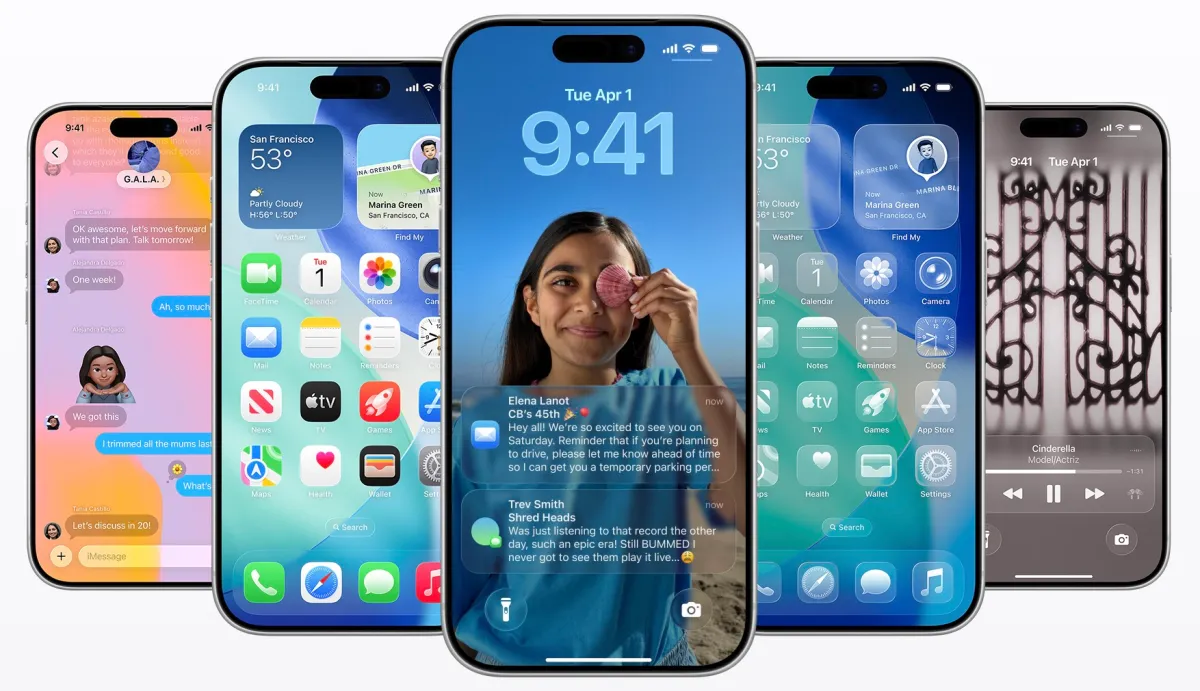
Apple’s iOS 26.4 Public Beta Drops: AI Playlists, Video Podcasts & More for Youths

Apple Unveils iOS 26.4: Disrupting Tech with AI-Powered Features

In a move that underscores its relentless push towards innovation and industry disruption, Apple announced the release of its latest mobile operating system, iOS 26.4. Currently available in public beta, this update anticipates a full rollout by March or April, promising to revolutionize user engagement with cutting-edge features leveraging artificial intelligence, security enhancements, and multimedia innovations. This strategic upgrade solidifies Apple’s positioning at the forefront of mobile technology, threatening rivals and reshaping how consumers interact with their devices and content.

AI-Driven Personalization and Business Disruption

The new AI-powered playlist generator within Apple Music exemplifies Apple’s commitment to integrating advanced machine learning into its core offerings. The “Playlist Playground” feature employs Apple Intelligence to craft customized 25-song playlists from text prompts, handling user preferences with unprecedented precision. This disruption not only enhances user experience but also impacts how music streaming services compete—ushering in an era where AI-driven content curation becomes standard. Industry analysts from Gartner suggest that AI personalization will be a key battleground, with companies that lead in this domain securing a dominant market share, potentially forcing competitors to adopt similar, disruptive algorithms or lose relevance.

Further, the refresh of the UI with full-screen artwork and the introduction of “Concerts Near You”—a feature that helps users discover live events—indicates Apple’s strategic pivot toward integrating content discovery with experiential social features. These innovations threaten traditional concert promoter and ticketing models, pushing the boundaries of how digital platforms monetize live entertainment, and creating new revenue streams that leverage AI for targeted recommendations and user engagement.

Security and Content Innovation Elevate Industry Standards

Security enhancements such as end-to-end encryption (E2EE) for RCS messaging mark a significant step towards harmonizing secure communication across platforms. Currently in testing, this feature promises to deliver iMessage-like confidentiality to Android users, broadening Apple’s influence in cross-platform messaging security—a critical concern in today’s increasingly digital society. The industry sees this as a disruptive move that pressures competitors like Google and Meta to elevate their security standards or risk losing user trust.

Meanwhile, video podcasts powered by HTTP Live Streaming (HLS) and integrated ad platforms exemplify Apple’s innovative push into multimedia monetization. Creators can now insert dynamic video ads, fostering a new digital advertising ecosystem that could undercut traditional radio, television, and even YouTube models. Industry giants like Elon Musk’s X (formerly Twitter) and startups such as Freenom are already exploring similar tech disruptions to redefine content delivery, but Apple’s seamless, ecosystem-wide integration gives it a formidable edge.

Security, AI, and Market Momentum Point Toward Future Dominance

By making Stolen Device Detection active by default and bolstering biometric authentication, Apple enhances device security, signaling a future where privacy and device integrity become standard expectations rather than added features. This approach pressures Android device makers to follow suit or risk user churn. Simultaneously, upcoming enhancements like support for in-car video playback via CarPlay and AI-powered camera tools introduce new avenues for disruption within connected vehicle markets and consumer multimedia.

Looking ahead, industry experts like Peter Thiel and MIT researchers emphasize that Apple’s emphasis on AI-driven content, cybersecurity, and seamless multimedia integration foreshadows a technological shift that demands urgency from competitors. As AI continues to evolve rapidly, Apple’s ecosystem becomes a battleground of innovation and disruption—propelling it towards an inevitable future where control over content, security, and user experience defines industry leadership. In this high-stakes race, only those who accelerate their technological development and adopt disruptive strategies will survive and thrive in the competitive landscape of tomorrow’s digital economy.

Unexpected God of War Prequel Drops on PS5 — Are You Ready?

Sony Disrupts Gaming Industry with Launch of God of War: Sons of Sparta

In a strategic move signaling ongoing innovation in the gaming sector, Sony unveiled God of War: Sons of Sparta, a prequel set to redefine the 2D action platformer genre. Released during its February 2026 State of Play presentation, this title exemplifies Sony’s continued commitment to pushing technological boundaries and engaging a youth demographic hungry for immersive experiences. The game’s release on PlayStation 5 underscores Sony’s focus on leveraging next-generation hardware to deliver high-fidelity gameplay experiences, further consolidating its market dominance.

Built as a canon story set in Kratos’ youth, Sons of Sparta combines classic mythology-inspired narrative with innovative gameplay mechanics. Sony states the game explores Kratos’ early training at the Agoge, revealing strategies and skills that define his legendary persona. The game utilizes a sophisticated blend of divine artifacts, like the Gifts of Olympus, and introduces fresh combat mechanics with spear and shield, signaling a technical leap for the franchise. The collaboration with Mega Cat Studios demonstrates Sony’s penchant for cooperative innovation across industry leaders, fostering diverse talent to enhance storytelling and gameplay fidelity.

The strategic price point of $29.99 with a Digital Deluxe edition at $39.99 marks an aggressive market approach, aiming to attract younger gamers and digital consumers. This move signifies Sony’s recognition of shifting consumer preferences towards accessible, high-quality gaming experiences without premium price barriers. Industry analysts from Gartner and MIT suggest that such affordable yet sophisticated titles will accelerate disruption in the traditional AAA market, pressing established publishers to innovate or risk losing relevance. This trend reflects a broader industry shift where disruption-driven growth is paramount, with new entrants leveraging lower costs and more agile development to capture market share.

As the industry advances at a rapid clip, technological innovation and strategic collaborations are fundamentally reshaping the entertainment landscape. The launch of God of War: Sons of Sparta exemplifies how established giants like Sony are pioneering new formats and gameplay styles to meet rising demand for immersive, narrative-driven experiences. Meanwhile, industry veterans and newcomers alike are watching closely, recognizing that disruptive technologies such as cloud gaming, AI-driven development, and cross-platform integration are not distant future concepts but current realities. As Elon Musk and Peter Thiel have highlighted in technological forums, the race for innovation is intensifying, heightening the stakes for market incumbents and challengers alike.

Future-forward, the gaming industry stands at a crucial moment where rapid technological advances and strategic agility will determine who leads the next era of entertainment. Innovation is no longer optional; it is imperative for survival amidst a landscape increasingly defined by disruption, youthful consumers, and global competition.

Jess Cartner-Morley Drops Winter Style Hack: Brighten Up with a Fresh Pop of White!

The Next Wave of Winter Style: Embracing White to Brighten the Season

As January drags on with its bleak skies and muddy puddles, a surprising tide is sweeping through the fashion world, led by _trends_ that challenge the winter gloom’s dominance. White has emerged as more than just a color—it’s a statement that transcends seasonal conventions. Influencers like Emma Roberts sporting crisp white ankle boots and fashion icons endorsing monochrome ensembles are signaling a shift in how we perceive winter styling. This isn’t just about aesthetics; it’s a societal move towards upliftment and light, even during the darkest months.

This trend’s social relevance lies in its counter-intuitive approach to winter fashion. Instead of succumbing to the heavy, dark layers traditionally associated with cold weather, youth and trendsetters are embracing a playful, _whimsical_ palette that brights their mood and social presence. _Adding a splash of white_, whether through boots, shirts, or accessories, functions as a visual “serotonin shot,” making even the gloomiest days seem a little brighter. Sociologists note that such color shifts act as subtle acts of defiance, empowering young people to reclaim their environment and express optimism in the face of persistent winter blues.

Fashion analysts are quick to point out that this is more than fleeting sartorial fun—it’s a cultural statement. The _white_ trend aligns with a broader movement towards _self-expression_ and _individuality_. Combining white with darker tones creates a _balanced_ aesthetic that stays playful yet grounded, a nod to youthful rebellion that is both stylish and socially engaging. Top brands like Whistles and John Lewis are capitalizing on this, offering sleek white jackets, accessories, and shoes that make layering accessible and versatile. Influencers and style guides emphasize that, just as a squeeze of lemon elevates a dish, a strategic pop of white can _perk up_ the most utilitarian winter wardrobe_.

As this trend gains momentum, it raises a profound question: is the white accent merely a fashion statement, or could it signal a deeper societal shift—a collective desire to _brighten_ and _redefine_ our cultural landscape? The _next big question_ is whether this playful embrace of white will foster resilient, optimistic attitudes that withstand future social and environmental challenges. In a world increasingly aware of the importance of mental well-being, perhaps the key to resilience lies not just in what we wear but in how we choose to perceive and shape our surroundings. As youth-driven style continues to evolve, one thing is clear: the snow may never come, but the potential for a _whiteout_ of positivity and hope is already on the horizon.

US Justice Department drops Millions of Epstein files, exposing the truth behind a dark chapter

The United States Justice Department has recently publicly dismissed allegations concerning former President Donald Trump, highlighting the political undercurrents that continue to shape American domestic and international landscapes. In a statement, officials emphasized that many of the documents containing *untrue and sensationalist claims* against Trump, submitted to the FBI just prior to the pivotal 2020 election, are fundamentally baseless. “To be clear,” the DOJ declared, “the claims are unfounded and false, and if they have a shred of credibility, they certainly would have been weaponized against President Trump already.” This ongoing narrative underscores the deep political fissures within the US and reveals how internal conflicts influence diplomatic decisions, often with ramifications beyond its borders.

Analysts interpreting this development suggest that domestic political factions have capitalized on the chaos surrounding Trump’s post-presidential investigations to influence global geopolitics. Some experts warn that these internal power struggles have the potential to undermine the coherence of American foreign policy, especially as the nation faces increasing pressure from rising competitors like China and Russia. Historically, by weaponizing legal processes, powerful factions within Washington have sought to weaken political adversaries, exporting this internal strife onto the international stage. International organizations such as the United Nations have repeatedly called for stability, yet the ongoing political chaos in the US threatens to create a vacuum in leadership and global influence.

Furthermore, how decisions made within the US legal and political machinery impact other nations cannot be underestimated. Countries aligned with the US often find their interests swayed or compromised by the shifting priorities and internal unrest in Washington. As the Biden administration navigates these crises, allies and adversaries alike observe with keen interest, questioning whether the US can sustain its role as a global leader amid the turbulence. International historians and geopolitical analysts warn that such internal turmoil risks emboldening rivals, who see opportunities to test American resolve and expand their influence. The narrative of justice, legality, and political neutrality is now intertwined with the larger story of national stability and whether the US can uphold its commitments in a fractured political landscape.

As this saga unfolds, the weight of history presses heavily upon the shoulders of those who shape the future. From the corridors of power in Washington to the chancelleries of Beijing, Moscow, and beyond, the relentless tide of political upheaval continues to redefine the contours of international diplomacy. The question remains: will the internal discord forge a new epoch of decline, or will resilience and reform restore the stability necessary for global leadership? Only time will tell, but one thing is clear: the course of history, once again, hangs in the balance—as the world watches, awaiting the next chapter in this unfolding drama.

Brand Beckham drops the ultimate clapback costume — and the fashion game just got more fierce

In an era where celebrity branding is less about talent and more about strategic image manipulation, the recent spectacle surrounding the Beckham family exemplifies this evolution. Over the past week, the media has been captivated by a series of social media revelations from Brooklyn Beckham that expose unseen cracks within one of the world’s most meticulously crafted dynasties. Meanwhile, David Beckham’s appearance at Paris Fashion Week, wielding a rare Hermès bag and a sashiko-dyed jacket, signals yet another chapter in the art of using fashion as a subtler form of communication. These shifts in behavior underscore how modern celebrities, especially those embedded in traditional institutions like the royals or famed families, are increasingly using clothing and public appearances as signals—either for unity or to send a hint of discord.

Fashion’s role as a social language is nothing new—think of Princess Diana’s iconic looks or Wallis Simpson’s modern take on regal style—yet today’s spectacle is amplified by social media’s immediacy. Influencers, sociologists, and brand strategists argue that what these figures wear isn’t just about aesthetics; it’s about shaping public perception. David Beckham’s choice of sashiko—an *ancient Japanese technique of visible mending*—may seem trivial, yet experts like brand consultant Andy Milligan suggest it could be a deliberate semiotic message. Are Beckham’s wardrobe choices a covert nod of resilience, a statement of humility, or simply a comfortable choice? The current climate makes it increasingly difficult to discern whether these “fashion statements” are organic expressions or carefully curated signals crafted by a team of image architects working behind the scenes.

At the same time, the family melodrama—highlighted poignantly by Brooklyn Beckham’s emotional social media exposé—reflects a broader shift in societal attitudes. In this digital age, transparency is currency, and celebrities are no longer passive figures; they are active participants in shaping their narratives, often blurring the line between authenticity and performance. Though Brooklyn’s claims paint a stark picture of family conflict, critics warn that such revelations serve a dual purpose: they keep the Beckham brand in perpetual conversation, attuned to the shifting values of a social media-driven generation. This combination of high fashion, family feud, and social media theatrics sets the stage for a powerfully modern brand of public spectacle—one where image is everything and vulnerability is often strategic.

Looking ahead, one has to ask: as families and celebrities fine-tune their appearance for both the camera and the subconscious, what does this say about the *future* of influence? Will fashion and personal narrative become so intertwined that the authentic self is forever mediated through carefully edited symbols? Or is this an inevitable sign of a society where every gesture, every garment, is a piece of the puzzle in a sprawling game of perception management? With the lines between reality and spectacle increasingly blurred, it seems the next big question for youth and society alike is: *are we witnessing the dawn of a new era where true authenticity is the ultimate act of rebellion?*

Social Media Auto Publish Powered By : XYZScripts.com