
Matox News

Truth Over Trends, always!

SEC Mandates Biannual Earnings Reports to Boost Transparency and Investor Confidence

SEC Advances Proposal to Relax Quarterly Earnings Reporting, Paving the Way for Industry Shift

The U.S. Securities and Exchange Commission (SEC) is on the brink of a seismic reform that could reshape the landscape of corporate transparency and market dynamics. According to recent reports from the Wall Street Journal, the SEC is preparing a formal proposal to allow publicly listed companies to dispense with the rigid quarterly earnings reports, opting instead for semiannual disclosures. This potential policy shift signifies not just a regulatory change but a disruptive force that could realign the fundamental expectations of transparency, investor engagement, and corporate strategy in the American market.

The push for less frequent reporting stems from mounting concerns over the costs and operational burdens that accompany quarterly filings — a requirement rooted in historical regulatory frameworks dating back over five decades. Industry insiders, including executives and market analysts, argue that this outdated model inhibits innovation by compelling companies to prioritize short-term earnings over long-term strategic growth. “The quarterly reporting requirement remains a barrier for startups and tech giants alike who seek agility and less distraction,” notes Dr. Lisa Johnson, a leading analyst at MIT’s Sloan School of Management. The potential move toward semiannual reporting could lower compliance costs and encourage more companies to go public, especially in the fast-evolving tech sector, where rapid innovation often conflicts with bureaucratic reporting cycles.

Prominent voices such as SEC Chairman Paul Atkins and former President Donald Trump have expressed support for reconsidering the annual burden on corporations. Discussions with stock exchanges about next steps are already underway, signaling an intent to modernize the regulatory infrastructure to foster greater industry agility. However, the process remains in an early stage, with any substantive change subject to a public comment period and approval vote. Historically, similar reforms have taken hold in the European Union and the United Kingdom, where mandatory quarterly reports were phased out roughly a decade ago, giving companies the opportunity to opt for semiannual disclosures. Yet, many firms in those markets still voluntarily report quarterly, driven by investor demand for near-real-time data, emphasizing the tension between transparency and innovation.

The implications of this regulatory evolution are significant. For disruptive technology firms and emerging startups eyeing public markets, reduced compliance overhead could serve as a catalyst for faster scaling and increased investment. It may also inspire a broader trend of disintermediation—where dominant players leverage agility to outpace competitors mired in bureaucratic inertia. On the flip side, some market advocates warn of potential downsides: less frequent reporting might reduce transparency, potentially increasing market volatility or eroding investor confidence if not carefully managed. Nonetheless, the broader industry must grapple with the undeniable fact that innovation often demands regulatory frameworks attuned to the pace of technological change.

Looking ahead, the proposed shift to semiannual reporting underscores an urgent need for stakeholders—including regulators, investors, and tech entrepreneurs—to adapt quickly. As Gartner and other forecasting services emphasize, the next wave of business disruption hinges on whether regulatory bodies can strike a balance between fostering innovation and ensuring market integrity. The clock is ticking: this potential policy change could serve as a catalyst for a radical transformation in corporate governance, signaling a new era where agility and innovation take precedence over outdated reporting conventions. The question remains: will U.S. markets follow Europe’s lead in driving reform or cling to legacy practices at a time when being first to adapt could determine the winners in the global technological race? The future of corporate transparency will be written in the coming months — and its impact could ripple through every corner of the business world.
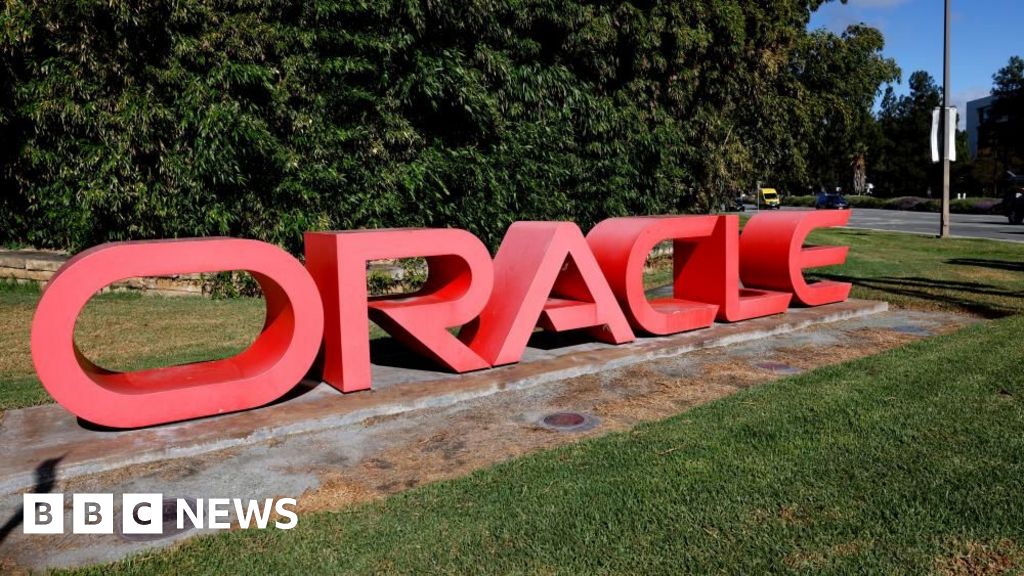
Oracle shares drop as earnings raise AI bubble doubts among young investors

Oracle’s Earnings and the Shifting Dynamics of Global Tech Power

In the wake of recent disappointing quarterly figures, Oracle, a titan in the cloud computing industry, saw its shares plummet over 10% in after-hours trading. The company’s revenue for the quarter ended in November stood at $16.1 billion, edging just below analyst expectations of $16.2 billion. Despite this marginal shortfall, Oracle’s overall revenue growth of 14%—bolstered by a 68% spike in its AI division—underscores the relentless expansion and strategic pivoting of America’s tech giants amid a tumultuous market.

What elevates Oracle’s recent developments from mere financial metrics is its strategic alliance with OpenAI, the outfit behind ChatGPT. In September, Oracle inked a deal to furnish $300 billion in computing power over five years, positioning itself as a crucial infrastructure provider in the AI race. This move has catapulted Larry Ellison into the spotlight, briefly making him the world’s richest man. International analysts have lauded this partnership as a major step in the global AI race, signaling America’s intent to maintain supremacy in this critical technological frontier. However, Ellison’s call for “chip neutrality”—buying AI chips from any manufacturer—has raised eyebrows regarding the underlying sector competition, especially with dominant players like Nvidia.

Risks, Rewards, and the Geopolitical Chessboard

Behind the veneer of growth lies a complex web of financial strategies and geostrategic maneuvers. Critics on Wall Street warn that Oracle’s substantial debt from bond sales—an unprecedented $18 billion—raises concerns over sustainability and overexposure to a volatile AI sector. As international organizations and analysts like Jacob Bourne voice caution, some experts see this as a reflection of the broader American tech sector’s pursuit of dominance at all costs. The narrative echoes tensions in U.S.-China relations, where global AI and tech leadership now serve as proxies for geopolitical influence, echoing classic competition over technological superpower status. Inner circles in Washington, as well as international think tanks, increasingly perceive these tech battlegrounds as pivotal to future global power alignments.

Meanwhile, Oracle’s political and economic initiatives include notable investments by the Ellison family, outspoken supporters of Donald Trump. Their acquisitions of Hollywood assets like Paramount and active bids for Warner Brothers Discovery reflect an intertwining of technological, financial, and geopolitical interests that stretch far beyond the data centers themselves. As historian and geopolitical analyst John Mearsheimer warns, such concentrated financial power and strategic investments bolster legacy industries while challenging the global cultural order, especially in an era where information warfare and media influence have become critical weapons of statecraft.

Implications for the Future and a Wary World

The unfolding chapters of Oracle’s ambitions and the broader AI arms race are a stark reminder that technology is now intrinsically linked to geopolitical stability or chaos. The decisions made today—whether purchasing chips from Nvidia or distributing AI infrastructure—are shaping the contours of future conflicts and alliances. International observers, from the United Nations to regional economies in Europe and Asia, watch with bated breath as these titanic shifts ripple through the fabric of global society. What remains uncertain is whether these technological pursuits will serve the cause of human progress or become catalysts for a new era of unchecked dominance and confrontation.

As history continues to unfold in this epoch of rapid innovation and rising strategic tensions, the world stands on the brink of a new chapter. The intricate dance of corporate power, political influence, and technological innovation holds the potential to forge a new global order—and just as easily, to unravel the fragile fabric of peace. In these moments, the destiny of nations is written not just in the boardrooms or server farms but in the choices of leaders who shape the future—an era where every decision echoes across decades, leaving a legacy that future generations will scrutinize and debate. The unease lingers: what new wars of influence, technological or otherwise, are already quietly taking shape in the shadows of this digital revolution?

Social Media Auto Publish Powered By : XYZScripts.com



