Matox News

Truth Over Trends, always!

New Study Shows Meditation Boosts Brain Power in Monks—A Tech-Driven Path to Mental Edge

Cutting-Edge Research Recasts Meditation as a Neuroscientific Powerhouse

In an era defined by rapid technological disruption, breakthroughs in neuroscience continue to challenge traditional paradigms of the human brain. Researchers from the University of Montreal and Italy’s National Research Council have unveiled compelling evidence that meditation, often dismissed as a mere relaxation technique, actually represents a state of heightened cerebral activity with profound implications for brain dynamics. Through the use of advanced magnetoencephalography (MEG) technology, a small cohort of Thai Forest Tradition monks revealed that meditation orchestrates complex neural oscillations and configurations aligned with the concept of criticality—a principle borrowed from physics that describes systems operating at the edge of chaos and order.

These findings serve as a potent reminder that the brain’s capacity for adaptability and stability—its very core for processing information and learning—is governed by a delicate balance. Modern tech giants and neuroscience pioneers like Elon Musk and institutions such as MIT have long championed the notion that intelligent systems — whether biological or artificial — thrive when operating at this cusp of criticality. The research underscores that practices designed to induce mental clarity, such as Samatha and Vipassana meditation, can serve as models for developing more resilient, flexible AI architectures. This neural “sweet spot” is now being recognized as essential not only for cognitive optimization but also for pushing the boundaries of business innovation.

Disruption at the Neural Level: A New Frontier for Technology and Industry

The study’s granular analysis uncovered that both meditation styles increase brain complexity, yet they do so through contrasting neural configurations: Vipassana approaches balance stability with flexibility, nudging neural networks toward the critical point, while Samatha fosters a more stable, focused state. Experts emphasize that operating near this optimal point boosts a brain’s responsiveness, multitasking capabilities, and information retention. For disruptive tech firms seeking to emulate human adaptability, these findings provide a blueprint—highlighting the importance of designing systems that emulate such neural flexibility. Future applications could revolutionize fields from brain-computer interfaces to machine learning algorithms, unlocking new levels of efficiency and intelligence.

  • Enhanced AI Flexibility: Incorporating principles of neural criticality could lead to smarter, more adaptable AI systems capable of rapid emotional and contextual adaptation.
  • Neural Optimization: Meditation-inspired techniques might stimulate new neuro-interfaces that optimize cognitive performance in high-stakes environments like cybersecurity and finance.
  • Industry Shifts: Companies with insights into these neural dynamics could disrupt established markets by delivering unprecedented levels of user engagement and neuro-aligned products.

Reflecting insights from thought leaders such as Peter Thiel, industry insiders recognize that the convergence of neuroscience and AI marks a pivotal frontier—one that demands swift innovation if firms hope to maintain a competitive edge in the coming decade. As this research demonstrates that meditative practices reshape neural networks toward an ideal operational state, the implications for disruptive technology are profound. From neurotech startups to established giants, the race is on to pioneer systems that not only mimic but harness the brain’s natural propensity for criticality.

Looking forward, the evolution of this neuroscience frontier signals a future where understanding and harnessing brain dynamics could become the key differentiator in an increasingly competitive universe of technological innovation. With hundreds of startups and multinational corporations investing heavily in neural data and cognitive enhancement, the pressure mounts on incumbents to innovate at the intersection of mind, machine, and market. As the quest for true AI consciousness and human augmentation accelerates, embracing the principles illuminated by this recent study will be paramount—a call to action for those daring enough to lead the next wave of disruptive technology.

Decoding Andy Burnham’s Low-Key Style Game: The Outsider’s Fashion Edge for Today’s Youth

In the evolving landscape of politics, fashion has become an unexpected but powerful tool for shaping identity and making a social statement. Andy Burnham, the charismatic mayor of Greater Manchester and self-styled “king of the north,” has recently embraced a more casual, understated wardrobe during public appearances—trading suits for black joggers, bombers, and simple workwear-inspired pieces. His appearance at the launch of the Class Ceiling report at Whitworth gallery exemplifies a broader cultural shift: politicians are no longer just speaking through speech or policy; they’re communicating through their everyday style. Burnham’s wardrobe signals a departure from the polished, often detached London political class, and instead aligns with the working-class roots and regional pride that fuel his electoral base.

This deliberate shift toward casual, workwear-inspired fashion is more than mere aesthetics. For sociologists and fashion analysts like Andrew Groves, director of the Westminster Menswear Archive, Burnham’s all-black, nonconformist look is “as calculated as any Westminster suit, just aimed at a different audience.” It’s a visual rejection of the “parliamentary polish” that many associate with distant, elitist politics. Instead, it projects an image of practicality, authenticity, and regional solidarity—elements increasingly vital to engaging young voters who crave transparency and relatability in their leaders. As Jonathan Tonge, a politics professor at the University of Liverpool, asserts, Burnham’s fashion aligns with his moderate, left-of-center politics: a statement that “I’m different from Westminster.”

What’s truly fascinating is how Burnham’s personal style also represents a broader societal narrative: the emergence of regional identities in national discourse. His “Manchester way” aesthetic—described as “the Smiths meets Britpop”—evokes local cultural icons and musical heroes, reinforcing regional pride and resisting the homogenizing influence of mainstream London politics. Meanwhile, his style stands in contrast yet subtle proximity to Keir Starmer, whose slightly more mainstream Britpop-inspired look—Stone Island, Harringtons, open-neck shirts—signals a different political momentum. While Starmer maintains hints of non-conformity, Burnham’s more radical authenticity taps into the social momentum fueled by **youth culture** and regional resilience, making style an essential language of political legitimacy.

  • Growing regional pride and identity movements
  • Increased importance of relatable, non-elite visuals in politics
  • The unspoken cultural dialogue between London and the North
  • Fashion as a gateway to authenticity and grassroots trust

As the fashion of Andy Burnham continues to evolve, it raises a compelling question about the role of cultural symbolism in shaping political futures. Will politicians follow suit, turning their style into a strategic form of communication that bridges the gap between their policies and the everyday lives of voters? Or is this merely a fleeting trend, a superficial gesture that masks deeper societal divides? The next big question—possibly the most urgent of all—might be whether this deliberate dressing-down truly signifies a shift towards a more authentic, regional-driven politics or whether it’s just a temporary fashion statement in a landscape still dominated by traditional, top-down hierarchies. As Burnham’s casual yet meaningful style gains traction, the future of political culture may well rest on whether other leaders choose to embrace their regional roots and personal identity—because, in the end, style might yet become the most radical act of all.

Jonathan Anderson Flexes Eccentric Edge at Dior Men’s Show — Sparking a Fresh ‘New Aristocracy’ at Paris Fashion Week

In the pulsating heart of Paris, fashion is undergoing a remarkable transformation that is as much about societal shifts as it is about style. Jonathan Anderson’s recent Dior menswear show, staged at the iconic Musée Rodin, exemplifies this evolution. With celebrity icons like Robert Pattinson and Lewis Hamilton in attendance, the collection didn’t just showcase clothing—it challenged perceptions about what it means to be part of a new aristocracy. Anderson’s concept focused on eccentricity over wealth, emphasizing the social and cultural relevance of individuality. Instead of traditional signs of status, he spotlighted personal expression—an intriguing reflection of today’s societal trajectory that increasingly favors authenticity and unique identity over old notions of privilege.

His collection, a provocative blend of punk-iness and historic references, took fashion’s boundaries for a deliberate spin. Sequin camisoles, snakeskin boots, and synthetic wigs united to form a character study that questions the norms of normality. Anderson’s use of cropped blazers and tailored pieces from eras just before societal upheaval—the 60s and prewar periods—serves as a commentary on clothing as a premonition of societal change. Influences from eclectic sources like MK Gee and Withnail and I indicate a deliberate move towards a culture that embraces mixed styles and the unconventional. This cultural layering signals a shift where fashion’s role extends beyond aesthetics into the realm of storytelling and social commentary.

Meanwhile, the conversation around fashion’s social relevance continues to evolve as Anderson mentions that consumers are already adopting the “anti-fitting” vibe—wearing men’s jackets designed with a rebellious twist—those traditionally confined to the women’s section. It underscores a broader trend towards bridging gendered styles and killing off the outdated “siloed” thinking of fashion marketing. Anderson sees this fluidity as a reflection of how we shop today, akin to a dessert menu where individuals craft their own personal aesthetic. This isn’t about Christian Dior or the brand; it’s about the next chapter of fashion—a chapter where personal identity reigns supreme, and the social hierarchy is redefined by the choices we make on our own terms.

On another front, visionaries like Pharrell Williams are similarly steering fashion’s future, this time at Louis Vuitton. Williams’ “retro-futuristic” collection, with tech-enabled tailoring, epitomizes the merging of tradition and innovation. Guests such as Skepta and Stephen Graham witnessed jackets glowing under lights and shirts designed to sculpt to the wearer—an explicit focus on technological integration in fashion. This resurgence of technical apparel indicates that luxury is not just about aesthetics anymore, but about enhanced functionality and personal empowerment. It’s a glimpse into a future where fashion aligns seamlessly with technology, digital culture, and individual agency, thus reshaping what luxury means in a world driven by rapid innovation.

Both Anderson and Williams highlight that the next big question for fashion isn’t simply about new styles—it’s about what these styles say about societal values and power structures. The cultural impact of this shift is profound: it signals a move away from the old aristocratic hierarchies based on wealth and social class, towards a society where self-constructed identities define one’s cultural capital. As fashion becomes more fluid and expressive, it challenges sociologists and trend analysts alike to reconsider the future of cultural influence. The true innovation may lie not just in the clothing itself but in how these visual stories will influence social norms and cultural narratives in the years ahead. The question remaining: are we witnessing the dawn of a new era where style democratizes power, or is this just the beginning of a new grand spectacle of identity politics—and what does that mean for the future of young, fashion-conscious generations?

France on Edge: Kids Caught in Crossfire of Marseille Drug War

In the historic port city of Marseille, a disturbing psychose has gripped its once lively streets, revealing the devastating impact of unchecked organized crime and social neglect. Reports emerging from local authorities, community leaders, and international analysts depict a city in chaos, where the fabric of law and order is unraveling amid a surge of violence, juvenile involvement, and a rapidly evolving drug trade. The harrowing scenes of children witnessing brutal murders, such as in the recent case of 15-year-old Adel, serve as grim symbols of a society under siege, with violence becoming part of everyday life.

Over the past eight years, France’s Ministry of Justice estimates a more than fourfold increase in teenagers recruited into the drug trade, a crisis amplified by social media’s dark influence and the erosion of traditional social structures. French police have responded with what officials euphemistically term “security bombardments,” raiding disorganized drug dens and arresting hundreds, yet the problem persists. With an estimated 20,000 individuals involved in Marseille’s illicit industry—culminating in confiscated assets worth €42 million in a single year—the city remains a battleground. Analysts warn that such measures are merely surface responses, failing to address the root causes entrenched within poverty, marginalization, and systemic corruption.

Adding fuel to the fire is the growing role of *foreign* actors, with local politicians like Franck Alissio claiming that much of the criminal leadership comprises immigrants or foreigners with dual nationality. This controversial assertion, though difficult to verify, underscores the debate over national sovereignty and social integration. Meanwhile, community organizer Mohamed Benmeddour describes children as young as 13 being coerced into violence and drug trafficking, often under threat of torture or death. The social fabric is fraying, as a younger generation becomes ensnarled in cycles of violence, with the grisly murder last month of Mehdi Kessaci, a young police trainee, serving as a stark turning point. His family’s mourning, coupled with the community’s trauma, illustrates how violence is now a weapon used by gangs to sow fear and exert control.

Many experts, including Philippe Pujol, caution against over-reliance on stronger police actions alone, emphasizing that such tactics only mask deeper societal wounds. Instead, they advocate for comprehensive reforms addressing the chronic poverty, educational neglect, and political failures that nourish organized crime. Yet, political factions such as the far-right National Rally propose draconian measures—including stricter border controls and immigration policies—as quick fixes. This discourse reveals a fractured society struggling to reconcile its rich history as a melting pot with the realities of modern urban chaos.

As Marseille teeters on the brink of societal collapse, her streets tell a story of decline, where hope battles the specter of despair. Amid the relentless gunfire, scorched bodies, and the sirens echoing through alleyways, history remains an unfinished narrative—a story not just of crime, but of nations failing to safeguard their future generations. With each new tragedy, the city’s scars deepen, serving as a dark warning: unless decisive action is taken to confront the deeper roots of this crisis, Marseille’s story may become a tragic blueprint for the unraveling of urban societies across the world.

Google’s AI edge? It’s what they already know about you.

Google’s Next-Gen AI Push: Transforming Search with Personalization

In a bold move toward redefining AI-driven search experiences, Google search executive Stein recently outlined a visionary approach centered around deeper user understanding and personalized responses. This strategic emphasis on personalization signals a potential paradigm shift in the way digital giants harvest and leverage data. Instead of relying solely on broad, generic listings, Google aims to craft AI that grasps individual preferences—culminating in highly contextual, tailored assistance that could forever alter competitive dynamics in the tech ecosystem.

Such innovation borrows from cultural phenomena like Apple’s hit TV series “Pluribus,” where AI systems are depicted as intimate, anticipatory entities. However, real-world applications portend significant disruption for the entire digital landscape. As Google integrates more granular personal data into its AI models, the line between useful personalization and privacy overreach becomes increasingly blurred. Experts from MIT and industry analysts underscore that this trajectory could propel Google ahead of rivals like Microsoft and Apple in delivering the “ultimate” user-centric AI—if the company manages data ethics effectively.

Implications for Business and Privacy

The era of hyper-personalized AI models unlocks expansive business opportunities: targeted product recommendations, real-time notifications for deals, and proactive engagement that boosts user loyalty and advertising revenue. Google‘s intent to make personalization transparent—by indicating when responses are tailored—appears to be a strategic move to mitigate public concern over data privacy. Yet, industry leaders warn that as data ingestion from connected apps proliferates, privacy risks will intensify, possibly inviting regulatory scrutiny and user mistrust.

  • Enhanced user engagement through individualized assistance
  • Increased data dependency raising privacy concerns
  • Potential for market disruption by AI giants leveraging deep personalization
  • Need for careful balancing of innovation and ethics

Observers like Peter Thiel have emphasized that such technological disruption necessitates robust safeguards to avoid a surveillance society. Nonetheless, the business implications are undeniable: those harnessing AI’s disruptive power early will set industry standards and market dominance for the decade ahead.

Looking Forward: The Race for AI Supremacy

As Google continues refining its AI capabilities, the competitive landscape is poised for rapid shifts. The company’s emphasis on disruptive personalization underscores a broader trend where big tech’s strategic vision is oriented toward creating AI that is not only smarter but also deeply embedded in daily life. Industry analysts highlight that this push for contextual intelligence could leapfrog traditional search engines into an era where AI becomes an indispensable personal assistant—an evolution that both product developers and regulators must track closely.

In this high-stakes game, companies that can innovate swiftly while maintaining trust will dominate. The urgency for sector leaders has never been greater, as the convergence of AI, data privacy, and user experience heralds a new frontier in technology. It is clear that by harnessing disruptive AI personalization, Google is not merely enhancing search—it is shaping the future of digital interaction. The question remains: who will control this frontier, and how will they balance innovation with responsibility? The coming years will be pivotal in defining the next era of tech supremacy, with those aligning with this evolution gaining outsized influence in global markets.

Asia-Pacific’s Travel Crown Slip: Is the Region Losing Its Global Edge?

Asia Pacific’s Travel Landscape: From Bust to Boom?

Once celebrated as the vibrant epicenter of global tourism, the Asia Pacific region has experienced a seismic shift in travel dynamics. With iconic destinations like Bali, Singapore, and bustling hubs in Japan and China, this region was responsible for over a third of all international passenger journeys pre-pandemic. But the global health crisis pivoted its trajectory, leaving many wonder if this once unstoppable traveler magnet will regain its former glory anytime soon. According to a recent CAPA report, Asia Pacific is projected to relinquish its title as the world’s largest travel region to Europe by the close of 2022, illustrating a sobering slowdown in recovery.

Despite a robust past, the numbers paint a different picture today. While 2019 saw an astonishing 3.38 billion passengers transit through Asia Pacific airports, forecasts now suggest this figure will fall to approximately 1.84 billion by year’s end. This decline is largely attributed to stringent border restrictions, mainly driven by China’s unwavering zero-Covid policy and Japan’s cautious reopening strategy, set to fully lift restrictions on October 11. These policies, while rooted in health considerations, have imposed a tangible toll on aviation and tourism infrastructure, stalling the momentum of regional recovery. Interestingly, while international travel has faltered, domestic tourism in countries like China continues to hold its ground, down only 5.4% from 2019 levels, hinting at an inner resilience that could eventually fuel broader bounce-back.

The Road to Reconnection: Challenges and Opportunities

Recovery efforts hinge heavily on political will and policy harmonization. Most travel in Asia Pacific destinations remains a shadow of pre-pandemic figures—hovering at 50% or less—except for exceptions like India, which is only 11% below 2019 benchmarks. Industry experts emphasize the importance of harmonized international travel rules, advocating for greater openness and continued vaccination drives to smooth the often fragmented patchwork of border policies. The ongoing restrictions, despite easing in some regions, underscore a broader message: trust and flexibility are key to fuel the revival of this vital travel ecosystem.

Travel professionals suggest that the region’s recovery will likely stretch into late 2023 or early 2024, driven by a mix of economic factors, epidemiological stability, and strategic initiatives to boost international connectivity. The Asian travel renaissance, if navigated adeptly, could serve as a cornerstone for economic revitalization, creating opportunities for entrepreneurs, youth explorers, and cultural ambassadors eager to reconnect with Asia’s diverse tapestry. As the world gradually reopens, the region’s internal drive for tourism innovation—from eco-friendly resorts to wellness retreats—aligns with a growing desire among young travelers to live authentically, embrace new experiences, and pursue personal growth through exploration.

Embarking on the Journey Forward

  • Plan with flexibility: In uncertain times, adaptable itineraries empower travelers to seize opportunities as borders shift.
  • Prioritize wellness: Wellness travel is more than a trend; it’s a lifestyle shift that fosters personal impact, filling journeys with purpose and rejuvenation.
  • Embrace cultural richness: Connecting with local communities enriches the travel experience, transforming it from routine to transformative.

In essence, travel isn’t merely a pursuit of leisure but a voyage toward self-discovery and interconnectedness. For the young adventurer, the traveler navigating the currents of global change, Asia Pacific’s unfolding story holds a mirror to broader societal shifts—one of resilience, unity, and the unyielding desire to explore. As borders open and connections are reestablished, a new chapter awaits—one in which journeys of discovery foster not just economic growth but also the spirit of global community. The adventure to embrace the world—and one’s place within it—continues, beckoning the next generation of explorers to step forward into a future full of promise.

UK bird flu chaos threatens Christmas turkey supply—industry on edge

UK Bird Flu Outbreak Weighs Heavily on Christmas Supply Chain, Signaling Broader Geopolitical and Economic Shifts

The ongoing avian influenza outbreak sweeping through the UK poultry industry exemplifies a crisis that extends far beyond farmyards and supermarkets. With cases surpassing last year’s toll, the impact on the Christmas supply chain is mounting, revealing vulnerabilities that could have wider geopolitical implications. The reality that approximately 300,000 birds—particularly organic and free-range—have already been culled underscores the severity of this health emergency. Though major retailers exhibit resilience, willing to absorb short-term losses on advance orders, the disruption signals a fragile global food network exposed to the unpredictability of zoonotic diseases.

This health crisis is more than a local story — it’s a stark warning of how risks from emerging infectious diseases could reshape international trade relations and national security strategies. With outbreaks confirmed in large-scale commercial poultry units across England and neighboring nations under stringent biosecurity mandates, authorities are racing against time to contain the virus. The Animal and Plant Health Agency reports nearly 50 cases since October, emphasizing that *crisis management remains a delicate balance.* Historians and analysts warn that if such outbreaks persist or amplify, they could precipitate a cascade of economic repercussions, jeopardizing global food security and intensifying political tensions over resource sovereignty and pandemic response coordination.

International Responses and the Broader Geopolitical Impact

While the UK strives to manage its farm crisis, the broader international landscape is not immune to the repercussions of emerging zoonoses. Countries with significant poultry industries—such as the US, China, and India—are closely monitoring developments, aware that the spread of avian flu can undermine global supply chains and trigger protective trade measures. The World Organisation for Animal Health (OIE) cautions that such outbreaks may catalyze stricter import restrictions, impacting international relations and trade agreements rooted in agricultural commodities. This scenario underscores the need for a cohesive multinational response, yet it also exposes vulnerabilities in existing treaties that often prioritize economic gains over health security.

Experts contend that shifting geopolitical alliances could influence future biosecurity protocols, especially as nations seek to safeguard their food sovereignty amid mounting ecological and health challenges. The UK’s experience serves as a trial run for how local health crises can ripple outward, forcing countries to reevaluate their strategic alliances and resource allocations—factors that will significantly influence future global governance. As a result, international organizations are called to step up their coordination efforts, fostering resilience in an interconnected world increasingly threatened by zoonotic spillovers and climate change.

Conclusion: The Unfolding Chapter of Global Crisis

As the UK battles its most severe bird flu outbreak in years, the world watches with bated breath. The decisions taken today—ranging from immediate containment measures to long-term policy shifts—will carve the path for future generations. Public health and economic stability hinge on swift, decisive actions, but history warns that such crises often reveal deeper geopolitical fault lines, exposing vulnerabilities in our interconnected fabric of society. With every cull and containment order, the narrative of global resilience continues to unfold, leaving nations to ponder whether they are prepared for the next shadow looming on the horizon—a threat that, if unchecked, could transform the course of history in ways yet unforeseen.

Keir Starmer to axe No 10 briefer if found, minister warns—Labour leadership on edge

Political Turmoil Rocks UK Labour Party Amid Leadership Allegations

The recent chaos within Britain’s Labour Party has exposed the undercurrents of internal strife that threaten to destabilize one of Europe’s historically significant political entities. The controversy centers around a leaked briefing war—an age-old tactic in politics but one that now threatens to erode Keir Starmer‘s authority as he grapples with mounting allegations of internal sabotage. The situation escalated after reports suggested that Number 10 Downing Street attempted to rally support for the Prime Minister, while simultaneously planting stories intended to weaken Labour’s front-runner, Wes Streeting. Analysts see these events not just as a leadership dispute but as symptomatic of deeper, systemic chaos in political communication and party unity.

This internal discord has prompted intense public debates and questions from international observers about the stability of the UK’s political landscape. According to historian and political analyst Dr. Elizabeth Morgan, the briefing war reflects a broader pattern where elite factions resort to clandestine tactics to sway leadership disputes, often at the expense of transparency and public trust. Labour’s efforts to contain the fallout have included promises of investigations and internal reviews, but these moves appear to be more aimed at damage control than genuine reform. This episode raises critical questions about the geopolitical impact of such internal fractures, as the UK’s political reputation on the global stage could be compromised by visible disarray among its major parties.

As the scandal unfolds, Keir Starmer remains under pressure to rid his ranks of perceived disloyalty. The focus on the modern culture of political briefing, long criticized by critics as a corrosive element of democratic governance, seemingly reaches new heights of intensity. World political organizations warn that such turmoil could weaken the UK’s diplomatic standing, especially as the country faces complex international challenges—from navigating post-Brexit trade relations to responding to geopolitical crises in regions like Eastern Europe and the Middle East. The internal conflicts highlight how fragile even well-established political alliances can be when submerged in the murky waters of factional infighting.

Ultimately, the trajectory of this political saga remains uncertain. On one side, supporters of Starmer insist that the internal leaks and briefings are routine and that, behind the scenes, efforts are underway to restore order. On the other, critics argue that the unrest exposes a deeper crisis of leadership integrity—a crisis with echoes beyond national borders, demonstrating that the battle for power often reveals more about societal divisions than the policies a government advocates. As history continues to unfold, the spectacle of Britain’s Labour leadership saga will serve as a stark reminder: in the corridors of power, the line between stability and chaos is razor-thin, and the consequences of internal betrayal ripple outward, shaping the course of nations and societies for generations to come.

Score Big: Roborock Qrevo Edge Robot Vacuum Almost 50% Off This Weekend!

In an era where technology is reshaping household chores, the latest offering from Roborock, the Qrevo Edge robot vacuum, exemplifies the shift towards integrating smart features with practical, everyday use. Priced now at a remarkable 43% off—$799, down from $1,399—this device isn’t just a vacuum; it’s a glimpse into the future of domestic automation. As consumers prioritize convenience and connected living, this model stands out with its advanced AI obstacle recognition, industry-first “adaptilift chassis,” and pet-friendly tech. It’s clear that the cultural and social impact of such devices extend beyond mere cleanliness, hinting at a society increasingly dependent on AI to navigate our personal and shared spaces.

The Qrevo Edge is not merely a cleaning tool but a reflection of the broader societal embrace of automation. Influencers and trendsetters in the tech sphere, like Marques Brownlee, have highlighted how these devices are no longer novelties but becoming essential components of modern lifestyles. Its AI obstacle recognition allows it to navigate complex home layouts, including doorframe ledges up to 4cm high, giving it a versatility that mimics human adaptability. Moreover, voice assistant compatibility and pet-centric features—such as video calls to check on furry friends and targeted pet hair removal—indicate that companies are tailoring their innovations to meet the demands of pet-loving youth and busy professionals alike. Through these features, the cultural impact manifests as a digital integration into daily routines, fostering a lifestyle where chores are semi-automated, leaving more time for personal pursuits or social engagement.

Additionally, the social relevance of such devices is rooted in their environmental and health implications. By self-emptying with hot water and drying with warm air, the Qrevo Edge minimizes odors and maintains hygiene without constant human intervention. This echoes a larger societal trend: the desire for a cleaner, more efficient home environment, driven by a growing awareness of health and wellness among younger demographics. As social analysts note, these gadgets are becoming cultural symbols of a post-task society—where technology not only augments productivity but also elevates the quality of personal space. In a way, they represent a shift in behavioral expectations, where the pursuit of a sophisticated, hassle-free life is increasingly intertwined with high-tech innovation.

In reflecting on the trajectory of these innovations, an intriguing question arises: as robotic assistants become more integral to our daily lives, will we begin to redefine what it means to have a “home”? With features that offer pet companionship, customizable cleaning zones, and intuitive obstacle detection, the next era could see these devices evolve beyond chores, potentially taking on roles in social interaction and emotional support. Influential sociologists like Sherry Turkle have argued that as humans form bonds with digital companions, societal norms around caregiving and interpersonal relationships may shift profoundly. So, as the Roborock Qrevo Edge and similar devices become common fixtures, the real question for the future will be: are we on the brink of a society where robots are not just tools, but partners in our daily narratives?

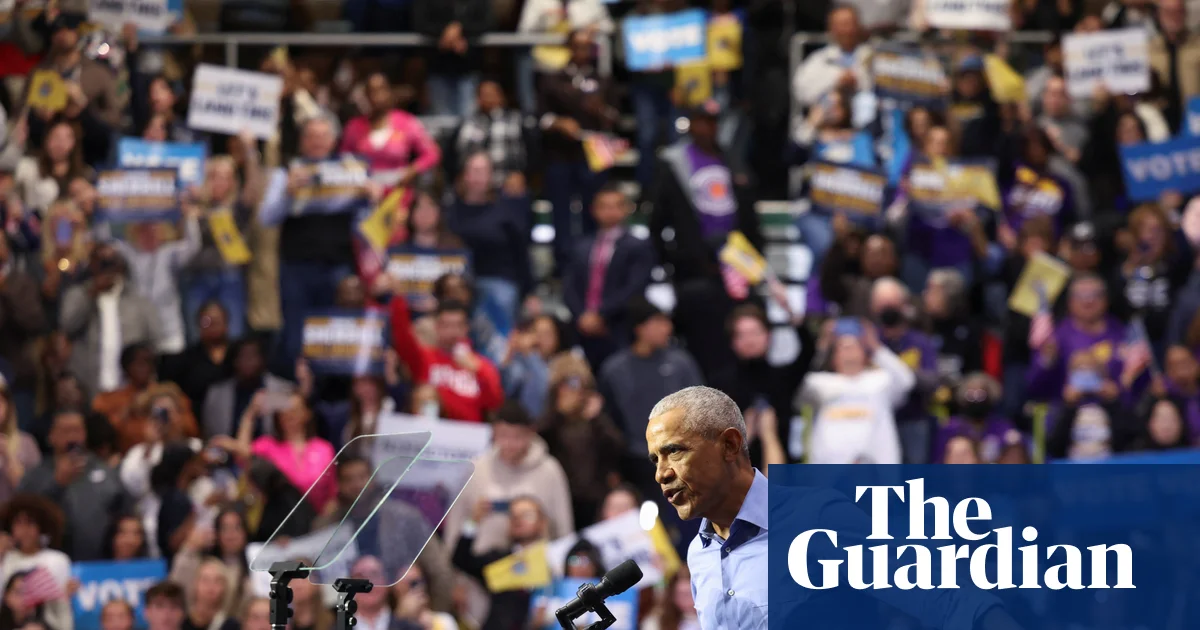
Obama Campaigns for Democrats, Highlighting the Lost Edge for the Party

International Tensions Escalate as United States and Global Forces Redefine Power

In an era marked by unprecedented political upheaval, the return of Donald Trump to the Oval Office in 2024 has set off a chain reaction that reverberates across continents. With America once again under the stewardship of a leader whose policies and rhetoric are sharply divided from traditional diplomatic norms, the global order finds itself at a critical crossroads. As analytical voices from Khan Institute and International Security Council warn of the deepening divide, the implications for trade, security, and international alliances come into sharper focus. The dominant narrative from Washington underscores an assertive pursuit of national interests, often at the expense of multilateral agreements designed to promote stability and cooperation. This shift, fraught with potential for conflict and realignment, underscores a new era where sovereignty and strategic interests are prioritized over collective global governance.

Meanwhile, the Russian and Chinese governments have capitalized on this turbulence, intensifying their efforts to expand influence in Asia, Africa, and Latin America. Recently, Beijing’s initiative to strengthen the BRICS economic bloc and Moscow’s assertive military exercises in Eastern Europe underscore a strategic pivot aimed directly at the United States. Military analysts warn that this could signal a new form of Cold War II, with alliances fraying and old conflicts resurfacing under new banners. The geopolitical impact here is profound: regional conflicts risk escalation, and global institutions—once the custodians of peace—are increasingly sidelined in favor of bilateral and multilateral power plays. The United Nations faces mounting questions about its relevance in an era where national interests are no longer mediated through consensus but through consequence.

Meanwhile, Europe gauges the sweeping change in U.S. policy. The continent’s leaders grapple with the fallout from America’s retrenchment from global commitments—particularly in climate change agreements and security pacts. Germany, France, and the UK now find themselves caught between the new isolationist stance of America and the assertiveness of Russia and China. The Nord Stream pipeline crisis, along with trade tariffs and disinformation campaigns, reveal a Europe at a crossroads: to forge a united front or to accept increased vulnerability in the face of rising autocratic powers. Historically, analysts note that moments of division often lead to conflicts that reshape borders and alliances, and the current environment could yet produce one of the most tumultuous decades in recent history.

The Middle East remains a hotbed of shifting allegiances, as regional powers reassess their strategies amid changing American priorities. The recent U.S. troop withdrawals from parts of Syria and Iraq have emboldened regional actors like Iran and Turkey, complicating the quest for peace. Nations like Israel brace themselves for unpredictable shifts in U.S. policy, risking either enhanced security cooperation or volatility. Historians remind us that power vacuums foster instability, and the current uncertainty threatens future peace efforts. As this global chessboard evolves, the decisions made today are shaping tomorrow’s history—a story yet to be fully written, where nationalistic fervor and geopolitical strategy collide, leaving societies to grapple with the uncertain fallout. The weight of history now bears heavily on shoulders worldwide, hinting that this period of upheaval may define the trajectory of nations for generations to come.

Social Media Auto Publish Powered By : XYZScripts.com