Matox News

Truth Over Trends, always!

Robot hero: Young tech saves elderly woman on Ukraine's frontlines
Robot hero: Young tech saves elderly woman on Ukraine’s frontlines

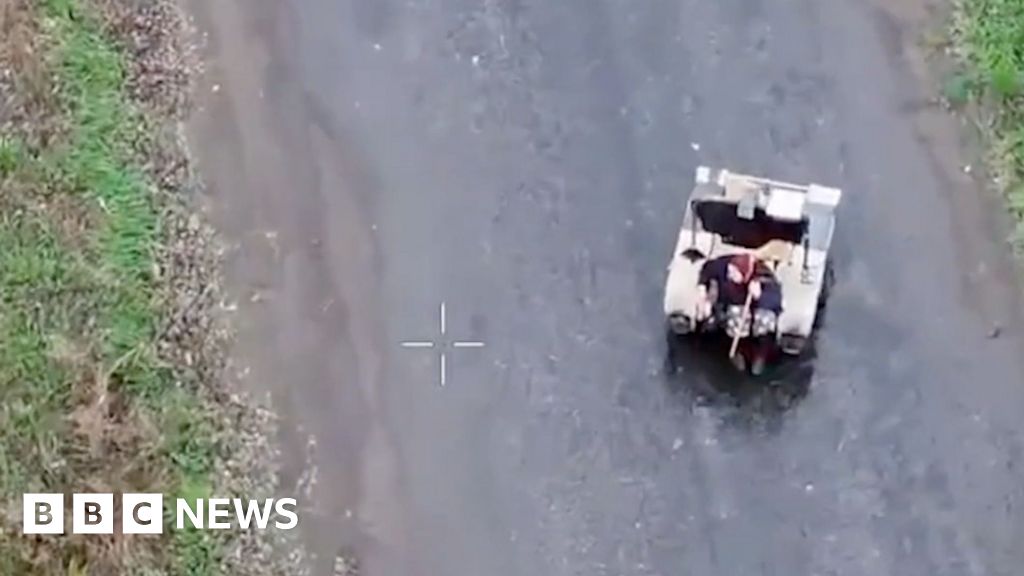
Recent events emerging from the Ukrainian conflict underscore a shifting paradigm in modern warfare, where technology, human resilience, and geopolitical stakes converge. A remarkable incident captured through drone footage revealed a groundbreaking development: a rescue operation leveraging autonomous robotic technology. Ukrainian forces deployed a drone to assist an elderly woman, Antonina Horuzha, who found herself stranded and exhausted amidst the chaos of ongoing hostilities. The footage, showing a robot with the inscription “grandma, sit down,” approaching her, exemplifies how drones have become not just tools of combat but vital lifelines to civilians caught in conflict zones.

This scenario signals a **turning point** in the geopolitical landscape. Ground drones—originally designed for reconnaissance and targeted strikes—are increasingly serving humanitarian roles. Analysts suggest that this evolution demonstrates the Ukrainian military’s adaptive use of technology in response to intense, resource-stretched warfare. Such outbreaks of innovation are often driven by necessity; Ukraine’s military factions, under the auspices of President Zelensky’s government, have integrated drone technology to bridge gaps created by compromised supply lines and dwindling manpower. According to military experts and historians tracking technological warfare, the rise of autonomous rescue drones could redefine how nations safeguard both their soldiers and civilians in future conflicts.

International organizations such as the United Nations and defense analysts acknowledge this technological shift as a potential force multiplier for Ukraine but also raise ethical questions. As autonomous systems gain prominence, concerns about conflict escalation, unintended consequences, and escalation of civil casualties come to the forefront. Moreover, Ukraine’s reliance on cutting-edge drone technology has prompted strategic considerations among adversaries—particularly Russia. How these technologies will influence the broader East-West power balance remains uncertain. Historically, such innovations have often accelerated conflict, making it more unpredictable and destructive. In this light, Ukraine’s successful use of rescue drones illustrates both resilience and a global trend: war increasingly becomes a battleground of technological innovation.

As visions of the future of warfare unfold, many international observers warn that this technological arms race may have consequences beyond the battlefield. Suppose autonomous, rescue, or even combat drones become widespread; questions about sovereignty, control, and the moral dilemmas of artificial intelligence in warfare are likely to intensify. For now, Ukraine’s daring deployment underscores a fundamental geopolitical shift—one where technology becomes a new front in ideological and territorial struggles. The ongoing saga of this conflict, however, leaves us with a stark reminder: the tide of history is still turning, and every innovation carries the weight of the future’s unpredictable outcome. As society watches from the sidelines, it is clear that the coming years will definitively shape the rules of engagement in this new era of warfare—an era where machines no longer merely serve, but increasingly define the destiny of nations.


Luxury cruise canceled after elderly passenger left behind on Lizard Island dies alone, exposing neglect in Queensland

The Australian Maritime Tragedy and Its Global Geopolitical Ripples

In a stark reminder of the dangers lurking in remote corners of the world, Australia is now grappling with not only a tragic loss of life but also growing questions about maritime safety and regulatory oversight. The recent death of 80-year-old Suzanne Rees aboard the luxury cruise vessel Coral Adventurer has reopened debates on how nations exercise authority over their once-secluded maritime territories. Rees, left behind on the Great Barrier Reef’s Lizard Island during a routine expedition, was not discovered until the following day, highlighting potential lapses in safety protocols. This incident has sparked outrage among Australians and international observers, hinting at broader questions of governance and accountability that resonate well beyond the shores of Australia.

Analysts from the Australian Maritime Safety Authority (Amsa) have confirmed they have issued a ban on the vessel to prevent further passenger intake while investigations are ongoing. As the cruise ship returns to Cairns, questions mount regarding the circumstances that led to Rees’ tragic demise, with reports indicating she was asked to descend unescorted after feeling ill—a testament to mounting concerns over maritime safety practices within Australia’s renowned but vulnerable reef territories. There is an underlying warning here for nations that hold prized but fragile territories: the sustainability of sovereignty and security must be matched by stringent oversight, especially on activities that attract global tourism and commercial operators.

The International Significance of Australia’s Aquatic Frontiers

This tragedy underscores how decisions made within Australia’s borders carry far-reaching geopolitical impact. As the continent continues to assert its sovereignty over its vast coastal and reef regions, international maritime law, combined with national safety standards, becomes a critical battleground for influence. Historians warn that neglecting these areas risks undermining national sovereignty, inviting external interference, and diminishing maritime security—core issues on global strategic forums such as the United Nations Convention on the Law of the Sea (UNCLOS). Moreover, the incident risks turning the spotlight toward Australia’s broader role within the Indo-Pacific—a region increasingly fraught with U.S.-China rivalries and contestations of influence over critical sea routes and resources. Any perception of governance lapses in protecting its maritime domains could embolden regional competitors and erode Australia’s soft power, particularly as it seeks to maintain stability in an era of strategic flux.

How Decision-Making and Societal Impact Shape Future Trajectories

The day after Rees’ death, the cruise company Coral Expeditions announced the cancellation of their tour, citing safety and mechanical concerns. This brief pause symbolized how even a single tragedy can serve as a turning point in national dialogue over safety, regulation, and the societal value placed on human life in delicate environments. As authorities investigate why Rees was allowed to go ashore unescorted and why her absence was not immediately flagged, a sense of urgent introspection emerges within Australia’s maritime oversight agencies. Such incidents threaten to fuel international skepticism about the efficacy of Australian governance—an issue that resonates in sectors like tourism, environmental protection, and security.

Furthermore, critics are warning that reliance on tourist dollars and the allure of untouched wilderness must be balanced against the genuine need for strict safety enforcement. In an era where fragile ecosystems and sovereign territories are increasingly targeted by covert geopolitical ambitions, the lessons from this tragedy could inform broader international policies. As global institutions like the United Nations call for greater ‘responsibility and safety,’ nations must realize that these decisions about safety protocols and environmental stewardship directly influence societal resilience, diplomatic relations, and the standing of a nation on the world stage.

Concluding Reflection: The Unfolding Chapter of History

As the Coral Adventurer sails back toward Australian shores with its tainted reputation, the tragedy’s true legacy remains unwritten. The weight of history presses heavily on the shoulders of policymakers, maritime authorities, and societies at large: how they respond next will script the future of Australia’s sovereignty and credibility. Critical questions linger about the adequacy of regulations governing the preservation of fragile environments and human safety in remote settings. In these unfolding moments, the necessity for decisive action is clear—fail to heed the lessons, and the echoes of this tragedy could resonate across borders, shaping the geopolitics of the Indo-Pacific for decades to come.

Social Media Auto Publish Powered By : XYZScripts.com


