Matox News

Truth Over Trends, always!

Congress members rally against Ellisons' oligarch-funded dinner honoring Trump
Congress members rally against Ellisons’ oligarch-funded dinner honoring Trump

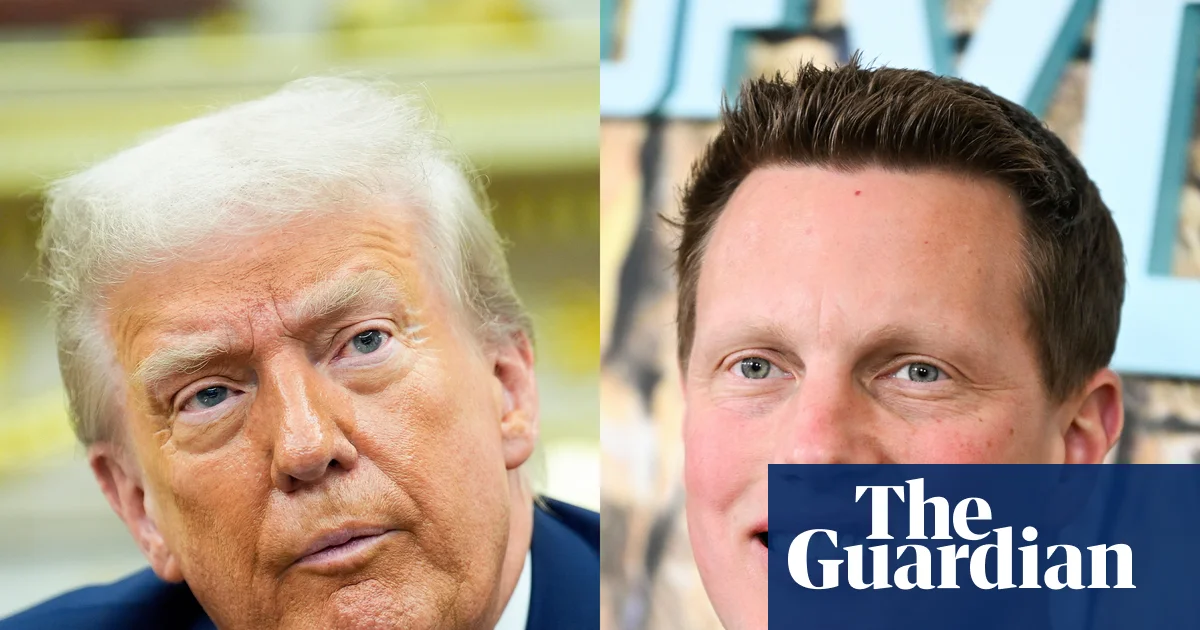
Recent events in Washington, United States, have cast a stark light on the complex intersection of politics, media influence, and corporate oligarchy. A high-profile dinner hosted by David Ellison, CEO of Paramount Skydance, has ignited controversy amid the broader debate over consolidation of media giants, political influence, and the authenticity of American democratic principles. The gathering, attended by former President Donald Trump and members of Congress, epitomizes the perceived symbiosis between corporate power and political elites. Critics argue that such events serve less as celebrations of free speech and more as symbols of entrenched oligarchic influence, in the context of the impending approval of a $110 billion merger between Paramount and Warner Bros Discovery.

Analysts and international observers warn that the accumulation of media assets under a handful of private corporations threatens the formative ideals of pluralism and accountability. US representative Jamie Raskin condemned the event as “a lavish oligarch’s dinner for Donald Trump,” framing it as part of a broader scheme to reshape media control to favor the MAGA movement and “the interests of the Donald Trump family.” As Norm Eisen of Democracy Defenders Action starkly remarked, “This isn’t a celebration of the First Amendment; it’s a celebration of power and corruption.” Critics assert that such corporate-political collusions not only threaten the integrity of American democracy but also have far-reaching global ramifications for free speech and international media landscapes.

The geopolitical impact of these developments extends well beyond national borders. The consolidation of media giants in the United States is seen by many international analysts as a template for similar schemes worldwide, fueling concerns about the erosion of independent journalism and the rise of state-influenced narratives. Observers such as historians and foreign policy experts warn that unchecked corporate influence within superpower nations like the U.S. can sway foreign policy, undermine democratic values, and embolden authoritarian regimes globally. Meanwhile, the U.S. government’s indecision on regulatory approval reflects the delicate balance of interests: protecting free-market capitalism, ensuring national security, and managing international perceptions of American democracy.

The aftermath of the dinner and similar events signals a pivotal moment in international politics, where the lines between corporate interests and political power are increasingly blurred. Critics warn that the ongoing consolidation is akin to forming a transnational oligarchy, capable of influencing geopolitical events and shaping societal norms across continents. As historians and international organizations analyze this trajectory, the emerging narrative suggests that humanity stands at a crossroads. Will the imperative for transparency and accountability prevail, or will the forces of power and corruption continue to dictate the course of history? The answer, unresolved yet urgent, leaves the world watching as the saga of influence, ideology, and control continues to unfold, echoing through history’s corridors in an ever-changing landscape of power and resistance.
Netflix drops the Warner Bros. bid, handing studios, HBO, and CNN to Ellison’s Paramount — a bold move in the streaming game

The ongoing wave of disruption within the entertainment industry has reached a new crescendo with the high-profile acquisition of Warner Bros. Discovery by Paramount. This deal, orchestrated amidst a fierce bidding war, consolidates significant media power in a landscape increasingly defined by innovation and strategic disruption. Notably, Paramount—backed by the financial might of billionaire Larry Ellison, whose net worth exceeds $200 billion—embeds itself into a sector ripe for transformation, signaling a new era of corporate consolidation aimed at competing with streaming giants and tech disruptors.

At the core of this deal is a masterstroke in leveraging financial innovation. Paramount’s acquisition involves assuming roughly $33 billion in Warner Bros. Discovery’s debt, a move facilitated by a $57.5 billion debt commitment from financial heavyweights such as Bank of America Merrill Lynch, Citi, and Apollo Global Management. This strategic leveraging echoes the practices of top-tier institutional investors, positioning Paramount for aggressive expansion while stoking risks associated with rising debt levels in an increasingly volatile media market. The deal’s structure underscores the shifting paradigm wherein industry giants deploy complex financial engineering to consolidate power and push ahead in a rapidly evolving tech-driven content landscape.

Critically, the dynamics surrounding Paramount’s ownership involve a contentious mix of political influence and media strategy. With Larry Ellison’s significant political donations and his son David Ellison’s ownership of Paramount, the deal is under close scrutiny regarding its potential impact on content polarization and market influence. The acquisition also includes a $2.8 billion termination fee payable to Netflix to dissolve prior contractual agreements, reflecting a readiness to navigate aggressive market repositioning. Analysts like those at Gartner emphasize that such high-stakes moves are indicative of a broader disruption in traditional media models, with legacy companies aggressively positioning themselves for an anticipated post-streaming revolution.

Looking ahead, this merger points to a possible consolidation of media assets that could significantly influence the industry’s future trajectory. As disruptive technologies continue to challenge conventional distribution channels, entertainment companies are doubling down on vertical integration and strategic partnerships. With technology companies such as Tesla and Elon Musk pushing the boundaries of AI and content delivery, and industry analysts warning about the potential for increased market concentration, the urgency for established players to innovate has never been greater. The winner in this race will be those who harness cutting-edge tech, strategic capital deployment, and political navigation—making the next chapter of media history one to watch with keen anticipation.

Social Media Auto Publish Powered By : XYZScripts.com



