Matox News

Truth Over Trends, always!

Kids hitting the gym: empowering the next generation to stay strong and healthy

The New Wave of Youth Strength Training: Reshaping Society’s Views on Childhood Fitness

In recent years, a cultural shift has emerged around childhood physical activity, driven by a growing recognition of the benefits of strength training for children and adolescents. Historically, societal wisdom warned against young children engaging in resistance exercises, fearing it could stunt growth or cause injury. However, contemporary research, endorsed by sociologists and medical professionals, challenges these outdated notions, emphasizing that appropriately supervised strength training can foster long-term health, resilience, and even improved social-emotional development within families and communities. This development isn’t just about physical fitness; it reflects a broader transformation in how society perceives youth, strength, and wellbeing.

Families across the socio-economic spectrum are now integrating strength training into their routines. Parents like Eve Stevenson, a former weightlifting champion and personal trainer, are demonstrating that early engagement in resistance exercises cultivates a sense of empowerment and resilience. Despite opposition from some critics who argue that such activities may be unsafe or unnatural for young children, experts like Jon Oliver of Cardiff Metropolitan University clarify that these practices, when supervised by qualified professionals, align closely with national guidelines and scientific consensus. The social impact of these shifts extends beyond individual families, challenging communities to rethink early childhood physical development and the values embedded within youth sports and recreation.

This movement is also fueled by media, with popular shows like Gladiators reborn on screens and captivating young audiences. Such cultural icons reinforce the idea that strength is a virtue accessible to all ages, not just elite athletes. It fosters a narrative where strength training becomes normalized as a wholesome activity, creating social spaces where families bond through shared activity, challenge stereotypes, and build community resilience. Sociologists note that this evolution is shaping a generation that values physical robustness not for aesthetic perfection but as a cornerstone of mental grit and societal contribution.

Despite the positive prospects, challenges remain. Critics voice concerns over early specialization, injuries, and the pressure to excel prematurely, echoing advice to promote broad motor skill development and fun over performance. Nonetheless, the emphasis on safety, proper technique, and fun—endorsed by experts like Morris—aims to ensure these activities bolster families’ social fabric. As larger societal issues such as youth mental health, body image, and social cohesion continue to loom, the focus on inclusive, supervised strength training offers a hopeful pathway. It is an invitation for communities to nurture strength—both physical and moral—and to reimagine childhood as a time of building resilience rather than compliance.

In the end, society stands at a crossroads, balancing tradition with innovation, fear with hope. When families like Stevenson’s or Hawkins’ foster environments where children see fitness as a normal part of life—an outlet for stress, a source of pride—they are sowing seeds of a society that values strength not just for appearance, but for character. As their stories unfold, they remind us that the most profound strength lies in the courage to redefine what childhood and community can be—built on the unshakable foundation of resilience, hope, and the relentless pursuit of a healthier society.


Hundreds of youth hubs aimed at empowering Britain’s isolated youth, delivering hope and opportunity.

In recent years, the fabric of youth engagement and community building in England has been frayed by decades of austerity and neglect. Recognizing this, the government has announced a significant investment of £500 million over the next four years aimed at rejuvenating youth services—an initiative that signals acknowledgment of the critical role these spaces play in shaping the next generation. This funding promises the construction and refurbishment of 250 youth centres and the launch of 50 new Young Future hubs, designed as comprehensive sites where existing services can converge under one roof. The hope is to reinstate a sense of belonging and purpose for millions of young people wandering a landscape increasingly isolated and digitally disconnected, yet yearning for genuine community connection.

The social landscape for youth in England has shifted dramatically, with young people now spending more time online, often retreating into bedrooms rather than communal spaces. As Culture Secretary Lisa Nandy emphasized, these spaces are disappearing in various parts of the country, leaving youths vulnerable not only to physical isolation but also to digital solitude, which can foster loneliness and mental health challenges. Sociologists like Richard Sennett have long warned society that disconnected communities weaken social cohesion and undermine the moral fabric. The establishment of these hubs aims to counteract this, offering not just safe physical environments but also opportunities for face-to-face mentorship and connection with trusted adults. The initiative also aligns with the wider societal understanding that early intervention and community support are fundamental to preventing social problems before they take root.

The impact on families, education, and communities is profound. For families, these hubs can serve as a vital support network, providing guidance and a safe space amid socio-economic challenges. In educational terms, youth centres foster skills development, career guidance, and mental well-being initiatives that complement formal schooling. Communities stand to gain by re-establishing trusted communal spaces where youths can participate in constructive activities, thus reducing risks associated with antisocial behavior and fostering social responsibility. However, social commentators such as Rosie Ferguson OBE warn that “fifteen years of cuts have left deep scars,” making the current investment a necessary, but only preliminary step towards long-term societal healing. Much like the work of sociologists analyzing post-industrial cities, it is clear that **sustained commitment and holistic support** are essential for meaningful rehabilitation of collective social health.

As society stands at this crossroads, society’s collective narrative must evolve from viewing youth issues as mere policy challenges to recognizing them as a reflection of where future generations are headed. The government’s approach, while promising, faces both political and practical challenges: ensuring these centers are adequately staffed, accessible, and genuinely engaging for diverse communities. It also calls for a moral reflection on society’s obligation to nurture its most vulnerable—those who often bear the brunt of social neglect. As history shows, without robust investment and community-driven efforts, the risk is that the “disappearing spaces” will only deepen the divide. Yet, amid these challenges, the hope remains that society can transform these spaces of isolation into grounds of renewal—regenerating resilience, fostering hope, and reminding us that the future, after all, is built not just in policies but in the hearts and minds of its young people.

Canva rolls out new AI tools and its own design model, empowering creators and boosting creativity

Canva Unveils Revolutionary AI-Powered Design Platform, Signaling Industry Disruption

In a bold move that underscores the rapid acceleration of AI-driven innovation in creative software, Canva announced the launch of its own state-of-the-art foundational AI model on Thursday. Moving beyond the era of simple diffusion-based image generation, Canva’s new model delivers **multi-layer, editable designs**—a game-changer for visual content creation. This strategic development exemplifies how tech disruptors are challenging legacy giants like Adobe and Figma, positioning Canva as a serious contender in the $40 billion creative SaaS industry.

The new model, trained on Canva’s extensive element library, enables users to generate versatile, multi-format designs—from social media posts to full-fledged websites—with the ability to manipulate individual layers and objects. “Where traditional diffusion models produce flat images, ours offers **editable, dynamic compositions**, elevating the user’s ability to iterate seamlessly,” explained Robert Kawalsky, Canva’s global head of product. This evolution aligns with industry analysts’ predictions (Gartner, 2023) that future creative tools will prioritize flexibility and user control, disrupting existing workflows and fostering innovation at an unprecedented pace.

Infusing AI Into the Creative Ecosystem: Business Implications & Future Trends

Canva’s integration of AI further extends into interactive features, such as real-time media suggestions, 3D object generation, and design style replication—saving time and reducing skill barriers for users. The platform’s bond with its recent acquisition, Affinity —a professional-grade design suite—illustrates a clear strategy to bridge casual content creation with high-end professional tools, effectively challenging Adobe’s dominance. Canva’s decision to make Affinity free permanently not only enhances value but signals a disruptive shift in the software licensing paradigm, encouraging broad adoption of high-fidelity, non-destructive editing capabilities.

Additional updates bolster Canva’s position as an integrated ecosystem. The introduction of form creation substitutes *Google Forms* for client input, alongside branded email templates designed with AI assistance, deepening the platform’s value for digital marketing. As MIT’s recent study suggests, such multi-functional platforms are steering the industry toward **ecosystem dominance**, where seamless interoperability between tools becomes essential for staying ahead.

  • Innovative features include AI-generated 3D objects and style-mimicry, advancing visual storytelling capabilities.
  • The tight integration of Affinity with Canva’s interface unifies vector, pixel, and layout considerations under one roof—streamlining designer workflows.
  • The ability to transfer objects between tools and leverage AI within Affinity sets a new standard for professional creative suites, blurring the line between amateur and professional design.

Looking Ahead: A Racedur for Market Leaders & Startups Alike

This advancement reaffirms the narrative that **disruption is not merely about innovation but strategic repositioning**, with Canva challenging entrenched industry incumbents through AI democratization and ecosystem expansion. As Elon Musk’s Neuralink and Peter Thiel’s Palantir have demonstrated, early adoption of scalable, AI-driven platforms can redefine market power and influence. Gartner forecasts that by 2026, over 70% of digital content will be AI-enhanced, emphasizing the urgent need for industry players to innovate or face obsolescence.

In a landscape where rapid technological shifts are defining winners from the rest, Canva’s convergence of AI, professional-grade tools, and ecosystem integration signals a clear message: the future belongs to those who can harness disruption as a strategic advantage. Companies and creators alike must adapt swiftly, as the next wave of radical innovation is set to reshape how visual content is designed, understood, and monetized—making it imperative for industry stakeholders to stay alert, agile, and prepared for the inescapable march of AI-driven transformation.

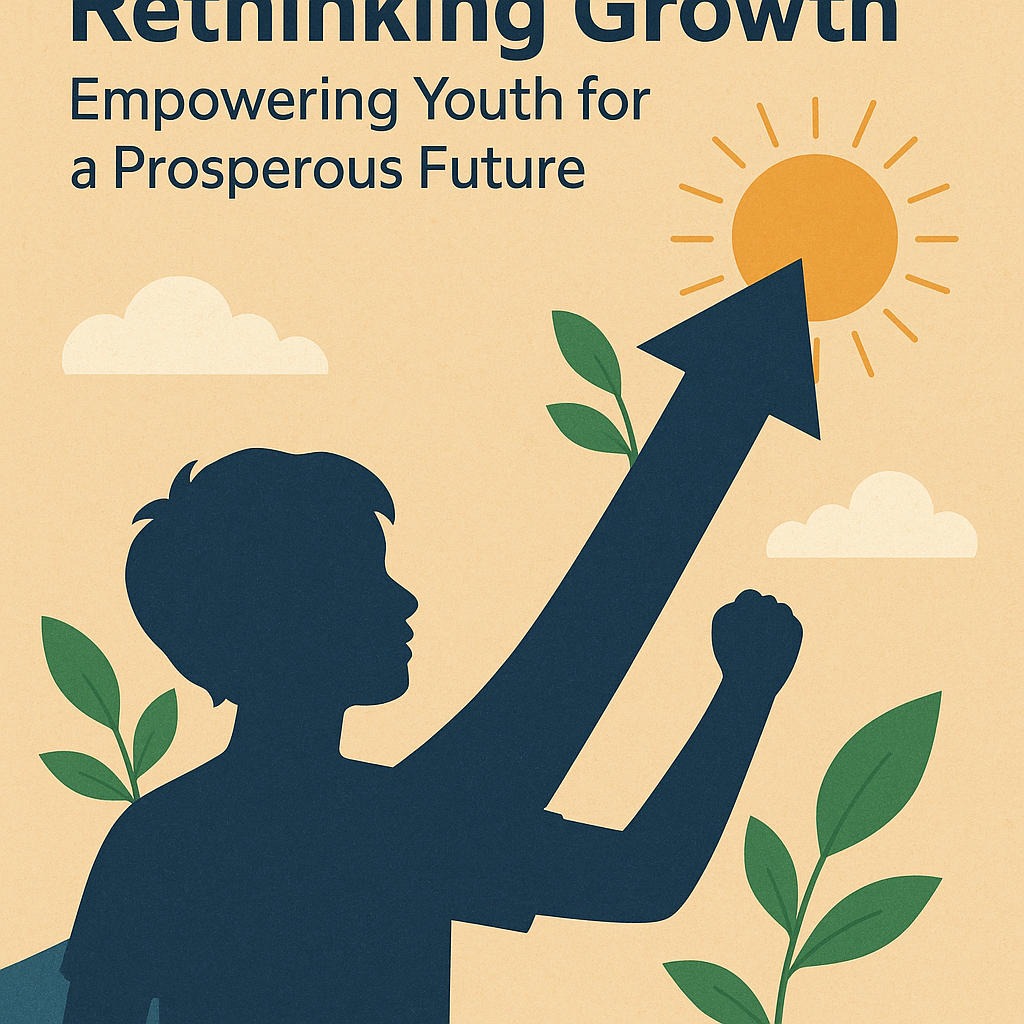
Rethinking Growth: Empowering Youth for a Prosperous Future

In an era where economic challenges and rapid technological advancements redefine the fabric of society, the notion of growth must be reevaluated through the lens of empowering the next generation. Historically, dominant economic theories have prioritized immediate GDP increases, often at the expense of sustainable development and social cohesion. Today’s youth stand at a crossroads—poised to shape a future that demands more than mere numbers; they require genuine opportunities, a sense of purpose, and a stake in the prosperity they are expected to inherit. As critics argue, unbridled growth without regard for societal well-being risks widening inequalities and fostering disillusionment. Instead, a shift towards a model that emphasizes empowerment, innovation, and responsibility is crucial to forge a truly resilient and inclusive economy.

Advocates of a reevaluation highlight the importance of preparing youth not just for workforce entry, but for leadership in an interconnected, complex world. Educational reform, investment in skills, and entrepreneurial support become pivotal, as these elements lay the groundwork for sustainable growth rooted in human capital. Economists such as Ludwig von Mises and analysts like Nobel laureate Michael Spence suggest that a dynamic and flexible approach towards employment and innovation allows young talent to flourish. Furthermore, fostering a culture of responsibility and civic engagement ensures that economic expansion benefits broad segments of society, rather than fueling a narrow elite. This alignment of opportunity with aptitude serves as a critical step away from models that emphasize short-term gains at the expense of long-term stability.

Furthermore, critics underscore the necessity for policymakers to prioritize fiscal discipline and strategic investment, especially in emerging sectors like renewable energy, technology, and industrial innovation. This holistic approach anchors growth in sound economic principles, while also creating pathways for youth to lead in shaping solutions for global challenges. Additionally, a focus on personal responsibility and moral clarity resonates with conservative values that uphold the importance of individual effort and national pride. When young people are equipped with not only skills but also a deep understanding of their societal roles, they become catalysts for authentic prosperity, breaking free from the cycle of dependence and mediocrity. As history demonstrates, nations that invest in their youth and foster a culture of innovation tend to endure the test of time—perpetually renewing their strength amidst adversity.

Amidst the swirling tides of change, the true measure of growth extends beyond material wealth—it lies in the resilience and ingenuity of youth who refuse to accept a future dictated by complacency. Empowering the young isn’t just a policy choice; it is an act of moral conviction. Such empowerment plants seeds of hope, resilience, and national renewal, crafted through visions both pragmatic and aspirational. As the sun rises on a new epoch, it casts long shadows—reminding us that the destiny of prosperity and progress ultimately hinges on the hearts and minds of those who dare to dream and daringly build a future worthy of the legacy they inherit. Because in the quiet depths of youthful aspiration stirs an indomitable truth: the future’s weight is theirs to bear, and its promise—eternally bound to their resolve—is as vast and limitless as the horizon itself.

Breaking Barriers: I Launched the World's First Deaf Rave, Empowering Our Community
Breaking Barriers: I Launched the World’s First Deaf Rave, Empowering Our Community

Social Innovation in Youth Culture: The Deaf Rave Movement Sparks Change

Across communities in the UK, a quiet revolution is unfolding—one that challenges longstanding social divides and redefines what it means to unite through music and culture. At the forefront is a vibrant movement led by deaf communities who are reclaiming spaces for themselves, especially through the groundbreaking initiative known as Deaf Rave. This innovative approach exemplifies a broader societal shift towards inclusive entertainment and demonstrates how addressing social issues can profoundly impact families, education, and community cohesion.

Historically, social exclusion has marginalized deaf individuals, often confining them to the peripheries of vibrant youth movements such as dance clubs and festivals. Sociologists like Dr. Mark P. Block have noted that such marginalization fosters a sense of alienation, intensifying societal divides. Yet, deaf pioneers like the individual whose story this article follows are creating change from within—organizing events that integrate visual and tactile elements with traditional music forms. Their efforts are not just about recreation but are a form of cultural assertion and a vital step toward societal equity. By adapting venues with vibrating floors and tactile vibrations, they transform music from a purely auditory experience into a multisensory celebration accessible to all.

This movement highlights how educational and familial landscapes are being reshaped. Programs like DJ workshops for deaf children signal a significant cultural shift, emphasizing that developmental opportunities and creative expression should not be predicated on hearing ability alone. Such initiatives foster family bonds through shared participation and break down misconceptions about deafness as a barrier rather than a different way of experiencing the world. As Dr. Ruth L. Okediji argues, nurturing diverse cultural expressions in youth is essential for cultivating a society where every child feels valued and heard, regardless of their sensory abilities.

However, the road to true inclusivity faces challenges. Organizers often encounter resistance from venue owners unfamiliar with the needs of deaf attendees, fearing issues surrounding noise levels or safety. These hurdles reflect a broader societal reluctance to adapt traditional spaces, which often default to auditory-centric paradigms that exclude deaf individuals. Yet, stories of success demonstrate that change is possible. The Deaf Rave movement has garnered support from public figures, earning honors such as an honorary Master of the Arts and an MBE, achievements that symbolize growing recognition of deaf culture’s vibrancy and significance. With initiatives like schools’ DJ workshops and festivals, the movement exemplifies how social issues can be addressed creatively to nurture communication, community, and belonging.

As society stands at this crossroads, the story of Deaf Rave invites us to consider our collective responsibility. Society’s ongoing challenge is to foster environments where diversity is celebrated and social inclusion becomes the norm—not the exception. Serious reflection on our cultural infrastructure, educational methods, and community practices reveals the possibility of transformation. It is in these moments of resilience and innovation that society’s true potential reveals itself—a testament to human ingenuity and our capacity for collective empathy. In the silent yet vibrant beats of these deaf raves, society finds a hope— a promise that through understanding and adaptation, we can create a future where everyone’s voice, regardless of how it is heard, is truly heard.

Empowering Voices: Sarah McLachlan Reflects on Her Journey Against Traditional Roles in Music and Beyond

Sarah McLachlan, a name once synonymous with the vibrant, empowering movements of the 1990s music scene, finds herself contemplating her artistic identity after an 11-year hiatus from releasing original songs. In her own words, she pondered, “What do I have to say at this point in my life?” Such introspection reveals a broader cultural conversation regarding the implications of identity, privilege, and societal expectation on artistry. McLachlan’s emergence during an era marked by the rise of female singer-songwriters, including luminaries like Alanis Morissette and the Indigo Girls, made her more than just an artist; she was a cultural icon who challenged conventional narratives and reshaped our understanding of gender roles in music and beyond.

McLachlan’s legacy can be traced back to her founding of Lilith Fair, a revolutionary music festival convened to celebrate female musicians and dismantle the prevailing gender biases of the industry. In a time when radio stations claimed it was “too much” to have more than one female artist on the airwaves, McLachlan bravely organized a series of all-female concerts that blossomed into a nationwide phenomenon. This bold move not only defied societal expectations but also drew attention to the, at times, insidious sexism inherent in the music industry. As cultural critic Tocqueville once noted in reference to democratic values, it is often the undercurrents of social mores that shape a culture’s identity. McLachlan and her contemporaries exemplified the resilience of women standing against such currents.

In her recent works, McLachlan continues to grapple with the complexities of her position in society. Addressing contemporary issues through songs like “One in a Long Line,” she projects her concerns regarding the erosion of women’s rights onto a canvas that resonates with upcoming generations. Her emphasis on community and unity stands as a counterpoint to divisive political narratives. McLachlan aptly states, “It’s about the generations coming forward and what we’re creating for them and what the world’s going to look like.” This articulation of legacy and responsibility aligns with the notions laid down by Ortega y Gasset, who emphasized the importance of the individual’s role within the broader societal context. McLachlan serves as both a witness and a participant, a voice urging younger generations to assert their own narratives in a world rife with complexities.

Ultimately, the recent resurgence of McLachlan’s work not only highlights her evolution as an artist but underscores the vital connection between culture, identity, and societal values. A new documentary, Lilith Fair: Building a Mystery, re-examines the festival’s powerful legacy, portraying the joy and solidarity it fostered amidst a backdrop of cultural turbulence. The documentary serves as both a reminder of what has been accomplished and a clarion call for future generations to continue the fight for equality and representation. As McLachlan herself muses, “Is it just fear? Is it control?” Thereby, she reflects the philosophical quest for understanding the roots of cultural dynamics that perhaps stymie progress. In a world where art often mirrors society, McLachlan exemplifies the enduring power of culture to shape identity and forge collective memory—a lingering echo of the past that resonates with hopes for a more promising future.

The rich tapestry of McLachlan’s life and work illustrates that culture is more than mere entertainment; it is a vessel of memory and an architect of tomorrow’s identity. In her lyrics and public stances, we witness the echo of G.K. Chesterton’s assertion that “tradition means giving votes to our ancestors.” For McLachlan, the reverberations of the past fuel her ambition to craft a future defined not by constraints but by compassion and creativity. As we engage with her music, we are reminded that culture not only preserves our identities but also foretells the ever-evolving narrative of humanity—a narrative that is at once a reflection of who we have been and a prophecy of who we may yet become.

Confronting the Client Challenge: Empowering Young Entrepreneurs for Success

The Economic Pulse: Navigating the Future Landscape of Global Markets

As the world grapples with a myriad of economic challenges, the latest trends and forecasts indicate a critical juncture for investors, companies, and governments alike. With rising inflation and interest rates affecting financial markets, strategic foresight will be essential for navigating forthcoming uncertainties. Economists from the International Monetary Fund (IMF) warn that the combination of geopolitical tensions and supply chain disruptions could exacerbate economic instability across various sectors.

In recent months, numerous indicators have pointed to a shift in economic paradigms. The U.S. Federal Reserve has implemented aggressive measures to combat inflation, including raising interest rates significantly. This strategy aims to cool down an overheated economy, yet it poses risks to commercial growth and consumer spending. Investors should note the ripple effects of such policies, as increased borrowing costs could stifle business expansion and lead to reduced profits. The following key economic indicators underline the current landscape:

  • Inflation Rate: Currently hovering around 8%, driven by food and energy prices.
  • GDP Growth Forecast: Projected to decelerate to 1.5% in the next quarter.
  • Unemployment Rate: Stable at 3.7%, yet job openings are decreasing significantly.

This combination of factors has led to increased volatility in global markets, compelling strategic thinkers to reassess their positions. Investment firms such as Goldman Sachs have adjusted their outlook, advising clients to focus on defensive sectors, and emphasizing the potential for opportunity in crisis. Meanwhile, think tanks like the Brookings Institution are advocating for policy frameworks that promote sustainable growth and financial stability. Their recent findings suggest that targeted fiscal measures could mitigate adverse effects while stimulating innovation and productivity.

Looking ahead, it is vital for young professionals and emerging entrepreneurs to stay abreast of these shifts. Understanding the interconnected nature of the global economy will empower them to seize opportunities and navigate challenges effectively. As nations grapple with their policy consequences, positioning for future growth will demand a keen awareness of structural changes and emerging trends. In this dynamic landscape, the economy serves as the guiding pulse of nations—a stage where resilience, innovation, and strategic foresight will define the future of power in a rapidly evolving world.

Social Media Auto Publish Powered By : XYZScripts.com