
Matox News

Truth Over Trends, always!

Football Empowers Girls to Stand Up Against Forced Marriage

In a quiet Indian village, two sisters stand as poignant symbols of a broader shift underway across numerous rural regions in India. As they talk about how football has transformed their lives and fortified their resolve against child marriage—a deeply entrenched social issue—they reflect a growing wave of grassroots empowerment that challenges traditional norms and influences international discourse. Their story underscores how sport, particularly football, is emerging as a potent tool for social change amid complex cultural landscapes.

The narrative of these sisters highlights a critical aspect of how local initiatives can have far-reaching geopolitical impacts. India, with its vast population and diverse cultures, faces persistent challenges related to child marriage and gender inequality. However, in recent years, NGOs and community leaders have leveraged the universal language of sport to promote education, self-confidence, and gender equality. This grassroots movement resonates with global reports from organizations like the United Nations Population Fund (UNFPA), which acknowledge that empowering girls through education and recreation can significantly reduce child marriage rates. As these sisters participate in football, they embody a microcosm of a broader societal push that could influence policy reforms and change social perceptions across the subcontinent.

Internationally, this evolution reflects a strategic shift where domestic social issues are increasingly linked to larger geopolitical narratives about development and human rights. Nations such as Japan and Australia, which have historically promoted soft power through development aid, now focus on empowering youth, especially girls, as part of their diplomatic agendas. Similarly, global organizations are framing the fight against child marriage as not only a humanitarian issue but also a matter of national security—since the stability of a society hinges on the education and well-being of its future generations. These dynamics underscore the importance of persistent, culturally sensitive interventions which, when successful, can ripple outward and reshape regional dynamics.

Historians and analysts point to the significance of local stories like those of the Indian sisters as key turning points in the international effort to combat harmful traditional practices. They emphasize that such movements often start small but can escalate to influence national policies and international protocols. As India and neighboring countries grapple with these issues, their internal reforms and social awakening could serve as a blueprint for other regions where traditional norms clash with modern aspirations. Meanwhile, global institutions watch carefully, recognizing that shifting societal attitudes in India have the potential to ripple through South Asia, impacting diplomatic relations, development aid, and regional stability.

As the world watches these stories unfold, it becomes increasingly clear that history continues to be written at the grassroots level. The resilience of these young women, driven by passion and hope, signals the dawn of a new era—where individual courage and community initiatives challenge centuries-old norms. The stakes extend beyond cultural boundaries, touching upon the fundamental question of how societies can reconcile tradition with progress. And so, as voices like those of the Indian sisters rise amidst the rural plains, we are reminded that the fabric of global geopolitics is woven with the threads of countless individual stories. In the shadows of traditional villages and the halls of international councils alike, the weight of history hangs heavily, waiting to see whether these sparks of change will ignite a new future or fade into the annals of forgotten struggle.
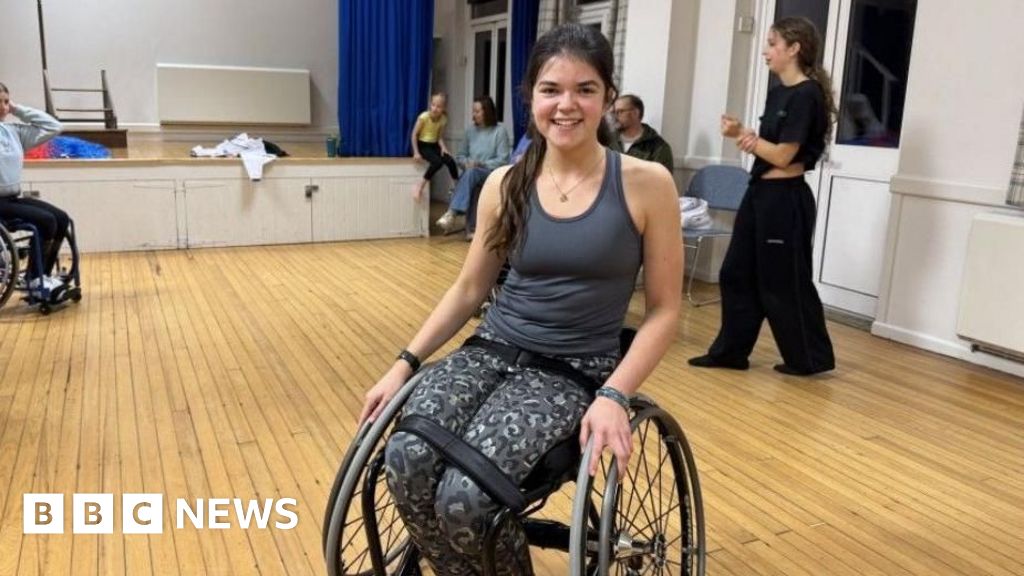
Para Dance Empowers Youth to Escape, Express, and Just Dance Through Life

In an age where the relentless march of modernity often threatens to erode tradition and collective identity, culture remains the vital vessel of our shared humanity. From the ancient rhythms echoing through mythic times to the contemporary expressions of dance and artistic innovation, culture embodies the subconscious of society—its memory, its values, and its very essence. As the historian Tocqueville once observed, democracy’s strength lies not just in political structures but in the moral and cultural fabric that unites its citizens. Today, the resurgence of inclusive and para dance initiatives highlights how culture continues to serve as a bridge—bringing together individuals regardless of their abilities, reinforcing community bonds, and celebrating resilience. It is at once a reminder of our collective heritage and a prophecy of our capacity to adapt and flourish, even in adversity.

Amidst these cultural currents, a profound recognition emerges: art is more than aesthetics; it is a declaration of identity. The story of Hannah, a teenage dancer in wheelchair, exemplifies the transformative power of movement as a form of self-expression and liberation. Her words—”being able to move to music and forget everything and just dance”—resonate with a deeper truth: that culture is an act of rebellion against the chaos of existence and a reaffirmation of life itself. The inclusive dance classes in Oxfordshire, founded by Lizzie Large and supported by spirited communities, echo the philosophical insight of G.K. Chesterton—who believed that true culture awakens the “childlike wonder” within us, reinstating the moral and spiritual vitality that modern society often neglects. These initiatives not only provide physical and mental liberation but serve as a reminder that our culture’s true strength lies in its ability to uplift the marginalized.

With the recent holding of the Para Dance IPC and World Ability Sports Para Dance Championships in Stevenage, a new chapter opens. Though para dance remains outside the spotlight of the Olympic and Paralympic games, the growing recognition of such competitions underscores an essential point: the evolution of culture mirrors humanity’s journey toward inclusion and excellence. As the philosopher Ortega y Gasset asserted, “The health of a civilization can be measured by its capacity to elevate everyone within it.” The medals won by Oxfordshire competitors symbolize more than athletic achievement—they serve as symbols of resilience, proof that culture, when embraced inclusively, can propel society toward a future that values all its citizens’ talents and spirits. If history teaches us anything, it is that culture’s true vocation is to be an anchor of identity and a compass guiding us toward harmony and understanding.

Ultimately, culture holds the mirror to our soul and the map to our destiny. It is both the memory of who we have been and the prophecy of who we are called to become. As the poet T.S. Eliot reflected, “This is the way the world ends—not with a bang but a whimper,”—yet within our cultural formations, there resides a quiet, persistent hope: a lament that awakens us and a promise that propels us. In every dance, every song, and every act of inclusion, we find the enduring testament that human identity is a tapestry woven with history’s threads and humanity’s dreams—an ongoing story, echoing in the footsteps of tradition and innovation alike, urging us to remember and to foresee, in the eternal dance of existence.

Discord’s Family Center update empowers parents to keep tabs on weekly spending—gear up for safer, smarter gaming!

Discord Unveils Next-Generation Parental Monitoring Tools, Signaling Industry Disruption

In a move that underscores the increasing importance of youth safety in digital spaces, Discord has rolled out a suite of substantial updates to its Family Center platform. These enhancements, aimed primarily at empowering guardians with deeper insights into their teens’ activity, embody the broader trend of tech giants intensifying parental oversight. At a time when social platforms face mounting scrutiny over youth privacy, Discord’s latest features position it as a disruptive force, potentially reshaping parental engagement across social media.

Among the most notable innovations is the expansion of guardians’ visibility into their teens’ digital behavior, including detailed reports on purchases, interaction patterns, and communication activity. Guardians can now track weekly expenditure within Discord’s Shop and Nitro subscriptions, gaining awareness of how teens allocate both time and money. Additionally, along with showing top interacted users and servers, Discord’s platform provides comprehensive insights into time spent on voice and video calls, reflecting an industry-wide response to the ‘teen safety’ wave fostered by competitors like Meta and Snapchat. The implications for business disruption are significant, as platforms move from passive monitoring to active engagement, potentially increasing user retention through safer environments, while simultaneously appealing to parental authority as a core feature.

Adding to this paradigm shift are enhanced parental controls, which now include restrictions on direct messaging, content filtering, and data privacy management. Guardians can dictate how their teens interact within Discord, a regime that echoes the industry’s strategic emphasis on responsible data practices and privacy. Experts from MIT and industry analysts from Gartner recognize that such features could usher in a new era of product differentiation—a crucial factor for platforms seeking to sustain relevance among younger demographics aware of privacy concerns. Meanwhile, Discord’s flexible reporting options—allowing teens to notify guardians of content reports—highlight an evolving model where transparency and communication become central to platform trustworthiness.

However, the deployment of these tools raises critical questions about industry standards and regulatory impacts. While fostering safer environments, increased oversight may prompt competitors to accelerate innovation, leading to a disruption in the social media landscape. With the backdrop of a sharply competitive market, where Elon Musk’s \href{https://parents.snapchat.com/safeguards-for-teens}{Snapchat} and Meta’s \href{https://techcrunch.com/2024/01/25/meta-teen-controls/}{tighter restrictions} are already reshaping youth interaction, Discord’s strategic move could accelerate the trend toward privacy-first, guardian-centric social spaces.

Future Outlook: Navigating the Next Wave of Social Tech

Looking ahead, the technology sector must brace for a rapid evolution in how digital platforms balance disruption and responsibility. As industry leaders like Gartner forecast an inevitable convergence of youth-centric design and privacy safeguards, Discord’s initiatives serve as a blueprint for the future of social media. In this high-stakes environment, the race is on to develop platforms that not only captivate younger audiences but also foster trust and security—critical ingredients for long-term business sustainability. With regulatory pressures mounting and consumer expectations shifting, developers and investors must act swiftly to secure a competitive edge, or risk being left behind in the digital revolution.

Social Media Auto Publish Powered By : XYZScripts.com