
Matox News

Truth Over Trends, always!

Oil Prices Drop as US Pauses Project Freedom to Engage Iran

The recent statements from President Donald Trump have reignited hopes of a potential breakthrough in the long-standing US-Iran conflict. After days of heightened escalation, which had already begun to ripple through global markets, Trump’s remarks serve as a pivotal moment in the ongoing geopolitical saga. Market analysts and policy makers are now scrutinizing these signals for directions that could redefine regional stability and economic resilience in the years ahead. The tone from Washington suggests a possible shift from confrontation towards diplomacy, which, if realized, would mark a significant departure from recent aggressive postures.

In the wake of Trump’s optimism, financial markets responded with cautious optimism. Major indices, including the Dow Jones and the S&P 500, registered modest gains amid volatile trading. This market reaction underscores investor sensitivity to geopolitical uncertainty, with current conditions revealing a delicate balance of confidence and apprehension. Furthermore, oil prices — a barometer of geopolitical risk — experienced slight declines, signaling market expectations of reduced supply disruption risk. The possibility of an agreement opening avenues for increased regional stability is likely to influence not just oil markets but also broader commodities and energy sectors, which have been severely impacted by recent tensions.

Economists such as those from the World Economic Forum and leading think tanks warn, however, that despite current positive sentiment, the underlying risks remain substantial. A potential rapprochement between the US and Iran would carry significant policy consequences for regional allies and adversaries alike. For instance, a diplomatic breakthrough could lead to major sanction relief and economic opportunities for Iran, fostering an environment ripe for economic expansion. Conversely, a failure to secure a lasting agreement might escalate tensions further, risking destabilization and impacting global supply chains. The strategic calculus for investors and policymakers hinges on the delicate balance of diplomatic signals amid existing geopolitical fault lines.

Meanwhile, markets and governments are continuously adjusting their expectations based on forthcoming diplomatic developments. According to economists from the American Enterprise Institute, the potential for a breakthrough could serve as a catalyst for long-term economic growth in the Middle East, provided diplomatic efforts are sustained and backed by tangible policy actions. This reflects an overarching narrative: the power dynamics of the 21st century are increasingly shaped by the capacity of nations to manage or manipulate geopolitical tensions to their advantage. As the global economy navigates this intricate terrain, the resilience of free markets and the readiness of nations to adapt could prove decisive in determining which powers emerge preeminent in the new geopolitical order.

Looking ahead, the signals from Washington could set the stage for a pivotal chapter in 21st-century geopolitics. As nations and markets hold their collective breath, the unfolding developments in the US-Iran relationship symbolize the broader contest for dominance—where economic influence and strategic alliances will forge the destiny of global power. The world watches as diplomacy’s next act unfolds, knowing that the decisions made in these crucial moments will echo across generations, framing the future of global economic strength and geopolitical stability. At this crossroads, the economy remains the living pulse of nations—an epic arena where the forces of power, security, and prosperity are continually played out in relentless pursuit of a new world order.
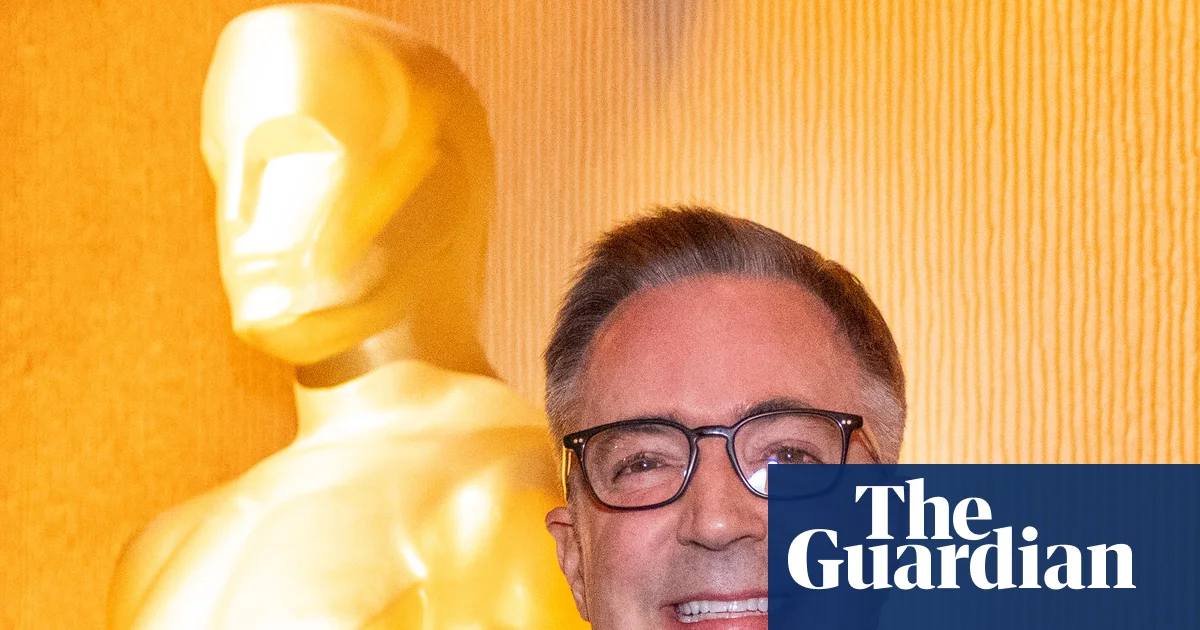
Oscars 2026: Oscars boss Bill Kramer highlights the power of YouTube to engage 2.5 billion viewers—criticizes TV, embraces AI, and advocates for early starts

As the sun blazes over downtown Los Angeles, a city that pulses with dreams and ambitions, the Academy Awards prepares to stage its annual celebration of cinematic artistry. Yet beneath the glitz and glamour, a profound shift is underway—one that threatens to redefine the very essence of cultural tradition. Historically, the Oscars have represented more than mere awards; they are a mirror to society’s soul, a reflection of shared values, myths, and memories. However, as Hollywood leans into the digital future with live streams on YouTube and grapples with emerging technologies like artificial intelligence, questions of authenticity, identity, and cultural continuity come to the fore. Culture—the bedrock of societal coherence—stands at a crossroads, demanding that we consider whether these innovations serve humanity’s collective memory or erode its cherished traditions.

Long regarded as the guardian of artistic excellence, the Academy of Motion Picture Arts and Sciences recognizes its vital role in shaping cultural continuity. As described by Academy CEO Bill Kramer, these changes are not mere technological shifts but signify a broader evolution of what culture represents in a rapidly transforming world. Kramer, a man whose career began with community-oriented work before rising to Hollywood’s highest echelons, echoes the wisdom of thinkers like G.K. Chesterton, who marveled at the importance of preserving the “secret” of tradition amid modern flux. The move towards global livestreaming aims to magnify Hollywood’s reach, extending the spectacle to an estimated 2.5 billion viewers worldwide. Yet, this expansion raises profound questions: Does the digital dissemination diminish the cultural significance that once hinged on communal, in-person experiences? Or can it serve as a contemporary vessel, carrying age-old stories into the modern age, much like the artist and philosopher T.S. Eliot suggested that tradition is the preservation of memory and prophecy intertwined?

This cultural transition also touches upon the industry’s response to technological innovations like artificial intelligence. While some waver in trepidation, fearing that AI could diminish human creativity, Kramer advocates a nuanced perspective. He asserts that AI is merely a tool—an extension of human ingenuity, not a replacement. This viewpoint aligns with the philosophical insight of Ortega y Gasset, who stressed that culture is the ongoing project of human consciousness shaping its tools and symbols. The true challenge lies in maintaining the integrity of artistic authorship—preserving the human spirit at the heart of storytelling. The Academy’s subtle updates on eligibility criteria and its firm stance on theatrical releases stand as testament to this effort to uphold tradition in the face of relentless technological change. Modernity need not dissolve cultural roots; instead, it offers an opportunity to deepen our understanding of what makes art genuinely human—a sentiment echoed by Chesterton, who revered faith in the enduring value of tradition.

Amid these transformations, voices such as Timothée Chalamet remind us of the importance of genuine cultural experience—those moments that etch themselves into collective memory. His remarks, though contentious, highlight a crucial debate: must art adapt to survive, or must it be preserved precisely because it is a window to our shared human essence? The challenge for the cultural custodians, like Kramer, is to navigate this tension—striving to honor tradition without forsaking innovation, fostering a cultural symphony that resonates across generations. As the Oscars prepare to unveil their latest chapter, one can sense that the true significance lies not solely in the awards handed out but in the unbroken thread connecting the past to the future—a testament that culture remains humanity’s memory and prophecy, a luminous testament to what we are and what we aspire to be. In this ongoing dialogue between memory and prophecy, we find a reflection of our very soul, enduring through the shifting tides of time—a reminder that, ultimately, culture is the living, breathing reflection of human spirit’s eternal voyage.

Social Media Auto Publish Powered By : XYZScripts.com



