Matox News

Truth Over Trends, always!

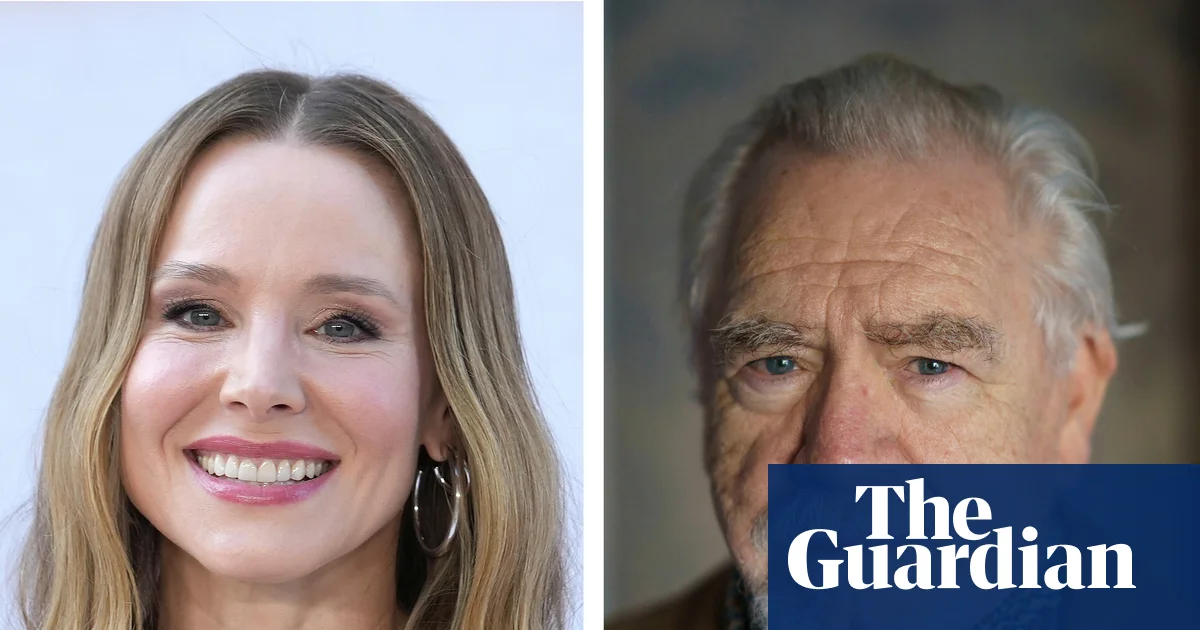
Kristen Bell and Brian Cox Express Surprise Over Their Involvement in Fox News Podcast—A Reflection on the Changing Cultural Landscape

In an era where the consecration of cultural memory is often overshadowed by relentless novelty, recent developments underscore a profound truth: culture remains the bedrock of identity, tradition, and societal coherence. The controversy surrounding Fox News’ announcement of The Life of Jesus Christ Podcast — a project seemingly resurrected from recordings made fifteen years prior and released without full consent — offers a revealing case study. It is, at its core, a reflection of the ongoing tension between the past’s enduring authority and the present’s insatiable quest for instant gratification. This episode exemplifies how culture functions as both memory and prophecy, shaping our understanding of tradition while offering glimpses of what humanity can become when rooted in historical continuity.

Indeed, the saga echoes the sentiments of Ortega y Gasset, who famously warned that “culture is the sum total of what our ancestors have created, and it is our obligation to preserve and invigorate it.” Yet here, the dissonance is palpable: the actors involved, many of whom voiced their participation years ago, learned only at the last moment of the project’s release. Such scenarios threaten to reduce sacred narratives — old voices re-voiced, ancient teachings repurposed — to mere commodities. In this, we see the peril of radical commodification overtaking the reverence that once imbued our cultural icons with spiritual significance. As Chesterton might argue, such commercialization risks transforming the sacred into the profane, stripping it of its profundity and turning tradition into a mere backdrop for entertainment—a tool to be used or discarded at will.

Furthermore, the controversy highlights a cultural shift wherein the integrity of artistic and spiritual authenticity is often sacrificed on the altar of market strategy. Critics observe that the project’s producers explicitly requested secrecy about the age of the recordings, desiring that the final product seem fresher and more relevant. This echoes Tocqueville’s insights on the tyranny of public opinion and the manipulation of perception for expedience. When tradition is sanitized and repackaged without regard to the original creators’ consent, it risks becoming a hollow echo, a simulacrum of its former self; a secular relic designed to appeal to modern tastes rather than uphold spiritual truth. In this dance between old and new, we are compelled to remember that culture’s raison d’être is to anchor society in enduring values, not to serve as a fleeting entertainment commodity.

Yet, amid these modern distortions, the core truth remains: our cultural patrimony is what makes us uniquely human. It is through our stories, our art, and our spiritual heritage that we forge a sense of purpose and community. As the philosopher T.S. Eliot observed, heroically and poetically, “the past will always be with us, not just as memory but as prophecy—a glimpse of what humankind can aspire to when it honors its roots.” This enduring truth calls us to be vigilant custodians of our traditions, recognizing that revival must be rooted in respect, not exploitation. After all, the cultural tapestry of humanity is as much a reflection of memory as it is a blueprint for the future—a sacred manuscript preserved and read anew across generations. When we cherish our cultural memory, we begin to glimpse that distant horizon where human history and divine aspiration converge into a single, luminous stream of hope and identity.

Para Dance Empowers Youth to Escape, Express, and Just Dance Through Life

In an age where the relentless march of modernity often threatens to erode tradition and collective identity, culture remains the vital vessel of our shared humanity. From the ancient rhythms echoing through mythic times to the contemporary expressions of dance and artistic innovation, culture embodies the subconscious of society—its memory, its values, and its very essence. As the historian Tocqueville once observed, democracy’s strength lies not just in political structures but in the moral and cultural fabric that unites its citizens. Today, the resurgence of inclusive and para dance initiatives highlights how culture continues to serve as a bridge—bringing together individuals regardless of their abilities, reinforcing community bonds, and celebrating resilience. It is at once a reminder of our collective heritage and a prophecy of our capacity to adapt and flourish, even in adversity.

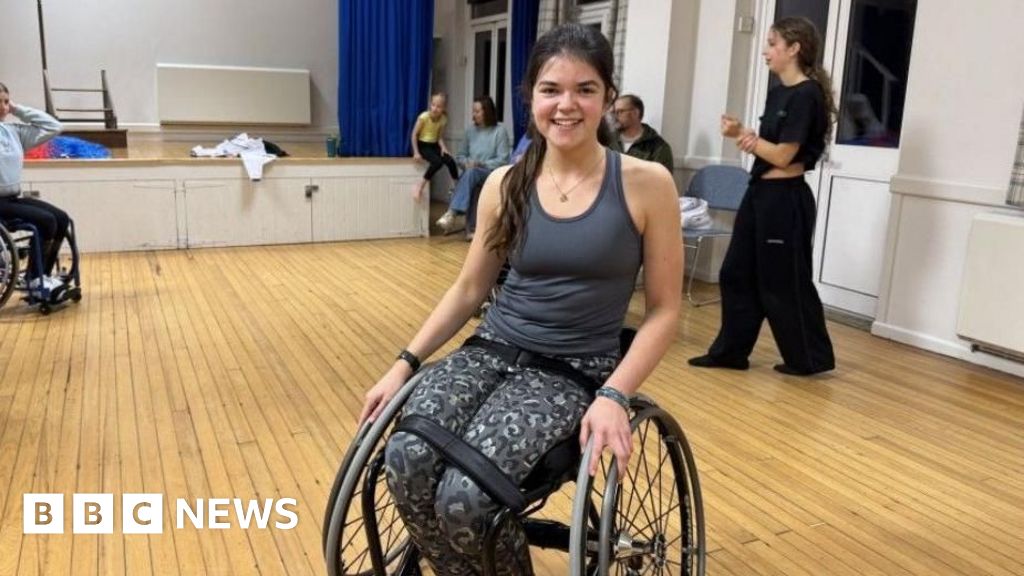
Amidst these cultural currents, a profound recognition emerges: art is more than aesthetics; it is a declaration of identity. The story of Hannah, a teenage dancer in wheelchair, exemplifies the transformative power of movement as a form of self-expression and liberation. Her words—”being able to move to music and forget everything and just dance”—resonate with a deeper truth: that culture is an act of rebellion against the chaos of existence and a reaffirmation of life itself. The inclusive dance classes in Oxfordshire, founded by Lizzie Large and supported by spirited communities, echo the philosophical insight of G.K. Chesterton—who believed that true culture awakens the “childlike wonder” within us, reinstating the moral and spiritual vitality that modern society often neglects. These initiatives not only provide physical and mental liberation but serve as a reminder that our culture’s true strength lies in its ability to uplift the marginalized.

With the recent holding of the Para Dance IPC and World Ability Sports Para Dance Championships in Stevenage, a new chapter opens. Though para dance remains outside the spotlight of the Olympic and Paralympic games, the growing recognition of such competitions underscores an essential point: the evolution of culture mirrors humanity’s journey toward inclusion and excellence. As the philosopher Ortega y Gasset asserted, “The health of a civilization can be measured by its capacity to elevate everyone within it.” The medals won by Oxfordshire competitors symbolize more than athletic achievement—they serve as symbols of resilience, proof that culture, when embraced inclusively, can propel society toward a future that values all its citizens’ talents and spirits. If history teaches us anything, it is that culture’s true vocation is to be an anchor of identity and a compass guiding us toward harmony and understanding.

Ultimately, culture holds the mirror to our soul and the map to our destiny. It is both the memory of who we have been and the prophecy of who we are called to become. As the poet T.S. Eliot reflected, “This is the way the world ends—not with a bang but a whimper,”—yet within our cultural formations, there resides a quiet, persistent hope: a lament that awakens us and a promise that propels us. In every dance, every song, and every act of inclusion, we find the enduring testament that human identity is a tapestry woven with history’s threads and humanity’s dreams—an ongoing story, echoing in the footsteps of tradition and innovation alike, urging us to remember and to foresee, in the eternal dance of existence.

Social Media Auto Publish Powered By : XYZScripts.com


