Matox News

Truth Over Trends, always!

Fact-Check: Viral Social Media Claim About Climate Change Facts Unverified

Fact-Check: Was Shein Accused of Making “False, Misleading, and Deceptive” Representations About Its Clothing?

Recently, reports emerged stating that the attorney general’s office accused the fast-fashion retailer Shein of making “false, misleading, and deceptive representations” regarding the clothing it sells. As consumers, it’s vital to scrutinize such claims carefully. While regulatory actions aim to protect shoppers, understanding the basis of these allegations is critical to navigate the complex relationships between commerce, law, and consumer rights.

Understanding the Allegation

The assertion from the attorney general’s office suggests that Shein, a dominant player in the global fast-fashion industry, purportedly made claims about its products that were not truthful or accurate. Specifically, these could relate to issues such as product descriptions, quality, origin, or safety standards. The nature of the claim indicates concerns over consumer deception—a serious matter that can undermine public trust and—if proven true—warrants regulatory intervention.

Examining the Evidence & Public Statements

To verify the claim, we need to consider official statements from both the attorney general’s office and Shein, alongside independent investigations:

  • Official documentation or press releases from the attorney general’s office—which provide detailed allegations and evidence backing their claims.
  • Shein’s public disclosures or disclosures during regulatory investigations—including whether the company has acknowledged any misrepresentations or disputes the allegations.
  • Investigative reports from consumer watchdog organizations and industry experts—to offer an unbiased assessment of the claims.

According to a recent legal filing, the attorney general’s office contends that Shein advertised products with descriptions that do not match their actual characteristics, potentially violating consumer protection laws. Shein, in its official statements, maintains that it complies with all relevant regulations and that its marketing is accurate. The company also emphasizes its commitment to transparency and consumer satisfaction. It’s important to note that definitive proof of misleading practices hinges on the evidence presented during investigations, which is not publicly available in full detail at this stage.

The Broader Context: Fast-Fashion and Consumer Rights

Fast-fashion brands like Shein have come under increasing scrutiny for their supply chains, environmental impact, and product safety. According to the International Journal of Environmental Research and Public Health, fast-fashion companies often face challenges regarding transparency in manufacturing practices and material sourcing. Nonetheless, consumer protection laws exist to prevent deceptive marketing and ensure honesty in product representation. Regulatory agencies aim to strike a balance: protecting consumers without unfairly penalizing companies based on incomplete or preliminary evidence.

Why Does This Matter?

Accusations like these serve as a reminder that transparency and honesty are foundational to a functioning democracy and a responsible market economy. Consumers rely on truthful advertising to make informed choices, and companies depend on consumer trust to sustain their businesses. The role of regulatory bodies and the judicial system is to scrutinize claims carefully, ensuring justice is served based on factual evidence. As the investigation continues, consumers should stay informed through reputable sources and remain vigilant about their rights.

Concluding Note

In the ongoing debate surrounding Shein and similar companies, the core truth remains essential. The integrity of marketplace claims and the protection of consumer rights are fundamental to a healthy democracy. Responsible citizenship involves demanding transparency, holding corporations accountable, and respecting the rule of law. As this case unfolds, the public must prioritize fact-based understanding over speculation, reinforcing the principle that an informed citizenry is the backbone of freedom and fairness in our society.

Time to face the facts: Overpopulation is hitting our society hard

As society grapples with accelerating ecological collapse, the entrenched social and economic behaviors that once seemed normal now reveal their destructive underpinnings. Growth economics, wealth inequality, patriarchy, colonialism, military supremacy, nationalism, and pronatalism—these are not just abstract concepts but patterns of thought and action deeply embedded within our social fabric. Sociologists and social commentators have long argued that these patterns function as a “fluency” response, bypassing rational deliberation and fueling a cycle of harm that only exacerbates our planetary crisis. They are reflexive responses rooted in our limbic system, driven by emotion rather than critical awareness, making it exceedingly difficult for societies to transition toward more sustainable and equitable paradigms.

This prevailing mindset has profound consequences for families, education, and community cohesion. Children grow up in environments where economic and social disparities are normalized, often inheriting the same unwise behaviors that threaten their future. Schools may inadvertently reinforce these paradigms, emphasizing consumerism and competition over sustainability and cooperation. Communities divided by race, class, and ideology find it harder to unite around solutions that prioritize ecological balance and social justice. Experts like sociologists and environmentalists are warning that until societies confront these deeply ingrained narratives, efforts to promote wiser social paradigms—such as eco-aware family planning and economic degrowth—may remain stagnant or be dismissed as radical.

Emerging ideas suggest that overhauling these outdated norms requires honest conversations about population overshoot and our collective responsibility. The conversation cannot be hijacked by racist or xenophobic discourses that often surface when fear of immigration is used to distract from systemic issues. Instead, advocates like Barbara Williams from Yarnton, Oxfordshire, emphasize that refined dialogue around eco-aware reproduction and resource stewardship is vital. Such paradigms challenge societal taboos, urging families and communities to embrace choices aligned with sustainability rather than short-term gains or societal pressures. These shifts, while promising, demand a reimagining of what it means to build healthy social and family units capable of withstanding the relentless strains of ecological decline.

Historically, societies that failed to recognize the link between social equity and ecological health suffered eventual collapse or profound transformation. Today, the stakes are even higher. As we confront these entrenched social issues, the path forward may seem daunting; yet, hope resides in collective action rooted in ethical reflection and community resilience. The challenge lies in fostering a society where these social issues are no longer tolerated as cogs in a destructive machine but are instead addressed with honesty and compassion. Society’s true strength will be demonstrated in its capacity to evolve from old patterns toward a future where families, communities, and institutions work in harmony with ecological boundaries—restoring the balance that human civilization so desperately needs. Only then can we look beyond the horizon of despair and envision a society that embraces both humanity and nature in a mutually sustaining dance of renewal.

What’s Known About the DC National Guard Shooting: The Facts for Young Americans

In a harrowing incident that underscores the ongoing vulnerabilities within U.S. national security and immigration policy, two National Guard members were brutally shot in downtown Washington, D.C. just blocks from the White House. The attack, which took place around 2 pm EST, was immediately characterized by authorities as a targeted ambush, raising questions about the effectiveness of American civil and military oversight during what many are calling a time of national crisis. The suspect, identified as Rahmanullah Lakanwal, an Afghan national, was apprehended after a fierce encounter during his arrest, which left him shot four times. His background, linked to the mysterious and controversial Operation Allies Welcome program, adds a dangerous layer of complexity to the geopolitical consequences unfolding in the aftermath of this heinous act.

Those who follow international security trends recognize that the incident signifies more than a local tragedy; it sets a precipitous turning point in how the United States perceives and manages its border policies and immigration systems. Lakanwal, who arrived in the U.S. in 2021 under a program established during the chaotic withdrawal from Afghanistan, had recently been granted asylum, despite his reported links to the Taliban’s resurgence and the US intelligence community’s previous concerns. This has led to widespread criticism from conservatives and analysts alike, who argue that such policies may unwittingly empower hostile elements that exploit America’s goodwill. Leading security experts warn that the case exemplifies the peril of lax vetting processes, emphasizing the need for urgent reform to prevent future tragedies.

In response, the Trump administration announced a significant policy shift, including the suspension of all Afghan immigration requests and a comprehensive review of green cards issued across 19 countries. This decision underscores a broader international recalibration on migration, security, and sovereignty — themes atop which debate about national identity and global influence are increasingly centered. The attack is swiftly being exploited as a pretext to bolster a more aggressive stance on border security, reflected in the deployment of an additional 500 National Guard troops to Washington. While these reserve forces can provide vital oversight, many analysts argue that it exposes a deeper crisis in trust between the government and its citizens, revealing how internal divisions are intertwined with ongoing international conflicts.

Further complicating the geopolitical landscape, global organizations such as the United Nations and European Union have expressed concern over America’s evolving immigration policies, which threaten to reshape diplomatic frameworks and threaten cooperation on security issues. Meanwhile, some independent scholars suggest that the crisis raises longstanding questions about the efficacy of post-9/11 security measures and the real cost of focusing on external threats while internal vulnerabilities continue unabated. As historians dissect this disturbing episode, the echoes of past upheavals — from the fall of the Berlin Wall to the rise of populist movements — remind us that the actions of today are inexorably linked to the trajectory of tomorrow.

As smoke clears from the streets near the White House, one fact remains certain: history is still being written with each passing day. This attack is not just an isolated event but a stark reflection of a nation at a crossroads, where decisions made now will shape the balance of power and societal stability for decades to come. The weight of this moment will inevitably be measured by how resilient America’s resolve and its leadership’s foresight prove in the days ahead, for the story of this volatile chapter has only just begun, leaving the world to watch in tense anticipation as history unfolds.

Key Facts on Hong Kong Apartment Fires You Should Know

The recent fire at Wang Fuk Court in Hong Kong has sent shockwaves throughout the international community, revealing the deep-seated vulnerabilities of one of Asia’s most iconic urban landscapes. As the city faces the devastating aftermath—at least 36 lives lost and over 270 reported missing—analysts worldwide are assessing the geopolitical impact of this tragedy. Hong Kong, long a symbol of economic prowess and cultural resilience, now grapples with a crisis that underscores the precarious balance between rapid urban development and safety regulation. The world watches closely, knowing that how this disaster is managed will resonate far beyond the city’s borders, shaping perceptions of Chinese governance, urban safety standards, and international cooperation.

The fire broke out at 14:51 local time in a district near the Chinese mainland border, at a complex composed of eight tower blocks—each 31 stories high—serving around 4,600 residents. Built in 1983, these buildings are undergoing renovation, their exteriors draped in bamboo scaffolding—a quintessential feature of Hong Kong’s construction landscape. Yet, this iconic practice, rooted deeply in the city’s history, has come under renewed scrutiny following the blaze. Reports indicate the flames spread rapidly through the bamboo scaffolding, raising alarms about the safety of such traditional materials in modern urban environments. Despite efforts to phase out bamboo scaffolding over safety concerns—particularly its combustibility—the haste of renovation and existing infrastructure seemed ill-equipped to handle the crisis. Meanwhile, communities and authorities are confronting a stark reality: decades-old urban models may no longer suffice in the face of modern safety standards.

International organizations, including Interpol and UN-HABITAT, have long debated the safety implications of traditional building practices in dense metropolises like Hong Kong. The usage of bamboo scaffolding, although culturally revered, is criticized for its intrinsic weaknesses, such as deterioration over time and high combustibility. Hong Kong’s government has attempted to address these issues, but progress has been slow, hampered by the city’s deep-rooted reliance on historic construction methods. As the fire’s ferocity and spreading pattern reveal, these safety lapses are not mere technicalities—they are life-and-death issues that now threaten the city’s reputation and deliver a stark warning: the balance between tradition and safety must be revisited before more lives are lost. The incident also highlights the critical importance of resilient urban planning, particularly in a city where skyscrapers and tightly packed communities intertwine.

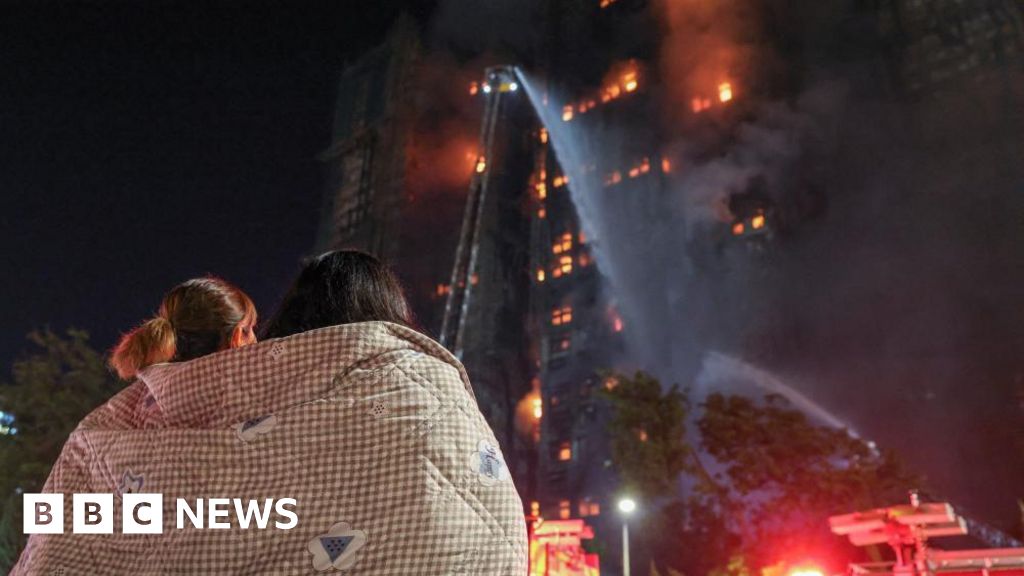
Analysts warn that the scene unfolding in Hong Kong is a turning point—an ominous wake-up call for global urban centers grappling with aging infrastructure and the lure of cultural heritage. The image of firefighters battling the flames amid collapsing debris and thick smoke encapsulates a crisis that transcends local borders. It also serves as a stark reminder of the ongoing challenges faced by societies caught between rapid modernization and maintaining safety. With China asserting its control over Hong Kong, the response to such incidents will be scrutinized for signs of effectiveness or systemic neglect. How the city’s authorities handle this disaster, including search and rescue efforts, safety reforms, and accountability, will influence perceptions of governance in the broader Chinese territory—an essential dynamic in a geopolitical landscape increasingly shaped by stability and human security.

As the smoke clears and the city takes its first steps toward recovery, history remains in the making. The flames at Wang Fuk Court are not merely a story of destruction but a chapter in a larger narrative—one where resilience, tradition, and reform collide amid the shadows of history. The world stands on a precipice, watching an unfolding story that may redefine urban safety standards and societal values in Asia’s most vibrant—and vulnerable—metropolis.

Social Media Auto Publish Powered By : XYZScripts.com