
Fact-Checking the Claim: Is Africa Breaking Apart?
Recently, some outlets have claimed that the African continent is “gradually splitting apart” and that a new ocean may form as a result. This statement deserves a thorough, evidence-based examination. To understand the reality of Africa’s geological activity, we need to delve into plate tectonics, geological processes, and expert insights.
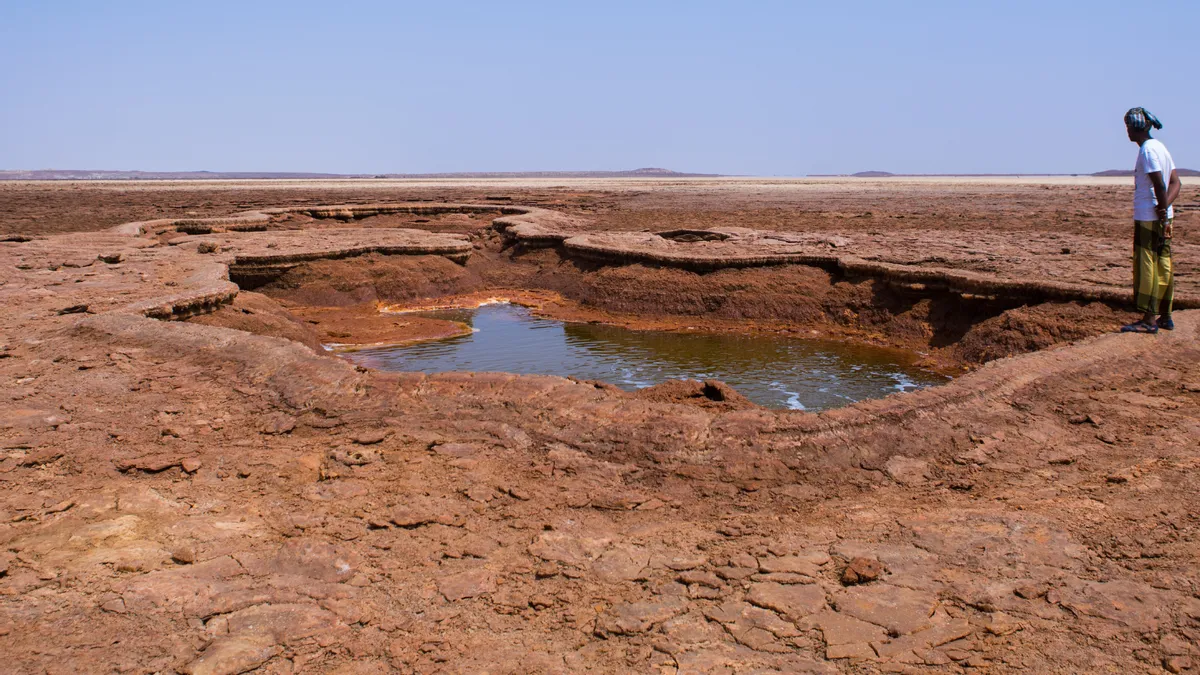
The claim that Africa is “gradually splitting apart” is based on the understanding of tectonic plate movements, particularly in the East African Rift System. This rift zone, spanning countries like Ethiopia, Kenya, and Tanzania, is an active continental plate boundary characterized by volcanic activity and seismic events. According to the United States Geological Survey (USGS), these rifts are manifestations of tectonic plates slowly pulling away from each other, similar to other well-documented divergent plate boundaries such as the Mid-Atlantic Ridge. However, this process occurs on geological timescales of millions of years and is not indicative of an imminent continental split or ocean formation.
Theoretical models suggest that if the East African Rift system continues its current activity over the next few million years, it could indeed lead to the formation of a new ocean basin. This process is comparable, albeit on a much longer timescale, to the separation of North America from Eurasia, which took hundreds of millions of years. Geologists like Dr. John Dewey of Columbia University highlight that such rifting is a natural and ongoing part of Earth’s geology but emphasizes that “a new ocean forming here will take far longer than human history.”
To substantiate the claim that the continent is “gradually splitting apart” in a manner that will rapidly create a new ocean, significant geological evidence showing rapid rifting or imminent ocean formation is lacking. Seismic activity, volcanic eruptions, and crustal movements are monitored worldwide, and experts confirm that current activity in East Africa, while noteworthy, does not predict immediate or even near-term global transformation. The African plate is indeed moving apart in some regions, but at a rate of just a few millimeters per year—far too slow for any dramatic geographic change within a human lifetime.
The scientific consensus, as provided by organizations such as the United States Geological Survey (USGS) and the African Geological Research Council, is clear: While Africa’s rifting is a fascinating and active process, it is a slow, natural feature of Earth’s tectonics that unfolds over millions of years. The idea that a new ocean will form tomorrow or even in the next few million years is misleading.
Conclusion: The Importance of Scientific Rigor
When evaluating claims about natural phenomena like tectonic movements, it is critical to rely on reputable scientific sources and understand the scale at which these events occur. The notion that Africa is “splitting” in a way that will soon reshape the continent is an oversimplification that ignores complex geological processes. Accurate information is vital for responsible citizenship and informed debate. Recognizing the difference between natural geological activity and urgent crisis helps us maintain a rational perspective and appreciate the long-term forces that continue to shape our planet.