Matox News

Truth Over Trends, always!

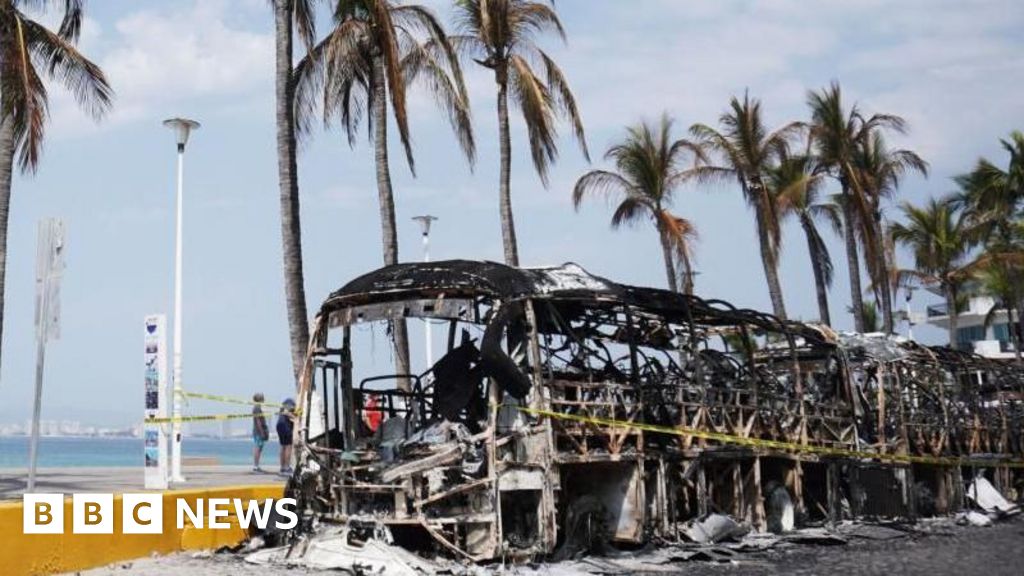
Mexican cartel’s rampage sparks fears of more violence ahead

Cartel Violence Sparks International Concern in Mexico’s Guadalajara

In the aftermath of recent violence in Guadalajara, residents are living in the shadow of fear following a violent retaliation by cartel members seeking to avenge the death of Nemesio “El Mencho” Oseguera, the presumed head of Mexico’s powerful CJNG (Cártel de Jalisco Nueva Generación). According to eyewitness accounts and local officials interviewed by the BBC, the city’s streets have become battlegrounds in what analysts describe as a dangerous escalation in organized crime conflicts. The violence, which initially targeted rivals, has now spilled over into civilian areas, prompting urgent discussions about the regional and global implications of Mexico’s security crisis.

Experts warn that this surge in cartel activity signals a broader destabilization that transcends national borders, impacting trade routes, foreign investments, and the safety of those seeking economic opportunity in the Western Hemisphere. International organizations, including the United Nations Office on Drugs and Crime, have reiterated their concerns over the expanding reach of Mexican cartels, which now challenge state authority and threaten regional stability. The death of “El Mencho,” once considered one of the world’s most elusive drug lords, has indeed sent shockwaves through the cartel ecosystem, leading to an unprecedented wave of violence and power struggles within the criminal underworld.

These developments coincide with a notable shift in U.S.-Mexico relations. As Washington increasingly emphasizes cooperation to combat drug trafficking, traffickers are adapting their strategies in ways that complicate law enforcement efforts. Some analysts argue that the failure to dismantle major cartels like CJNG signifies a broader failure of both Mexican and international policies to stem the flow of drugs and illicit arms. The conflict in Guadalajara exemplifies how local conflicts can rapidly escalate into regional crises with far-reaching effects. Historically, similar patterns of cartel violence have led to destabilization in neighboring countries, fostering insecurity that hampers growth and democratic development.

The repercussions extend beyond borders—causing ripple effects that threaten the sovereignty and stability of nations across the Americas. Mexico’s government continues to face mounting pressure to implement decisive measures, including military crackdowns, yet critics argue that without addressing the root causes—poverty, corruption, and lack of economic opportunity—such violence will persist. University scholars and political analysts warn that unless a comprehensive strategy is adopted, the cycle of violence will only intensify, potentially drawing in international actors and destabilizing entire regions.

As residents share their stories of chaos and resilience, the world watches with bated breath. The recent violence in Guadalajara is more than a local crisis; it is a stark reminder that history is still being written, with the fate of nations hanging in a delicate balance. In the coming weeks, the international community’s response—and Mexico’s ability to confront this darkness—will determine whether this chapter ends in tragedy or a harder-earned path toward stability.
Trump’s FCC drops cybersecurity rules amid Chinese hack fears — a bold move for youth, tech, and free markets

FCC’s Cybersecurity Rollback Sparks Industry Disruption and Security Concerns

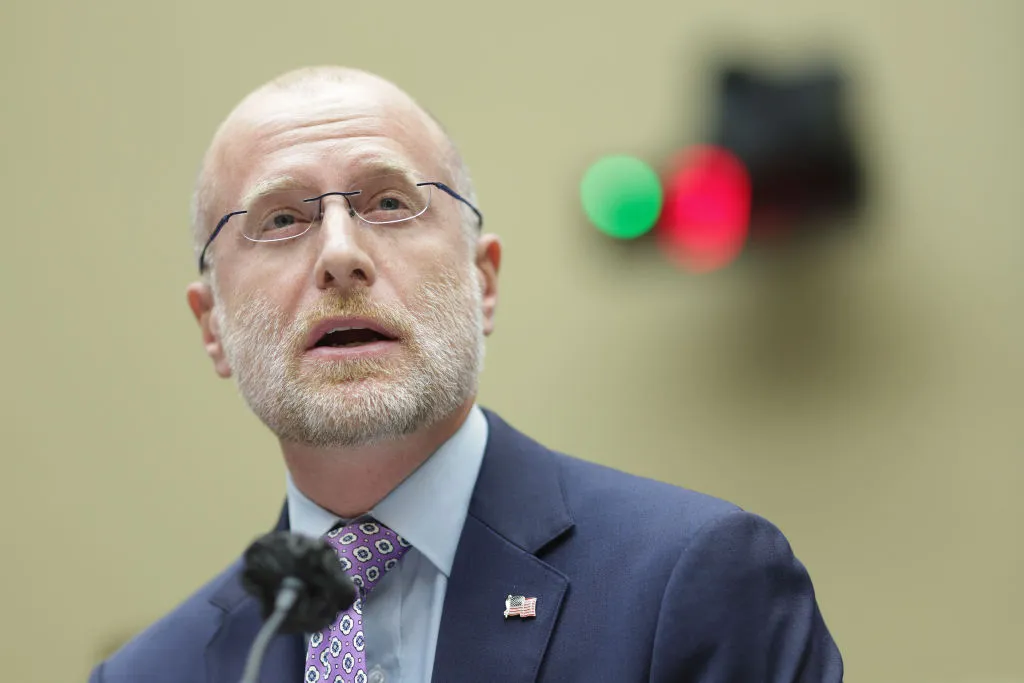
In a bold move signaling a shift in U.S. telecommunications policy, the Federal Communications Commission (FCC) voted 2-1 along partisan lines to rescind critical cybersecurity regulations previously enacted under the Biden administration. The decision, championed by the FCC’s two Republican commissioners, Brendan Carr and Olivia Trusty, effectively removes mandatory security standards aimed at safeguarding phone and internet networks from unlawful access and cyber threats. This strategic rollback aligns with a broader trend of deregulation in the tech sector, emphasizing market-led resilience over prescriptive government intervention.

The regulatory shift arrives amidst an escalating threat landscape, notably exemplified by the Salt Typhoon hacking campaign attributed to China-backed adversaries. This sophisticated operation compromised over 200 US telecommunications firms, including giants such as AT&T, Verizon, and Lumen. Hackers targeted fundamental infrastructure, including wiretap and surveillance systems mandated for law enforcement, exposing the fragility of existing security protocols. Industry analysts, including Gartner and MIT cybersecurity experts, warn that such vulnerabilities could be exploited further if regulatory oversight diminishes.

Adding complexity to the industry’s response are divergent opinions among policymakers. Democratic FCC commissioner Anna Gomez opposed the rollback, arguing it reverses the only meaningful cybersecurity efforts against nation-state cyber espionage. Critical voices, including Senators Gary Peters and Mark Warner, expressed alarm that deregulation will undermine national security, leaving critical communication channels exposed. Their assertions underscore a persistent industry question: Will market forces alone suffice to defend against increasingly sophisticated cyber threats, or is strategic regulation indispensable? Conversely, the NCTA, representing the telecommunications industry, welcomed the move, asserting that the existing rules were overly prescriptive and hampered innovation.

From a technological perspective, this deregulation potentially signals a disruptive phase for the industry, where innovation, rather than regulation, becomes the primary driver of security advancements. Cutting-edge solutions—such as AI-powered anomaly detection, blockchain-based integrity checks, and decentralized security architectures—are poised to redefine cybersecurity landscapes. Disruption driven by market competition could accelerate the deployment of these technologies, positioning nimble firms as leaders in the new security paradigm. Notable industry figures, including Elon Musk and Peter Thiel, have long championed decentralized innovation—foreshadowing a future where private entities spearhead cybersecurity guardrails, rather than bureaucratic mandates.

Looking forward, the industry faces a pivotal moment: balancing innovation and disruption with the safeguarding of national security interests. Policymakers, industry leaders, and technologists must collaborate to ensure that market-driven solutions do not come at the expense of foundational infrastructure resilience. As hackers refine their methods and geopolitical tensions escalate, the window narrows for meaningful action. The future of U.S. cybersecurity in telecommunications depends on adopting a proactive, forward-thinking approach that leverages technological innovation while maintaining robust safeguards—an urgent call for strategic agility in an increasingly volatile digital landscape. The coming months will determine whether deregulation fosters a pioneering security ecosystem or exposes critical vulnerabilities, with profound implications for the global tech frontier.

Almost 70 Aussie schools shut down over asbestos fears in playground sand

Australasia Encounters a Growing Crisis Over Asbestos in Children’s Play Sand

In a disturbing turn of events revealing the complex web of geopolitical and public health concerns, the Australian Capital Territory (ACT) has announced the closure of 69 schools due to the discovery of asbestos traces in commercially sold coloured sand. This development underscores not only domestic safety lapses but also emphasizes the far-reaching consequences of regulatory failures and international trade dynamics. The contaminated sand, linked to popular brands such as Kmart and Target, was introduced into educational environments, prompting precautionary measures that will ripple across regional policies and international relations. As inspectors and analysts delve into the causes, the incident raises critical questions about how safety standards are monitored and enforced in an interconnected global supply chain.

The recall was initiated after the Australian Competition & Consumer Commission (ACCC) identified traces of asbestos—a mineral once widely used in construction but now banned in both Australia and New Zealand—within the products. Despite the ACCC’s reassurance that the risk of airborne asbestos exposure is minimal, the decision to close schools reflects a broader motor of precaution embedded within government policy. Remarkably, air testing so far has yielded negative results for airborne asbestos, yet the government’s response remains cautious, illustrating the precarious balance between public safety and political risk. Such measures reveal a high level of sensitivity to the potential consequences of asbestos exposure, which remains a grave health threat, capable of causing deadly cancers over decades. The incident underscores the crucial importance of vigilant oversight in the export-import of hazardous materials, a subject of heated debate among international regulatory bodies.

The crisis has also spilled over into neighboring New Zealand, where fears surrounding asbestos-laden sand prompted additional school closures. This regional response underlines the shared vulnerabilities in the Pacific, where regulatory harmonization is often challenged by differing national policies and economic ties. As analysts highlight, the incident illustrates how seemingly local decisions can escalate into transnational crises, impacting regional stability and sovereignty. Experts like Dr. Raymond Stevens of the Pacific Safety Institute warn that this controversy may serve as a wake-up call, urging governments and international organizations to tighten controls over hazardous imports. Meanwhile, local authorities are conducting extensive searches to map the presence of coloured sand within school premises, an effort that, although reassuring with negative air tests thus far, underscores the importance of comprehensive safety protocols in protecting future generations.

In the grand geostrategic context, the contamination incident emphasizes the fragile nature of supply chains in an age of globalization. Moreover, it exposes the potential for malign influence or negligence to have far-reaching consequences. Some critics argue that lax enforcement of import bans on asbestos may be indicative of broader governance issues or economic priorities that favor cheap imports over safety. These incidents unfold in tandem with international debates over trade policies, environmental standards, and the role of multinational corporations in ensuring product safety. As such, the incident with coloured sand reflects the broader tensions between economic growth and societal health—an ongoing struggle that has historically defined the geopolitical landscape. Leaders and international organizations, including the World Health Organization, continue to emphasize the importance of adhering to strict standards, but the reality remains complex, fraught with loopholes and conflicting interests.

Ultimately, this controversy serves as a stark reminder that history’s most profound lessons often arrive cloaked within crises. The incident in Australasia is more than a local health scare; it is a symptom of the unresolved tensions between profit and safety, sovereignty and global interdependence. With each school closure and each cautious inspection, the weight of history presses on nations, demanding action and accountability. As the story continues to unfold across the Pacific, one thing remains clear: the decisions made today will echo for decades, shaping the landscape of international safety and sovereignty, and reminding us that, in an interconnected world, the safety of our children is ultimately a question of global resolve. The unfolding narrative stands as a testament to how fragile progress is—yet how vital vigilance remains in the face of emerging threats. The pages of history turn quietly, but their impact is profound—each chapter written by choices made in moments of crises, leaving us to confront the relentless march of time and consequence.

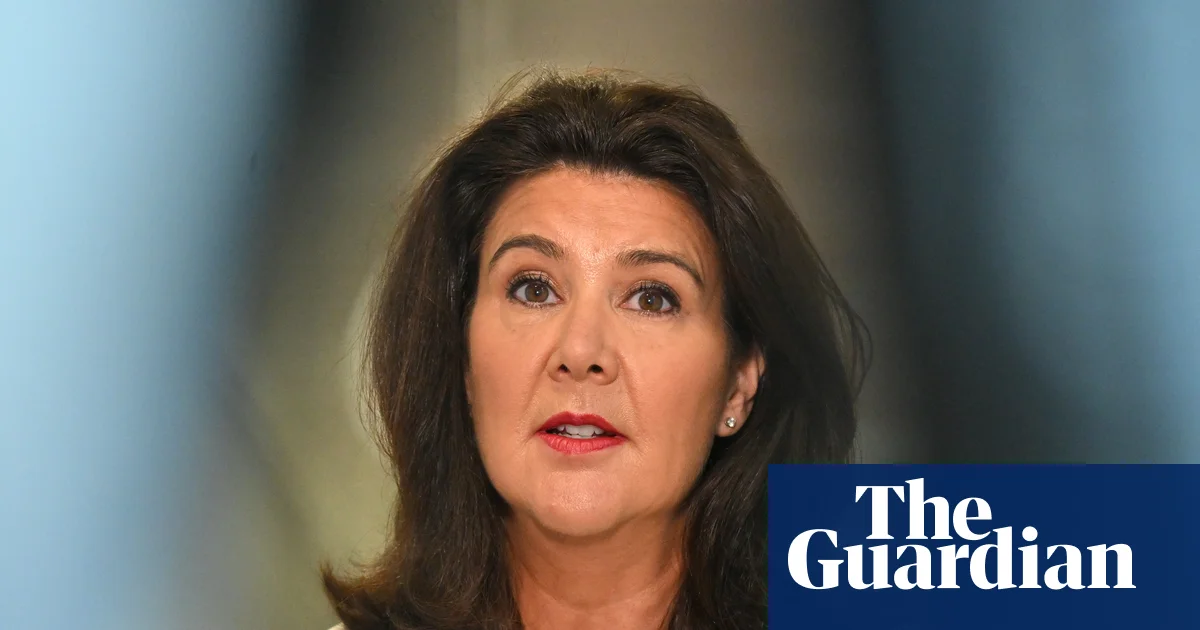
Liberal MPs fight to save net zero amid fears of city electoral wipeout | Liberal Party

Australia’s Internal Climate Dilemma Sparks Global Concerns

The political landscape of Australia is currently embroiled in a fierce debate that carries substantial geopolitical impact. The country’s liberal factions are divided over the core issue of maintaining a commitment to net zero emissions, a move seen by many as pivotal to Australia’s international standing and climate obligations. On one side, conservative forces rooted in the Liberal and National parties are considering abandoning their previous pledge to reach net zero by 2050 — a target enshrined under the Paris climate agreement. On the other, moderate voices and climate advocates warn that such a retreat would not only damage Australia’s reputation but also threaten its strategic alliances and economic stability, especially within the Asia-Pacific region.

Internal Politics as a Microcosm of Global Climate Strategy

The ongoing debate reflects a broader turning point for Australia, a nation historically cautious about aggressive climate policies—yet increasingly pressured by global expectations, scientific evidence, and the rising influence of international organizations. Senator Andrew McLachlan has voiced concerns about the ramifications of abandoning the pledge, warning that “if we retreat from achieving net zero, we will pay dearly in city electorates. Our reputation as a nation that keeps its promises will be diminished, and our Pacific friends will be betrayed.” These sentiments underscore the how decisions made in Canberra ripple across regional stability and global perceptions. Moreover, foreign analysts and historians note that Australia’s willingness to adhere to or forsake its commitments could serve as a litmus test for international trust and diplomatic credibility in an era where climate policy is increasingly intertwined with national security.

Impact on Society and International Relations

  • Recent polls suggest that a significant segment of the Australian population and their elected representatives view the net zero pledge as essential, citing the potential consequences of “doing a U-turn,” including economic repercussions and diminished international influence.
  • In contrast, the ruling party’s internal factions consider a strategic reprieve, contemplating a delayed or modified timeline for reaching their climate goals—an approach that risks violating the Paris agreement’s stipulation not to regress on previous commitments.
  • World leaders and international organizations, such as the United Nations and the IPCC, have repeatedly emphasized the critical importance of adherence to scientifically-backed targets, framing Australia’s debate as emblematic of the global challenge in balancing economic growth with environmental stewardship.

As Prime Minister Sussan Ley faces mounting pressure to align her party’s stance, a decisive policy is looming — one that could either solidify Australia’s leadership role in climate action or underpin a dangerous retreat into isolationism and economic shortsightedness. The prospect of a break with the Paris climate accord hangs in the balance, with implications for perhaps the most vulnerable nations in the Pacific and beyond, which look to Australia as a regional leader.

The outcome of this internal political struggle will inevitably shape the narrative of Australia’s future — whether it aligns with the global effort to mitigate catastrophic climate change or succumbs to internal divisions and short-term political gains. As history continues to unfold, it remains uncertain whether this pivotal moment will be remembered as a turning point towards principled leadership or a cautionary tale of a nation’s retreat from its global responsibilities. The weight of the choice made today will be etched into the chronicles of history, influencing generations and the integrity of international commitments for years to come.

Exclusive: Rediscovered John Lennon interview exposes deep American fears of widespread phone-tapping

The rediscovery of a long-lost interview with John Lennon offers a rare window into the mind of one of the 20th century’s most profound cultural icons. Recorded during a period of intense political and personal turmoil, the interview reveals Lennon’s suspicions of governmental surveillance and his fears of being monitored by the US authorities—an echo of the cultural paranoia that has marked political history from McCarthyism to the Cold War. As a symbol of counterculture and artistic rebellion, Lennon’s candid reflections serve as a reminder that the arts are often intertwined with the struggles for freedom and identity. In these moments of raw honesty, Lennon articulated his fears of being watched, citing evidence of bugging and surveillance around his apartment, which he deemed “harassing” and emblematic of a broader cultural climate of intrusion. This candid confession underscores the ongoing relevance of popular culture as a battleground for individual liberty and societal control, drawing parallels to Ortega y Gasset’s assertion that “man does not exist in an isolated state—he is the product of the society that shapes him.”

Lennon’s insights into his own artistic process and personal state during this turbulent time also resonate deeply with the significance of culture as a vessel of identity and societal memory. Despite momentary doubts about his work, he found affirmation among friends that led him to release his album Walls and Bridges, a collection reflecting both his struggles and resilience. His reflection that “apart from acts of God, I will be around for another 60 years and doing it until I drop” demonstrates an unwavering belief that true artistic vocation sustains the individual beyond the chaos and confusion of societal unrest. Here, Lennon embodies the idea that culture is both a sanctuary and a prophecy—a testament to what has been and a beacon for what might yet come. As T.S. Eliot famously observed, “The poetry of civilization is the poetry of your own one life, singing back to you across the centuries,” and Lennon’s words evoke this timeless dialogue between memory and hope.

Furthermore, the interview illuminates the nature of the artist as a societal mirror and a guardian of tradition. Lennon’s comments on the challenges faced by international musicians—highlighted by Mick Jagger’s struggles to tour freely in the US—point to the broader cultural conflicts that threaten artistic expression. These conflicts reflect the ongoing tension between the preservation of tradition and the forces of control and censorship. Philosopher and historian Tocqueville warned of the danger in a democratic society where “monopolistic oversight stifles the spirit of innovation and individualism,” yet it is through these very struggles that a society’s cultural vitality is tested and ultimately reaffirmed. Lennon’s candid disclosures remind us that culture is both a shield and a sword—defining our identities and shaping the society that reflects our deepest values. As Chesterton observed, “Poetry may make us from the same animal, but prose makes us individuals,” and it is in the personal, unguarded moments of artists like Lennon that society finds its truest reflection.

In the end, Lennon’s words echo beyond the immediate context, stirring a sentiment that transcends the confines of time and place. Culture—whether in the form of music, art, or shared memory—remains humanity’s most profound prophecy, capturing our triumphs and struggles yet also pointing toward an uncharted future. Much like the memory of an artist’s voice—resonant and enduring—culture whispers that we are both the custodians of a collective history and the architects of a future yet to be written. It is, as T.S. Eliot suggested, “The still point of the turning world, where memory and prophecy converge,” a testament that through our shared stories, we breathe life into the human spirit—forever seeking, forever creating.

Social Media Auto Publish Powered By : XYZScripts.com