Matox News

Truth Over Trends, always!

Opposition Slams Labor’s Secretive FoI Changes, Charges Fees to Silence Youth Transparency Movements

In what could mark a significant shift in Australia’s democratic landscape, the Albanese government has proposed a controversial overhaul of its Freedom of Information (FoI) regime. The proposed legislation aims to introduce fees for FoI requests, significantly reduce the scope of accessible documents, and impose strict processing time limits. Critics warn that these changes threaten the very foundation of accountability, echoing fears that secrecy will supersede transparency. Despite the government’s assurances that the reforms target frivolous and AI-generated requests, opposition and crossbench senators depict the plan as an erosion of citizens’ rights and a step toward government opacity.

Led by a Labor-dominated Senate inquiry, proponents argue that the measures are necessary to curb unwarranted demands on public resources and shield sensitive policy discussions from undue exposure. The amendments include a transfer from the current 30-day response window to a more restrictive business days timeline, along with a 40-hour cap on processing individual requests. These provisions, aimed at streamlining bureaucratic procedures, are met with skepticism by opposition voices who contend that the real impact will be a decline in government transparency and an increase in administrative barriers for citizens seeking information. Increasingly, international observers look at Australia’s evolving foi policy in the context of a broader global trend—governments tightening control over information to defend national interests, whilst critics warn of safeguarding elitist privileges at the expense of public accountability.

Historians and analysts warn that such moves are not isolated but part of a broader, pattern of democratic backsliding observed across Western nations. According to the International Transparency Agency and key political analysts, the current push can be understood as an attempt by governments to regulate the flow of information in an era dominated by AI and digital manipulation. The United States and United Kingdom, for instance, have enacted similar restrictions amid concerns over data overload and misinformation. Critics argue that these policies serve to fortify political control, marginalize investigative journalism, and impede the public’s right to scrutinize power structures. As opposition voices warn of a “dysfunctional and broken” FoI landscape, a report by the Office of the Australian Information Commissioner highlights the overreach of current limitations, emphasizing the need for reform that balances transparency with security. Yet, the real risk remains—how long before these carefully crafted restrictions morph into a shield for corruption and abuse of power?

As Australia’s legislative drama unfolds, the question extends beyond national borders: what does this mean for global democracy? Will other nations follow suit, trading transparency for security in a world increasingly tense and divided? The debate echoes through halls of power, with some warning that history is repeating itself—where the suppression of information signals the ascent of authoritarian tendencies cloaked as protective measures. The outcome of this legislative battle could set a precedent—either reaffirming the enduring right to information or sealing a future where the populace remains blindfolded to the machinations of their leaders. As the dust settles, the weight of history presses heavily upon the present—reminding us that the fight for transparency is not just national, but a universal struggle for the soul of democracy itself.

University Fees Up, V-Levels Introduced: What Young Brits Need to Know

Society at a Crossroads: The Rising Costs and Shifting Structures in Higher Education

As families across communities grapple with economic uncertainty, the landscape of higher education faces transformative shifts that threaten to deepen social divides. The recent White Paper from the government signals not just changes in policy, but the potential recalibration of social mobility itself. With tuition fees destined to escalate annually with inflation from 2026 onward, the foundational promise of accessible university education appears increasingly fragile.

Historically, social commentators like John R. Bowen have emphasized that education acts as both a mirror and a moulder of societal structures. The planned fee increases—expected to elevate costs by over £400 annually—pose a significant hurdle for students from lower-income backgrounds. Although the government assures that income-based repayment thresholds will shield some, the specter remains that rising debt burdens could disproportionately burden those who can least afford it, thereby narrowing the social strata rather than bridging them.

Financial Strain and Academic Inequity

In this context, the question of university staff pay and quality of education emerges as a critical issue. The uncertainty surrounding whether fee hikes will translate into better salaries for lecturers is symptomatic of a larger dilemma. According to sociologists like Michael W. Apple, the way in which educational resources are allocated often reflects broader societal priorities. Critics argue that with universities facing financial strain—exacerbated by years of austerity—the likelihood is that staff pay disparities and resource shortages will deepen, potentially impacting students’ learning experiences.

  • Proponents claim that inflation-linked fee increases are essential for the long-term sustainability of universities, which have struggled with frozen or declining funding.
  • Opponents warn that this model could entrench socio-economic inequalities and erode the quality of higher education for the most vulnerable students.

Additionally, the government plans to reintroduce maintenance grants for some lower-income students by 2029, financed through a tax on international student fees. While such measures aim to shore up access, questions linger about whether they will be sufficient to counter the effects of rising debt and cost of living, especially for those who are the first in their families to pursue higher education.

Reimagining Accreditation: The Role of V-Levels

Amidst these financial and social upheavals, a pioneering shift in educational pathways is underway: the introduction of V-levels from 2027. These new qualifications are designed to sit alongside traditional A-levels and T-levels, replacing qualifications like BTecs, yet their precise impact remains opaque. The shift signifies a broader debate on the credibility of vocational qualifications and their role in social mobility.

Historians like E. P. Thompson have documented that vocational education has long been undervalued, often viewed as a lesser alternative to academic routes. The emergence of V-levels is an attempt to elevate such pathways, but the transition must be carefully managed. Current vocational students, many from working-class backgrounds, worry whether these reforms will result in a two-tier system, where social and economic barriers could once again decide educational destiny.

Hope and Reflection

As society grapples with these challenges, the question remains: how can communities and policymakers foster a future where opportunity is truly accessible to all? It requires a collective effort, integrating public funding, fair assessment standards, and a renewed respect for vocational paths—steps that echo the insights of social thinkers advocating for equity rooted in social justice.

In the quiet moments of reflection, society faces a choice—to let the escalating costs and structural divides deepen the chasms between classes, or to forge a new way forward rooted in equality, opportunity, and the human dignity that underpins a resilient society. The seeds of transformation may be fragile, but history has shown that hope, combined with deliberate action, can sow the roots of profound change—reminding us that even amidst adversity, society’s true strength lies in its capacity to evolve.

Revolut targets Indian banks’ ‘criminal’ forex fees, challenging the old guard

Revolut Ignites Fintech Disruption in India’s Cross-Border Payments Market

In a bold move to reshape India’s underserved cross-border payments landscape, British fintech powerhouse Revolut has officially launched operations in the country, aiming to capitalize on a $30 billion annual flow of Indian abroad. The company’s strategic entry underscores a significant industry shift driven by innovation and regulatory agility, positioning it to challenge deeply entrenched banking giants and local fintech rivals.

Since announcing its India plans in 2021, Revolut has diligently secured key regulatory licenses, including the full authorization from the Reserve Bank of India to issue prepaid cards and digital wallets, and has acquired local entities like Arvog Forex to solidify its foothold. These milestones mark a deliberate disruption of traditional banking models that have historically dominated foreign exchange services, often charging exorbitant fees that Revolut’s India Head, Paroma Chatterjee, aptly describes as “criminal.” With these permits, Revolut can now offer domestic and international payment services, including same-day remittances, positioning itself as a formidable player in a market where cross-border fees are often perceived as predatory.

The implications extend beyond mere fee reduction; Revolut’s innovative platform leverages multi-currency accounts, digital wallets, and local network integrations, including discussions with payments networks like Visa and India’s RuPay. By doing so, the company aims to deliver a superior customer experience—an essential factor highlighted by industry analysts such as Gartner—that directly threatens traditional banks’ monopolistic hold on currency exchange and remittance services. The disruption here signals the dawn of a new fintech era, where transparency, usability, and regulation enable faster, cheaper international transactions.

Business Strategy and Market Outlook

Revolut’s vision centers on targeting over 150 million digitally native Indians aged 25–45, with a stretch goal to onboard 20 million users by 2030 and process upward of $7 billion in transactions. This strategic focus reflects a broader industry trend where digital-first financial services prioritize highly engaged, profitable customer segments rather than sheer volume. Chatterjee emphasizes that “customer engagement and profitability are the metrics that will define success,” a viewpoint shared among leading fintech innovators like Peter Thiel, who advocate for sustainable, value-driven growth over vanity metrics.

Furthermore, Revolut’s current waitlist of more than 350,000 potential Indian users underscores the latent demand for alternative, more affordable cross-border solutions. The company’s flexible network approach, including exploring local payment options such as RuPay, underscores its commitment to capturing market share in a competitive environment populated by established fintech players like Niyo and BookMyForex. This demonstrates an understanding that strategic partnerships and local inclusion are essential for long-term viability in India’s complex regulatory and consumer landscape.

Future Outlook and Industry Impact

The rapid digital transformation reshaping financial services calls for aggressive innovation, a trend further accelerated by the rise of fintech startups globally. As industry leaders and investors watch closely, Revolut’s expansion into India exemplifies a broader disruption that could permanently alter the way cross-border payments are handled worldwide. With its proactive investment of over $45 million to localize operations and a burgeoning team of 3,500 employees in India, Revolut signals a breakaway from the traditional banking approach.

Looking ahead, the industry faces a critical juncture where regulatory evolution, technological innovation, and fierce competition will determine which players can claim dominance in the next generation of financial services. As Elon Musk and other visionaries continuously push the boundaries of digital disruption, the message is clear: the days of slow, fee-laden international transactions are numbered. For fintech firms and traditional banks alike, the clock is ticking—those who fail to innovate risk obsolescence in a rapidly shifting global landscape.

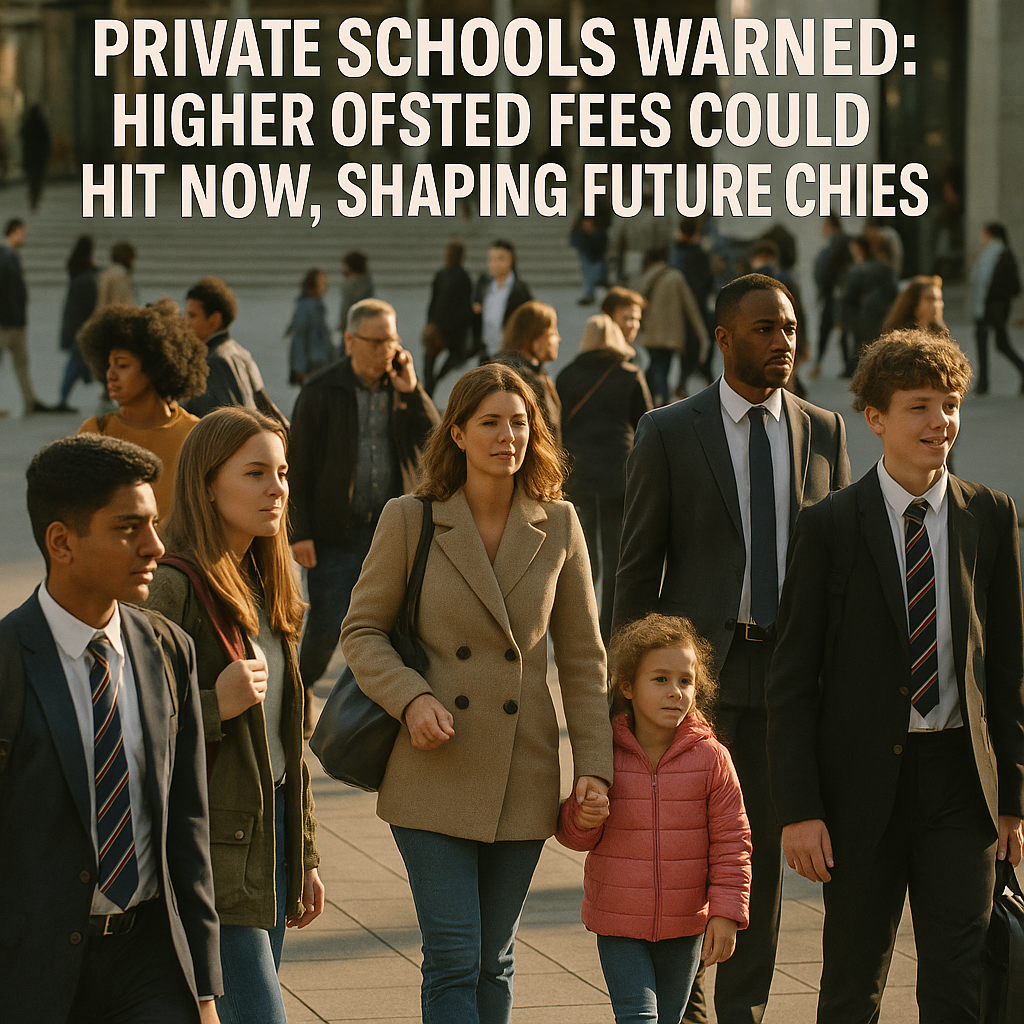
Private Schools Warned: Higher Ofsted Fees Could Hit Now, Shaping Future Choices

Societal Divide Deepens: The Impact of Private School Policies on Families and Communities

In recent months, the fractures within the fabric of British society have become more evident, as government and educational authorities grapple with the future of private education. The Department for Education (DfE) has proposed increased fees for Ofsted inspections of private schools, a move seen by many as a step toward economic fairness but criticized by others as a threat to exclusive community benefits. Currently, the regulator’s inspection costs are partially subsidized by taxpayers; however, the DfE suggests that private institutions should shoulder more of this burden, claiming that the taxpayer shouldn’t be subsidizing private businesses in this way. This policy shift raises questions about the social cohesion of communities and the role of private institutions within the broader society, especially given their historic role in perpetuating class distinctions and access to elite education.

Private schools inspected by Ofsted—those classified as “non-association”—comprise a significant portion of England’s independent educational landscape, with nearly half the 1,150 inspected institutions being specialized schools catering to pupils with disabilities and special educational needs. These smaller institutions serve as vital anchors for families seeking tailored education for their children—but looming financial pressures threaten their sustainability. The DfE’s proposal to increase fees over the next five years, climbing for schools with 150–399 pupils from £2,500 to £3,300, is part of a broader initiative to channel additional funds into **state school excellence**. Education Secretary Bridget Phillipson insists this approach is aimed at “driving up standards for children in state schools,” but critics argue it risks widening the social divide—thereby impacting family choices, community stability, and the very fabric of local life.

  • The financial burden on private schools could escalate, potentially making it more difficult for families already under economic strain to access these institutions.
  • Such shifts may incentivize educational consolidation, reducing the diversity of school options within communities.
  • The ongoing VAT on school fees and legal disputes over discrimination allegations compound the economic pressures faced by families and institutions alike.

This evolving landscape underscores how social and economic policies directly influence families and community dynamics. The higher fees could deepen existing inequalities, positioning private institutions as increasingly exclusive enclaves while challenging the principles of equal opportunity. Experiencing socioeconomic and cultural transformations, society faces the challenge of balancing meritocracy with accessibility. Sociologists like Charles Murray have long argued that education serves as a cornerstone of societal mobility; yet, policies that threaten to make private education more inaccessible risk entrenching disparities that threaten to undermine social cohesion. As families navigate these shifting currents, their choices and opportunities are being reshaped, impacting generations to come.

Reflecting on these societal shifts demands more than policy adjustments; it calls for a collective moral reconceptualization of what it means to foster an equitable society. The true test lies not merely in economic recalibrations but in nurturing a social fabric where opportunity and dignity for every family remain attainable. However, as history reminds us, societal transformations are seldom smooth, and the resilience of community bonds will be challenged amid economic austerity and cultural shifts. Yet, with deliberate effort and moral clarity, society can forge pathways that bridge divides, ensuring that future generations inherit not a fragmented landscape but a resilient, inclusive, and hopeful society.

Social Media Auto Publish Powered By : XYZScripts.com