Matox News

Truth Over Trends, always!

Why Society Ignores Female Desire: The Paternalism We Must Overcome | Documentary

Across the United States, a complex tapestry of social issues continues to unfold, revealing how cultural shifts and demographic changes profoundly impact families, education, and communities. From the persistent neglect of female sexual health within medical curricula to the ongoing battle over reproductive rights, these struggles underscore a society grappling with its moral and ethical foundations. At the heart of these issues lies a universal desire for autonomy—whether related to sexuality, reproductive freedom, or the very fabric of cultural identity.

Consider the case of female sexual health, a domain historically marginalized within the medical establishment. As documented in the documentary The Pink Pill, the silence surrounding female libido and orgasm demonstrates a troubling disinterest rooted in paternalistic attitudes. While drugs like Viagra gained approval in the late 1990s, efforts to develop and approve female counterparts faced insurmountable hurdles, primarily due to biases and side effect concerns. The story of Addyi, often dubbed “female Viagra,” exemplifies this dynamic. Despite demonstrating benefits for women suffering from HSDD (Hypoactive Sexual Desire Disorder), the drug was plagued by regulatory obstacles, cultural resistance, and immense financial hurdles, ultimately being shelved despite patient demand.

This narrative reflects a broader societal tension: the conflict between public health progress and social skepticism. Sociologists like Dr. Naomi Wolf have pointed out that the suppression of female desire is intertwined with patriarchal notions about morality and gender roles. As healthcare providers and policymakers waver, many women find their choices constrained, a situation aggravated in the post-Roe era, where reproductive autonomy faces ongoing threats. The debate over sexual health remedies is not merely a medical matter but a fragment of a larger cultural war over whose body belongs to whom. For families and communities, this translates into a sense of disempowerment, fostering mistrust and feelings of exclusion from discussions about their own well-being.

Concurrently, the societal narrative surrounding education and social engagement reveals a youth increasingly aware of the disparities that divide. Movements mobilizing around fear of censorship and attacks on free thought reflect a generation demanding both accountability and respect. These efforts echo in the broader fight for bodily rights and social justice—a fight that many argue must be championed from within local communities, as well as national institutions. Community leaders are calling for a renewed commitment to *fostering environments where young people can explore issues like sexuality, mental health, and societal norms without fear of marginalization.* They recognize that educating future generations about ethics, rights, and personal agency is not a challenge of mere policy but of moral integrity.

In the face of this turbulent landscape, there remains hope—an enduring belief that societal change is possible through community activism, education, and the resilience of families. As social commentators like Christopher Lasch have noted, society’s true strength lies in its moral fabric, woven through generations committed to upholding the dignity and rights of every individual. The journey toward healing and equity requires confronting uncomfortable truths, but it also offers an opportunity—a chance to redefine what cultural progress means. Perhaps, in this ongoing struggle, society will rediscover the essential truth: that true liberty begins with respect for individual choice and the moral courage to protect it. Only then can society look forward, with hope, to a future where the rights of families, communities, and individuals are no longer sacrificed at the altar of outdated biases, but celebrated as the foundation of a truly free society.

Female MPs face death and rape threats after condemning neo-Nazi rally outside NSW Parliament

In a disturbing display of the persistent reach of extremist ideologies, Australia continues to grapple with the consequences of its complex approach to political protests and hate speech. Recent reports from New South Wales reveal a troubling escalation: two prominent female MPs—federal MP Allegra Spender and state MP Kellie Sloane—have received **threats** following their condemnations of a neo-Nazi rally outside the NSW parliament. These threats, including death and dehumanizing calls, underscore a **growing threat** not only to individuals but to the very fabric of societal tolerance in the region. The rally itself, attended by around 60 men clad in black and advocating against the “Jewish lobby” using classical antisemitic tropes, exemplifies the destructive power of unchecked radicalization, which analysts warn could destabilize domestic cohesion and fuel international tensions.

The Australian government and police authorities have faced intense scrutiny over their handling of the event. Despite the rally’s approval by local police, critics argue the decision reflects a **double standard**—a claim the authorities deny. Speaking on ABC radio, NSW Premier Chris Minns dismissed accusations of bias, emphasizing that police responses were routine but failing to clarify the procedural missteps that permitted the rally’s occurrence. Reports of an “internal communication error” suggest systemic issues in monitoring and controlling hate-fueled activities. Academic experts and human rights organizations have long cautioned that such lapses have **serious geopolitical implications**. They argue that allowing neo-Nazi symbols and speech in Australia fuels a broader pattern of nationalist resurgence, which can carry over into international conflicts involving Australia’s allies and adversaries in the Indo-Pacific region.

The **global impact** of this domestic unrest should not be underestimated. As the world watches, nations like Germany, France, and the United States are witnessing resurgent far-right movements that echo rhetoric seen in the neo-Nazi rally. Historians warn these symbol-laden events serve as **warning signs**—deepening divides that threaten to distort the global order. The Australian government is now contemplating bans on Nazi symbols and speech, aiming to “clarify and codify” hate laws. Such legislative moves are crucial; but they also raise critical **questions about free expression and state overreach**, issues that deeply resonate across democracies. The international community, including the UN and human rights watchdogs, emphasizes that **decisions surrounding hate speech laws** must balance security with civil liberties, or risk igniting new conflicts under the guise of protecting societal cohesion.

As .history continues to unfold in real time, the significance of these events transcends the shores of Australia. In a world where **extremism** feeds on division and silence, the choices made today will define the battlegrounds of tomorrow’s struggle for justice, tolerance, and unity. The recent neo-Nazi rally acts as a stark reminder that the **fight against hatred** is not only domestic policy but a **cornerstone** of international stability. As political leaders chart their course—balancing **security concerns** with the rights of citizens and the urgency of moral clarity—they must confront an evolving reality: that history will judge how decisively they resisted the forces seeking to divide humanity along racial and ideological lines.

Jade, Reece Witherspoon, and Aimee Lou Wood celebrated at the Women of the Year awards—champions of resilience and female achievement

The Enduring Power of Culture: A Reflection of Heritage and Humanity’s Future

In an era where the rapid influx of information and shifting social paradigms threaten the continuity of tradition, cultural events serve as vital reminders of our shared heritage and collective identity. The recent Harper’s Bazaar Women of the Year Awards held at London’s prestigious Claridge’s Hotel exemplifies this phenomenon, drawing luminaries from entertainment, sports, and intellectual spheres to celebrate the enduring significance of culture as both a mirror and a mold of society. How we honor our achievements — be they in film, music, or activism — underscores the intrinsic bond between history, identity, and societal values. As Ortega y Gasset observed, “The greatest danger for most of us is not that our aim is too high and we miss it, but that it is too low and we reach it,” highlighting the importance of cultivating lofty ideals rooted in our cultural essence.

Within this mosaic, figures like Jade Thirlwall from Little Mix and actress Erin Doherty exemplify the potency of culture in inspiring new generations—serving as icons who, despite contemporary challenges, embody resilience and authenticity. Jade’s heartfelt tribute to Cheryl, her childhood idol, mirrors the way cultural icons function as beacons of aspiration and continuity; an echo of Chesterton’s assertion that “A dead thing can go with the stream, but only a living thing can go against it,” emphasizing the importance of preserving cultural integrity amidst pressures to conform. The recognition of Doherty’s performance in Netflix’s Adolescence reflects society’s appreciation for what T.S. Eliot called the “tradition,” a living consciousness that connects past art with present expression, ensuring that art remains a catalyst for societal reflection.

Moreover, the celebration of figures like Reese Witherspoon and Rosamund Pike underscores the role of cultural icons in shaping societal narratives, challenging the superficial and advocating for authentic storytelling. Witherspoon’s comment on creating Hello Sunshine in response to Hollywood’s inadequacies echoes the importance of storytelling as a form of cultural renewal. Likewise, Pike’s acclaimed performance in National Theatre’s Inter Alia reminds us that art and performance are vital repositories of historical memory, and through them, society continuously drafts its future. As Tocqueville observed, “The life of a democracy will be rich and earnest… only if the ideas which animate it are rooted in the family, in religion, and in the arts,” signaling that our collective cultural endeavors are foundational to societal health.

The Memory and Prophecy of Humanity

Ultimately, culture embodies both memory and prophecy; it is the archive of our ancestors’ wisdom and the forecast of future possibilities. Just as Chesterton saw in tradition the fellowship of the past with the present, our cultural expressions serve as the threads binding generations, offering continuity amid change. The ceremony’s celebration of human achievement—whether through art, entertainment, or activism—reminds us that our cultural pursuits are human anchors and guiding stars. They are where history whispers its lessons and where imagination envisions the horizons yet to come. As we stand amid the echoes of the past and the dawn of the future, it becomes clear: Culture is the canvas of human memory, painted with the colors of our aspirations—a living prophecy that carries us forward, both rooted and reaching, into the infinite unfolding of human destiny.

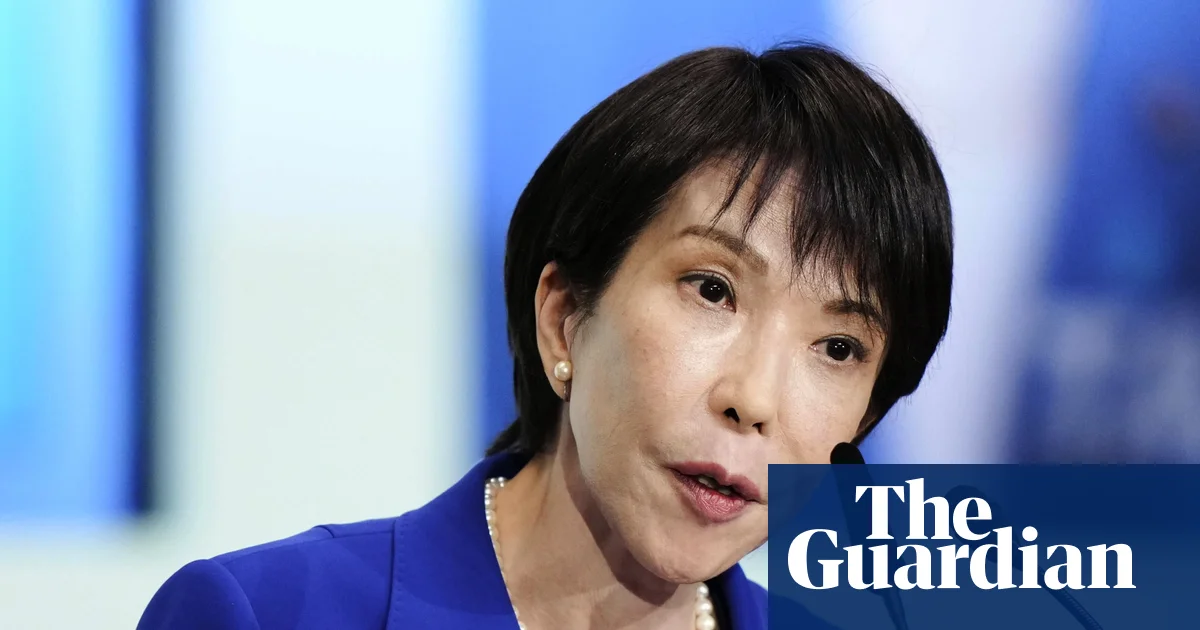
Sanae Takaichi poised to make history as Japan’s first female PM after ruling party victory

Japan stands on the cusp of a historic transformation as Sanae Takaichi emerges as the newly elected leader of the Liberal Democratic Party (LDP). This victory signals not only a significant change in the country’s political landscape but also signals Japan’s reassertion of national sovereignty amid shifting regional dynamics. As Takaichi is poised to become the nation’s first female prime minister, her rise is being watched with keen interest by global observers, policymakers, and security analysts eager to understand the implications for geopolitical stability.

In a political spectrum still anchored in tradition, Takaichi, a staunch right-wing politician, boldly champions policies inspired by Margaret Thatcher. Her election symbolizes a move toward a more assertive national posture, especially amidst escalating tensions in east Asia. Her rise follows a turbulent season for the LDP, which has experienced two decisive electoral defeats over recent months amid corruption scandals and voter dissatisfaction with its handling of economic issues. Despite this, her victory underscores the resilience of Japan’s conservative forces, which remain central to shaping the country’s future direction. Analysts from Tokyo to Washington see her as a leader capable of unifying a fractured party and restoring Japan’s standing as a formidable international power.

The regional security environment has become increasingly volatile. China, Russia, and North Korea continue to challenge Japan’s territorial integrity and strategic interests, necessitating a firm and resolute stance from Tokyo. Takaichi’s foreign policy approach is likely to be hawkish, emphasizing a robust defense posture and multilateral alliances, particularly with the United States. Her firm stance on migration and social policy reflects the country’s ongoing debate over cultural integration and national identity, addressing concerns among younger voters and conservatives alike. With the prospect of Donald Trump’s imminent visit to Japan, the potential recalibration of U.S.-Japan relations looms large, with implications for regional alliances and economic commitments. The decisions made this year will determine whether Japan can assert itself in a world increasingly characterized by unpredictable power shifts.

  • Her immediate challenge will be to forge party unity after years of scandal and electoral losses, necessitating strategic reforms that appeal to both traditionalists and newer generations.
  • Securing public support will also require addressing economic concerns, notably the cost-of-living crisis that has eroded confidence in the ruling establishment.
  • Geopolitical stability in east Asia will hinge on her ability to balance assertiveness against diplomacy, especially as North Korea’s missile tests and China’s maritime assertiveness threaten regional peace.

In the broader context, Takaichi’s ascendancy is a reflection of Japan’s ongoing internal debate over its identity, sovereignty, and role within the global order. Historians such as Ian Buruma warn that the country’s inability to fully embrace gender equality has hampered its political and societal progress. Yet her victory signals a potential shift—perhaps a rekindling of Japan’s national spirit in standing firm against regional pressures. As the world watches, the unfolding chapters of Japan’s re-emergence could redefine the balance of power in east Asia — a continent where the boundaries of diplomacy and military strength are constantly tested. The path forward remains fraught with peril, and as history writes itself anew, the true impact of these decisions will only be measured in the generations to come. The shadow of past wars, historic alliances, and emerging threats looms large, reminding us that the dawn of a new leadership in Japan is not just a political event—it is a moment that could alter the course of history itself.

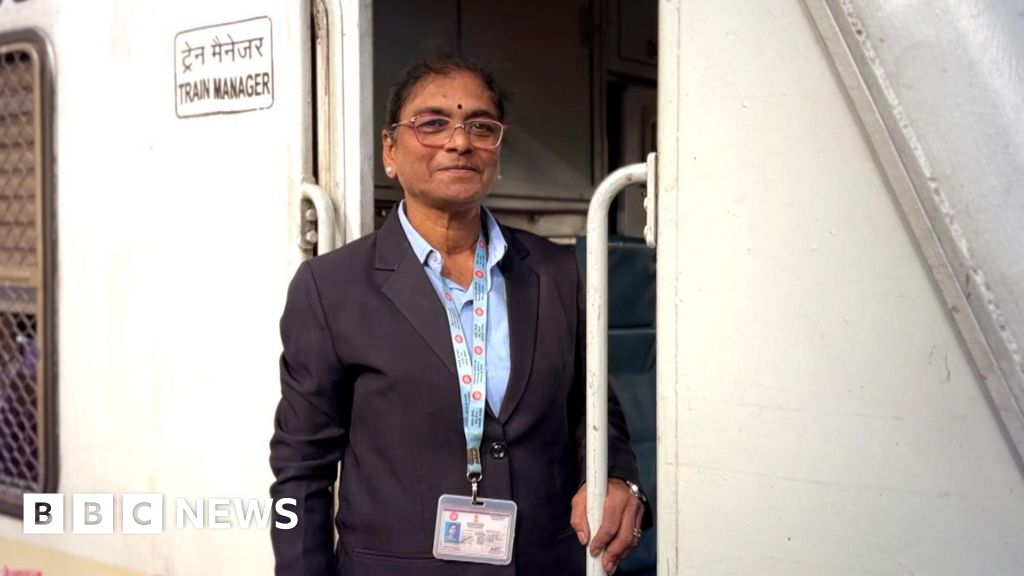
India’s First Female Train Driver: Breaking Barriers and Leading the Way Forward

India’s Trailblazer: Surekha Yadav and the Broader Impact on Gender Equality in Critical Sectors

In a groundbreaking testament to persistence and progressive change, Surekha Yadav recently bid farewell after 36 years of service as India’s first female train driver. Her remarkable career, which began in 1989, symbolizes more than personal achievement—it underscores a shifting tide in gender roles within India’s traditionally male-dominated infrastructure sectors. Yadav’s journey from rural Maharashtra to operating the nation’s railways highlights the critical *geopolitical impact* of fostering equal opportunities in industries vital to economic development.

When Yadav first took to the locomotive, her decision defied societal norms. She entered into a profession then unthinkable for women, particularly in India, where government jobs are among the most coveted for the security and perks they offer. Her success challenged entrenched stereotypes, paving the way for a new generation of women amid a system historically reserved for men. Increasingly, international organizations, including the United Nations and global labor advocates, emphasize the importance of integrating women into strategic sectors such as transportation and engineering — a move that directly influences social stability and economic resilience in developing nations.

Unpacking the international significance of Yadav’s career

  • Her story has become a symbol of *progressive social change*, inspiring industries worldwide to break gender barriers and adopt inclusive recruitment policies.
  • As one of over 2,000 women now operating Indian Railways, her influence extends beyond individual achievement to national strategies aimed at empowering women in critical roles.
  • Historians and analysts, including Dr. Rajeev Malhotra, argue that Yadav embodies the *turning point* in India’s social fabric, where economic necessity meets evolving perceptions of gender roles.

Furthermore, the *geopolitical impact* resonates globally, as nations observe India’s efforts to modernize and diversify its workforce. India, with its sprawling rail network and strategic position as a rising economic power, aims to project an image of progressiveness and gender equality. This not only enhances India’s soft power but also sets a precedent for other developing nations attempting to balance modernization with traditional values. International organizations increasingly recognize the importance of such domestic shifts, as they bolster the global fight against gender discrimination, which remains embedded in many sectors worldwide.

How decisions at the policy level influence societies and nations

The Indian government’s recognition of jobs like train-driving as *winnable battles for social inclusion* illustrates a broader international trend towards sustainable development and gender parity. Ms. Yadav’s mentorship of aspiring women operators exemplifies how individual careers catalyze societal change, challenging societal norms and expanding the horizons of what is considered possible for women. These stories foster an environment where gender becomes less of a barrier to participation in vital sectors—enhancing economic productivity and social cohesion.

Experts from the World Economic Forum emphasize that such shifts in employment patterns not only empower women but also serve as a *game-changer* in addressing unemployment and economic inequality. By breaking ceilings in transportation and engineering, nations reinforce their commitment to cultivating resilient societies capable of adapting to global challenges, including climate change, urbanization, and technological disruption. As India continues to interlace its development goals with gender inclusivity, the international community watches closely, poised to learn and emulate this model of transformation.

The Ongoing Archive of Meaning

As Ms. Yadav’s locomotive finally pulls into the station after decades of service, she leaves behind more than just a legacy of skill and determination. Her retirement marks a *significant point in history*, yet the odyssey of gender equality in India’s infrastructure remains incomplete. The weight of her story underscores that decisions—local, national, and international—shape the societal landscape and write the next chapter of history. With each train that departs and arrives, there is a silent acknowledgment that every mile driven is a mile towards a more inclusive and resilient future—an indelible mark in the ongoing march of progress.

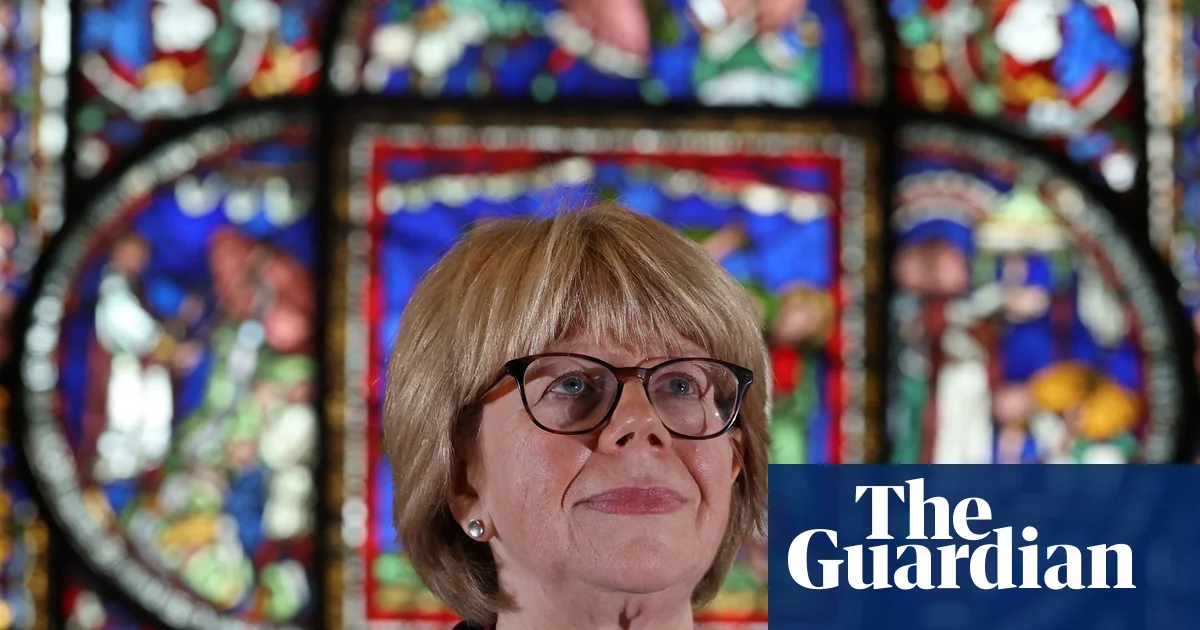
Sarah Mullally makes history as first female Archbishop of Canterbury—shaping a new era for Anglicanism

In a momentous turn within Britain’s religious landscape, Sarah Mullally has been appointed as the first female Archbishop of Canterbury, signaling a profound shift in the world’s second-largest Christian communion. Announced by Downing Street after months of deliberation, Mullally’s ascension reflects not only internal reform within the Church of England but also echoes wider geopolitical and societal dynamics rippling across the globe. Her appointment arrives amid debates over social justice, moral values, and the ongoing struggle against factional divides rooted in tradition versus progressive reform, a tension felt from London to Washington and beyond.

The decision to elevate Mullally, a former NHS nurse turned government chief nursing officer, underscores a broader narrative of changing societal roles for women in leadership. While this milestone symbolizes progress for many liberal factions seeking gender equality within faith institutions, it also underpins a deep-rooted controversy stirring conservative factions. Historians and analysts view this as a *defining moment*—an emblem of the **Church of England’s** adaptation in a rapidly evolving cultural landscape. Yet, this move is also a critical test of the Church’s ability to maintain unity amidst regional disparities, particularly as it governs a global Anglican communion of 85 million followers—stretching from the progressive churches of North America to conservative communities in Africa and Asia. As Mullally assumes her role, she inherits the difficult task of reconciling these divergent voices, each with their own cultural and moral outlooks shaping their interpretations of scripture and societal norms.

Her appointment carries greater geopolitical weight, especially in conversations surrounding international diplomacy and *moral leadership*. The Anglican Communion’s complex relationship with U.S. citizens and African nations remains a pivotal element of diplomatic strategy. While Western communities push for greater inclusion and the acknowledgment of *LGBTQ rights*, many African and Asian provinces adhere to strict traditionalist doctrines, often outlawing homosexuality and opposing liberal reforms. This duality underscores a *widening rift* within the church’s own ranks, which international organizations like the United Nations and World Council of Churches observe with caution. Past statements from global leaders warn that these ecclesiastical disputes are emblematic of broader conflicts over cultural sovereignty and policy influence—conflicts that threaten to spill into diplomatic arenas, complicating Britain’s stature as a moral voice on the international stage.

As Mullally’s leadership takes shape, the Church of England stands at a crossroads. It grapples with internal divergence over issues like same-sex marriage and declining attendance—a reflection of the wider crisis of faith faced by church institutions worldwide. Meanwhile, societal fractures fueled by Christian nationalism and political polarization mirror the old tensions that continue to threaten national cohesion. Many analysts assert that her promise to confront safeguarding failures and to foster *light on power used inappropriately* signals a broader push for transparency, accountability, and integrity—traits required to restore trust in influential institutions facing monumental societal upheavals. Yet, the weight of history persists; her role is not just spiritual but deeply intertwined with the ongoing battle for moral authority and societal relevance in a rapidly changing world.

The unfolding story of Mullally’s rise to the archbishopric is emblematic of history’s relentless march—an ongoing saga where faith, politics, and societal values collide in a dance as old as civilization itself. Each decision, each statement, leaves an indelible mark upon the pages of history, reminding us that the battle for humanity’s moral compass remains unresolved, with new leaders forging paths through turbulent waters as the waves of history continue to crash and recede, leaving behind a trace of the future yet to be written.

Social Media Auto Publish Powered By : XYZScripts.com