Matox News

Truth Over Trends, always!

Qantas Unveils Game-Changing Ultra-Long-Range Airbus for Non-Stop Sydney to London & New York Flights

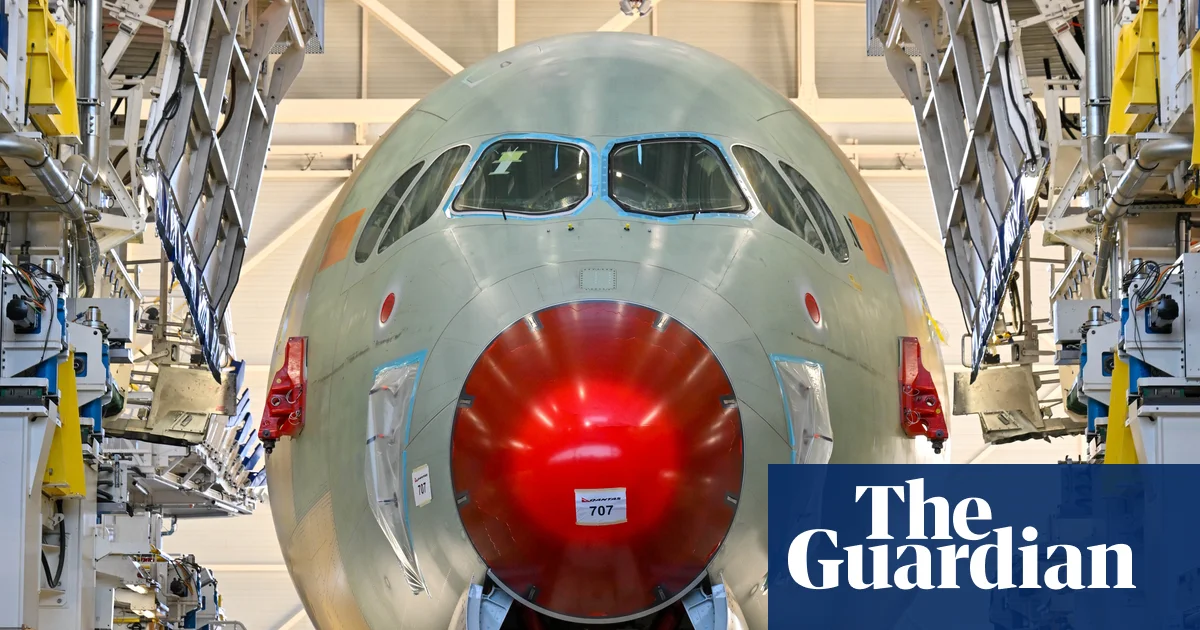
The global landscape of aviation and international connectivity is on the brink of a transformative shift, driven by the ambitious plans of Qantas and the ongoing evolution of aerospace technology. The Australian airline recently unveiled the first images of its next-generation aircraft, an Airbus A350-1000ULR, which is set to revolutionize long-haul travel by enabling non-stop flights from Sydney to London and New York starting in 2027. This development signifies more than just a new type of aircraft; it symbolizes a strategic move by Qantas to establish dominant global routes, reduce travel times, and secure competitive advantages in the fierce international aviation market. Such advancements, while promising for travelers, have wide-ranging implications for geopolitics, economic influence, and societal change.

In crafting this ultra-long-haul flight network, Qantas is positioning itself to challenge existing transcontinental aviation standards, with the aircraft scheduled for test flights in 2026 at Airbus’s Toulouse assembly line. The airline has ordered a dozen of these aircraft as part of its Project Sunrise, a strategic initiative aimed at connecting Australia directly to global hubs, bypassing traditional stopover points.

  • These non-stop flights will cut travel times up to four hours, significantly altering international mobility and opening new avenues for global commerce, tourism, and cultural exchange.

While some analysts, such as those at the International Air Transport Association, highlight the benefits of reduced travel time, critics warn that this acceleration of global connectivity could deepen geopolitical tensions and economic disparities. The dominance of Australia in long-haul aviation might diminish reliance on transcontinental hubs in Asia or the Middle East, impacting regional influence and shifting international power balances.

Beyond the technological and economic implications, these developments further underscore how decisions made by multinational corporations like Qantas impact societies worldwide. The push for faster, more direct routes exemplifies a growing trend towards minimizing geographical barriers, which, according to historians specializing in globalization, could lead to a new era of interconnectedness—yet also exacerbate existing inequalities. The emphasis on efficient global travel aligns with broader geopolitical strategies that favor the free flow of capital and people, often at the expense of local industries and national sovereignty. International organizations such as the World Trade Organization have noted that such advancements may foster economic growth but also pose challenges for labor markets, especially in regions less equipped to adapt to rapid technological shifts.

As the world hurtles toward an era where the boundaries of distance are continually compressed, the weight of history presses ever more heavily. The unfolding story of Qantas’s bold leap into ultra-long-haul aviation is not just about advancements in flight; it is a reflection of an era where technological progress and geopolitical ambitions intertwine, shaping the future of global society. Whether these developments herald a new age of prosperity or deepen divisions remains to be seen. What is certain, however, is that the decisions now being made will echo through history, for better or worse, as the world watches with bated breath—an unfolding saga where every mile traveled is a step further into a future yet unknown.

EU Court: Pets on Flights Now Just Baggage—Standards Lowered for Travelers

European Court of Justice Declares Pets as Baggage: Shaping International Liability Rules

In a landmark decision that could reverberate across Europe and beyond, the European Court of Justice (ECJ) has definitively classified pets transported by airlines as baggage. This ruling, born from a contentious case involving a lost dog during an Iberia flight from Buenos Aires to Barcelona, underscores a significant shift in how international flight liabilities are understood, with profound geopolitical implications. As debates intensify around the status and welfare of companion animals, this decision crafts a legal framework that emphasizes the role of airlines in their cargo management, potentially recalibrating international standards and influencing judicial interpretations globally.

The case arose after Felicísima, the owner of Mona, a pet dog, embarked on a long-haul journey, only to see her beloved animal escape during transfer and subsequently become lost despite extensive search efforts. The incident, ultimately classified as the loss of baggage under the Montreal Convention, was pivotal. The ECJ ruled that since no special declaration about Mona’s contents was made at check-in, the airline’s liability was limited, awarding just over €1,500 despite the owner’s €5,000 claim. This decision clarifies the legal standing of animals in transit, casting long shadows over international commerce and responsible pet transportation. Analysts and legal scholars interpret this as a reinforcement of airlines’ authority to treat animals as cargo, effectively redefining the boundaries of liability and responsibility.

The ruling’s geopolitical impact is palpable. Countries observing the European Union are left to consider the broader implications for animal welfare, international trade, and security protocols. The ECJ’s explicit wording states that animals fall under baggage and are subject to the liability framework established for cargo, even acknowledging the EU’s recognition of animal welfare as a general interest. This raises questions for international organizations like the ICAO (International Civil Aviation Organization), which will need to adapt its guidelines to account for such rulings. For global powers, the message is clear: transportation of pets is a legal matter rooted firmly in cargo policy, complicating efforts to extend more compassionate or protective standards without international consensus.

Furthermore, nations outside the EU are observing with a mixture of alarm and strategic recalibration. Many developing countries, where pet tourism and expatriate communities thrive, now face a future where airlines could prioritize cargo standards over animal welfare unless established through bilateral agreements. Meanwhile, human rights and animal advocacy groups are warning that this legal interpretation might diminish the already fragile protections for companion animals. As one leading analyst notes, “It’s a turning point—where economic interests and legal clarity threaten to eclipse the emotional bonds we forge with our animals, transforming them into commodities regulated solely by international cargo conventions.”

As history continues to unfold, the weight of this decision will likely challenge lawmakers and the judiciary alike, forcing a reevaluation of how societies balance commerce, compassion, and responsibilities. The echoes of this ruling will resonate in the corridors of power, compelling a global conversation about the moral obligations of nations in safeguarding not just human lives but the lives of those animals that share our journey into an increasingly interconnected and legally complex world. The unfolding chapters remain ominous, and it is within these deliberations that the future of international animal transport—and perhaps the soul of 21st-century global governance—will be written.

Munich Airport halts flights again over drone sightings—disrupting travel for a second straight day

In a clear reflection of the geopolitical tensions simmering across Europe, recent drone sightings have disrupted vital infrastructure, exposing vulnerabilities in regional security and sovereignty. Munich airport’s second consecutive day of shutdowns due to unidentified drone activity highlights the delicate balance between technological advances and national defense. As dozens of flights have been diverted or canceled, impacting thousands of passengers, experts warn that these incidents are more than mere nuisances—they are strategic signals from a shifting international security landscape. Authorities in Denmark, Norway, and Poland have also suspended flights, while Romania and Estonia directly linked recent aerial incursions to Russia, which vehemently denies any involvement, dismissing allegations as hysteria designed to inflate military budgets. This pattern indicates a troubling escalation—one that could redefine how nations defend their airspace and sovereignty.

An analysis from military historians and security experts emphasizes that these drone incursions are increasingly sophisticated and politically motivated. German Interior Minister Alexander Dobrindt called the first night’s drone activity a “wake-up call” for Europa’s defensive capabilities, explicitly noting the growing difficulty in policing and defending against small, yet potentially devastating, unmanned aerial threats.

  • Germany is already preparing legislative changes to authorize the military to shoot down drones if necessary

. The situation is compounded by recent statements from Bavarian officials, including Markus Söder, advocating for immediate drone destruction capabilities. Meanwhile, larger concerns loom over the role of Russia, with Poland, Estonia, and Ukraine highlighting that these incursions could be preludes to broader escalation in Ukraine or even hybrid conflicts spilling beyond traditional battlegrounds. The pattern of drone activity, particularly over military and industrial sites, aligns with Russia’s documented tactics of unconventional warfare and information destabilization.

International organizations and analysts warn that these developments threaten to plunge Europe into an era of uncertainty and heightened confrontation. The European Union, along with NATO, faces mounting pressure to adapt swiftly. The recent surge in drone activity coincides with financial cycles of escalating military spending across the continent, seen as necessary by many governments to counteract new-age threats. Meanwhile, the United States closely monitors the situation, with experts warning that unchecked drone escalation could alter the balance of power, especially if it incites an *accidental confrontation* or sparks a regional arms race. The global stage is witnessing a scenario not dissimilar to the early Cold War—where technological advances are fueling new conflicts and alliances are testing their resilience.

As the world watches with cautious trepidation, the ongoing drone saga signals more than a regional security scare. It marks a critical epoch—where the lines between peace and war are increasingly blurred by rapid technological evolution and geopolitical rivalry. The history books will remember this period as one of dangerous transition, where a series of small incursions could ignite the sparks of a larger conflict. The decisions made today—whether to escalate, negotiate, or militarize—will echo loudly through the corridors of history, forging a future that remains uncertain but undeniably imminent. In a world on the brink, every drone’s buzz becomes a reminder: the era of traditional warfare is fading into a new realm, where the prices of complacency could be paid in blood and history’s darkest shadows.

Why Turning on Airplane Mode Matters for Young Passengers on Flights

Shaping the Future: How International Decisions and Technology Reconfigure Geopolitical Boundaries

In an era punctuated by rapid technological advancement and shifting alliances, geopolitical impact is evident in every facet of international relations. Recent episodes of global decision-making expose the profound influence that international institutions and national policies wield over the lives of societies and nations worldwide. Whether it’s the ongoing debates surrounding the rollout of 5G networks or the lingering shadows of past treaties, each decision ripples across borders, challenging established security protocols and redefining power balances. Historically, analysts and historians like Niall Ferguson and Margaret MacMillan warn of the crucial turning points where technology and diplomacy intertwine—each choice shaping the contours of the 21st-century global order.

The core of recent controversy lies with the deployment of 5G wireless technology. Governments, including Australia and the United States, have voiced serious aviation safety concerns linked to the new standard’s spectrum proximity to aircraft navigation frequencies. Airline industry leaders and safety experts fear that the close spectrum overlap could cause electromagnetic interference, jeopardizing critical phases of flight such as landings. While the European Union has largely moved forward without significant incidents, the debate underscores a fundamental tension: how technological progress is constrained by and influences international standards. The Federal Aviation Administration and Boeing once studied this issue, concluding in 1992 that electronic devices during non-critical flight phases did not interfere. Still, the recent proliferation of high-speed 5G networks, particularly with the advent of millimeter-wave spectrum, reignites a pivotal question—how do nations balance innovation against safety risks in a tightly controlled electromagnetic environment?

Crucially, decision-making regarding spectrum allocation is rooted in international cooperation through organizations like the International Telecommunication Union (ITU). Nonetheless, the clash between expanding mobile broadband and aviation security reveals the limits of existing governance frameworks. As analysts confront the complexities of 5G’s near-spectrum overlap with traditional navigation bands, it becomes evident that how nations respond to these technological challenges will directly influence their geopolitical resilience. Countries that quickly adapt or lead in resolving such conflicts may gain strategic advantages, while others risk sidelining safety standards, fostering distrust and instability. The ongoing struggle exemplifies a broader narrative: international conflicts over resources, technology, and security will determine the global power structure for decades to come.

Another significant geopolitical layer involves international diplomacy and regional alignments. While EU nations have relatively integrated policies allowing residual use of personal devices, the US and Australia remain cautious, citing potential ground interference. These discrepancies threaten to fracture global standards, potentially creating a digital and security rift reminiscent of Cold War-era divisions. Experts warn that such divergences may pave the way for a new form of technological sovereignty, where nations prioritize national interests over cooperation, heightening risks of conflict and fragmentation. As governments grapple with the future of wireless networks, history reminds us that the unchecked pursuit of technological dominance often fosters geopolitical rivalries, the repercussions of which resonate across political, social, and economic domains.

As multilateral institutions and national leaders scramble to craft policies that mitigate risks while embracing innovation, the enormity of the ongoing technological and diplomatic evolution becomes unmistakably clear. Today’s decisions are not merely about spectrum or aviation safety—they are the forging of a new geopolitical landscape where the fabric of international power is woven anew. Moving forward, the choice to prioritize safety, sovereignty, and cooperation will determine whether history will record these moments as a renaissance of collaboration or as the dawn of a fractured and multipolar world. The world stands at a precipice, and in the silent corridors of power, the echo of these decisions will reverberate through the ages—molding a future still being written in the crucible of history’s unfolding saga.

Social Media Auto Publish Powered By : XYZScripts.com