Matox News

Truth Over Trends, always!

Robot hero: Young tech saves elderly woman on Ukraine's frontlines
Robot hero: Young tech saves elderly woman on Ukraine’s frontlines

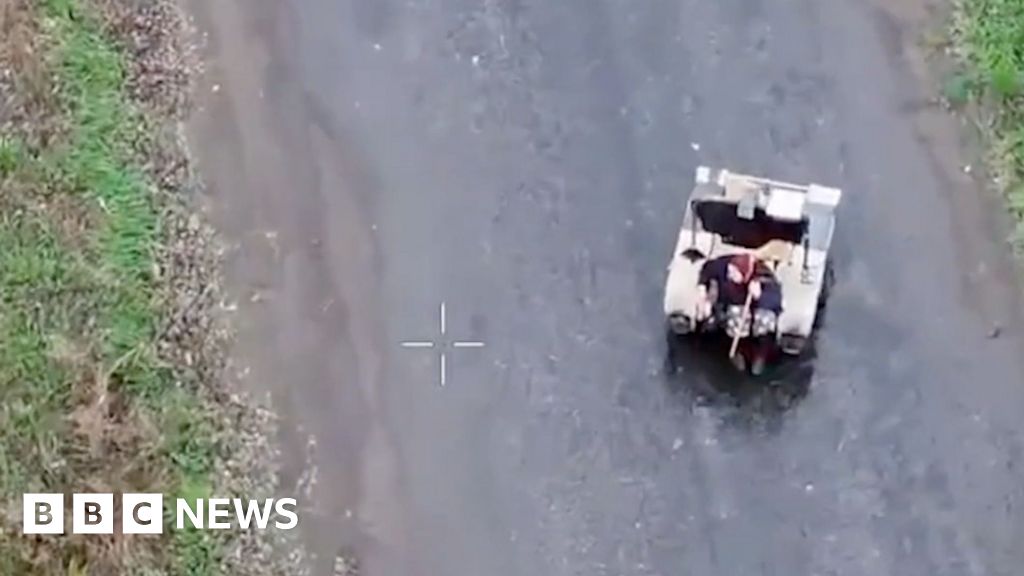
Recent events emerging from the Ukrainian conflict underscore a shifting paradigm in modern warfare, where technology, human resilience, and geopolitical stakes converge. A remarkable incident captured through drone footage revealed a groundbreaking development: a rescue operation leveraging autonomous robotic technology. Ukrainian forces deployed a drone to assist an elderly woman, Antonina Horuzha, who found herself stranded and exhausted amidst the chaos of ongoing hostilities. The footage, showing a robot with the inscription “grandma, sit down,” approaching her, exemplifies how drones have become not just tools of combat but vital lifelines to civilians caught in conflict zones.

This scenario signals a **turning point** in the geopolitical landscape. Ground drones—originally designed for reconnaissance and targeted strikes—are increasingly serving humanitarian roles. Analysts suggest that this evolution demonstrates the Ukrainian military’s adaptive use of technology in response to intense, resource-stretched warfare. Such outbreaks of innovation are often driven by necessity; Ukraine’s military factions, under the auspices of President Zelensky’s government, have integrated drone technology to bridge gaps created by compromised supply lines and dwindling manpower. According to military experts and historians tracking technological warfare, the rise of autonomous rescue drones could redefine how nations safeguard both their soldiers and civilians in future conflicts.

International organizations such as the United Nations and defense analysts acknowledge this technological shift as a potential force multiplier for Ukraine but also raise ethical questions. As autonomous systems gain prominence, concerns about conflict escalation, unintended consequences, and escalation of civil casualties come to the forefront. Moreover, Ukraine’s reliance on cutting-edge drone technology has prompted strategic considerations among adversaries—particularly Russia. How these technologies will influence the broader East-West power balance remains uncertain. Historically, such innovations have often accelerated conflict, making it more unpredictable and destructive. In this light, Ukraine’s successful use of rescue drones illustrates both resilience and a global trend: war increasingly becomes a battleground of technological innovation.

As visions of the future of warfare unfold, many international observers warn that this technological arms race may have consequences beyond the battlefield. Suppose autonomous, rescue, or even combat drones become widespread; questions about sovereignty, control, and the moral dilemmas of artificial intelligence in warfare are likely to intensify. For now, Ukraine’s daring deployment underscores a fundamental geopolitical shift—one where technology becomes a new front in ideological and territorial struggles. The ongoing saga of this conflict, however, leaves us with a stark reminder: the tide of history is still turning, and every innovation carries the weight of the future’s unpredictable outcome. As society watches from the sidelines, it is clear that the coming years will definitively shape the rules of engagement in this new era of warfare—an era where machines no longer merely serve, but increasingly define the destiny of nations.

Russia’s Mega Missile Showdown: Powerful But Crashing on the Frontlines

In a landscape marked by rapid technological advancements, Russia’s recent missile tests reveal a nation still striving to modernize its nuclear arsenal amidst ongoing geopolitical tensions. Despite signals from Moscow that the Sarmat intercontinental ballistic missile (ICBM) would soon be operational, recent failures cast doubt on its readiness, illustrating the broader challenges faced by Russia in maintaining a credible nuclear force. This development signals a significant industry disruption within Russia’s defense sector, where modernization efforts have stalled and technological hurdles have hampered deployment timelines. Meanwhile, the US continues to monitor with precision, emphasizing the importance of surveillance and strategic advantage.

Russia’s strategic missile program, once considered a centerpiece in its military doctrine, now faces setbacks that could impact global stability. The Sarmat missile, capable of carrying multiple warheads and targeting distant adversaries, was heralded as a game-changer in nuclear deterrence. However, recent test failures—despite high-profile declarations from President Vladimir Putin—underscore the risks of overreliance on aging technology and ambitious claims. As noted by military analysts at MIT and defense think tanks, this persistent technical lag leaves Russia’s nuclear deterrent vulnerable, which could prompt shifts in global strategic calculations. Concurrently, Moscow’s emphasis on replenishing assets essential to the Ukraine conflict has diverted resources from nuclear modernization, illustrating a prioritization of conventional forces over strategic deterrence. Notably, the scheduled test of the shorter-range Yars missile demonstrates Russia’s ongoing efforts to maintain a layered nuclear posture, but confidence in these systems remains fragile amid repeated failures. Russia’s internal debate about the efficacy of its arsenal reflects a broader trend among key military powers—where innovation is often outpaced by geopolitical ambitions and budgetary constraints.

The implications for business and innovation in the defense industry are profound. As nations like the United States utilize advanced surveillance platforms such as the RC-135S Cobra Ball—equipped with optical and electronic sensors—to monitor missile tests, private defense contractors and government agencies face mounting pressure to accelerate technological breakthroughs. Indeed, the rise of artificial intelligence, machine learning, and next-generation sensors are reshaping how strategic assets are tested, validated, and deployed. Private sector innovators and established defense giants are now competing in a high-stakes race to develop systems capable of ensuring missile accuracy, stealth, and rapid deployment—areas that are becoming central in the era of disruptive military technology.

Looking ahead, the future trajectory of nuclear modernization remains uncertain. While Russia’s failure to bring the Sarmat into operational readiness underscores the fragility of current military technology, it also emphasizes the increasing importance of innovation that can disrupt traditional deterrence models. Leading experts, including those from Gartner and the Belfer Center at Harvard, warn that the next decade will be critical as advanced hypersonic weapons, cyber capabilities, and AI-driven command systems redefine strategic stability. The lesson is clear: in the race for supremacy, businesses and governments must prioritize disruptive innovation to stay ahead of technological obsolescence. Otherwise, the risk is that defects in current arsenals could introduce unpredictable instability, forcing the world into an unpredictable future where technological primacy determines peace or conflict.

Social Media Auto Publish Powered By : XYZScripts.com



