Matox News

Truth Over Trends, always!

Private schools lose fight against VAT hikes, fueling debate on society's priorities
Private schools lose fight against VAT hikes, fueling debate on society’s priorities

Private Schools’ Challenge to VAT Removal Sparks Broader Social Debate

In recent developments, a coalition of low-fee private schools has actively contested the government’s decision to eliminate the VAT exemption previously granted to them. This move not only affects the financial sustainability of these institutions but also underscores the larger societal debates surrounding access to quality education and the widening economic divide within communities. As education remains a fundamental pillar of societal progress, the repercussions of policy decisions resonate beyond school walls, impacting families and shaping communities’ futures.

The removal of VAT exemption has ignited protests and legal challenges from private school advocates who argue that it threatens the affordability of education for many families. These schools, often providing an alternative to overstretched public education systems, serve a significant demographic that relies on manageable tuition fees. By imposing VAT, critics contend that the government risks exacerbating inequalities within society, especially for lower-income families who see private schooling as a crucial pathway for social mobility. Sociologist Dr. Laura Higgins emphasizes that such policies directly influence families’ access to education, ultimately affecting children’s prospects and social integration.

Historically, education has been viewed as a cornerstone of social cohesion, yet policy decisions like these *can threaten the fabric of community life if they favor those with more economic privilege*. From a social perspective, the challenge lies in balancing fiscal responsibility with ethical imperatives to foster equity and opportunity. The debate also raises questions about how societal values are reflected in policy. According to social critic Matthew Crowley, an increase in the cost of private education risks creating a divided society where the social mobility of lower-income families is compromised, with long-term ramifications for community stability and cohesion.

As the controversy unfolds, policymakers face the difficult task of considering the broader social consequences of their decisions. Advocates for inclusive education argue that public resources should be directed towards strengthening state institutions, yet they acknowledge that a diverse educational landscape can promote healthy competition and innovation. This dilemma touches on fundamental social issues—how societies value education, how they address inequality, and how they uphold the human dignity of all children. If the current trajectory continues, families may find themselves caught in a cycle of escalating costs and limited opportunities—undermining the very ideals of a fair and just society.

In reflecting on these social tensions, one is reminded of the words of societal reformer George Bernard Shaw, who once said, “Progress is impossible without change, and those who cannot change their minds cannot change anything.” As communities grapple with the challenge of ensuring equitable access to education, there is a vital hope that society can adapt—creating policies rooted in human rights, moral responsibility, and community solidarity. The path forward demands dialogue, compassion, and a relentless commitment to the transformative power of education—not just for individual success, but for the moral fabric of our society. Only then can society truly stand resilient against the forces that threaten to divide us, guiding future generations toward a shared destiny of opportunity and hope.
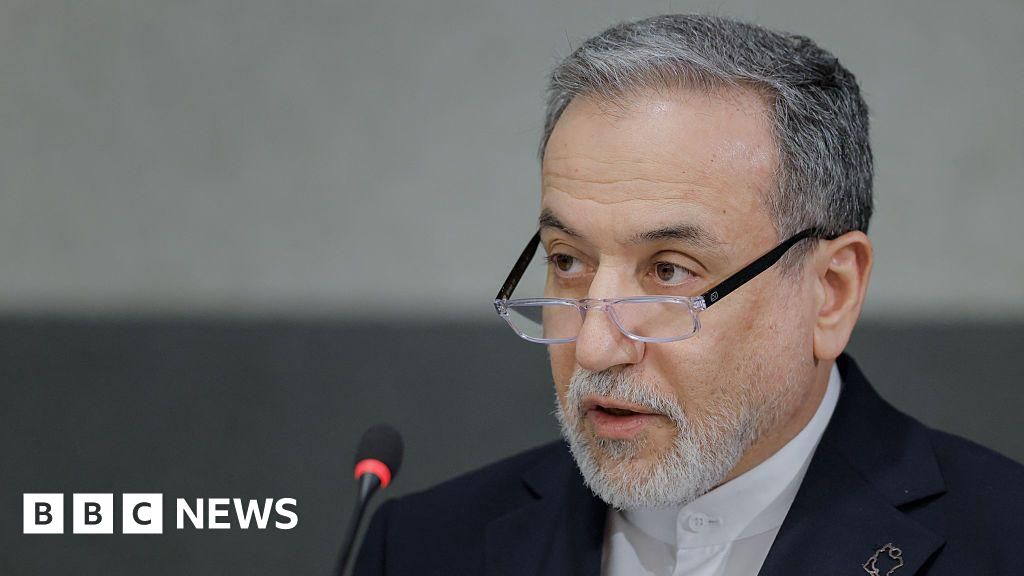
Trump teases limited military strike on Iran, fueling tensions among youth conservatives

In a rapidly evolving geopolitical landscape, President Donald Trump issued a stark new threat against Iran just days after he suggested the Middle Eastern nation had approximately ten days to accept a comprehensive deal aimed at restricting its nuclear ambitions. This provocative stance underscores a broader shift in U.S. foreign policy, emphasizing maximized pressure and increased brinkmanship. The timing and rhetoric raise fresh concerns over the potential unraveling of diplomatic efforts that have sought to stabilize the region and prevent the proliferation of nuclear weapons.

The immediate aftermath of Trump’s announcement has already reverberated across global capitals and international institutions. Major powers such as Russia and China, along with European allies, have expressed alarm over what many interpret as a return to a confrontational posture that risks plunging the region into renewed instability. The United Nations Security Council and other multilateral platforms are closely monitoring developments, with some analysts warning that miscalculations or accidental escalations could ignite regional war or diminish fragile diplomatic gains made over recent years. These fears are compounded by recent historical patterns where diplomatic deadlines have often precipitated crises, energizing hawks who favor an uncompromising approach towards Iran’s nuclear program.

Generally perceived as a critical juncture in ongoing negotiations, the situation has sparked commentary from historians and security experts warning against the dangers of rigid ultimatums. Notably, international organizations like the International Atomic Energy Agency (IAEA) stress the importance of sustained diplomacy. “Decisive actions that ignore the complex web of regional and global interests risk undermining decades of diplomatic progress,” said Dr. Laura Matthews, a renowned geopolitical analyst. Her words echo concerns among many in the international community who view Iran’s nuclear pursuits less as an immediate threat and more as a complex negotiation with significant long-term implications for global security and regional stability.

  • The recent escalation underscores the fragile balance of power in the Middle East, where alliances are shifting and mistrust runs deep.
  • U.S. allies in Europe and the Gulf Cooperative Council have issued mixed responses, with some urging restraint and others expressing support for a firm stance.
  • Diplomatic efforts, including recent talks in Vienna and Geneva, aim to revitalize the 2015 Joint Comprehensive Plan of Action (JCPOA), yet these negotiations now face unprecedented hurdles.

As the world watches with bated breath, the unfolding drama risks settling into a decisive moment that could determine the future of global peace and security. The complex interplay of national interests, ideological divides, and historical grievances suggests that this is more than a simple matter of diplomacy—it is a test of the international community’s collective will. The decisions made in this critical window could either usher in a new era of cooperation or plunge entire regions into chaos. The weight of history presses heavily on the shoulders of current leaders, and once the course is set, the ripple effects will resound for generations to come, transforming the geopolitical landscape in ways yet unforeseen. Here, at this precipice, the world stands on the edge of a new chapter—one that will be written by those who dare to shape the future amidst the shadows of past conflicts.

Safe Sun Apps Fueling Skin Cancer Risks, Undermine Youth Awareness

Resurgence of Tanning Culture Sparks Concerns Over Youth’s Health and Society

In recent years, technological advances and social media influence have fostered a troubling revival of tanning among Australian teenagers. Promoted through popular social media influencers and smartphone applications, a new wave of tanning culture is emphasizing “safe” and “healthy” routines—despite medical experts warning that any exposure to ultraviolet (UV) radiation carries significant health risks. These apps, some directed at users as young as four, guide users to intentionally expose themselves to UV rays, with features allowing customization of skin tone, tanning intensity, and even the application of oils or accelerants. This trend complicates societal efforts to combat skin cancer and influences family dynamics by normalizing risky behaviors at an impressionable age.

The Illusion of ‘Safe’ Tanning and Its Impact on Communities

  • Many of these apps suggest that tanning can be achieved gradually or within “safe” exposure thresholds. However, dermatologists like Dr. Deshan Sebaratnam refute this, emphasizing that “a tan is a distress signal from your skin,” indicating damage rather than safety.
  • Damage from UV radiation penetrates into DNA, causing mutations that can ultimately lead to skin cancer. Despite this, the marketing around ‘gradual’ tanning perpetuates misconceptions, undermining public health efforts and problematically targeting young people who are at a higher lifetime risk from early UV damage.
  • According to the Cancer Council Victoria’s SunSmart program, these trends threaten to undo decades of public health campaigns aimed at reducing tanning obsession, which historically has been associated with societal notions of beauty and status—but at what human cost?

Families and Education Under Siege by Cultural Shifts

In this social environment, families find themselves grappling with an increase in misinformation and risky behaviors. Schools and community programs face the challenge of counteracting pervasive advertising that normalizes tanning as a desirable or ‘safe’ activity. Sociologist Dr. Julia Connor notes that “cultural norms around tanning, often intertwined with notions of youth, beauty, and social acceptance, are deeply ingrained”—making interventions difficult. Meanwhile, education on the real dangers of UV exposure remains sporadic and often overshadowed by rapidly evolving marketing trends that glamorize sun-kissed skin.

What is more concerning is that the development of these apps often involves targeted marketing, using social media influencers who appeal directly to impressionable youth. Studies have shown that such strategies significantly influence adolescents’ perceptions about health and beauty. As a result, young individuals may prioritize appearance over their long-term health, inadvertently planting the seeds for skin cancer and other sun-related health issues. Community leaders and policymakers are called upon to more robustly regulate advertising and digital content, enforcing guidelines that prioritize critical education about UV risks.

Moving Toward a Society That Values True Safety and Health

Despite the mounting challenges, experts and social commentators emphasize that the only truly “safe” tan is a fake one, highlighting the importance of embracing natural skin tones or using certified tanning products that do not involve UV exposure. Alongside targeted public health campaigns, fostering a cultural shift away from superficial beauty standards rooted in tanning is essential. As historian Dr. Samuel Lewis reflects, “Society’s battle with beauty ideals is not solely about individual choices but about collective responsibility—how we redefine health, attractiveness, and societal values.”

Ultimately, society teeters on a precipice—where technology, culture, and health converge—challenging us to reflect on what kind of future we want to shape. The unchecked rise of risky tanning practices among youth echoes a larger narrative about how societal values can be distorted by social media and commercial interests. Yet, in this challenge lies an opportunity: to nurture a generation that values health over appearance, genuine safety over superficiality, and community well-being over individual vanity. Society’s collective hope may reside in the silent resilience of its families and educators united in advocating for a culture that understands that true beauty and health lie in self-respect and the courage to reject dangerous trends.

RuPaul’s Drag Race UK names its seventh reigning queen, fueling the next generation’s fierce talent

In an era characterized by rapid change and digitized chaos, the enduring significance of culture persists as the vital foundation upon which societies forge their identities. As Ortega y Gasset famously asserted, “The culture of a nation is the collective memory that shapes its future.” In this light, contemporary cultural phenomena serve not merely as entertainment but as the living record of a peuple’s values, traditions, and aspirations. The recent triumphs and innovations within cultural expression—be it art, music, or even televised art forms like drag culture—strike at the core of national and individual identity, underscoring that culture remains our most profound and personal form of history—a mirror and a prophecy.

Take for instance the spectacle of RuPaul’s Drag Race UK, which has garnered global attention yet remains intrinsically rooted in the UK’s vibrant craft of performance art. The recent series finale exemplifies how artistic performance functions as a battleground of cultural values, where beauty, self-expression, and resilience converge to challenge superficial stereotypes and to celebrate authentic individuality. Bones, crowned the series winner, embodies more than a flashy persona; she embodies a narrative of perseverance, tradition, and the reclaiming of cultural space, a testament to how artistic identity can serve as social commentary. Her journey from Soho’s underground scene to national recognition reminds us that the true power of culture lies in its capacity to foster community, affirm identity, and inspire societal reflection. As the philosopher Chesterton once observed, “Art may imitate life, but authentic art is life itself, expressed through beauty and courage.”

Nevertheless, as Tocqueville warned, the saturation of cultural products can lead to a kind of cultural exhaustion, diluting the richness of tradition in favor of fleeting trends. Critics argue that the fans’ call for greater diversity in drag—less homogeneity and more authentic representation—speaks to an inevitable evolution of a culture that must continuously refashion itself to stay vital. This is not a sign of cultural decline but a testament to its dynamic resilience. Yet, amidst this flux, the core principles of tradition—values of family, community, and authentic selfhood—must remain preserved. As G.K. Chesterton remarked, “Tradition means giving votes to the most obscure of all classes, our ancestors. It is the democracy of the dead.” In this way, culture remains a living dialogue between past and future, inspiring the youth to cherish their roots while daring to redefine them.

Ultimately, culture is both memory and prophecy—an ongoing reflection of who we have been and a vision of what we may become. The mosaic of our collective heritage guides us through the turbulent waters of modernity, reminding us that our true strength lies in honoring the principles that have sustained us. As T.S. Eliot contemplated, “We shall not cease from exploration, and the end of all our exploring will be to arrive where we started and know the place for the first time.” It is in this cyclical dance of remembering and dreaming that humanity finds its most eloquent voice—an anthem of tradition, a call to renewal, and a testament to the unbreakable unity of culture’s eternal dialogue.

4 Must-Have Tools Fueling the Next Tech Bubble

Tech Giants Accelerate Capital Expenditures Amid AI Boom

In a clear signal of disruption in the technology sector, leading companies are channeling unprecedented levels of capital into expanding their infrastructure, particularly focusing on artificial intelligence (AI) capabilities. During this earnings season, industry analysts have observed a notable trend: corporations like Google, Microsoft, and Amazon are aggressively increasing their capital expenditures (CapEx) to build out data centers and AI-specific infrastructure. This shift not only underscores their commitment to dominance in next-generation tech but also signals a strategic move to redefine competitive landscapes across digital ecosystems.

The implications are profound. As Lauren Goode from WIRED highlights, tech firms are not merely sitting on piles of cash—they are actively deploying these resources into expansive infrastructure projects, focusing heavily on AI hardware and data processing capabilities. Industry giants recognize that the future of tech hinges on the ability to process exponential data loads while enabling real-time, AI-driven decision-making. This aligns with insights from Gartner analysts who forecast that AI-driven data infrastructure will constitute over 50% of enterprise IT spending by 2025, challenging existing hardware paradigms and accelerating the disruption of traditional data center models.

Technological innovation is at the heart of this surge, with companies leveraging advances in semiconductor fabrication and edge computing. Disrupting established players like Cisco or traditional server providers, new entrants are pioneering energy-efficient and scalable AI hardware solutions designed to meet the massive computational demands of modern machine learning workloads. Experts such as Elon Musk have long emphasized that the next wave of tech supremacy depends on autonomous systems and AI infrastructure, pushing companies to pour billions into infrastructure that can support a future dominated by intelligent, autonomous systems.

  • Massive investments in data centers tailored for AI workloads
  • Development of custom AI chips to improve processing efficiency
  • Integration of edge computing to reduce latency and enhance real-time insights
  • Strategic partnerships with semiconductor firms to accelerate innovation

This dynamic shift signifies more than just infrastructure buildup; it bears the potential to __________________ the tech business model itself. Companies capable of scaling AI capabilities quickly will gain significant market share, disrupt traditional industries, and create new revenue streams. Critics warn that such rapid investment could inflate valuations and foster a tech bubble, but current industry trajectories suggest bold moves are necessary for those seeking dominance in an increasingly AI-centric world.

Looking ahead, the accelerated CapEx cycle in tech signals that the race for AI supremacy is more urgent than ever. Industry leaders and smaller innovators alike must adapt swiftly or risk being left behind as the foundational architecture for tomorrow’s digital economy takes shape. Disruption is imminent, and the companies that push the boundaries now will set the tone for the industry’s future. Those with the foresight and agility to innovate will define the next chapter of technological progress, making it clear that the era of AI-driven infrastructure is just beginning—and the stakes have never been higher.

Trump alleges foreign-owned meatpackers fueling U.S. beef price hikes | Donald Trump

The recent flurry of political rhetoric surrounding the U.S. meat industry underscores a broader geopolitical tension that extends far beyond domestic economic concerns. Donald Trump has accused foreign-owned meat packers of artificially driving up beef prices in the United States, prompting a demand for a Department of Justice investigation into what he claims is illicit collusion and price fixing. This sharp stance, announced days after electoral setbacks for the Republican Party, reveals how intertwined economic security and political narratives have become in the current global climate. While Trump has not provided concrete evidence, his claims resonate with longstanding fears of foreign influence and monopolistic practices in vital sectors, exacerbating doubts over the integrity of global supply chains.

What makes this controversy particularly significant is its potential geopolitical impact. The beef industry, a critical component of both the American economy and its food security, is now entangled with international trade dynamics. Trump’s earlier proposal to surge Argentinian beef imports to curb high prices exemplifies a broader strategy of leveraging trade policy to address domestic economic challenges. Such tactics could risk international partnerships, especially with nations like Argentina and Brazil, which are major global exporters of beef but may face increased tariffs or trade restrictions. These punitive measures could send shockwaves through international markets, prompting retaliatory tariffs and escalating tensions within transnational trade agreements, thereby undermining the stability of the *U.S.-Latin America* regional relations.

The ongoing debate over food security and trade policy also holds profound implications for geopolitical alliances. Critics, including international trade analysts and historians, warn that actions perceived as protectionist could weaken free trade principles and foster a cycle of economic nationalism. In the context of a world increasingly polarized by ideological conflicts and supply chain vulnerabilities, the U.S. is walking a fine line between protecting domestic industries and exposing itself to diplomatic fallout. Furthermore, global institutions like the World Trade Organization could be pushed into contentious disputes that threaten to erode the rules-based international order. As nations scramble to fortify their economic resilience, the decisions made in Washington could either catalyze a new era of cooperation or ignite a contest over resources and markets—a contest that history warns favor the more strategic and united actors.

Ultimately, as world leaders navigate these turbulent waters, the legacy of this moment will be shaped by whether they prioritize unilateral measures over multilateral diplomacy. The unfolding story of the U.S. beef industry dispute mirrors larger struggles for sovereignty, economic independence, and cultural identity in an interconnected world. Historians and geopolitical analysts observe that decisions made today—whether to escalate tariffs, impose sanctions, or foster cooperation—will, in time, define the geopolitical landscape for generations. As the smoke of political posturing begins to clear, the silent weight of history presses relentlessly onward, reminding us that every economic move carries the potential to reshape the fabric of international relations, forging new alliances or deepening old wounds. The world watches with bated breath, aware that in this arena of high stakes, not only cattle but entire nations are pawns on a chessboard of global power struggles.

England’s reform plans delayed again—now set for 2026, fueling youth skepticism.

Society Faces Critical Crossroads in Supporting Communities with Special Educational Needs

The recent postponement of reforms to the Special Educational Needs and Disabilities (Send) system in England underscores deep-rooted social and institutional inequities that continue to afflict families and communities. Originally slated for release in the autumn, the Schools White Paper, which aimed to address pressing issues within Send provisions, has been pushed back until early next year. By delaying this vital policy overhaul, the government risks perpetuating a broken system that fails to meet the needs of vulnerable children and their families, thereby deepening societal divides.

Social commentators and historians have long argued that large-scale social shifts require systemic change rooted in active listening and genuine engagement. Yet, critics warn that the government’s decision to extend the consultation period—despite clear calls for urgent action—sends a troubling message: the needs of families with children who have Send are being sidelined. The delays compound existing frustrations among parents, educators, and advocacy groups who have described the system as “in crisis.” The National Audit Office has even declared that the Send system is “not financially sustainable” and “failing” in delivering better outcomes. As local authorities face potential deficits in the billions, this crisis underscores the urgent necessity for comprehensive reform.

Families, often caught in the crossfire of bureaucratic inertia, bear the brunt of this stagnation. According to Anna Bird, chair of the Disabled Children’s Partnership, the uncertainty surrounding Send provision leaves parents feeling overwhelmed and dismissed, with many children waiting months or years for essential support. The moral and human stakes are high: children with Send are entitled to a society that recognizes their potential, yet systemic neglect erodes that promise. Meanwhile, local authorities warn that without root-and-branch reforms, they could face insolvency, further jeopardizing services for the most vulnerable. The County Councils Network points out that inaction could lead to a £6bn deficit by next March, placing enormous pressure on already strained resources.

Opposition voices, including the Liberal Democrat spokeswoman Caroline Voaden, decry the delay as a “betrayal” that only prolongs the suffering of children and families trapped within a broken system. Meanwhile, policymakers emphasize “co-creation,” engaging stakeholders through listening sessions and ministerial meetings, in hopes of crafting more informed reforms. Yet, some suggest that this process may be too little, too late, risking further erosion of public trust and worsening disparities in support for children with Send. The ongoing battles over funding and policy direction reveal a society grappling with moral questions: how long can a nation ignore its moral imperative to protect its most vulnerable?

As society stands at this crossroads, the question remains: will it heed the call for swift, meaningful action, or allow inequity and neglect to deepen? The lingering shadows cast by delays serve as a somber reminder of society’s moral obligation to foster inclusive, equitable communities. The hope is that, despite the obstacles ahead, a renewed collective commitment will emerge—one that transforms social policy into a beacon of hope and change. Society’s true strength lies in its ability to confront its challenges with unwavering resolve, guiding future generations toward a future where every child, regardless of their needs, is embraced with dignity, support, and opportunity.

Netflix doubles down on AI, fueling the future of entertainment amid industry splits

Netflix Embraces AI Innovation, Signaling Industry-Wide Disruption

In a move that underscores the transformative power of artificial intelligence (AI) across the entertainment sector, Netflix is positioning itself at the forefront of technological innovation. During its recent quarterly earnings report, the streaming giant explicitly stated it is “very well positioned to effectively leverage ongoing advances in AI,” highlighting a strategic shift that aims to redefine content creation and production workflows. Unlike narratives that paint AI as a threat to creativity, Netflix emphasizes its role as a tool for making the creative process more efficient—an approach that aligns with the broader industry trend of technological disruption brought about by generative AI.

While Netflix does not intend to depend on AI as the core of its content, the company’s recent experiments demonstrate a pragmatic approach to integrating this disruptive technology. For example, the use of generative AI in the Argentine show “The Eternaut” to craft a collapsing building scene, and other projects like “Happy Gilmore 2,” which employed AI to make characters appear younger, illustrate how content creators leverage AI for pre-visualization, visual effects, and post-production processes. These innovations not only accelerate production timelines but also open avenues for storytelling that were previously constrained by budget and time. In this context, AI becomes a catalyst for disruption that could redefine competitive dynamics within the industry.

Industry analysts like Gartner and institutions such as MIT have long predicted that AI-driven automation will drastically lower production costs, thus enabling new entrants and more agile competitors to challenge traditional media giants. However, this rapid evolution also sparks intense debates around ethical considerations and creative integrity. Artists express concern about AI tools that non-consensually utilize their work as training data, posing potential threats to job security and artistic authenticity. Despite these controversies, industry leaders like Netflix’s CEO Ted Sarandos assert that AI will serve as an enhancer, not a replacement, for human creativity. His comments reflect a broader consensus: innovation must complement, not substitute, genuine storytelling talent.

The implications for business models are substantial. Disruption driven by AI technology is poised to shift market leadership and content economics. As Netflix’s quarterly revenue edges upward to $11.5 billion, an increase of 17% year-over-year, it remains evident that leveraging AI for more efficient production could create a competitive edge in an increasingly crowded streaming landscape. With AI’s capabilities expanding rapidly, major players like Disney, Amazon, and Apple are likely to follow suit, pushing the industry toward a new paradigm where speed, customization, and innovation become the benchmarks of success.

Looking ahead, the industry faces a critical point of inflection. As AI tools become more sophisticated and widespread, the pressure on traditional filmmaking and content creation will intensify. Events like the upcoming TechCrunch conference in San Francisco from October 27-29, 2025, are expected to spotlight these trends, highlighting the urgency for companies to adapt quickly or risk falling behind in the relentless march of technological progress. The future of entertainment is undoubtedly intertwined with disruption driven by AI innovation. The companies that harness this wave of change—and do so ethically—will define the new standards of storytelling, business agility, and competitive dominance in the digital age.

Australia’s ‘Messy’ Trend Fueling Youth Unemployment Concerns

The Fragile Equilibrium: How Economic Policies and International Shifts Reshape Global Power

As Australia projects confidence on the global stage, highlighting its resilient labor market amidst volatile economic indicators, broader geopolitical repercussions come into focus. During this week’s G20 summit in Washington, Finance Minister Jim Chalmers has been vocal about Australia’s economic growth, emphasizing the strength of its employment sector as a model for stability. Yet, beneath this veneer of resilience lies an undercurrent of uncertainty, revealing how national economic decisions impact global power dynamics and societal realities. Major international organizations, such as the IMF and World Bank, continue to monitor these shifts closely, warning that regional economic health is increasingly interlinked with geopolitical stability.

The recent uptick in Australia’s unemployment rate—rising unexpectedly to 4.5%, the highest in nearly four years—serves as a stark reminder of vulnerability despite apparent prosperity. Historians and analysts warn that such fluctuations are not merely localized technicalities but embody profound systemic vulnerabilities that can ripple across economies. The Reserve Bank of Australia (RBA) is caught between balancing inflation reduction and maintaining full employment, a dilemma common among central banks worldwide. As Shane Oliver, chief economist at AMP, notes, this “messy handover” from public to private employment sectors exposes the fragility of current economic strategies. When around 80-90% of recent employment gains came from heavily subsidized or taxpayer-funded sectors, questions arise regarding the sustainability of such growth models—an issue that reverberates across other nations with similar reliance on government-driven job creation.

Global Reflections: How Decision-Making Shapes Societies

The geopolitical impact of these economic shifts extends beyond regional borders, influencing the strategic calculations of China, the United States, and European Union. As fiscal strategies pivot in response to labor market tremors, nations find themselves recalibrating their geopolitical stance to safeguard their interests. For example, China benefits from the perception of economic resilience in nations like Australia, bolstering its influence in the Indo-Pacific region. Meanwhile, the United States faces mounting pressures from inflation and inflation control measures that could impact global markets, especially if the Federal Reserve follows suit with aggressive rate adjustments. The Eurovision of economic powerhouses is becoming increasingly intertwined with military and diplomatic posturing, underscoring the interconnectedness of trade policies and international security.

Experts warn that these economic decisions must be viewed through the lens of their long-term geopolitical implications. The article’s analysis reveals a pattern where minor policy shifts—such as a central bank’s rate cut—can have cascading consequences, influencing not just financial markets but also diplomatic alliances and regional stability. International organizations have repeatedly emphasized that economic resilience in one nation can serve as a stabilizing force or, conversely, a source of instability if mismanaged. As history has shown, the epoch-defining struggles of the 20th century—entities like the League of Nations or the early United Nations—were born in the crucible of economic upheaval, reminding the world that economic stability and peace are indivisible.

Uncertain Futures and the Weight of History

As the geopolitical ballet unfolds, the decisions made by central banks, governments, and international bodies will determine whether societies forge paths toward greater stability or slide into chaos. The signs of a “messy handover” in employment sectors, coupled with the geopolitical ramifications of economic policies, suggest that the world remains perched on a precipice—a fragile equilibrium requiring prudent leadership and foresight. Just as the global community watched the rise and fall of empires, today’s policymakers are carving their legacy amidst the shifting sands of economic and political power. This unfolding chapter in history serves as a stark warning: the interplay of economic imperatives and geopolitical ambitions will ultimately define the course of nations and societies for generations to come.

Exclusive: Under 1% fueling 40% of Victoria’s crime surge—youth crime on the rise

Victoria’s Rising Crime Wave: A Global Issue that Has Serious Geopolitical Repercussions

In the heart of Australia, Victoria is experiencing a daunting crime surge that extends beyond mere local concern—its ripple effects threaten broader societal stability and international perceptions. Recent data from the Crime Statistics Agency (CSA) reveals a 15.7% increase in criminal offenses for 2024-25, with nearly 639,000 recorded incidents. This trend, centered on escalating thefts, family violence, and youth offenses, has shocked analysts and security experts, prompting debates about the effectiveness of the state’s law enforcement strategies and the societal factors fueling this crisis.

Historically, the rise of organized crime, societal disconnection, and economic pressures have served as catalysts for surge waves of criminal activity—Victoria is no exception. Yet far beyond the state’s borders, this crisis raises questions about geopolitical impact: how do such local crises influence Australia’s international standing amidst regional disputes? Victoria’s crime escalation resonates as a warning for policymakers worldwide, highlighting the critical importance of strong, adaptable law enforcement and social programs in maintaining stability. Analysts like Dr. James Andrews, a senior researcher at the International Institute for Security Studies, warn that persistent crime storms could embolden regional adversaries and weaken a nation’s global image.

In response to these alarming statistics, Victoria’s government is adopting controversial measures, including the new “tough” bail laws that treat young offenders like adults under certain circumstances. Many experts believe these policies are a double-edged sword: while intended to restore order, they risk alienating youth and undermining long-term social cohesion. Moreover, the decision to intensify punitive measures—such as a “two-strike” rule for repeat offenders—aligns with a broader global trend among Shifting governments to prioritize harsh law enforcement tactics over community-based interventions. International organizations, including the United Nations, have long debated the balance between security and social justice, with varying degrees of success and criticism.

Victoria’s crisis underscores a broader truth: societal fragility cannot be mitigated solely through law enforcement. The surge in thefts from cars—up nearly 40%—and record-high family violence cases suggest a society under pressure from multiple directions. Beyond the immediate social implications, these trends could alter demographic compositions, economic stability, and investor confidence, further reshaping regional geopolitics. As global powers observe, the question arises: will Victoria’s response set a precedent or serve as a cautionary tale? Historians like Prof. Laura Cheng caution that neglecting root causes, such as economic disparity and mental health challenges, tends to prolong crises and invite international scrutiny.

As Victoria’s thriving society faces these upheavals, the weight of history presses down with an ominous presence— an unfolding narrative of social resilience tested by adversity. The decisions made in response, and their international echoes, could become a defining chapter in the long story of this nation’s struggle to reconcile order with freedom, security with justice. In a world where chaos often compounds, and stability is fragile, the true measure of a society’s strength lies in how it confronts its darkest hours—for now, the future remains unwritten, and history’s relentless hand continues to shape the outcome.

Social Media Auto Publish Powered By : XYZScripts.com