
Matox News

Truth Over Trends, always!

Wildlife Trusts Celebrate 100 Years with Major Woodland Initiative for Future Generations

Across the United Kingdom, a profound shift in nature conservation is unfolding that resonates far beyond its borders, illustrating a nationalist pride in restoring the natural landscape as a cornerstone of cultural resilience. The recent purchase of 136 hectares of farmland at Wood Norton by the Norfolk Wildlife Trust marks a compelling turning point in how nations prioritize ecological revival in their policy agendas. With a £4.6 million investment, this project symbolizes more than ecological preservation—it signifies a commitment to rebalancing human activity with natural processes. Historians and scientists have long debated whether the modern state’s role should be to exert control or enable the land to reclaim its own destiny, and the Norfolk initiative clearly leans toward the latter—a move that experts argue could set a precedent for similar efforts worldwide.

The geopolitical impact of such ecological initiatives extends well beyond national borders, influencing regional policies, trade, and even the global climate architecture. The project is partly funded through Natural England’s nutrient mitigation scheme, aimed at reducing nitrates and phosphates in waterways—a strategy increasingly adopted in nations facing water pollution crises. International organizations like the United Nations Environment Programme acknowledge that restoring wetlands and floodplains can drastically improve water quality and mitigate extreme weather events. By turning degraded farmland into vibrant wildlife corridors, the UK sets a template for how countries can use ecological restoration as a form of soft power—demonstrating leadership in environmental stewardship while fostering economic benefits in agriculture and tourism. Critics, however, warn that such measures could threaten food security, especially as the nation balances the need for ecological resilience with the imperative of feeding a growing population.

Moreover, this project mirrors a global reawakened appreciation for ‘rewilding’—a movement that champions the return of herbivores and natural predators to restore ecological balance. Drawing inspiration from successful initiatives like the Knepp estate, conservation experts emphasize that supporting biodiversity is not merely about protecting the rare but recognizing ‘how common species are suffering’ and how their resurgence can reinforce the resilience of entire ecosystems. International research indicates that habitat creation and restoration can fortify local communities against climate-induced calamities. As analysts warn of looming resource crises and ecological instabilities, the Norfolk project stands as a testament to a rising tide of ecological nationalism—where the land’s future is dictated by its own natural intelligence rather than human interference alone.

As history unfurls, what transpires at Wood Norton may become a symbol of a broader realignment—an age where human ambition must reckon with the planet’s innate capacity for regeneration. It is a landscape infused with the hope of renewal, yet fraught with the weight of decisions made: will this be merely an isolated sanctuary or the seed of a global movement reimagining land use? With the return of beavers, the resurgence of wild flora, and the recognition that ‘the land should decide its own destiny,’ humanity is at a crossroads. The choices we make today—whether in Norfolk or elsewhere—will echo into history’s chapters, shaping a world on the brink of either ecological collapse or renaissance. The shadows of past conflicts over land and resource are still cast long, but now, amidst the rising dawn of ecological sovereignty, the story remains fundamentally ours to write.
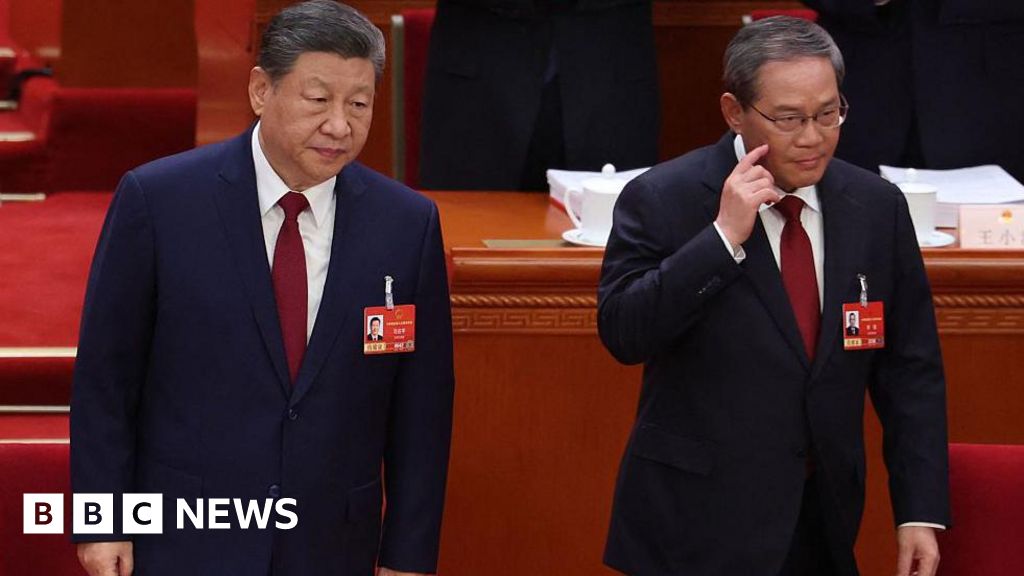

China sets lowest growth target since 1991, signaling cautious economic outlook for the future

In a significant development that signals a new chapter in international economic diplomacy, the target has been lowered for the first time since it was cut to “around 5%” in 2023. This adjustment marks a pivotal moment in recent geopolitical history, reflecting both the shifting priorities of influential nations and the mounting pressures that have reshaped global markets. As nations grapple with economic restructuring and geopolitical rivalries, this recalibration reveals much about the underlying currents that threaten to define the future of global stability.

The decision to revise the target, broadly regarded by analysts as a barometer for economic health and strategic influence, underscores the complex interplay of trade policies, international agreements, and geopolitical power struggles. According to prominent international economists and historians, such as Dr. Margaret Tufton and Dr. Jared Black, these modifications are symptomatic of broader shifts in the global order. They warn that each change in target thresholds is not merely a policy adjustment, but a reflection of profound geopolitical recalibrations taking place behind the scenes. Particularly notable is the influence of major economies like the United States, China, and Russia, all of which have responded to internal and external pressures with a recalculated approach towards economic expectations and international cooperation.

The lowering of targets also intensifies debates within international organizations, especially regarding the role of the Bretton Woods institutions. Critics argue that such shifts reflect a move away from the previous commitment to growth and stability, potentially undermining confidence among global investors. The International Monetary Fund has issued cautious statements, emphasizing that these adjustments could trigger ripple effects across emerging markets, often vulnerable to volatile shifts in policy and perception. Meanwhile, many nations worry that this change signals an erosion of longstanding commitments to shared economic stability, risking further fragmentation of the global economy.

As the world braces for the consequences of this strategic recalibration, many analysts caution that this is merely the beginning of a more turbulent epoch. Countries are increasinglyforced to reconsider alliances, confront rising nationalist sentiments, and adapt their economies to a shifting landscape of power. Historians caution that every epoch-defining decision bears the weight of history—shaping nations, societies, and civilizations for generations to come. The ongoing saga, driven by decisions at the highest levels of power, reminds us that in geopolitics—much like in economics—the margin for stability continues to narrow. As the clock ticks on, the world stands at a crossroads where every choice could carve the course of history, leaving the shadows of past conflicts and ambitions looming large over an uncertain future.

Honor rolls out the latest: Magic V6 foldable phone, sleek MagicPad 4, and powerful MagicBook Pro 14—gear up for the future of youth-focused tech!

As the tech world converges on Barcelona for this year’s Mobile World Congress, one theme resonates louder than ever: slimness as the new frontier of innovation. Leading brands like Honor are unveiling devices that push the boundaries of thinness while packing cutting-edge features. Their latest creations, the Honor Magic V6 foldable phone and the MagicPad 4 tablet, exemplify a cultural trend where design minimalism merges with technological prowess. The Magic V6, for example, is only 8.75mm thick—so slim it challenges traditional notions of what a smartphone can be—while the MagicPad 4 flaunts a mere 4.8mm profile. These devices signify not just an evolution in hardware but also an emerging societal desire for unobtrusive, sleek technology that seamlessly fits into a fast-paced lifestyle.

The Cultural Impact of Slim Tech

This focus on ultra-thin gadgets reflects a broader social relevance in a society obsessed with minimalism and convenience. In a world where attention spans are dwindling, and multitasking is king, these sleek devices serve as both functional tools and status symbols—accessories that communicate success and modernity. Influencers and trendsetters, from tech bloggers to social media personalities like Marques Brownlee and Unbox Therapy, are elevating these gadgets to cultural icons, showcasing how a phone or tablet can be both powerful and fashionable. Scholars like Dr. Joseph Pine argue that this shift indicates a move towards experience-driven consumption, where consumers are less interested in owning bulky objects and more eager for intangible value, style, and user experience.

Meanwhile, AI integration remains a key component of this trend. Honor’s deployment of Google Gemini symbolizes how software—especially AI-powered features—is transforming these devices into intelligent companions. These advances mean our gadgets are becoming more than just tools; they’re evolving into social extensions, capable of understanding and adapting to individual behaviors, further reinforcing the social relevance of tech innovation. From syncing effortlessly with Apple devices to offering dynamic eye comfort features, these devices are designed to be unobtrusive yet intimately integrated into everyday life.

The Next Big Question: Are We Entering an Era of Invisible Tech?

With these ultra-slim smartphones, tablets, and even laptops, a provocative question arises: Are we approaching a future where technology becomes so seamlessly integrated into our lives that it becomes essentially invisible? The ongoing miniaturization signals a shift toward disappearing devices: gadgets so refined they practically vanish, leaving us with a pure, distraction-free experience. The social implications of this are profound. If our next devices are less about conspicuous presence and more about subtle integration, what does that say about our relationship with technology? Will this trend lead to a society where our devices are no longer objects of display but silent enablers of connectivity? And how will this influence future societal norms concerning privacy, dependency, or even our concept of identity?

As the tech industry channels its efforts into making hardware thinner and smarter, the ultimate challenge remains: how will societal expectations and behaviors adapt in this new era of invisible, AI-enhanced devices? The answers may redefine lifestyle trends for generations to come, challenging us to consider whether true innovation resides not only in what our gadgets can do but also in how seamlessly they blend into our lives, perhaps even before we notice they’re there.

Student Loans Crisis in England: Action Needed to Secure Our Future Students

In an era marked by soaring student debt and economic uncertainty, international observers are witnessing a critical juncture that underscores the fragile state of global socio-economic stability. As countries grapple with mounting financial burdens, the lens is now sharply focused on major Western nations where policy decisions regarding higher education funding and economic reforms are illustrating broader geopolitical shifts. The recent debates over student loans, interest rates, and university funding within the United Kingdom serve as a microcosm of a global crisis—one that threatens to reshape societal structures and international influence.

Within the UK, the political landscape is rife with tension as policymakers from both sides of the aisle scramble to address widespread discontent. The Labour government, represented by figures like MP Nadia Whittome, highlights a stark reality: even highly paid individuals see their financial situations erode over time due to rising inflation and disproportionate interest payments. This frustration feeds into a broader narrative of systemic unfairness, compounded by ailing institutions. The debate about student debt relief and university funding has escalated rapidly, prompting pledges from the ruling Conservatives to cut interest rates on certain loans—an initiative that has met with controversy and alarm from independent financial experts like Martin Lewis. Such internal conflicts expose the underlying fragility of the nation’s financial model and hint at upcoming political upheaval.

The geopolitical impact extends beyond the UK’s borders. As policymakers cut back on “ineffective” university courses and shift funding priorities, internationally entrenched issues surrounding global competitiveness and educational quality are intensifying. Countries across the world are observing these debates, recognizing that a nation’s future economic strength hinges on the sophistication of its human capital. Meanwhile, analysts warn that such domestic upheavals in a Western powerhouse could embolden authoritarian actors, especially in regions where Western influence is waning. The United States, for example, is also facing a renewed crisis over the affordability of higher education, foreshadowing a potential ripple effect that could destabilize international alliances and push nations further into strategic competition.

Institutions like the International Monetary Fund and OECD have sounded the alarm over how these domestic policies, if left unresolved, threaten to exacerbate inequalities worldwide. The undeniable truth is that decisions made in London or Washington do not simply stay local; they influence global economic patterns, migration, and diplomatic relations. The emphasis on suppressing university costs and realigning fiscal priorities is, in essence, a reflection of a deeper desire to reconfigure the global power hierarchy. Each reform, each budget cut, meticulously analyzed by geopolitical strategists, signals a move toward an uncertain future where the sovereignty of nations may become increasingly intertwined with their ability to sustain socioeconomic stability amid external pressures.

As the shadows lengthen across international theaters, the question remains—how will history judge this epoch of upheaval? With every policy shift, the weight of tomorrow’s world is being written. Will these decisions lay the groundwork for a renewed era of national strength, or will they serve as a cautionary tale about the perils of shortsighted governance? The scars of this tumultuous chapter are yet to be fully revealed, but one thing is certain: the course of history is still being set, and the echoes of today’s choices will resonate for generations to come.

NextGen Athletes: Spotlight on Rising Stars Shaping the Future of Sports

Eastern Conference Showdown: Who Holds the Edge?

As the NBA season unfolds, the race in the Eastern Conference is intensifying, with analysts like Tim Bontemps and Brian Windhorst weighing in on the current contenders. With several teams vying for supremacy, the landscape appears more competitive than ever, raising the stakes as we approach the playoffs.

Among the top teams, the Milwaukee Bucks have recently surged, showcasing their championship experience under the leadership of Giannis Antetokounmpo. His impressive averages of 30.0 points and 11.5 rebounds per game have been instrumental in the Bucks’ rise. Additionally, the Philadelphia 76ers, led by Joel Embiid, are also making a case for supremacy with a strong offensive display and a robust defense.

  • Milwaukee Bucks ride high with consistent performances from their stars.
  • Philadelphia 76ers boast a potent combination of offensive prowess and defensive solidity.
  • Emerging challengers like the Boston Celtics and Miami Heat cannot be overlooked with their evolving rosters.

Key matchups to watch include the fierce battles between the Celtics and Heat, which promise to be pivotal in determining playoff positioning. Notably, clutch moments like last week’s nail-biter in which the Celtics edged out the Heat underscore the unpredictable nature of this conference. Coaches are emphasizing the importance of defense as teams prepare for the crucial stretch run.

Ultimately, this season’s Eastern Conference narrative goes beyond the scoreboard. As teams battle for dominance and fans rally behind their franchises, basketball continues to serve as a unifying force in communities across America. In a world often divided, it is on the hardwood where rivalries ignite passion, camaraderie is built, and young talent emerges as the future stars of this beloved sport. The chase for the championship is not merely about wins; it represents resilience, hope, and the enduring power of teamwork.

Source link

Plaid hits $8B after bold employee stake sale, boosting fintech’s future

Fintech Sector Sees Valuation Shifts Despite Growth Milestones

The recent valuation updates of Plaid, a prominent player in the fintech ecosystem, highlight ongoing market turbulence and the resilience of technological innovation. Despite announcing a new, larger headline valuation, the company’s worth remains approximately 40% below its 2021 peak of $13.4 billion. This decline reflects the broader repercussions of changing interest rate environments, with ultra-low rates that previously fueled a massive surge in fintech valuations now giving way to a recalibration driven by macroeconomic pressures and investor caution. Industry analysts suggest this trend exemplifies the volatility that disrupts overheated markets, compelling companies to innovate more strategically rather than chase premature IPO ambitions.

Importantly, Plaid continues to maintain technological leadership and operational momentum, evolving its core offerings while managing internal workforce needs. Notably, the company has introduced initiatives to support employee retention and address vesting-related tax burdens, a move that underscores how emerging tech giants are shaping their internal ecosystems amid a competitive landscape. These developments illustrate a shift in how fintech firms balance growth, talent retention, and long-term viability, signaling a maturing industry that prioritizes sustainable innovation over short-term market Flamboyance.

From a broader business implications perspective, these valuation dynamics are more than isolated setbacks; they serve as a bellwether for how disruption is unfolding across digital finance. Gartner and other leading analyst institutions emphasize that the shift away from speculative valuations towards realistic, innovation-driven business models will define the next wave of industry dominance.

  • Technological disruption fueled by API ecosystems
  • Emergence of decentralized finance (DeFi) platforms challenging traditional models
  • Increased focus on compliance, security, and user experience

presents opportunities for visionary firms to leap ahead. Companies like Stripe and Square are actively sculpting the future landscape, leveraging AI and blockchain to enhance transactional efficiencies and security.

Looking ahead, the fintech market appears set for a foundational transformation. Industry leaders, backed by innovative ventures and lessons learned from past exuberance, are forging pathways that integrate cutting-edge technology with pragmatic growth strategies. As Elon Musk and Peter Thiel have long emphasized, the real value lies in disruption through innovation, rather than mere market hype. Consequently, this environment demands agility and strategic foresight — qualities essential for crossing the chasm from startup to industry titan.

Ultimately, the message for stakeholders in the tech arena is clear: the era of unchecked valuation bubbles is waning, replaced by a landscape where disruption and technological innovation are paramount. With the right investment in R&D, talent, and strategic foresight, tomorrow’s national and global market leaders will emerge from these challenging times with the resilience and agility necessary to shape the future of finance. The question remains: who will capitalize on this historic shift, and how quickly can they turn disruption into dominance? The clock is ticking.

England’s Special Education System to Be Revamped for a Brighter Future

As society continues to evolve, so too must our approach to supporting the most vulnerable among us. Beginning in 2035, a significant policy shift will take effect: only children with the most complex needs will qualify for education, health, and care plans under the new system. This decision, while seemingly pragmatic in addressing resource constraints, raises fundamental questions about how society perceives and supports children with special needs, and what it means for families, communities, and the future of inclusive education.

This policy change underscores a broader trend towards *selectivity* in social support, a phenomenon that sociologists warn could deepen existing inequalities. According to experts like Dr. Patricia Hill Collins, social stratification often manifests in access to essential services, perpetuating cycles of disadvantage for those at the margins of society. When eligibility narrows, families of children with less complex needs may face increased challenges in securing necessary resources, potentially sidelining their children from the inclusive spaces that foster social cohesion and mutual understanding. Such a shift threatens to redefine societal attitudes toward disability and difference, promoting an inadvertent narrative that only the most severe cases warrant intervention. This approach risks marginalizing children with less visible needs, thereby fostering a society that *marginalizes* rather than *embraces* diversity.

At the heart of this debate lie families—many of whom, in the face of this policy change, worry about the potential reduction in support and the implications for their children’s development. Parents of children with moderate needs often emphasize that early intervention and ongoing support are crucial for fostering independence, social skills, and a sense of belonging. The social fabric is woven through communities that embrace inclusion, yet policies that restrict access threaten to fray these bonds, creating pockets of exclusion that ripple outward into schools and neighborhoods. Furthermore, educators and social workers warn that such a reduction in services could have long-term impacts on educational outcomes and community integration. Children who do not receive adequate support are more likely to face hurdles throughout their lives, impacting employment prospects, social relationships, and mental health.

  • Inconsistent funding and resource allocation challenge the sustainability of inclusive approaches, emphasizing the need for comprehensive national strategies rather than policies based on severity thresholds.
  • Recognizing the importance of societal values that uphold dignity and equal opportunity is vital to avoiding a fractured social landscape.
  • Enhanced community-based programs can bridge gaps, providing tailored support while fostering a sense of collective responsibility.

As social commentators and historians observe, society’s moral fabric is tested when we determine who is worthy of care. A society that limits its compassion risks unraveling, leaving the vulnerable behind in a climate of austerity and indifference. However, with deliberate policies rooted in inclusivity and equity, communities can transform challenges into opportunities for renewal and growth.

In the quiet moments of reflection, society must ask itself: what kind of future do we envision—one that recognizes the dignity of every individual or one that simply categorizes and excludes? The path forward demands courage and conviction. As history has shown, resilient communities are built not merely on policies but on the collective will to see every child—not only the most complex—embraced as an integral part of societal life. Only then can we truly hope to forge a society where every family feels valued, every community thrives, and the promise of a brighter future becomes a shared reality rather than an elusive ideal.

Billions in SEND funding to boost school inclusivity, government vows to fairer future

Government Initiatives Spark Debate Over Support for Children with Special Educational Needs

In a move that signals profound shifts in the landscape of education and social services, the government has announced sweeping reforms aimed at reshaping how children with special educational needs (SEN) receive support. These changes come amid vocal concerns from educators, families, and advocacy groups about the effectiveness and fairness of the current system, which many argue has left vulnerable students behind and strained communities at their breaking point.

The core of the reform efforts involves restructuring the support frameworks within local authorities and educational institutions. Critics fear that the decentralization plan might lead to inconsistency, with some regions potentially lacking the resources or expertise to adequately meet these children’s needs. As social commentators often point out, such shifts risk creating a fragmented system where families are left navigating complex bureaucratic hurdles, often feeling disempowered or misunderstood. This social upheaval underscores a persistent tension: how to balance equitable access to tailored education while managing limited resources within a decentralized framework.

The societal implications extend beyond the classroom, affecting families, communities, and the broader social fabric. When children with SEN are not supported properly, families experience heightened stress, financial strain, and emotional fatigue. These issues ripple outward, altering community dynamics and impacting local cohesion. Sociological insights, such as those from Dr. Emily Rodriguez, emphasize that *”access to quality support for vulnerable children is intertwined with societal resilience”* — a sentiment that underscores wider concerns about social equity and moral responsibility.

Furthermore, this reform initiative reveals underlying demographic shifts and cultural tensions that challenge the status quo. As historian Mark Lawson points out, societies that neglect their most vulnerable members risk risking societal fragmentation, where exclusion and inequality foster social divides. The proposed reforms aim to modernize and streamline the support system, but critics warn of a potential decline in inclusive education if implementations fall short. To address this, authorities propose targeted

  • training programs for educators
  • greater parental involvement
  • investment in community-based resources

, seeking to bridge gaps and foster a society where no child is marginalized.

As communities stand at this crossroads, questions about societal values and priorities loom large. It is a poignant reminder that the future of our neighborhoods depends on the moral choices we make today. Will these reforms create a cohesive society that upholds the dignity of every child, or will they deepen social divides? The challenge lies not only in implementing policy but in nurturing a collective conscience committed to building an inclusive society where every family can hope and every child can thrive. In the end, society’s resilience will be measured by its capacity to embrace its most vulnerable, transforming hope into tangible change, and fostering a future where unity and compassion prevail over neglect and indifference.

The Future of Safe Sex: At-Home STI Tests — What Young Tech Users Need to Know in 2026

Emerging Disruption in Healthcare: The Rise of At-Home STD Testing

The healthcare industry is witnessing a significant wave of innovation as **at-home STD testing kits** disrupt traditional diagnostic models. Driven by advancements in biotech and the proliferation of telemedicine, this market shift offers consumers increased accessibility, privacy, and autonomy in managing their sexual health. Devices from **leading companies** leverage cutting-edge lab analysis techniques, including rapid molecular diagnostics, to deliver results directly to users without the need for clinical visits. This transition exemplifies the broader trend of *decentralization* in healthcare, empowering consumers to take health matters into their own hands.

Market analysts, such as those at **Gartner** and **MIT**, highlight the transformational potential of these home testing solutions. **Innovation** here is characterized not merely by convenience but by the disruption of stenotic *industry entry points*, challenging longstanding health service providers and reshaping the healthcare value chain. The core features of successful kits include:

  • High accuracy through advanced molecular assays
  • Ease of use with user-friendly instructions
  • Privacy-enhancing packaging and discreet shipping options
  • Immediate digital reporting systems that connect users with healthcare professionals if needed

However, this disruption is not without hurdles. Experts such as **Dr. Gary Schoolnik** caution that **sample collection accuracy** remains a crucial concern, as a technical failure can lead to **false negatives**, potentially delaying critical treatment and impacting public health outcomes. Additionally, many at-home tests are designed as initial screening tools, with positive results often necessitating confirmatory procedures at healthcare facilities. Market shifts toward remote diagnostics are increasingly raising questions about the *regulation* and *standardization* of these kits, prompting calls from policymakers and industry leaders for more stringent oversight.

Beyond technological challenges, *behavioral and social dynamics* influence the reception and efficacy of at-home testing. The persistent **stigma** surrounding STIs remains a barrier to widespread adoption, particularly among youth demographics. On the business side, companies investing heavily in **digital health ecosystems** are incentivized by emerging trends like *personalized health data* and *preventive care*. These developments promise to disrupt the traditional reactive healthcare model, fueling competition and innovation in the broader digital health sphere. Yet, as **Peter Thiel** and other visionary investors have observed, these rapid shifts require agility, foresight, and a vigilant eye toward *regulatory* and *ethical* considerations.

Looking ahead, the implications for industry and society are profound. As **new startups** and **tech giants** race to dominate this market, the focus will likely shift from mere testing to integrated health management platforms, incorporating AI-driven insights and telehealth consultations. The urgency for policymakers and healthcare providers is clear: adapt quickly or risk obsolescence in the face of this **disruptive innovation**. The boundary between traditional healthcare and consumer innovation continues to blur, with the next decade poised to redefine how society approaches health diagnostics—making it more accessible, private, and proactive. The question remains: will existing institutions embrace the change or be left behind as this **technological revolution** accelerates at an unprecedented pace?

Tories pledge to cut student loan interest rates, backing young Britain’s future

Educational Debt and the Strain on Families and Communities

Recent comments by Kemi Badenoch, a prominent political figure, highlight a significant concern shared by many young graduates: the burden of student loans. Badenoch described the feelings of graduates as being “stitched up,” underscoring a pervasive sense of economic disillusionment that threatens to destabilize the social fabric. Her pledge to cut interest charges on Plan 2 loans signals an acknowledgment of the profound impact that rising educational costs have on recent entrants into the workforce. For families in working-class and middle-income communities, student debt often translates into delayed milestones such as homeownership and family formation, extending the cycle of economic hardship.

Shifts in Educational Access and Societal Divide

The escalating costs of higher education serve as a barrier for many aspiring students, especially amid demographic changes and cultural shifts that favor increased diversity but challenge conventional funding models. Sociologists like Dr. David Brooks argue that the increasing reliance on student loans contributes to widening social inequality, as only those from more privileged backgrounds can afford the luxury of higher education without crippling debt. This disparity perpetuates social stratification, making educational attainment less about talent and more about financial capacity. The socio-economic divide risks further fracturing communities, eroding the social cohesion necessary for collective progress.

Educational Reform and the Role of Society

Understanding the social ramifications of debt, some experts advocate reforms aimed at creating a more equitable and accessible system.

  • Implementing more comprehensive public funding for higher education.
  • Introducing income-based repayment schemes that lessen the burden on graduates.
  • Enhancing vocational training and apprenticeships to diversify pathways to economic stability.

By addressing these structural issues, society can foster environments where families are encouraged to thrive without the overshadowing anxiety of debt. Furthermore, institutions must recognize their role in broadening educational access, ensuring that talent and ambition are not stifled by financial barriers. As historian Dr. Margaret MacMillan notes, societal progress hinges upon equitable opportunities that empower all youth to contribute meaningfully to their communities.

Hope Amidst Challenges

While the societal challenges are undeniable, recent political commitments provide a glimmer of hope. Badenoch’s promise to reform student loan policies signifies a step toward restoring fairness in an often inequitable system. Yet, true change demands concerted efforts across all levels of society, from policymakers and educators to families and youth themselves. Initiatives aimed at reducing educational costs, improving employability, and fostering social mobility are essential for nurturing resilient communities. As history has shown—through periods of upheaval and reform—social transformation begins with recognizing shared struggles and united action. The hope remains that future generations will look back on this era not only as a time of hardship but as a turning point—when society chose to invest in its people and, in doing so, redefined its moral foundation.

Social Media Auto Publish Powered By : XYZScripts.com