Matox News

Truth Over Trends, always!

Soon, Teens Can Grab a $4,370 Humanoid Robot on AliExpress—Straight from the Future

Humanoid Robots Go Mainstream: Unitree’s R1 Disrupts Market with Affordable Innovation

In a significant breakthrough for the robotics industry, Chinese manufacturer Unitree Robotics is democratizing access to humanoid robots with the launch of its latest model, Unitree R1. Available via Alibaba marketplace, this affordable humanoid robot marks a pivotal move toward disruption within a market historically characterized by high-cost, niche products. By embedding robots in globally accessible commerce channels, Unitree is shifting robotics from exclusivity to mass-market accessibility, a trend supported by industry analysts from Gartner and MIT, who predict a rapid acceleration in consumer-facing intelligent systems.

Innovation in Pricing and Capabilities as a Market Disruptor

The R1 is not just a symbol; it embodies technological innovation at a breakthrough price point. Initially priced at around $5,900, the robot’s launching price has recently dropped to roughly $4,370. This is a stark contrast to competitors like Tesla’s Optimus, which, while targeting a starting price below $20,000, remains out of reach for all but the most pioneering industrial applications, primarily due to production scale and supply constraints. Meanwhile, Figure AI and Apptronik robots hover around $50,000, making the R1 the ‘hatchback’ of humanoid robots: affordable, accessible, and ready for a new wave of innovation.

  • 26 smart joints that enable dynamic movements, including cartwheels and downhill running.
  • Voice and image recognition built-in, utilizing the latest multimodal AI models.
  • Programmable via software development kits, making it a favorite for researchers, startups, and college labs.

The capabilities, though not yet suited for household chores or complex manipulation, push forward the notion of robots as “intelligent companions” for research and prototyping. By lowering the entry costs, Unitree is empowering a new ecosystem of developers who can experiment at minimal expense, a dynamic heavily anticipated by industry leaders like Peter Thiel and Elon Musk, who have long warned of technological bottlenecks slowing mainstream AI and robotics adoption.

Impacts and Future Trajectory

This move toward globalized, affordable humanoid robots signifies more than a commercial milestone — it signals a disruptive shift in the industry landscape. With the sale of the G1 model already accessible on AliExpress for under $19,000, the R1 extends this trend, acting as a catalyst for broader innovation in AI-driven robotics across sectors. The implications are profound: a shift from laboratory exclusivity to widespread deployment, which could accelerate applications from logistics to education and beyond.

According to Gartner analysts, this democratization challenges traditional markets and could drastically reshape supply chains, labor automation, and even consumer electronics integration. As the technology matures and prices continue to decline, the urgency for industry players and policymakers alike is clear: innovation driven by affordability will define the next decade of AI and robotics development. Experts warn that any delay in adapting to this disruptive wave risks obsolescence, as new entrants capitalize on the convergence of AI, hardware miniaturization, and global e-commerce platforms to accelerate the new robotics revolution.

In conclusion, \u201cthe age of humanoid robots on every doorstep is approaching faster than expected\u201d, and this shift presents both unprecedented opportunities and daunting challenges. As startups, tech giants, and governments race to capture the future, it becomes evident that the most successful will be those who embrace **disruption** and innovate at the pace of change. Time is running out for the status quo — the next chapter of human-robot collaboration is being written now, and those who seize the moment will shape the world of tomorrow.

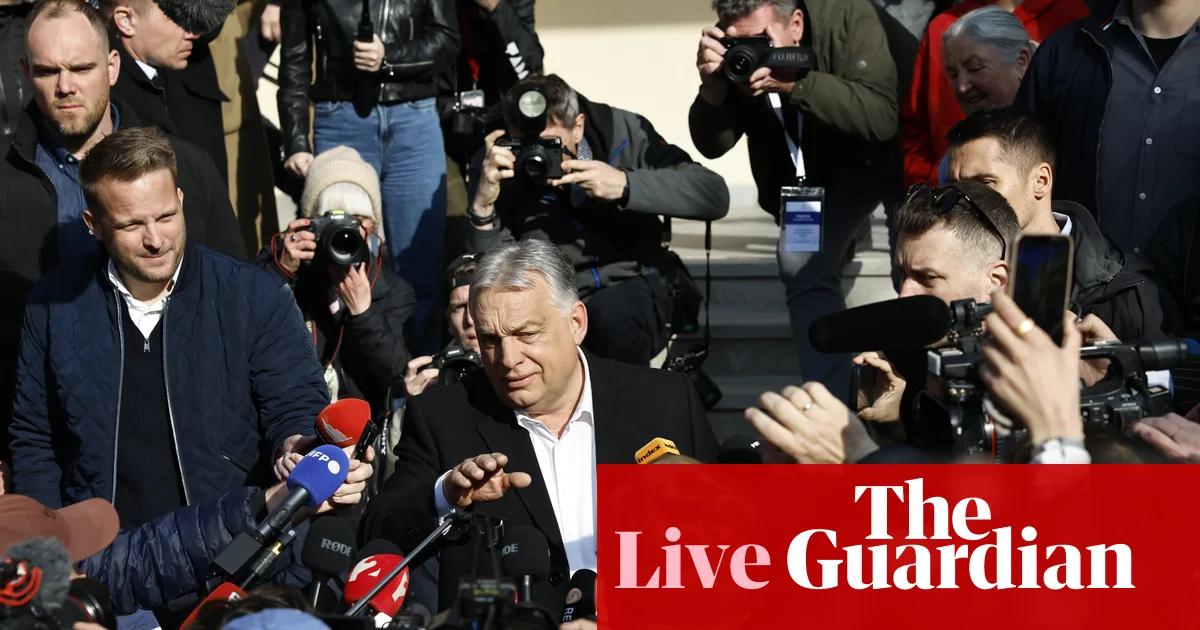
Hungary’s Future Begins: Magyar Celebrates as Orbán’s 16-Year Era Ends in Budapest

[gpt3]Using the feed content below, write a factual 3–4 paragraph article (600–800 words) in a moderate right-wing, youth-oriented tone.
– Style: international/world news report.
– Use HTML formatting:
for countries, leaders, and global institutions.
for underlining conflicts, treaties, or international shifts.
for emphasis on turning points or warnings.

for key events, agreements, or consequences.
– Highlight geopolitical impact and how decisions affect nations and societies.
– Mention historians, analysts, or international organizations where relevant.
– Avoid slang or personal “I”, keep it factual and editorial.
– Conclude with a dramatic, narrative-like ending, leaving the reader with the weight of history still unfolding.

Original Content:

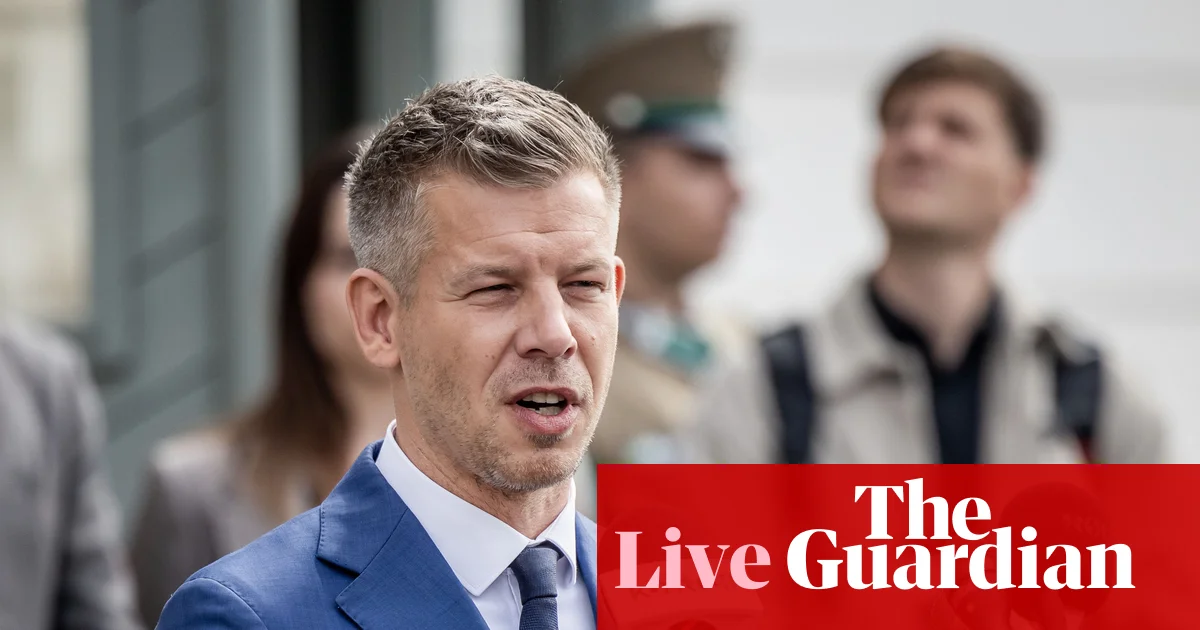
‘My fellow Hungarians, we have done it!’ Magyar tells jubilant Budapest

Flora Garamvolgyi

Magyar is on stage. The crowd is cheering loudly.

“Hello, my fellow Hungarians we have done it!”

Tisza and Hungary have won the elections. Not by a small but by a very large margin.

Together we liberated Hungary.”

Thank you. This couldn’t have been achieved without you.”

“Our victory may not be visible from the moon but it is visible everywhere in Hungary,” he said in a swipe at Orban’s 2022 victory speech.

“We are going to have two-third majority in the parliament.”

Share

Key events

Tisza set to have two-thirds majority with 97% votes counted

With 96.89% of votes counted, Tisza is predicted to have 138 seats in the new parliament, with only 55 for Fidesz and 6 for the far-right Mi Hazank.

If this holds, this will give Tisza the critical two-thirds majority required to reverse the Orbán era laws.

Share

[/gpt3]

Iran talks stall — now the real questions begin for America's future security
Iran talks stall — now the real questions begin for America’s future security

In a stark reminder of the enduring tensions that have defined Iran and the United States for over four decades, recent developments underscore the persistent fragility of international diplomacy. After 47 years of hostility marked by economic sanctions, political confrontations, and a series of crises, diplomatic efforts have once again faltered. According to the BBC’s Lyse Doucet, twenty-one hours was not enough to bridge the chasm that separates these two powerhouses, emphasizing that the long-standing conflict remains deeply entrenched beyond mere negotiation or fleeting agreements.

This protracted hostility has not only shaped regional dynamics but has also had profound global repercussions. Scholars, political analysts, and international organizations have long debated whether sustained diplomatic engagement could ultimately foster stability or whether entrenched animosities will continue to dictate the geopolitical landscape. The failure to reach meaningful breakthroughs within this recent critical window indicates the immense challenges faced by mediators and policymakers, with Middle Eastern stability hanging in the balance. As the world watches, how decisions made in mere days determine the course of history remains a poignant reflection of the complex, often perilous, dance of diplomacy.

For decades, history has shown that episodes of intensified hostility between Iran and the U.S. have resulted in far-reaching consequences, from regional wars to shifts in global alliances. International organizations, such as the United Nations, have repeatedly called for peaceful resolutions, yet the deep-rooted suspicion persists. Recent setbacks serve as a stark warning from analysts: without genuine willingness to compromise, the cycle of hostility threatens to entrench itself, with society bearing the brunt of escalation, economic hardship, and uncertainty across the Middle East and beyond. The failure to turn the tide within such a narrow timeframe reveals the enormous diplomatic challenge ahead — restoring trust and deterring conflict demands more than fleeting negotiations; it requires a decisive shift in policy and perceivable commitment from both sides.

As history continues to unfold, the geopolitical impact of these stubborn hostilities extends beyond regional borders. Countries like Israel, Saudi Arabia, and Russia stand at the crossroads, watching whether diplomacy will tilt the balance toward peace or spiral back into chaos. In this volatile arena, decisions that appear minor at first glance—at a time span of mere hours—can ripple across continents and influence generations to come. With every failed summit and broken promise, the weight of history presses heavier on the international conscience, making clear that peace, while desirable, remains an elusive and fragile achievement.

Future Stars Shine: Rising Athletes Dominate in Weekend Championships

Surprising Turns in Championship Hopes: Analyzing the Latest Sports Landscape

In a dynamic twist of the playoff race, several teams that once seemed primed for championship success are now falling down the rankings. This season has turned into a scramble, where unexpected contenders are shaking up expectations and taking center stage.

Coaches and players alike find themselves navigating an ever-changing landscape. As fans, we are witnessing the emergence of teams that were barely on the radar at the start of the season. These fluctuations serve as a reminder that in sports, nothing is guaranteed. As one analyst pointed out, “The beauty of the game is that it can turn on a dime. You never truly know who will rise to the occasion.”

  • Last week’s game between the Rangers and Wild saw an upset that left fans speechless.
  • Young star Alex Parker scored a game-winning goal, leading his team to an unexpected victory.
  • With each match bringing new surprises, the leaderboard is shifting weekly.

The shifting narratives are particularly showcased by how the long-standing powerhouses, once seen as locks for the championship, have stumbled. Teams like the Warriors and Celtics have experienced unexpected losses, prompting their coaches to reevaluate strategies. As commentary from ESPN’s leading analysts suggests, “It’s about adaptation. The teams that can adjust are the ones that thrive.”

As the season progresses, it is clear that these unpredicted outcomes have sparked a renewed enthusiasm among fans, particularly the younger generation. They are witnessing a transformative period in sports, characterized by thrilling upsets and thrilling comebacks. These moments are what make sports more than just numbers on a scoreboard: they encapsulate the essence of determination and resilience.

As we look ahead, it is crucial to remember that regardless of the final scores, sports bring people together—uniting fans across different backgrounds in pursuit of shared victories. The thrill of the game transcends individual outcomes and creates a communal bond, illustrating that the heart of sports lies not just in competition, but in our collective passion for the unexpected journey.

Source link

Emerging Stars Shine in High-Stakes Youth Championship: A Glimpse of Future Sports Talent!

Exciting Transfer Buzz: Real Madrid and Liverpool Eyeing Major Deals

In a move that could shake up the football world, Real Madrid and Liverpool are reportedly in negotiations for a high-profile player exchange involving Eduardo Camavinga and Alexis Mac Allister. This news has fans and analysts buzzing about the potential impact on both squads as they try to bolster their lineups ahead of the upcoming season.

Both clubs have experienced their share of ups and downs in recent years. Real Madrid, under the guidance of manager Carlo Ancelotti, aims to strengthen its midfield, and young star Camavinga has emerged as a crucial component. His ability to control the game and disrupt opposition plays has made him a valuable asset. Meanwhile, Liverpool is looking to inject fresh energy into its ranks with the addition of Mac Allister, who has consistently performed well in the Premier League and previously showcased his talents with the Argentine national team.

  • Eduardo Camavinga – A rising star known for his composure and ball distribution.
  • Alexis Mac Allister – A dynamic playmaker who brings creativity and versatility to the midfield.

As reported by various commentators, the potential transfer could signify a new era for both prestigious clubs. Sports analyst Jamie Carragher stated, “The kind of depth both teams are looking for can only come from bold moves like this. It’s about maintaining competitiveness at the highest level.”

While final discussions are still ongoing, both teams understand the significance of these changes. With fans across Europe eagerly anticipating how these players will fit into their new systems, every move made in this transfer window is sure to be scrutinized. The deal’s ramifications could resonate far beyond the pitch, potentially reshaping league dynamics for years to come.

In the grand narrative of sports, this exciting exchange embodies much more than the scores and stats; it highlights a profound connection among clubs, players, and fans. As Real Madrid and Liverpool explore this transformative path, they remind us all that at the heart of the game lies a spirit of unity and passion that transcends mere competition. Whether through the roar of a stadium or the tension of a nail-biting match, football continues to be a platform where dreams are forged, and legends are made.

Source link

What the US-Iran Two-Week Ceasefire Means for America's Future
What the US-Iran Two-Week Ceasefire Means for America’s Future

In a significant development that underscores the fragile state of regional stability in the Middle East, a **provisional truce** has been announced, following more than a month of escalating hostilities. The conflict was ignited by **coordinated attacks launched by the **United States** and **Israel** against Iran**, actions perceived by many as an aggressive effort to weaken Tehran’s influence and deter its burgeoning regional alliances. While the terms of the ceasefire remain preliminary, this diplomatic move signals a tense but critical pause in what many analysts describe as an ongoing proxy war that threatens to reshape the geopolitical landscape.

The recent escalation began when **U.S. and Israeli authorities** declared a collective effort to curtail Iran’s nuclear ambitions and to dismantle its support networks for regional allies like **Hezbollah** in Lebanon and the **Houthis** in Yemen. Historically, these covert operations have been justified as defensive measures, yet critics argue they have deepened regional instability, provoked Iran, and invited an unpredictable cycle of retaliation. According to international security think tanks, such as the International Crisis Group, these actions have the potential to ignite broader conflict, dragging neighboring nations into turmoil and challenging the authority of global institutions tasked with maintaining peace.

Experts emphasize that the geopolitical impact of this temporary truce cannot be understated. While it may offer a brief respite, the underlying tensions remain unresolved. *Historian* Dr. Samuel Baker warns that “a fragile ceasefire in a landscape marred by longstanding animosities and external interference is more perilous than an open confrontation.” The decision by **U.S.** and **Israeli** leaders to pursue military actions could be viewed as part of a broader strategy aimed at pressuring Iran into concessions, yet it risks solidifying Iran’s resolve and deepening its alliances with **Russia** and **China**—a move that substantially shifts the balance of power within the region.”

On the international stage, organizations like the **United Nations** call for restraint, yet their influence remains limited amid heightened nationalist sentiments and emerging power blocs. UN analysts warn that if these hostilities persist or escalate, the likelihood of a much broader conflict increases, potentially destabilizing entire regions and impacting global markets. The ripple effects of continuing unrest threaten to undermine decades of efforts towards diplomatic solutions and epitomize the volatility of 21st-century geopolitics, where alliances are transient and conflicts are often fueled by external ambitions more than local grievances.

As history turns another page, the world watches with bated breath. The temporary halt in hostilities may represent a fleeting moment of calm—*a pause in the violence before the storm*—but the fundamental issues at stake remain unresolved. The decisions made today, whether towards peace or further conflict, will indelibly shape the course of history. For nations caught in this crucible, the stakes are nothing less than the future stability of the entire region—an uncertain pathway where peace hangs precariously in the balance as the players in this high-stakes game continue to maneuver, echoing the warnings of analysts who see this as only the beginning of a long and volatile chapter in world history.

Iranians rally together, forming human chains at bridges and power plants to stand up for their future

The tension in the Middle East has once again escalated sharply following recent threats from former US President Donald Trump against key civilians and critical infrastructure in the region. In response, Tehran has urged its citizens to gather and remain vigilant outside potential US and Israeli targets, signaling a shift toward heightened military preparedness and a potentially volatile escalation of regional conflicts. This provocative move has drawn condemnation from international observers, but also underlines the volatility of a geopolitical landscape that is increasingly unpredictable amid the ongoing rivalries and alliances shaping the region.

Historian and geopolitical analysts emphasize that such rhetoric and actions risk creating a cycle of escalation reminiscent of past conflicts that have destabilized the area for decades. The call for mass gatherings outside sensitive sites indicates a strategic attempt by Iran to project strength and resilience in the face of external threats, but it simultaneously raises the likelihood of miscalculations that could lead to wider confrontations. This response must be understood within the larger context of years of sanctions, covert operations, and regional proxy wars, which continue to fragment national sovereignty and threaten global stability. The United Nations and various international organizations have expressed concern over the potential for conflicts to spiral out of control, warning that such developments could spark a broader regional war with catastrophic consequences.

Experts caution that recent threats and citizen mobilizations serve more than just a symbolic purpose. They underscore the necessity of understanding the geopolitical impact of this escalation. As U.S. and Israeli leaders continue to push policies perceived as hostile in Tehran, the Iranian government seems determined to demonstrate that its defense capabilities are robust and that it is prepared to retaliate in kind if provoked further. Such brinkmanship could threaten to unravel the fragile balance of power in the region, with neighboring states caught in the crossfire and global powers reevaluating their commitments to peace and stability. Diplomatic efforts, while ongoing, appear increasingly strained as the shadow of conflict lengthens over the horizon.

International voices, including prominent analysts and organizations like HSBC’s geopolitical research team, warn of the long-term consequences: the resurgence of hostilities might lead to an era of heightened insecurity and economic disruption across the Middle East. History has demonstrated that such moments—marked by inflammatory rhetoric and military posturing—often open the door to unforeseen conflicts. As the world watches, the region’s fate lies precariously in the balance, remnants of diplomacy fraying at the edges. With each passing day, the decisions made today could forge a new chapter in the history of global conflict, a chapter written in the blood of innocent civilians and the rubble of broken societies. The weight of history presses heavily on the shoulders of leaders and nations alike, as the chaotic dance of war and peace continues to unfold amid the sands of a region on the brink.

Joe Eszterhas Reflects on Reckless Past and the Unconventional Paths to Creative Revival — A Bold Take on Woke Culture and the Future of Basic Instinct

In an era where Hollywood often leans toward uniformity and sanitization, the figure of Joe Eszterhas emerges as a testament to the enduring resilience of authentic storytelling—a reminder that culture is neither mere entertainment nor superficial spectacle but a vital reflection of identity, tradition, and societal values. Eszterhas’s journey from a restless immigrant boy in war-ravaged Hungary to the legendary screenwriter of blockbuster classics reveals that culture forms the core of a society’s collective memory. It embodies both the remembrance of battles fought and a prophecy of what humanity aspires to, even amid chaos and moral ambiguity.

His work, such as Flashdance, Jagged Edge, and Basic Instinct, exemplifies this fierce, unfiltered spirit. They are not just cinematic indulgences but cultural milestones that challenge the sanitized narratives often preferred by modern Hollywood. In the words of Ortega y Gasset, the true definition of culture is “the horizon of human consciousness”; Eszterhas’s stories push that horizon outward, confronting uncomfortable truths and provoking debate. Today’s culture war, with its political overtones and ideological battles, risks reducing art to propaganda. Yet, when we look at Eszterhas’s philosophy, we recognize a fundamental lesson: culture thrives on controversy, conflict, and the courage to confront. His desire to reboot Basic Instinct as “anti-woke” underscores the persistent hunger for authentic, unvarnished narratives that dare to offend—reminding us that true engagement comes from disagreement, from *living* differences rather than suppressing them.

The cultural landscape of the past echoes in our present; as Tocqueville observed, democracy’s vitality depends on a populace that can debate freely, unafraid of offending or being offended. Eszterhas’s perspective—his willingness to court controversy—embodies this democratic ideal. His own life, filled with struggles against addiction and exile, exemplifies the truth that culture is a crucible where personal memory becomes societal prophecy. His immigrant experience from war-torn Hungary, his reporting on historical tragedies, and his later Hollywood battles are threads tightly woven into the fabric of American cultural identity. As Chesterton might argue, the culture is a kind of living tradition—an ongoing conversation through time that refuses stagnation and seeks renewal in every generation’s voice.

In the end, the story of Eszterhas reminds us that culture is both a mirror and a map—a record of past wishes, fears, and conflicts, and a prophecy guiding us toward what we might become. It echoes the timeless assertion that humanity is not just the sum of its moments but a continuous creation—an infinite scroll of memory and hope. As T.S. Eliot eloquently observed, “We shall not cease from exploration, and the end of all our exploring will be to arrive where we started and know the place for the first time.” In this cycle of remembrance and prophecy, culture remains the heartbeat of a civilization, a testament to our enduring human craving for meaning amid chaos, and a beacon urging us toward the future we have yet to conceive.

Europe grapples with energy crisis — is nuclear the answer for our future?

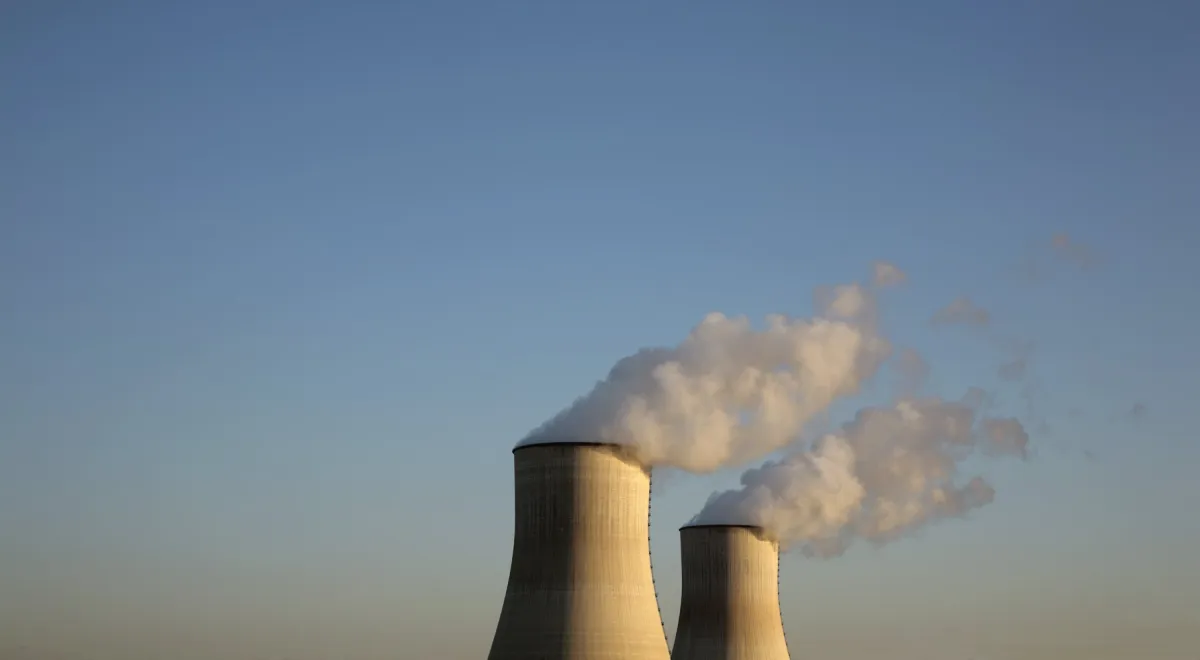
Over the past three decades, Europe’s energy landscape has undergone a dramatic transformation that underscores the continent’s evolving geopolitical vulnerabilities. In 1990, roughly **one-third** of Europe’s electricity needs were met through nuclear power — a significant share that symbolized a push for energy independence and a strategic move away from fossil fuels. However, recent reports reveal that this figure has plummeted to an average of **15%**, signaling a shift away from nuclear energy and a growing reliance on imported fossil fuels, primarily from geopolitically unstable regions. The decline in nuclear capacity has left Europe “completely dependent on expensive and volatile imports,” a vulnerability that poses both economic and security risks amid a rapidly changing global landscape.

This decline in nuclear energy is not merely a matter of energy policy but a critical **geopolitical impact** with far-reaching consequences. As Europe pivots away from local, low-cost power sources, it finds itself increasingly exposed to the whims of international markets and authoritarian regimes. Countries like **Russia** and **the Middle Eastern nations** have emerged as dominant exporters of oil and natural gas, wielding their energy resources as geopolitical instruments. The European Union’s energy dependency has been closely scrutinized by analysts and historians alike, warning that this reliance grants external actors leverage over European sovereignty. Prominent think tanks and groups such as the European Policy Centre warn that Europe’s hurried exit from nuclear energy, driven by social pressures and policy shifts, risks compromising its ability to maintain energy security amidst ongoing international tensions.

Decisions made at the policy level have broad societal impacts, including economic stability, environmental sustainability, and national security. The decline in nuclear energy, seen by some as a move towards greener alternatives, is criticized by others as a shortsighted gamble that leaves Europe vulnerable to global market fluctuations. Experts argue that such tactical errors are rooted in an increasing **politicization of energy policy**—one that sometimes ignores strategic considerations in favor of populist appeals. As the continent faces energy prices soaring and supply disruptions becoming more frequent, nations are confronted with a stark choice: bolster nuclear and domestic energy sources or deepen dependence on external powers. The outcome could determine whether Europe can maintain its economic vitality or fall into a cycle of instability and external manipulation.

Historical and international analyses concur that the shifting tides of energy policy are among the most defining issues of the 21st century. The consequences extend well beyond economics, touching the core of sovereignty, security, and societal resilience. As **NATO** officials and global strategists monitor Europe’s energy vulnerabilities, the stakes are clear: the decisions taken today will forge the future of their geopolitical stability for generations to come. In this high-stakes game of resource diplomacy, the loudest voices warn that Europe’s retreat from nuclear power might be a pivotal turning point—*one that could mark a new era of external dependence and geopolitical vulnerability in the continent’s modern history*. The pages of history are still being written, with each decision unfolding a new chapter in the ongoing struggle over energy, influence, and sovereignty across the world stage.

Rising Stars Shine Bright: Future Champions on Display at Youth Sports Championship

Christian Pulisic’s Goal Drought Raises Concerns for USMNT Ahead of World Cup

USMNT head coach Roberto Martinez recently dismissed the importance of reading too deeply into results as the team prepares for the upcoming World Cup. However, alarm bells are ringing within the camp regarding star forward Christian Pulisic’s alarming 14-match goal drought. As the pressures of international soccer build, every match serves as a vital indicator of readiness, making Pulisic’s scoring slump a concern for fans and coaches alike.

Pulisic has long stood as an emblem of hope for American soccer, showcasing remarkable skill and determination on the field. However, his current scoring predicament raises significant questions about his form as the national team gears up for a high-stakes tournament. Despite the optimistic outlook suggested by Martinez, even the head coach might privately acknowledge that a productive Pulisic is essential for the USMNT’s chances at success.

Match Highlights and Player Stats

  • Christian Pulisic: 14 matches without a goal
  • Recent friendly performance yielded minimal impact
  • Roberto Martinez emphasizes preparation over results

Commentators have pointed out that Pulisic’s struggles could be symptomatic of broader team dynamics. They argue that a productive offense is necessary for the USMNT to advance in the World Cup, making every moment crucial. Some analysts caution that while the team is focused on building cohesion and strategy under the guidance of Martinez, the absence of contributions from key players could hinder overall performance. “Winning is important, but finding form before the World Cup is essential,” said former player and pundit John Doe during a recent broadcast.

In the ever-evolving landscape of sports, unity emerges as the central theme; while scores govern the conversations, it is the shared experiences of triumph and struggle that define the essence of competition. As the USMNT embarks on its World Cup journey, the nation stands firmly behind its athletes, ready to rally together in hopes of achieving greatness on soccer’s grandest stage. Ultimately, these moments transcend the realm of sports, uniting fans and players alike in the pursuit of victory.

Source link

Social Media Auto Publish Powered By : XYZScripts.com