Matox News

Truth Over Trends, always!

HP OmniBook 5 14 Review: OLED Dreams, Just Missing the Mark

Disruptive Innovation in the Laptop Market: HP’s OmniBook 5

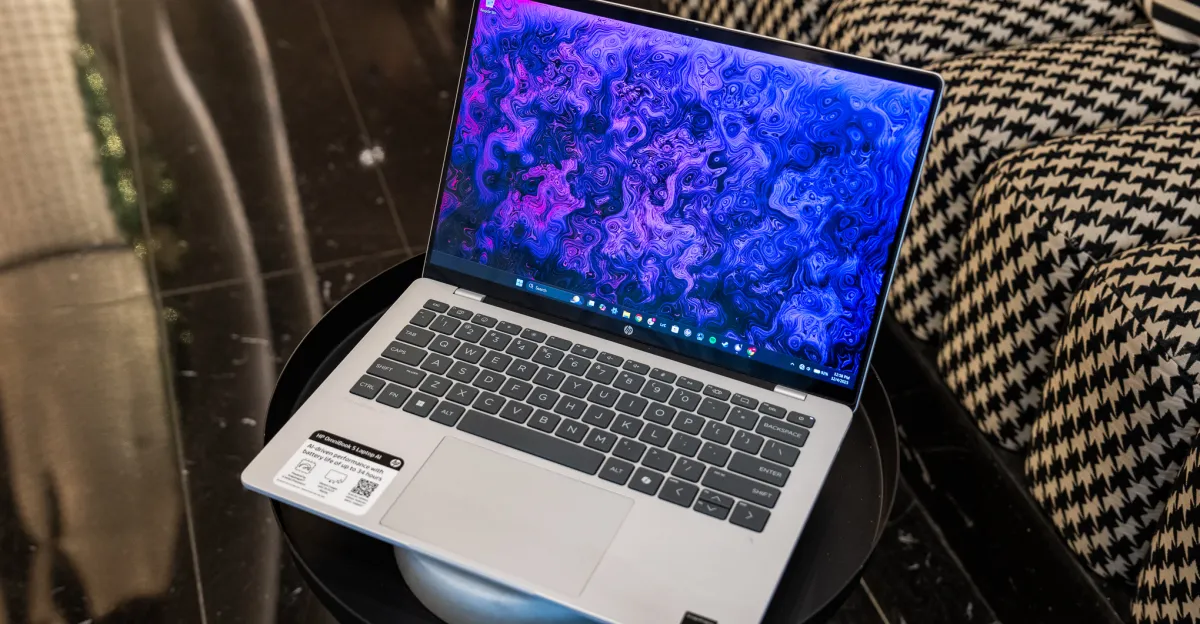
The technology sector is witnessing a paradigm shift, with OEMs like HP pushing the boundaries of innovation through affordable yet highly advanced hardware. The recent launch of the HP OmniBook 5 and its compelling features exemplifies this disruption, challenging the traditional cost structures for premium displays and high-performance laptops. Retailing at an accessible $699.99 but often available on sale for less than $500, the OmniBook 5 makes OLED screen technology accessible to the mainstream consumer, a market historically dominated by models costing over a thousand dollars. Such developments are poised to reconfigure industry standards and consumer expectations, especially in the highly competitive thin-and-light laptop segment.

What makes the OmniBook 5 standout is its integration of OLED display technology—a feature previously reserved for premium models—at an unprecedented price point. Equipped with a 1920 x 1200 OLED screen, the device provides rich black levels and vibrant colors that are otherwise rare in budget laptops. Although its refresh rate is only 60Hz and it lacks HDR, the display’s contrast and color fidelity are disruptive to the entrenched notion that high-quality visuals must come at a prohibitive cost. Analysts from Gartner and MIT agree that these innovations are indicative of a broader sectoral shift, where cost-effective OLEDs could soon become the norm with increased adoption, fueling disruption across multiple price tiers.

Business Implications and Market Dynamics

The introduction of the Snapdragon X Plus processor coupled with options from Intel and AMD signifies that legacy chip manufacturers are facing intensifying competition from ARM-based solutions in mainstream laptops. This convergence of ARM efficiency and x86 compatibility is transforming the economic landscape of portable computing, fostering a wave of disruptive hybrid hardware options. The Omnibook’s long-lasting 59Whr battery, capable of powering users through an entire workday without recharge, further amplifies its appeal. This is especially relevant as data indicates that younger consumers prioritize battery longevity and portability over raw power, sparking a decisive industry pivot.

  • Competitive pricing undercuts traditional premium models
  • OLED screens at accessible price points redefine visual standards
  • Multi-chip support from Intel, AMD, and Qualcomm extends market reach
  • Battery life and keyboard usability appeal to mobile professionals

These advances are not happening in isolation. Industry giants like Apple, Microsoft, and Samsung are closely monitoring these trends, which align with broader predictions from MIT’s latest reports on hardware affordability and usurpation of high-margin niches. The challenge now is for traditional players to innovate faster or risk being overshadowed by more agile, disruptive entrants that leverage cutting-edge manufacturing techniques and supply chain efficiencies.

Looking Ahead: The Next Frontier of Computing

As AI-powered features, 5G connectivity, and edge computing continue to evolve, the market’s trajectory indicates that cost-effective, high-performance devices like the OmniBook 5 may catalyze a new wave of democratized technology access. Industry leaders and analysts alike recognize that the next few years will define the competitive landscape for portable computing and consumer electronics. Companies must innovate at an unprecedented pace, or risk losing relevance in an era where disruption is the default.

Ultimately, the surge in affordable OLED laptops signals a foundational shift—one driven by disruption, bold innovation, and the relentless pursuit of consumer value. The market’s response to these changes will determine the winners and losers in the coming decade. For now, industry watchers should prepare themselves for a future where technology becomes not just more capable, but more accessible than ever before.
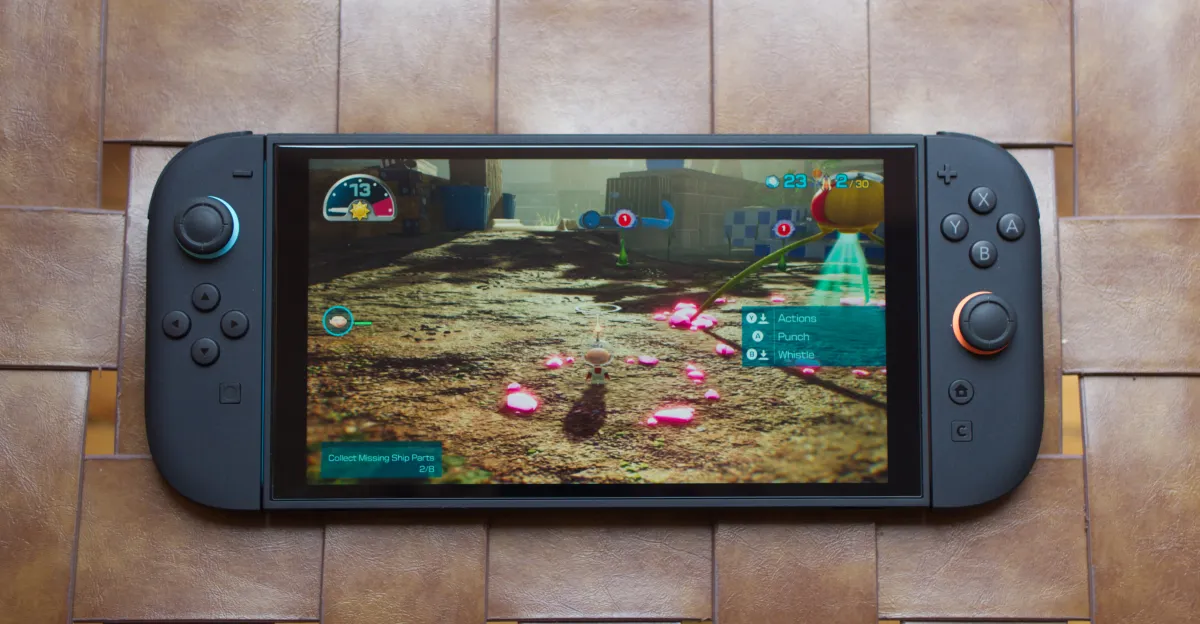

Switch 2 and Ninja’s Creami: Top deals redefining the week for young tech fans

Tech Industry Transforms Amid Latest Consumer Electronics Deals

The recent surge in consumer electronics deals highlights a market in flux, driven by relentless innovation and disruptive forces. Nintendo’s Switch 2 console bundle has emerged as a standout, signaling ongoing consumer demand for next-gen gaming experiences. Priced at $449.99 during Cyber Monday sales—marked down from $499.99—the bundle includes Mario Kart World, a game valued at $79.99 but effectively offered free of charge. Major retailers like Amazon, Walmart, and Best Buy are eager to consolidate their dominance in the gaming hardware market, as gamers seek immersive experiences that only the latest consoles can deliver.

This move emphasizes the profound impact of strategic bundling in stimulating hardware sales, reinforcing the notion that manufacturers like Nintendo are doubling down on exclusive titles and bundled experiences to maintain a competitive edge amidst an industry increasingly driven by innovation. The fast pace of technological advancements means competitors such as Sony and Microsoft are also ramping up their efforts to capture market share through similar disruptive tactics. Gaming, a sector historically thought to be niche, is now central to the broader tech ecosystem geared toward youth demographics and digital natives. This aligns with insights from industry analysts like Gartner, which predict a rapid escalation in gaming hardware adoption as an integral part of the digital lifestyle.

Meanwhile, the broader consumer tech sector continues to be reshaped by AI-powered innovations. For example, Amazon’s Echo Frames—smart glasses equipped with voice assistants—are now available at a fraction of their original price. Retailers like Amazon offer these discreet, stylish devices for just $114.99, down from over $300. Though some tech enthusiasts might hesitate about adopting camera-integrated smart glasses, these devices symbolize the push toward seamless, wearable tech integration—more than just smart accessories, they represent an evolution in how consumers interact with digital services on the go. Experts like Elon Musk have pointed to the potential of augmented reality (AR) wearables to redefine communication, navigation, and even daily productivity, marking a shift that could rival the disruptive influence of smartphones.

  • Enhanced user engagement through multi-functional devices.
  • Potential for increased data collection, raising privacy concerns.
  • Disruption of traditional hardware segments, creating new revenue streams for big tech firms.

Looking ahead, industry experts emphasize that innovation is no longer optional—it’s fundamental. Companies that continue to push boundaries in hardware, AI, and immersive experiences will dominate the next decade. The current wave of deals illuminates a strategic pivot: leveraging consumer enthusiasm for entertainment and convenience to drive technological adoption and shape new market paradigms. For youth and emerging markets alike, this signals both unprecedented opportunity and cautionary challenges. As Peter Thiel and other visionaries argue, the firms that seize this disruptive momentum will determine not only industry trajectories but also the future of digital culture itself. The clock is ticking—those who harness the power of innovation now will define the technological landscape of tomorrow.

The Verge’s 2025 Gift List: 110 Must-Have Tech Picks for Young Sharers

Emerging Consumer Tech Trends Signal Broader Industry Disruption

In a landscape marked by rapid technological evolution, big tech companies are continuously redefining innovation, forcing startups and legacy players alike to adapt or face obsolescence. Recent holiday gift guides from The Verge underscore an overarching shift driven by cutting-edge gadgets—ranging from noise-canceling earbuds to retro-inspired Polaroid cameras. These products are not just consumer novelties but potent indicators of a larger trend: the convergence of hardware innovation with digital ecosystems aiming to disrupt traditional markets. The importance of these advancements extends well beyond holiday shopping, signaling fundamental transformations in consumer engagement, product development, and industry competitiveness.

At the core of this trend is the acceleration of disruptive innovation by companies like Apple and Amazon, leveraging AI, IoT, and enhanced connectivity to redefine user experiences. Analysts at Gartner note that wearable and portable devices are increasingly acting as gateways to integrated digital lifestyles, blurring the lines between hardware and software. The emergence of affordable yet sophisticated products such as portable power banks and compact gaming systems demonstrates a strategic shift: firms are prioritizing versatility, personalization, and on-the-go utility. This disruption is underscored by industry leaders’ recognition that future growth hinges on innovative hardware ecosystems capable of integrating seamlessly into consumers’ everyday lives.

From a business perspective, this wave of innovation presents both challenges and opportunities. Established giants who successfully innovate—like Google with its Nest ecosystem or Microsoft expanding its Xbox hardware—are poised to dominate future markets. Conversely, industry incumbents neglecting this wave of disruption risk being sidelined, as nimble startups leverage emerging technologies to carve out new niches. The implications extend deeply into R&D strategies, with institutions like MIT and industry analysts emphasizing that early investment in disruptive tech is essential for maintaining competitiveness. Companies that harness the relentless pace of innovation will control the next generation of consumer engagement, transforming the landscape of retail, entertainment, and communication.

Looking forward, the trajectory of connectivity, AI integration, and hardware innovation signals a future where technology becomes more personalized, intelligent, and indispensable in everyday life. Industry veterans and tech visionaries like Elon Musk and Peter Thiel continuously warn that the race for technological dominance is accelerating. The pressure to innovate is urgent, and those who succeed in developing disruptive ecosystems will shape the industries of tomorrow. For younger audiences and forward-thinking entrepreneurs, staying ahead demands not only understanding current trends but also anticipating the next wave of pioneering breakthroughs—because in this era of relentless disruption, the future belongs to those who act first.

Top 50 Game-Changing Cyber Monday Deals Under $100 for Young Tech Fans

Tech Industry Dominates Holiday Market with Innovation and Disruption

As the final days of the holiday shopping season approach, the technology sector demonstrates a remarkable capacity for disruption and market innovation. Consumers are witnessing unprecedented deals on state-of-the-art gadgets—ranging from OLED TVs to laptops—highlighting an industry that continues to evolve at an aggressive pace. Industry analysts from Gartner and MIT point out that aggressive pricing strategies and rapid product iteration are fueling a consumer-driven tech revolution, which could have ripple effects across global markets.

Emerging technologies such as advanced gaming peripherals, like the DualSense controller for PlayStation 5, reflect a broader trend of integrating premium experiences at accessible prices. Companies like Sony and Microsoft, leveraging their dominant market positions, are pushing new hardware with features designed to enhance immersive gaming—a vertical that continues to disrupt traditional entertainment models. Meanwhile, tech brands like Nothing are offering the Nothing Ear series at record lows, signaling a shift towards affordable, high-quality audio products—a move that’s reshaping consumer expectations and how brands position themselves in premium versus entry-level segments.

Innovation Driving Business Transformation

The proliferation of budget-friendly yet advanced gadgets signals more than just consumer savings; it signifies a paradigm shift in market dynamics. The integration of AI-powered features and smart technologies into everyday devices is opening new revenue streams for established players and creating opportunities for disruptive startups. *In particular, the development of low-cost wearable tech* with capabilities like health monitoring, voice recognition, and seamless connectivity demonstrates the industry’s focus on mass adoption of intelligent devices. Industry experts, including Elon Musk and Peter Thiel, emphasize that the next wave of innovation will hinge on hardware-software convergence—enabling a surge in AI-enabled gadgets that can fundamentally alter consumer lifestyles.

Market Implications and Future Outlook

The ongoing expansion of affordable, high-performance tech challenges long-standing industry assumptions about profit margins and product differentiation. It urges incumbents to accelerate their innovation cycles lest they fall behind nimble startups that are capitalizing on rapid advancements. Disruptive technologies such as foldable screens, augmented reality, and AI chips are poised to redefine competitive advantages in this space. Companies that innovate proactively—while maintaining aggressive pricing—are likely to dominate future markets characterized by relentless innovation and consumer demand for smarter, more accessible technology.

With the industry on the brink of a new era driven by disruption and technological convergence, the urgency to adapt has never been greater. Stakeholders must recognize that the future belongs to those who can seamlessly blend **innovation, cost-effective solutions, and market agility**. The next decades promise a *tectonic shift* in how technology interfaces with daily life—equivalent to the advent of the smartphone era but exponentially more transformative. As market leaders innovate fiercely, they not only shape the future of tech but also determine the economic landscape for years to come, making it essential for investors and entrepreneurs alike to stay ahead of the curve and capitalize on this technological renaissance.

Epic Cyber Monday Deals on Bose, Sony, and Apple Headphones—Don’t Miss Out!

Tech Industry Disruption Accelerates with Groundbreaking Trends in Consumer Audio

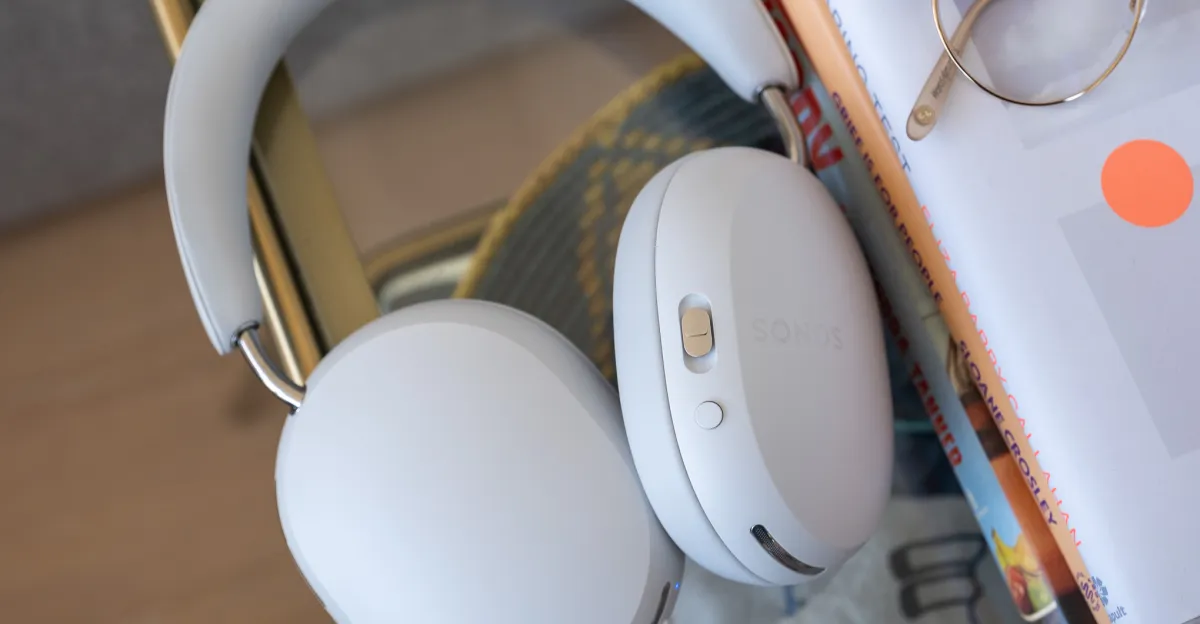
The consumer electronics landscape is witnessing a seismic shift, driven by technological innovation and business disruption that threaten to redefine market dynamics. Established giants such as Apple, Sony, Bose, and Sonos are capitalizing on a unique window of opportunity, offering their flagship headphone and earbuds models at historically low prices. This strategic move not only boosts revenue in the short term but aims to capture greater market share in a highly competitive segment that is rapidly evolving towards personalized, immersive audio experiences.

Amidst the current price slashes—most notably on models like Apple’s AirPods Pro 3 and the last-gen Bose QuietComfort headphones—industry analysts from Gartner and MIT suggest that the next wave of disruption will hinge on innovative sound technologies and integration with emerging AI ecosystems. This momentum signals a broader market shift, where traditional audio devices are increasingly becoming gateways to larger tech ecosystems, including voice assistants, health tracking, and augmented reality. As Peter Thiel has often emphasized, the secret to sustained market dominance lies in relentless innovation, a principle now manifesting in the evolution of consumer audio.

  • Enhanced suppression of ambient noise with adaptive algorithms
  • Seamless integrations with smart home and wearable technologies
  • Advanced personalization via AI-driven sound profiles

The business implications are profound. Companies that adapt swiftly to these innovations, fostering competitive advantages such as *disruption-proof ecosystems* and *superior user experience*, will set the pace for the industry’s future. Furthermore, the recent surge in more generous return policies signifies market confidence and a strategic move to build brand loyalty among a younger, tech-savvy demographic eager for premium experiences at accessible prices. This shift highlights a growing trend—consumers are not just buying devices; they’re investing in holistic digital ecosystems.

From an innovation standpoint, the convergence of AI, machine learning, and voice recognition technologies is laying the groundwork for a new era of disruptive products. Companies are investing heavily in hardware-software integration, aiming to deliver personalized soundscapes, adaptive noise cancellation, and intuitive user interfaces that anticipate user needs. The emergence of affordable yet highly capable models, such as Nothing Phone Ear (a), reflects a savvy strategy targeting mass market penetration while maintaining technological prestige. This democratization of premium experiences foreshadows an era where advanced audio tech becomes a baseline standard, much like smartphones have become.

Looking ahead, industry leaders and innovators must navigate a landscape marked by rapid technological change and fierce competition. As Elon Musk advocates for relentless innovation and Peter Thiel underscores the importance of monopoly-driven tech markets, it’s clear that those who lead in disruption and innovation will shape the future of how humans interact with technology. The next decade promises a battlefield where audio becomes the frontier of a broader digital revolution—one that demands urgency, strategic vision, and unwavering commitment to cutting-edge development. For the youth and entrepreneurs eager to stake their claim, this is an unprecedented moment to harness the power of disruptive innovation and redefine the boundaries of what’s possible.

Top Nintendo Switch 2 accessories on major Black Friday deals—grab ‘em before they’re gone!

The gaming industry continues to accelerate its trajectory of innovation with Nintendo’s recent release of the Switch 2. Debuted in June at a retail price of $449, this next-generation console is rapidly becoming a game-changer, not only for consumers but also for industry dynamics. The product represents a significant leap in portable gaming technology, integrating advanced hardware capabilities that leverage disruptive innovations in console design. As early adopters flock to secure this high-demand device, it’s clear that Nintendo is capitalizing on a thriving market eager for immersive, portable entertainment experiences.

The Switch 2 stands out by adopting features that challenge existing market standards. Its robust library of exclusive games and enhanced hardware specifications set it apart from legacy systems, promising improved performance, graphics, and user engagement. Yet, despite the hype and absence of discounts on the console itself, a thriving ecosystem of third-party accessories is driving revenue. During the Black Friday sales event, accessory discounts have surged, offering consumers opportunities to upgrade and customize their gaming experience—an industry move that underscores how peripheral markets become critical revenue streams in the console ecosystem.

Industry analysts, including Gartner and MIT researchers, recognize the strategic importance of such innovations. The disruption caused by next-gen consoles like Nintendo’s lies in their ability to redefine user engagement, extend product lifecycle, and challenge dominant players such as Sony and Microsoft. The market shift towards user-centric, portable gaming platforms also signals evolving consumer preferences, emphasizing mobility and versatility over static home consoles. This disruption is anticipated to ripple across related sectors, prompting hardware manufacturers, software developers, and even service providers to reevaluate their strategies in a rapidly shifting landscape.

Looking ahead, technology leaders like Elon Musk and Peter Thiel emphasize the urgency for continuous innovation, warning that complacency could lead to obsolescence. As the gaming industry pivots toward integrated hardware advancements—potentially incorporating AI, cloud streaming, and even virtual reality—the competitive landscape is set to intensify. The race for market leadership in portable, high-performance gaming devices is more urgent than ever, compelling companies to innovate at breakneck speed. For industry watchers and stakeholders, the message is clear: those who adapt swiftly to the wave of technological disruption will dominate the decade’s gaming frontier. The future belongs to those who see innovation not just as a strategic advantage but as an existential imperative.

Kuxiu’s Power Bank Gets Bigger, Faster Wireless Charging – Power Up Your Way!

Next-Gen Solid-State Power Bank from Kuxiu Signals Major Disruption in Portable Energy

In a significant stride towards disrupting the portable power industry, Kuxiu has announced the launch of its upgraded semi-solid state power bank, the S3. Building on its innovative foundation established with the initial semi-solid electrolyte-based battery, Kuxiu’s latest offering exemplifies the pressing shift in battery technology. This groundbreaking development not only emphasizes innovation but also positions Kuxiu as a formidable challenger to traditional lithium-ion power banks, promising a future where safety, longevity, and efficiency take center stage.

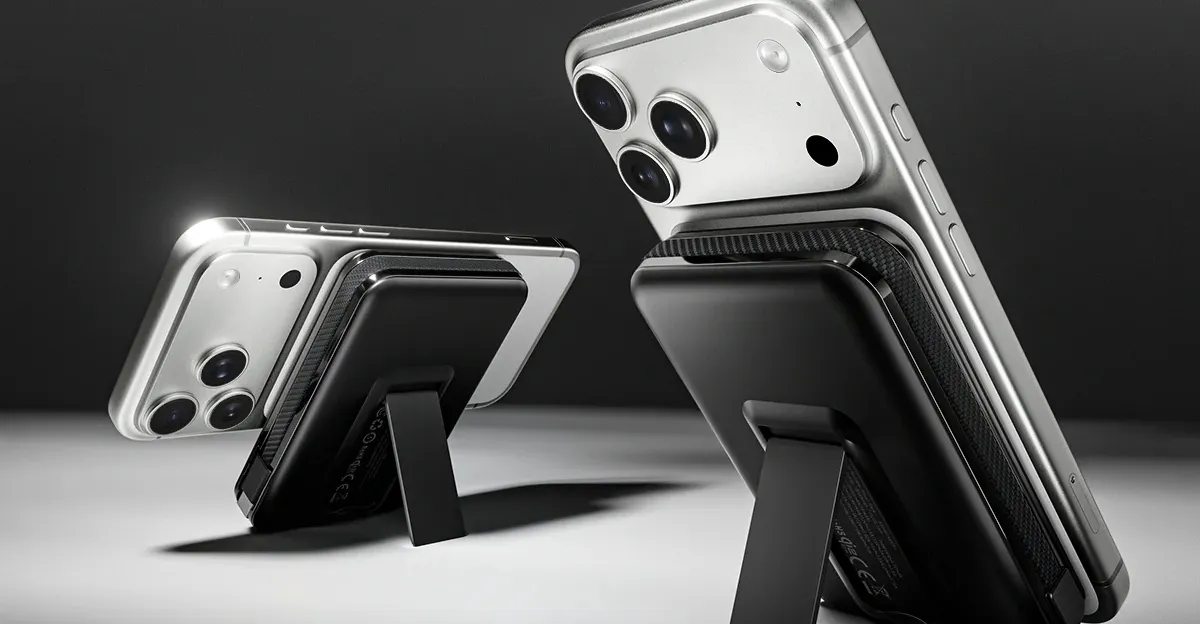
The S3 model introduces a substantial doubling of capacity—now at 10,000mAh—highlighting how solid-state chemistry is evolving to meet consumer demand for high-capacity, safe, and durable portable power. With 38.5Wh, it boasts the ability to nearly double the battery life of popular smartphones, including iPhones, depending on device specifications. The incorporation of Qi2.2 certification enables wireless charging at up to 25W, signifying a push toward seamless, cable-free energy transfer. These features collectively underscore a clear trend: disruption of traditional power banks with safer, more efficient alternatives. According to industry analysts, this aligns well with Gartner’s prediction that solid-state batteries will become standard in mobile devices by the early 2030s, heralding a new era of portable energy.

Innovative Design Elements That Set the S3 Apart

The S3’s design improvements extend beyond raw capacity. Increasing the number of N52 magnets from 16 to 18 enhances magnetic coupling, reducing accidental disconnections—an often overlooked risk in portable power devices. Additionally, the integrated kickstand and on-device display streamline user experience, providing real-time remaining capacity and charging status. The built-in USB-C cable, supporting power delivery rated at 35W, offers flexible multi-device charging, exemplifying a shift toward more versatile and user-friendly hardware. Such innovations demonstrate how Kuxiu is leveraging advanced materials and smart design to amplify the practical value of portable power supplies, essentially setting new industry standards.

Business and Industry Implications

  • Disruption of the Power Bank Market: As solid-state batteries boast longer lifespan, increased safety, and higher efficiency, existing lithium-ion power banks face significant obsolescence. This shift threatens traditional manufacturers reliant on older battery chemistries, forcing a technological overhaul.
  • Opportunity for Innovation-Driven Companies: Firms embracing solid-state technology, as exemplified by Kuxiu, could capture major market segments—particularly among younger consumers seeking reliable, sleek, and eco-friendly solutions. As such, innovation becomes not only a technical priority but a strategic business imperative.
  • Potential for Broader Impact: Enhanced power backup solutions will accelerate the adoption of wireless and portable energy, impacting markets such as consumer electronics, wearables, and IoT devices. According to MIT research, these advancements could reduce reliance on traditional power sources, fostering a more sustainable and interconnected digital ecosystem.

The Road Ahead: A New Era in Portable Power

The launch of the Kuxiu S3 underscores a pivotal moment: the next wave of battery innovation is here, with solid-state solutions leading the charge. Industry giants and startups alike are racing to commercialize safer, higher-capacity, and more reliable power sources, driven by advances in materials science and smart design. Experts like Elon Musk and Peter Thiel emphasize that such innovations are critical for solving the world’s energy challenges while unlocking new market opportunities. Looking ahead, the industry must prepare for a transformative shift—one where disruption is not just inevitable, but necessary. Forward-thinking organizations that embrace these technological trends now will shape the future landscape, positioning themselves at the forefront of the portable power revolution and redefining the potential of mobile energy solutions.

Altman unveils OpenAI’s new AI gadget—more chill and peaceful than the iPhone.

OpenAI & Jony Ive Set to Redefine Consumer Tech with Revolutionary AI Hardware

The tech industry is witnessing an unprecedented infusion of innovation as OpenAI announces a groundbreaking partnership with renowned designer Jony Ive on a new AI hardware device set to redefine how individuals interact with technology. Although details remain under wraps, early reports suggest the device will be pocket-sized and potentially screenless, signaling a paradigm shift in personal AI interfaces. The collaboration integrates OpenAI’s cutting-edge AI algorithms with Ive’s mastery of minimalist design, promising an experience that emphasizes simplicity, usability, and contextual awareness.

This development carries profound business implications, especially as it positions OpenAI at the forefront of the next wave of disruption in consumer technology. Since acquiring Ive’s design startup, Io, earlier this year for $6.5 billion, OpenAI has clearly aimed to democratize AI accessibility beyond the realm of savvy developers and enterprise users. By leveraging Ive’s signature approach—where solutions are both elegant and intuitive—the company intends to craft an interface that seamlessly integrates into daily life, echoing the revolutionary impact of the iPhone. As Altman reflected, the iPhone remains the “crowning achievement” of consumer products, and this new device aspires to surpass even that milestone in relevance and utility.

Industry analysts from Gartner and MIT’s Media Lab emphasize that this venture exemplifies the shift towards personalized, contextually aware AI tools. The device aims to filter distractions, prioritize meaningful interactions, and adapt intelligently to users’ routines. Notably, Altman envisions a product capable of building a trust-based relationship over time, where the AI gains a holistic understanding of users’ lifestyles. Such capabilities could streamline digital interactions and reduce information overload—a persistent concern in today’s hyper-connected environment.

  • Enhanced filtration of notifications and alerts
  • Context-sensitive cues that anticipate user needs
  • Long-term AI-user relationship building

Consequently, this innovation could set new standards for privacy and user control, shifting the industry focus from mere functionality to meaningful, trust-based engagement.

The timeline for commercialization appears promising, with Ive confirming the device’s availability within less than two years. As the industry anticipates this launch, the broader market faces unprecedented disruption, risking the obsolescence of existing (often distractive) gadgets and interfaces. The implications extend further—if successful, this innovation could catalyze a new breed of ultra-portable, AI-driven personal assistants, disrupting not only consumer electronics but also sectors like healthcare, education, and enterprise productivity.

In a landscape already transformed by Elon Musk’s Neuralink and Peter Thiel’s investments in AI-driven startups, this new venture underscores the urgent need for companies and investors to stay ahead of the curve. The convergence of innovation, disruptive design, and strategic partnerships signals that the next frontier of technology will prioritize meaningful human-AI relationships. As industry leaders and startups race to develop smarter, more intuitive devices, the outcome of this bold collaboration will shape the future of personal tech for years to come. For those who wish to lead rather than follow, now is the time to recognize that the era of simplistic yet profound AI interfaces is just around the corner—change is inevitable, and the clock is ticking.

Raycast for Windows: The game-changing productivity boost your PC needs

Tech Industry Disruption and the Future of Innovation: A Deep Dive

As the technology sector accelerates its pace toward revolutionary changes, companies like Google, Samsung, and decentralized gaming platforms are leading a wave of disruption that promises to redefine business paradigms and consumer experiences. Recent developments indicate an industry at inflection point, where breakthrough innovations challenge traditional models and create new ecosystems of value.

Google’s Gemini 3, the latest iteration of its powerful Large Language Model (LLM), exemplifies the competitive edge AI is gaining globally. This model not only dominates in natural language understanding but also integrates seamlessly across multiple platforms—from apps to search engines—thus fostering a more intuitive user interface that could overhaul how we interact with information. Experts at MIT suggest that the expansion of such multilingual, multimodal models symbolizes a shift toward ubiquitous, AI-driven decision-making, with potential ramifications for entire industries, including advertising, education, and enterprise. Meanwhile, Raycast for Windows introduces an innovative productivity suite, bringing a Mac staple—a launcher and shortcut system—into the PC realm, promising to disrupt workflows and streamline computer management, especially for a generation raised on speed and simplicity.

In the consumer space, gaming startups and console creators are pushing boundaries—most notably with the Analogue 3D retro console built on Nintendo 64 hardware, which has garnered critical acclaim for blending nostalgia with cutting-edge hardware. Additionally, the emergence of Steam Machines and chaos-filled titles like Kirby Air Riders represent a revitalization of physical gaming experiences in an increasingly virtualized environment. Industry analysts, including Gartner, warn that disruption in gaming hardware and services signals a broader trend where convergence and nostalgia drive new revenue streams, reshaping the landscape for hardware makers and developers alike.

Furthermore, the ongoing proliferation of AI in everyday devices signifies a tectonic shift in digital interaction. Gemini’s widespread integration, along with innovative apps like Comet for Android, demonstrates that AI’s reach is expanding beyond traditional ecosystems, promising to enable smarter mobile browsing, remote work, and personal productivity tools. Industry leaders, including Elon Musk and Peter Thiel, recognize that accelerating AI capabilities bring both opportunities and warnings, emphasizing the need for responsible innovation amidst fierce competitive pressures. As startups and tech giants race to embed AI deeper into our lives, the actual business implications are profound—pioneering companies could dominate the emerging AI-enabled economies while laggards risk obsolescence.

Looking ahead, the pace of technological innovation mandates swift adaptation, as industry giants and startups alike race to establish dominance in these disruptive spaces. From AI advancements like Google’s Gemini to gaming hardware based on legacy systems, the industry’s trajectory is clear: those who leverage disruption and innovation effectively will shape the next era of digital commerce and culture. As industry experts underscore, the urgency to innovate—before the next wave of competitors —has never been greater. The future belongs to the agile and the bold, as the stakes climb higher on the chessboard of technological supremacy.

Meross Adds Thread to Cord-Free Presence Sensor, Boosts Connectivity for Young Tech Fans

Meross Disrupts Smart Home Industry with Battery-Powered MS605 Presence Sensor

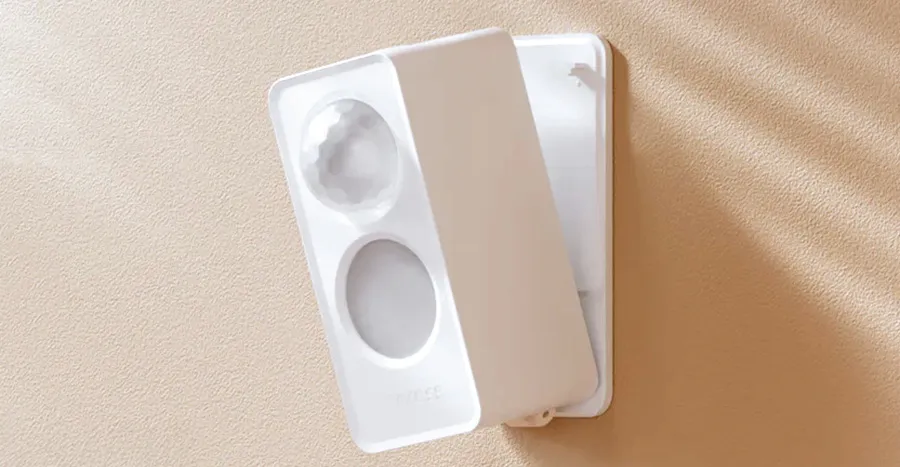
In a bold move that exemplifies the ongoing disruption within the smart home market, Meross has announced the release of its latest presence sensor, the MS605. This new iteration marks a significant evolution, shifting from traditional wired installations to a fully battery-powered design that promises more flexible and seamless integration across diverse environments. Powered by a solitary CR123A battery, the MS605 boasts an impressive lifespan of up to three years, broadening the scope for innovative home automation applications without the constraints of power cords. This development underscores how minimalist, energy-efficient components are redefining the user experience in connected ecosystems.

The innovation does not stop with portability. Meross’ adoption of the Matter protocol—an industry-driven standard aimed at unifying device communication—places the MS605 at the forefront of industry-wide disruption. Unlike its predecessor, which relied on Wi-Fi compatibility, the new sensor leverages the Thread protocol for low-power, reliable connectivity. This shift aligns with industry analysts from Gartner and MIT, emphasizing how mesh network standards will underpin the future of interconnected devices, enabling faster, more secure interactions between sensors, hubs, and voice assistants like Google Home, Apple HomeKit, and Amazon Alexa.

The implications for businesses within smart home ecosystems are profound. The reduced dependency on conventional power sources, combined with the adoption of Thread-based connectivity, opens new avenues for rapid innovation and deployment. Companies that embrace these standards can reduce costs, improve scalability, and deliver more resilient products. Notably, the MS605’s support for Matter over Thread suggests that OEMs now have the flexibility to integrate sensors into broader, more cohesive smart environments, challenging entrenched players who rely solely on Wi-Fi protocols. As Elon Musk and Peter Thiel have emphasized, disruption requires interoperability—and Meross’s strategy exemplifies this principle in action.

Market watchers and industry leaders are taking note of Meross’s move, recognizing a broader trend where simplicity, energy efficiency, and compatibility are vital drivers of competitive advantage. While the $34.99 pre-order price points to an accessible product, the real value lies in the disruptive potential of standardized, low-power sensors integrated into the smart homes of tomorrow. This push toward broader ecosystem compatibility accelerates the shift away from proprietary solutions, empowering consumers and fostering innovation among manufacturers. In the near future, expect to see more companies adopting Thread and Matter standards, pushing the entire industry towards an integrated, disruption-driven horizon that promises smarter, more responsive living environments.

As the smart device industry accelerates these advancements, stakeholders must stay vigilant to emerging market shifts. With the rise of battery-powered, standards-based sensors like the MS605, the fusion of innovation and disruption is clear. The future belongs to those ready to leverage these breakthrough technologies—an era where seamless, automated, and interconnected homes become the new normal. Entrepreneurs, investors, and consumers alike must recognize that in this rapidly evolving landscape, agility and forward-thinking are the keys to thriving in the next chapter of digital innovation.

Social Media Auto Publish Powered By : XYZScripts.com