Matox News

Truth Over Trends, always!

‘A New Normal’: Inquiry Reveals How Covid Reshaped British Society for Good

The conclusion of the Covid-19 inquiry signifies more than a formal end to government investigations; it serves as a stark mirror reflecting the profound societal wounds inflicted by a global crisis. For nearly three years, this inquiry has dissected myriad facets of pandemic management, revealing unsettling truths about how social issues have reshaped families, challenged institutions, and strained communities. At the heart of these revelations lies a grim depiction of a nation grappling with the aftermath, where mental health crises, social neglect, and systemic vulnerabilities threaten to fracture the social fabric.

One of the most troubling findings relates to the surge in mental health issues among the young. Experts testified that during lockdowns, the demand for mental health services spiked dramatically, with many previously unaffected individuals seeking help from charities such as Mind. Due to the abrupt shutdown of statutory services, families witnessed loved ones, particularly children and teenagers, descend into distress, marked by increased rates of self-harm, eating disorders, and suicidal ideation. Social commentator Dr. Sarah Hughes emphasized that the relentless media coverage and a pervasive sense of crisis left young minds in a state of constant anxiety, disrupting their ability to grieve and process loss. The trauma of being unable to hold proper funerals during this time has left a legacy of complex grief, one that community and mental health institutions are still ill-equipped to address adequately.

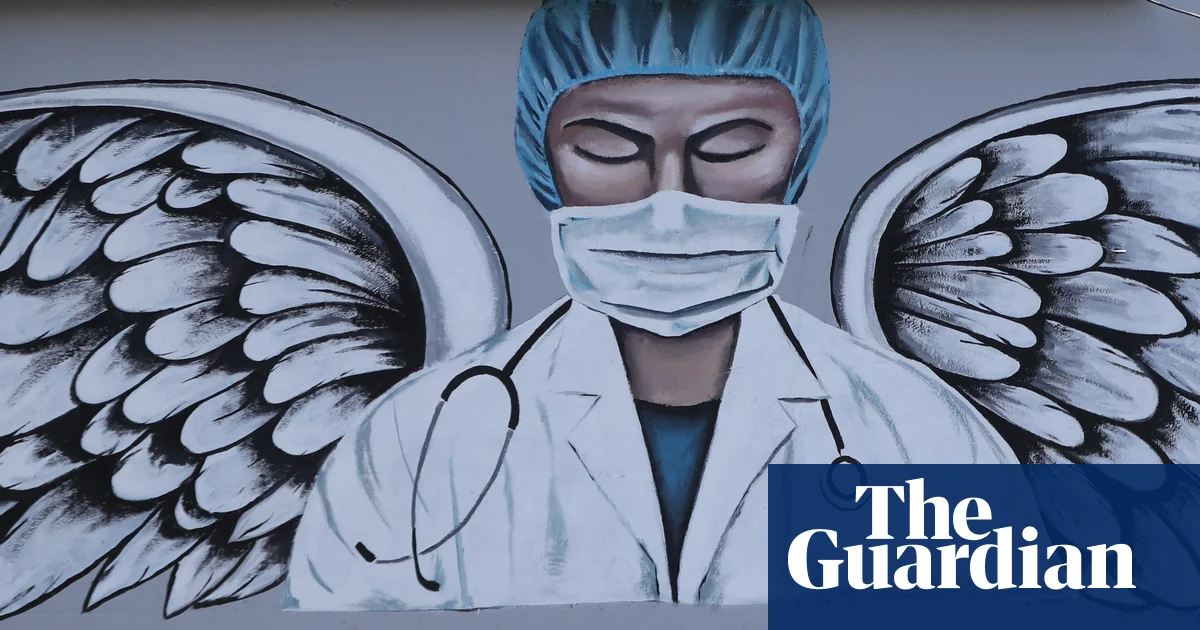
Meanwhile, the public’s attitude towards essential workers deteriorated under the weight of pandemic stress. As the inquiry highlighted, many key workers faced verbal abuse, intimidation, and dehumanization while enforcing social distancing and health regulations. Transport workers, cleaners, and healthcare staff bore the brunt of a society riddled with frustration and fear, often becoming targets of violence and threats, exemplified by the tragic case of Belly Mujinga, a railway worker who succumbed to Covid after being spat at on duty. These incidents underscore a broader social malaise—an erosion of mutual respect and recognition for those who kept society afloat during its darkest hours. Labour union leaders have argued that this normalization of hostility has long-term implications for community cohesion, further alienating those who serve as the backbone of our daily lives.

The crisis also cast light on critical failings within the housing and social support systems. Governments swiftly responded with the Everyone In initiative, temporarily housing rough sleepers in hotels to mitigate health risks. However, the long-term consequences have been troubling: the normalization of temporary accommodations as an acceptable form of housing. As the social housing sector grapples with these new realities, experts warn that this approach undermines stability for vulnerable populations and exacerbates mental health crises. Shelters and charities report an increase in severe psychological distress, with staff untrained to handle such complexities, raising important questions about the structural weaknesses in our social safety net. This calls for an urgent reassessment of emergency planning, emphasizing the need for resilient, humane models of support that prioritize long-term stability over short-term fixes.

Most poignant are the stories of disabled individuals caught in a vacuum of support and safety. Evidence from the inquiry shows that the withdrawal of social care services and ongoing fears of infection have left many disabled persons isolated and vulnerable. Experts have documented cases where high anxiety, compounded by the loss of trusted routines and healthcare, resulted in tragic outcomes—such as young women turning to harmful coping mechanisms like self-harm with bleach. These narratives exemplify how a society’s moral fabric is tested when it leaves its most vulnerable behind, often devaluing their existence with dismissive messaging about “underlying conditions” and mortality statistics. As Professor Nick Watson from Glasgow University pointed out, the erosion of trust and sense of safety is a wound that will take years to heal, demanding a societal reckoning about how we care for those who depend on our collective compassion.

Reflecting on the enduring scars of the pandemic reveals a society at crossroads: one where social cohesion, moral responsibility, and community resilience must be rewoven with intention and care. It is a challenge for communities to confront uncomfortable truths—about neglect, stigma, and systemic fragility—and to forge a future rooted in dignity and respect for all. The hope of renewal lies in recognizing these social lessons not as failures but as catalysts for meaningful transformation—an acknowledgment that society’s true strength resides in its unwavering commitment to nurture and protect its most fragile members.
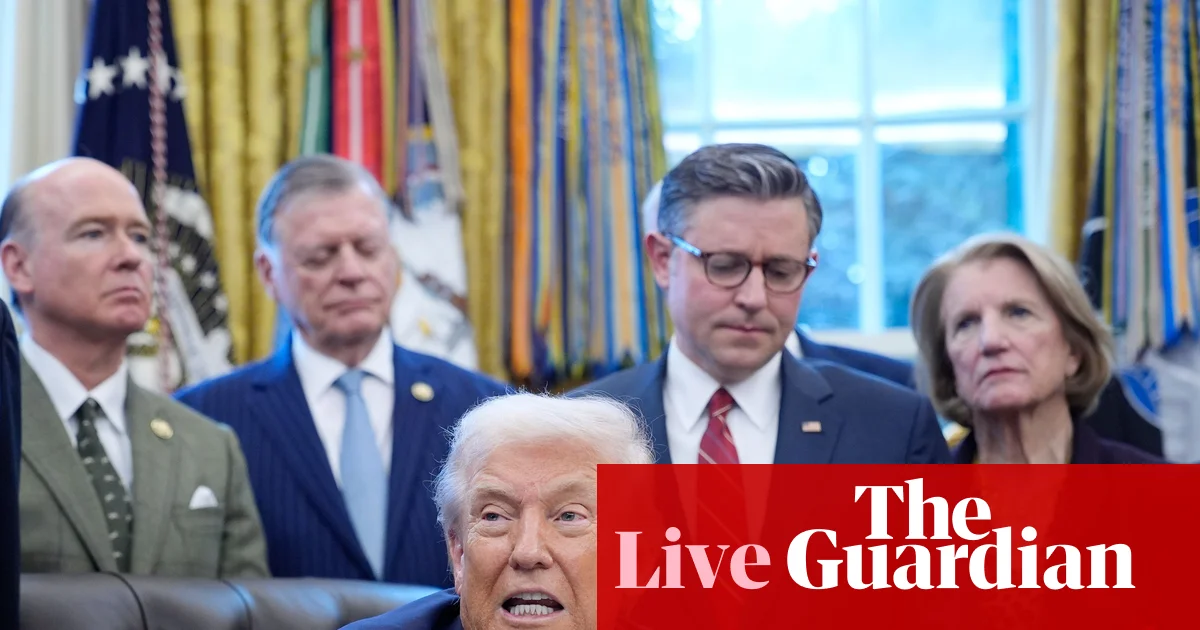
Trump calls Pretti and Good ‘not angels’ as he hints at milder immigration stance — US politics updates

In a tumultuous era marked by shifting alliances and ideological battles, United States actions continue to reshape the global geopolitical landscape. The recent reaffirmation of religious and national values by President Donald Trump at the 74th National Prayer Breakfast underscores a broader ideological push to reinforce traditional faith-based identities amidst a rapidly evolving international order. This event—an annual convergence of political, social, and business elites—serves more than just spiritual purposes; it is a platform where Trump emphasizes his commitment to defending religious freedoms, pushing back against what he characterizes as the divisive policies of the current Biden administration. Analysts argue that such rhetoric aims to rally the conservative base while projecting strength abroad, signaling a deliberate departure from progressive social policies that have faced increasing global scrutiny and resistance.

Beyond the religious rhetoric, American strategy on the world stage reflects a calculated effort to counterbalance China’s rising dominance, especially in critical sectors such as minerals essential for modern weaponry and high-tech industries. The Trump administration’s initiative to establish a critical minerals trading bloc with allies demonstrates its intent to leverage economic and strategic tools to diminish China’s geopolitical influence. This move, supported by tariffs and trade agreements, highlights a concerted effort to safeguard supply chains crucial for electric vehicles, missiles, and cutting-edge defense technology. International organizations, including some from Europe and Asia, are watching these developments closely, recognizing that control over vital resources translates into political leverage—an arena where Great Powers compete fiercely for dominance. Economists warn that this tripwire could solidify a new era of resource nationalism, profoundly affecting society through increased costs and reshaped alliances.

Meanwhile, the internal political dynamics of the United States reveal an ongoing ideological struggle that extends beyond foreign policy. The controversy surrounding immigration enforcement in Minnesota, where ICE agents face opposition from local and national figures, exemplifies the deep societal divide regarding law and order. Recent statements by Donald Trump acknowledging that Renee Good and Alex Pretti were “not angels” but affirming unwavering support for law enforcement, strike a tone of toughness and reassurance to his conservative supporters. Trump’s call for a “softer touch” in immigration enforcement suggests an attempt to balance strict policies with public relations, aiming to preserve his political narrative of law and order—a message that resonates powerfully in a society grappling with safety and national unity. As Senator Chuck Schumer and others demand complete withdrawal of federal agents, the societal tension reveals the fragility of domestic consensus amid international and ideological pressures shaping the nation’s future.

As the world watches, the chessboard of geopolitics continues its relentless advance. Negotiations between Moscow and Kyiv in the shadow of Russian missiles highlight the ongoing \u201cwar of attrition\u201d—a grim reminder that conflicts are no longer confined to battlefield trenches but extend into cyber, economic, and diplomatic realms. Concurrently, the US seeks to form strategic alliances to curb China’s burgeoning influence, while Britain grapples with internal scandals involving past figures linked to Jeffrey Epstein, exposing the persistent scars of political trust and morality. These developments evoke a somber reflection on history—an ongoing saga where decisive decisions today will resonate through generations. The weight of history presses upon every leader in every capital, and the narrative continues to unfold with unpredictable intensity, leaving the global community poised at a crossroads where the future of nations, societies, and values hangs in the balance, teetering on the edge of history’s next great chapter.

“‘Wicked: For Good’ Showcases Powerful Narratives Through Vibrant Hues”

In the ongoing dialogue between culture and identity, visual storytelling remains a profound vessel for expressing the complexities of human experience. The recent release of the documentary “Wicked: For Good” exemplifies this truth by showcasing how color—that seemingly superficial element—serves as a potent language of its own. Alice Brooks, the film’s cinematographer, meticulously explains how choices in palette invoke symbolism, evoke emotions, and deepen the narrative’s moral and philosophical underpinning. Here, the careful orchestration of hues becomes a mirror reflecting society’s deepest hopes and fears, underscoring the inextricable link between aesthetic design and cultural meaning. In this context, the power of art extends beyond spectacle, becoming a moral and philosophical commentary rooted in the visual language of civilization.

Throughout history, cultures have employed symbolism through visual motifs to preserve tradition and reinforce societal cohesion. Just as the Renaissance masters wielded chiaroscuro to explore themes of providence and human frailty, contemporary filmmakers like Brooks harness color to navigate the moral landscape of modern storytelling. The deliberate use of contrasting tones—shadows and light—serves as a reminder of Ortega y Gasset’s assertion that the culture of a society is the collective memory and moral compass, guiding its sense of identity. In this prism, the cultural artifact transforms into a vessel of collective memory, a prophecy of future societal values, echoing the conservative belief that tradition anchors society amidst the chaos of an ever-changing world.

As Tocqueville observed, democracy’s strength lies in its capacity for cultural self-awareness and collective identity. The film’s visual motif underscores this cultural assertion: that the stories we tell ourselves—encoded in color, imagery, and symbolism—are fundamental to defining who we are. This cultural potency is especially salient in youth culture, where visual and aesthetic expressions serve as codified acts of resistance and affirmation. The intentional craftsmanship behind “Wicked: For Good” exemplifies how art preserves enduring values through symbolic language, reinforcing that culture is both a fabric woven from tradition and a beacon guiding future generations. In a society increasingly dominated by fleeting trends, such works remind us that authentic cultural expression remains rooted in symbols that transcend individual fleeting impulses.

Finally, embracing the philosophical grace of T.S. Eliot, we understand that culture is not merely the preservation of what was but a living vision of what can be. In this light, the final image is evocative: a superimposition of memory and prophecy, where color and form act as poetic metaphors for mankind’s ongoing quest for meaning. As Brooks’s careful calibration of hues demonstrates, the language of art continues to articulate the moral and spiritual architecture of society—an indelible testament to cultural resilience. For in the end, culture is both a mirror of our collective identity and a prophecy of our collective future, whispering that through the memory of tradition, humanity whispers its hope—hope that history’s lessons will shape a luminous horizon yet to come.

Man who forcibly approached Ariana Grande at Wicked sequel premiere faces serious charges | Wicked: For Good

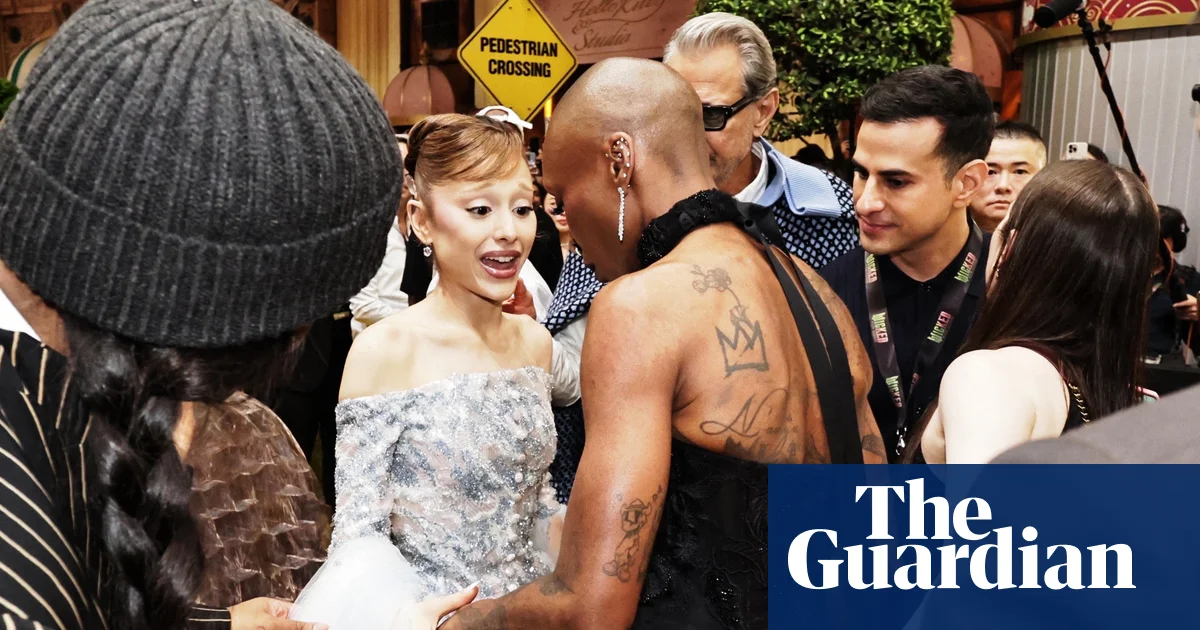
In an era where security measures are tighter than ever, the spectacle of red carpet invasions reveals a deeper cultural tension—a collision of individual expression and societal boundaries that define our collective identity. Recently, a man in Singapore charged as a public nuisance exemplifies this ongoing struggle. His attempt to breach security and approach Ariana Grande on the premiere of Wicked: For Good underscores a timeless human desire: the urge to connect, to be seen, to make an impact amid the swirling currents of modern spectacle. Though his actions were met with condemnation—highlighted by warnings of fines up to S$2,000—what remains undeniable is the audacity of the individual in the face of societal order.

This fringe phenomenon is not new. History and culture have long chronicled instances of figures who sought to disrupt the polished veneer of celebrity and spectacle. From Hugh Grant handcuffed to a celebrity on the 2007 premiere of Music and Lyrics to Kim Kardashian being flourbombed in 2012, these acts echo a persistent desire to breach the superficial boundaries of entertainment and enter the realm of raw human emotion. Such acts serve as a mirror—illuminating the fragile tension between public decency and the innate human longing for authenticity. As Ortega y Gasset observed, culture is not merely an accumulation of artifacts but the living fabric of *people’s identities*, an ongoing dialogue where the individual seeks to carve a space within communal narrative.

Amid these moments, the cultural significance of celebrity becomes evident: it is both a reflection of societal ideals and a battleground where **tradition** confronts **modernity**. The red carpet, historically, is a ceremonial threshold—an arena of societal memory—yet it has evolved into a stage of continuous challenge, where figures like Bradley Cooper or Cynthia Erivo stand as witnesses to the fragile boundary between admiration and intrusion. These episodes underscore the need for society to uphold its shared norms without suppressing the individual’s essential drive for recognition. Critics like Chesterton have long argued that the true strength of a society lies in its capacity to reconcile discipline with compassion, preserving the integrity of both community and individual aspiration.

In contemplating these moments, one recognizes the enduring power of culture: a living archive of memory and prophecy, where each act of defiance or reverence adds to the unfolding story of human dignity. As T.S. Eliot suggested, true culture is the *spiritual foundation* that guides us through chaos towards meaning. Today, as stars and spectators alike grapple with the spectacle of invasion—whether it be a fleeting viral moment or a profound act of rebellion—what remains is the profound truth that our cultural expressions are the echoes of our shared hopes and fears. They are both the fabric woven by our ancestors and the silent hymn calling forth future generations in the eternal quest for identity, continuity, and hope. Culture, then, is not merely the legacy of the past but the prophecy of humanity—an ongoing testament to the resilience of our true selves amidst an ever-changing world.

Gaza Peace Talks Continue as Trump Calls Deal ‘Really Good’ Chance for Progress

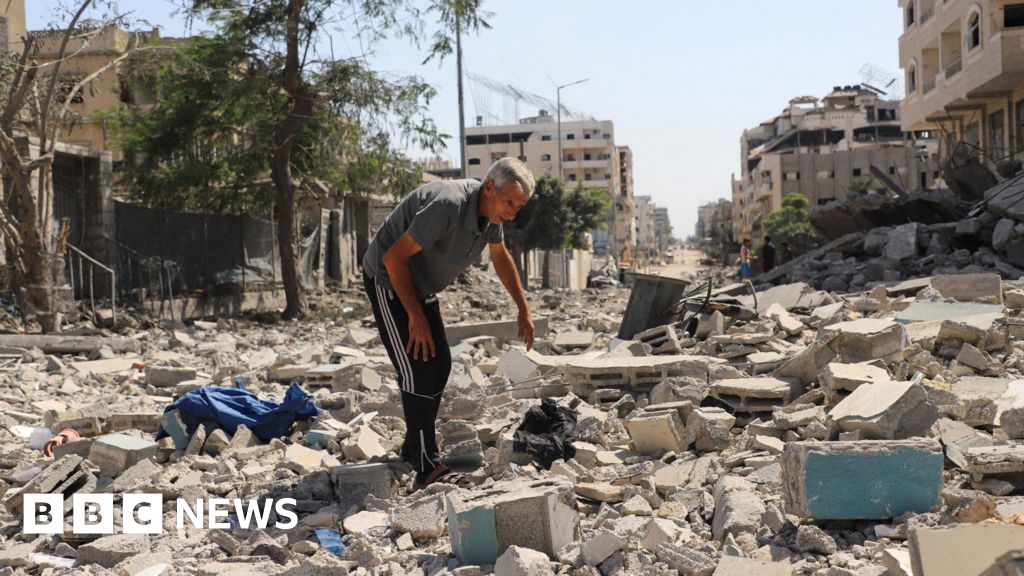
The Middle East remains at a pivotal crossroads, with recent developments in Gaza signaling both a potential shift in conflict dynamics and a test of international diplomacy. As Israel ratchets up its offensive in Gaza City, the international focus has shifted toward indirect negotiations aimed at forging a durable peace, with the U.S. peace plan emerging as a central, yet contentious, element of this process. The upcoming talks in Sharm El-Sheikh are crucial, as they seek to create the “field conditions” necessary for an exchange—one that could see hostages released and relative calm restored for the first time in months.

Leading this diplomatic push are influential figures like Donald Trump and **Israeli Prime Minister Benjamin Netanyahu**, who have expressed optimism about the possibility of an agreement. Trump, now a key envoy in the negotiations, publicly stated that the first phase of the peace effort—focused on the release of hostages—”should be completed this week,” indicating a real sense of urgency. Analysts and historians warn, however, that such optimistic rhetoric often masks deeply entrenched issues, particularly Hamas’s refusal to accept the plan’s **disarmament** clause and its insistence on remaining part of Gaza’s governance. Meanwhile, Palestinian factions and regional actors—especially **Qatar** and **Egypt**—are playing critical roles, facilitating shuttle diplomacy that is seen as essential given the profound mistrust between Israel and Hamas.

The geopolitical impact of these negotiations is profound. If successful, they could serve as a blueprint for a broader peace settlement—potentially reshaping societal relations and regional stability. Yet, the balance remains delicate. Israel’s security concerns persist, especially regarding Hamas’s future role, which remains a sticking point. Hamas’s statement indicated willingness to release all Israeli prisoners, both living and dead, but avoided addressing its disarmament—raising doubts among critics that foundational issues might plunge the talks into failure. International organizations such as the United Nations have called for restraint, with Secretary-General Antonio Guterres warning that the opportunity presented by Trump’s initiative “must be seized” to prevent further tragedy. Conversely, opponents argue that the peace plan, especially with its concessions, risks rewarding continued militant influence while failing to address broader issues of Palestinian sovereignty, thus challenging existing international norms.

As the conflict’s toll continues to climb—over 67,000 killed in Gaza alone, including thousands of children—the regional and global repercussions grow ever more urgent. Countries such as the United Kingdom and regional powers are now openly supporting the U.S. efforts, yet skepticism remains. Critics warn that history repeatedly demonstrates how fragile ceasefires and peace agreements can be, especially in a context where past promises have been broken and trust remains elusive. The voices of analysts like *Benny Morris* and *Rashid Khalidi* echo warnings that the deeper issues—like the status of Palestinian sovereignty, disarmament, and the future governance of Gaza—must be resolved for peace to hold. Otherwise, the cycle of violence threatens to erupt again, possibly even more devastating than before. As the world watches anxiously, the story of Gaza continues to unfold—each negotiation, each development, adding a new chapter to a conflict that Western leaders and regional stakeholders alike consider among the most complex and perilous the modern era has faced.

Social Media Auto Publish Powered By : XYZScripts.com