Matox News

Truth Over Trends, always!

S. Korea Cuts Tariffs on Key Goods Following New US Deal

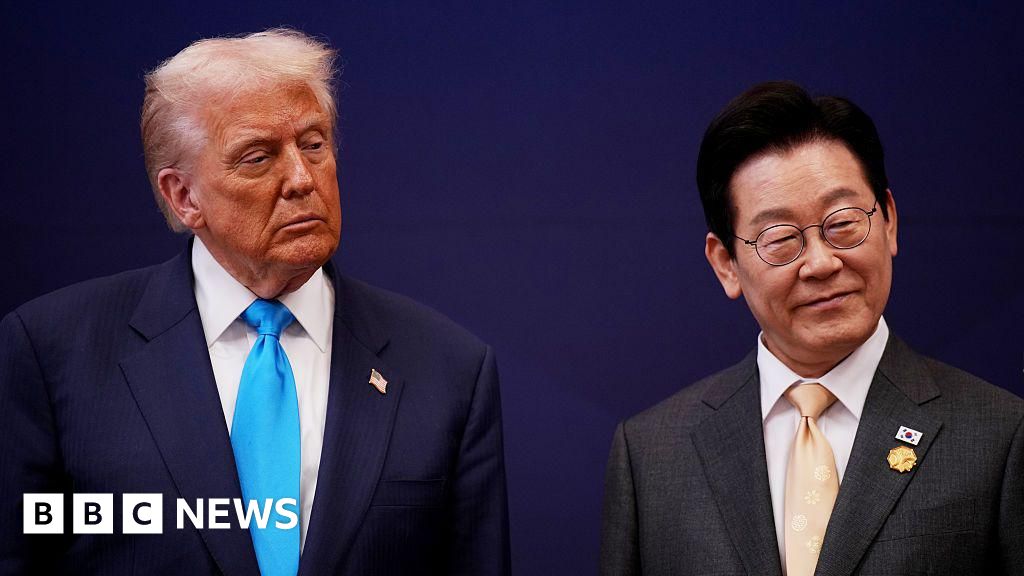
The recent negotiations between the United States and South Korea mark a significant shift in the ongoing battle for economic and geopolitical influence in the Indo-Pacific region. After prolonged discussions, the two nations announced a broad trade deal that exemplifies the delicate balance of power, alliances, and economic interests in a troubled global landscape. The accord, characterized by the preservation of reciprocal tariffs at 15% while strategically reducing taxes on automobiles and parts, signals a cautious yet strategic move by both sides. While the agreement fosters economic cooperation, it also underscores the complex geopolitics at play, particularly as the U.S. continues to assert dominance amidst rising tensions with China and North Korea.

  • South Korea committed to investing $350 billion in the U.S., including $200 billion in cash investment alongside a substantial $150 billion in shipbuilding and industrial capacity. Conversely, President Trump highlighted the importance of national security in trade, emphasizing that the deal, while primarily economic, also contains vital dimensions of security cooperation. Yet, this accord doesn’t come without controversy, as Trump’s initial tariffs of 25% on Seoul—negotiated down from higher rates—reveal the ongoing tug-of-war over trade policies and the broader competition for global economic primacy.

Despite the positive outlook conveyed by the leaders, the negotiations were marred by underlying tensions and shifting demands. The White House’s later escalation of demands for cash investments highlights the unpredictable geopolitics that have come to define Trump’s America-first approach. Amid these negotiations, South Korea’s industries—especially electronics, chips, and automotive sectors—remain cautious, torn between hope for clarity and the risks of a trade environment still fraught with tariffs and uncertainty. Analysts warn that such trade deals, while beneficial in the short term, are part of a larger contest for influence in Asia, where every tariff and investment decision echoes through the geopolitical corridors of power.

As Trump prepares to meet Xi Jinping in Busan on the sidelines of the Asia-Pacific Economic Cooperation (Apec) summit, the stakes could not be higher. This confrontation between the world’s two largest economies symbolizes the unfolding battle over global dominance, with both leaders touting hopes of securing a “good deal”—a phrase loaded with both optimism and suspicion. Many strategic analysts see this as a crucial juncture; the meeting will test whether the U.S. can recalibrate its approach to China amid rising competition, or if the divergence will deepen, sowing chaos and uncertainty across the entire Asia-Pacific region.

Meanwhile, amid the diplomatic dance, fragile peace on the Korean Peninsula hangs in the balance. Trump’s visit was marked by a notable gesture—he became the first U.S. president awarded the Grand Order of Mugunghwa, symbolizing a recognition of his efforts toward peace. Yet, the headlines are overshadowed by renewed tensions: North Korea’s recent missile tests and the ongoing division of the Korean people, a reminder that decades of conflict simmer just beneath the surface. In public, protests erupted, some protesting Trump’s policies while others rallied in his support, revealing the societal rifts and conflicting loyalties that frame this geopolitical theater.

As the world watches, the ancient echoes of history remind us that these moments are pivotal—each decision, each summit, could tilt the scales toward stability or chaos. The unfolding saga of America’s strategic recalibration, China’s assertiveness, and South Korea’s delicate diplomacy is a testament to a new chapter in global power dynamics. The weight of history presses down, unyielding, as the powers of today carve the contours of tomorrow—each move etching itself into the fabric of history’s relentless march forward. In the final analysis, the stakes are no longer confined to nations alone but are a battle for the very soul of the modern world, where peace, prosperity, and even survival hang in the balance amid the unpredictable currents of geopolitics.

Trump Hits Canadian Goods with Tariffs After Reagan Campaign Backlash

Trade Tensions Escalate as US and Canada Clash Over Tariffs and Political Rhetoric

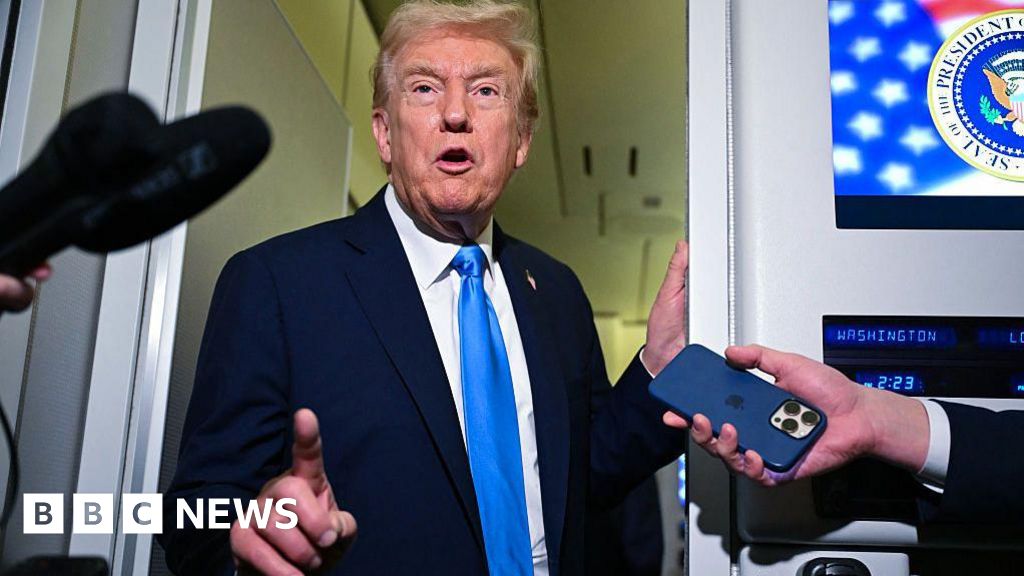
The ongoing trade dispute between the United States and Canada has taken a dramatic turn, with recent actions highlighting the fragile state of North American economic relations. Following US President Donald Trump’s announcement of increased tariffs—reportedly a 10% hike on goods imported from Canada—the geopolitical landscape is shifting dangerously close to a trade war. Trump’s decision came in response to a political advertisement sponsored by Ontario that featured excerpts from Reagan-era US presidential speeches, criticizing tariffs as harmful to American workers. The ad, which quoted Reagan’s famous warning that tariffs “hurt every American,” was seen as a direct challenge to current US economic policies, prompting the Trump administration to retaliate with increased levies.

This move underscores a broader deterioration in United States-Canada relations, with tariffs already hitting sector-specific industries—particularly metals and automobiles—severely impacting Canadian exporters, who rely heavily on the US market. Canada’s auto sector, based largely in Ontario, accounts for a significant share of national exports, and analysts warn that further escalation could weaken the North American supply chain, risking long-term economic stability. The Canadian Chamber of Commerce publicly expressed hope for diplomacy, emphasizing that tariffs serve as a “tax on North American competitiveness,” yet the damage inflicted by these tariffs is already palpable across borders. With the impending Supreme Court case questioning the constitutionality of Trump’s tariffs, the region faces an uncertain future, torn between protectionist policies and the need for open trade.

Amidst this tense backdrop, political narratives are being wielded as much as economic policies. Ontario Premier Doug Ford initially launched a provocative anti-tariff advertisement during the World Series, featuring Reagan’s words and highlighting the adverse impact of tariffs on American workers. After diplomatic pressure, Ford agreed to pause the ad campaign, though it still ran over the weekend during the high-profile baseball championship. Meanwhile, Trump accused Canada of attempting to manipulate the upcoming US Supreme Court case that could dismantle his tariff regime altogether. These accusations reveal the strategic use of diplomatic confrontations to influence legal and political outcomes, illustrating the dangerous confluence of trade policy and national politics. Historians and analysts note that this pattern of escalating rhetoric echoes past trade disputes, which often intensify before reaching a resolution or erupting into full-fledged conflicts.

The international community watches with concern as these developments threaten the stability of North American economic and diplomatic relations. The stakes extend far beyond tariffs; they touch on sovereignty, national identity, and the broader strategic positioning of the United States and its closest neighbor. The global institutions tasked with maintaining a rules-based order lack the power to curb rising unilateralism. With the US seemingly determined to invoke economic measures as a form of political leverage and Canada asserting its sovereignty through symbolic gestures like the World Series ad and diplomatic protests, the future of North American integration hangs in the balance. As the story unfolds, history’s weight remains heavy—each decision, each controversy, contributes to a larger narrative of power, resilience, and the relentless pursuit of national interests amidst a shifting geopolitical landscape. The outcome of this tempest, whether a return to dialogue or a descent into economic conflict, will indelibly shape the legacy of the current era and the security of generations to come.

Social Media Auto Publish Powered By : XYZScripts.com


