
Humanoid Robots Go Mainstream: Unitree’s R1 Disrupts Market with Affordable Innovation
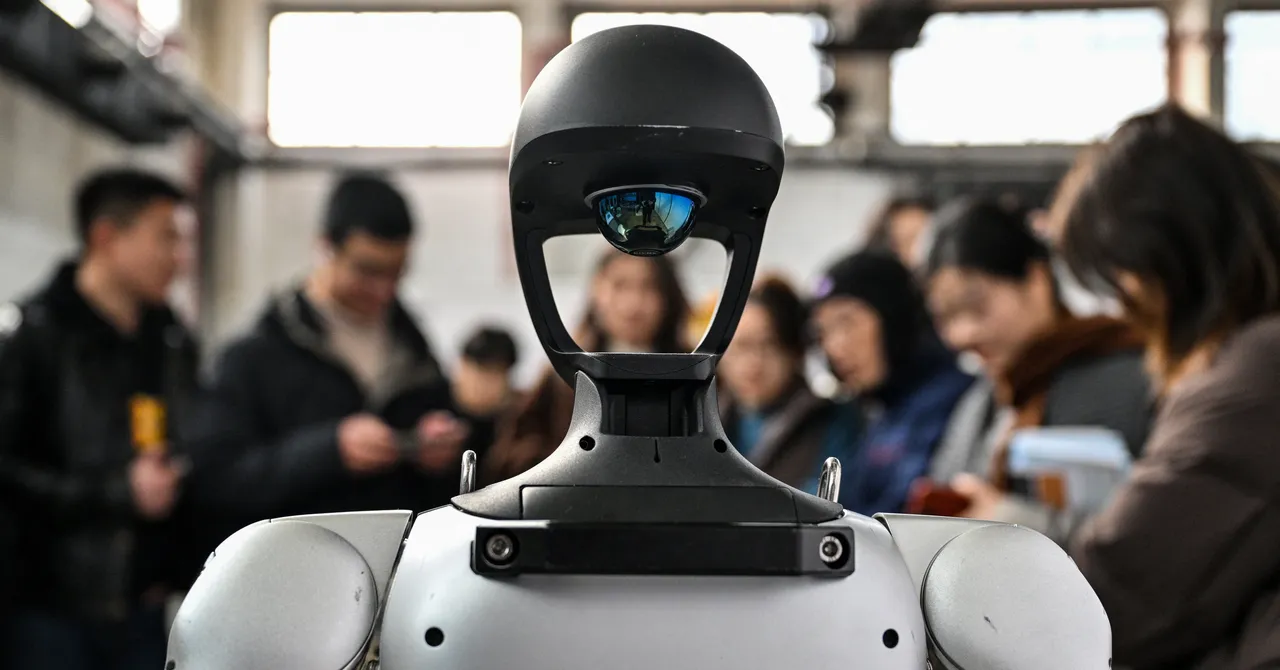
In a significant breakthrough for the robotics industry, Chinese manufacturer Unitree Robotics is democratizing access to humanoid robots with the launch of its latest model, Unitree R1. Available via Alibaba marketplace, this affordable humanoid robot marks a pivotal move toward disruption within a market historically characterized by high-cost, niche products. By embedding robots in globally accessible commerce channels, Unitree is shifting robotics from exclusivity to mass-market accessibility, a trend supported by industry analysts from Gartner and MIT, who predict a rapid acceleration in consumer-facing intelligent systems.
Innovation in Pricing and Capabilities as a Market Disruptor
The R1 is not just a symbol; it embodies technological innovation at a breakthrough price point. Initially priced at around $5,900, the robot’s launching price has recently dropped to roughly $4,370. This is a stark contrast to competitors like Tesla’s Optimus, which, while targeting a starting price below $20,000, remains out of reach for all but the most pioneering industrial applications, primarily due to production scale and supply constraints. Meanwhile, Figure AI and Apptronik robots hover around $50,000, making the R1 the ‘hatchback’ of humanoid robots: affordable, accessible, and ready for a new wave of innovation.
- 26 smart joints that enable dynamic movements, including cartwheels and downhill running.
- Voice and image recognition built-in, utilizing the latest multimodal AI models.
- Programmable via software development kits, making it a favorite for researchers, startups, and college labs.
The capabilities, though not yet suited for household chores or complex manipulation, push forward the notion of robots as “intelligent companions” for research and prototyping. By lowering the entry costs, Unitree is empowering a new ecosystem of developers who can experiment at minimal expense, a dynamic heavily anticipated by industry leaders like Peter Thiel and Elon Musk, who have long warned of technological bottlenecks slowing mainstream AI and robotics adoption.
Impacts and Future Trajectory
This move toward globalized, affordable humanoid robots signifies more than a commercial milestone — it signals a disruptive shift in the industry landscape. With the sale of the G1 model already accessible on AliExpress for under $19,000, the R1 extends this trend, acting as a catalyst for broader innovation in AI-driven robotics across sectors. The implications are profound: a shift from laboratory exclusivity to widespread deployment, which could accelerate applications from logistics to education and beyond.
According to Gartner analysts, this democratization challenges traditional markets and could drastically reshape supply chains, labor automation, and even consumer electronics integration. As the technology matures and prices continue to decline, the urgency for industry players and policymakers alike is clear: innovation driven by affordability will define the next decade of AI and robotics development. Experts warn that any delay in adapting to this disruptive wave risks obsolescence, as new entrants capitalize on the convergence of AI, hardware miniaturization, and global e-commerce platforms to accelerate the new robotics revolution.
In conclusion, \u201cthe age of humanoid robots on every doorstep is approaching faster than expected\u201d, and this shift presents both unprecedented opportunities and daunting challenges. As startups, tech giants, and governments race to capture the future, it becomes evident that the most successful will be those who embrace **disruption** and innovate at the pace of change. Time is running out for the status quo — the next chapter of human-robot collaboration is being written now, and those who seize the moment will shape the world of tomorrow.