
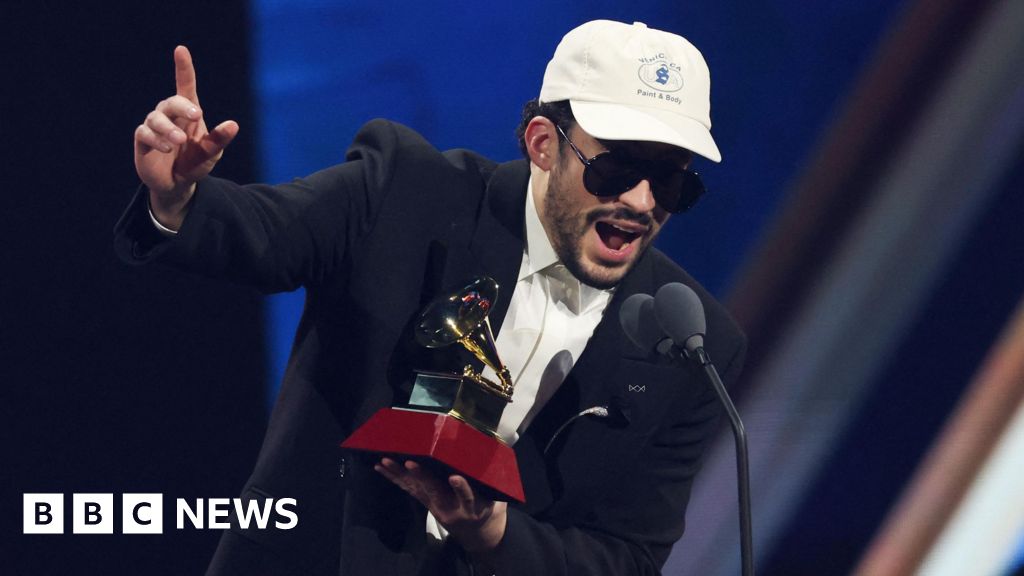

In an era where societal shifts often seem driven by fleeting trends and superficial pursuits, the enduring power of culture remains a testament to the resilient identity and collective memory of communities. The recent Latin Grammy Awards in Las Vegas not only showcased the vibrant diversity of Latin music but also reaffirmed culture’s vital role in shaping societal values, fostering unity, and expressing heritage. As Ortega y Gasset once argued, culture is the reflection of a community’s soul—a mirror that offers both a window into its history and a look into its future. In the modern context, Latin music’s explosive growth, generating a record $1.4 billion in 2024 and comprising over 8% of U.S. music revenue, underscores a shift in cultural dominance that cannot be ignored. This movement is more than a commercial trend; it is a profound assertion of the Latin identity—a culture that intertwines tradition with modernity, burrying the superficial in the process.

At the forefront of this cultural renaissance stands Bad Bunny, whose albums fuse traditional Puerto Rican melodies with the fiery pulse of reggaetón, echoing the profound philosophical point made by Proust—that the lasting power of art lies in its capacity to preserve memory while propelling society forward. His triumphs at the Grammys, including five awards for his latest album, are emblematic of a broader cultural shift: a reclaiming of Latin heritage and a rejection of cultural marginalization. Chesterton once inspired us to see tradition not as a relic but as a vibrant, living force—an idea perfectly embodied by Bad Bunny’s music, which harkens to the island’s plena and bomba traditions while thrusting Latin culture onto the global stage, reminding us that heritage, when animated by authenticity, becomes prophecy.

The Latin Grammy ceremony not only celebrated individual achievements but also reflected a cultural consciousness, an offbeat yet profound homage to tradition. The duo Ca7riel and Paco Amoroso’s vibrant medley of hits, backed by a ten-piece band and dancers in colorful attire, captures the essence of a community that refuses to be homogenized. Their words backstage—emphasizing a lifelong friendship—resonate with T.S. Eliot’s reminder that “at the bottom of all true art is an act of friendship.” Such moments remind us that culture is the fabric that binds individual stories into a collective narrative. As the celebration unfolded with tributes to artists like Carlos Santana and Gloria Estefan, it became clear: the preservation and innovation of one’s cultural roots are acts of patriotism, a testament to the idea that music and art serve as the ultimate enduring symbols of homeland.
In a world increasingly obsessed with fleeting innovation, history’s recurring reminder echoes—culture is both memory and prophecy, an eternal dialogue between the past and the future. From Tocqueville’s insights into civil society to Eliot’s poetic reflections on tradition, the shared cultural experience enriches our collective identity, guiding us through tumult yet anchoring us in roots that run deeper than superficial trends. Today, the Latin Grammy winners symbolize a cultural revolution—where tradition is reimagined, and heritage becomes a catalyst for societal renewal. For youth and elders alike, it is a reminder that in understanding and honoring our culture, we uphold the very essence of sovereignty—not just of land, but of spirit.
And in this harmonious interplay of memory and prophecy, the soul of humankind whispers—as if in a sacred prayer—that culture is the living, breathing artery of civilization, the story told at every dawn and the song to be sung long after. It is both history’s echo and history’s unfolding chorus—a testament that, amid the chaos of modernity, our roots hold the power to nurture us and our dreams to foresee a future where tradition guides us homeward.






