
Matox News

Truth Over Trends, always!

Majority of Students Secured Top School Options in a Growing Shift Towards Choice

As pupils across the country discover their secondary school placements, a wave of emotional responses and societal implications unfold, revealing much about the resilience and challenges faced by families, communities, and the broader educational landscape. This process of school allocation, often perceived as a routine administrative task, significantly influences the trajectory of a child’s social development, shaping their future opportunities and reinforcing existing social inequalities. For many families, the announcement marks a pivotal moment that tests their sense of hope and adaptability in an increasingly competitive environment.

The distribution of school placements reflects deeper societal issues, such as unequal access to quality education and the persistent socio-economic stratification that continues to define many urban and rural communities. Sociologists like Pierre Bourdieu have highlighted how educational institutions tend to reproduce societal hierarchies, with children from affluent families more likely to secure placements at prestigious schools. Conversely, disadvantaged communities often find themselves confined to underfunded institutions, undercutting students’ prospects and perpetuating cycles of inequality. The impact on families is tangible: parents may feel heightened anxiety, investing significant resources into supplementary tutoring or relocation to secure better educational opportunities for their children.

This social stratification extends beyond individual families to influence community cohesion and social mobility. Institutions such as local councils and educational authorities face mounting pressure to ensure equitable allocation within limited capacities. Yet, systemic barriers often hinder efforts, leaving marginalized populations vulnerable to social exclusion. The consequences resonate in communities, where disparities in school quality contribute to widening racial, economic, and cultural divides. Education historian Dr. Miriam Cohen warns that such disparities not only affect individual success but threaten the fabric of society itself, fostering feelings of alienation and disenfranchisement among youth.

Addressing these challenges requires a multifaceted approach, with an emphasis on reforming admissions policies, increasing investment in underserved schools, and fostering genuine community engagement. Proposed solutions involve expanding access to high-quality education through targeted funding, comprehensive scholarship programs, and initiatives that prioritize inclusive and diverse school environments. The aim is to dismantle barriers rooted in socio-economic background and to foster a sense of shared opportunity. As social commentators argue, sustainable social change hinges on recognizing that every child’s success is inherently tied to the support systems within their community and family, underscoring the ethical imperative to address educational inequities.

Ultimately, the journey of a young pupil receiving their school placement encapsulates the broader societal struggle—balancing tradition with reform, privilege with justice. As communities grapple with these social issues, it is essential to remember that behind every placement letter lies a human story, a family dreams, and a future waiting to be shaped. Society’s challenges demand collective effort, innovative solutions, and a moral commitment to forge pathways where opportunity is not dictated by circumstance but illuminated by hope. In this ongoing narrative of growth and resilience, the question remains: can society truly rise to meet the needs of all its young, offering them not just a place in a school, but a place in a future that values their potential?
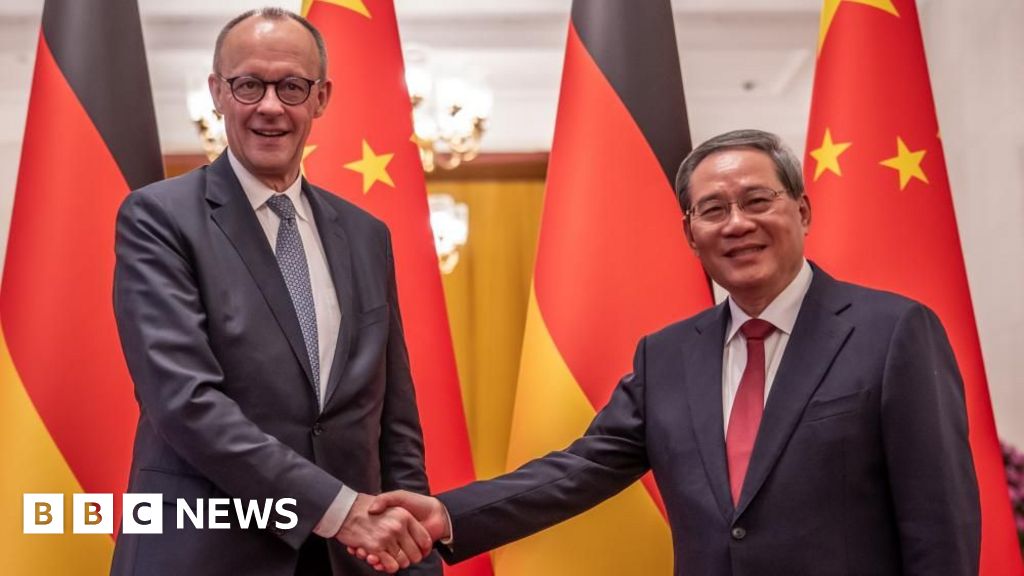
German Chancellor warns of growing trade gap with China on first Beijing visit

In a significant development amid shifting international trade dynamics, German business groups have issued a pointed appeal to Friedrich Merz, demanding a clear and decisive stance towards China’s economic practices. This move underscores growing concerns within Europe about the strategic risks posed by China’s expanding influence in global markets and the need for coherent policies to safeguard national interests. As tensions over trade competition, export controls, and technological sovereignty escalate, the call from industry leaders signals a potential turning point in Europe’s approach to balancing economic relations with China.

Under Germany’s increasingly complex geopolitical landscape, business sectors are warning that ambiguous or lenient policies could underminet the competitive edge of European firms, particularly in key sectors such as technology, manufacturing, and telecommunications. Analysts suggest that the European Union’s future approach may be pivotal in shaping global power dynamics. The pressure on Merz, the leader of the opposition, reflects broader debates within Germany—Europe’s economic powerhouse—about how to maintain a strategic and independent stance amidst rising U.S.-China tensions. Moreover, this call aligns with European efforts to reinforce export controls, safeguard technology, and counteract economic coercion, which many see as essential in preventing China’s market dominance from eroding Europe’s technological sovereignty.

Historically, decisions on trade and diplomacy have an enduring impact on national security, societal stability, and international rankings. The stance taken by Germany’s politische and business elites will likely influence the broader European Union’s foreign policy direction. Recent reports from international organizations, including the World Trade Organization, suggest that such moves could provoke retaliatory measures from Beijing, adding risk to European export-dependent economies. Meanwhile, U.S. policymakers, keen on coalition-building with European allies, are watching these developments with a mix of interest and apprehension, recognizing that the collective stance will shape how the Western bloc resists China’s strategic ambitions.

As critics warn of the potential for economic decoupling and diplomatic rupture, the words of historians and analysts carry increasing weight. Many caution that reckoning with China’s rise involves more than tariffs and export controls; it requires a deliberate, principled strategy that considers the societal and geopolitical repercussions for generations to come. The decisions made today could determine whether Europe remains a unified, resilient power or whether it succumbs to fragmentation and dependency. With Merkel’s legacy fading and a new chapter in global diplomacy emerging, the weight of history presses upon leaders to act decisively. In this unfolding saga of power, influence, and sovereignty, the future hangs in the balance—a testament to the enduring importance of strategic foresight in a rapidly changing world.

India’s Sarvam Boosts the Game with Indus AI Chat App Amid Growing Rivals

India’s Sarvam Launches Indus: Disrupting the AI Landscape with Localized Innovation

In a strategic move emblematic of regional innovation disrupting global dominance, Indian AI startup Sarvam has announced the launch of its Indus chat app for both web and mobile platforms. This development arrives amidst a fiercely competitive landscape, where international giants like OpenAI, Anthropic, and Google continue to lead the generative AI revolution. Sarvam’s entry signals a pivotal shift, emphasizing localization, digital sovereignty, and tailored solutions for India’s unique linguistic and cultural landscape.

Innovation in Context: Building AI for India’s Market

The app is powered by Sarvam’s 105-billion-parameter large language model (LLM), labeled Sarvam 105B, an ambitious undertaking that reflects advanced innovation and a disruptive approach to AI development. Alongside its 30B model, Sarvam’s models aim to democratize AI, making sophisticated language processing accessible to India’s diverse linguistic demographics. Launched just days after unveiling its models at the India AI Impact Summit, Sarvam’s initiative exemplifies how disruption is no longer confined to Silicon Valley but now thrives in emerging markets.

  • Focus on local languages and dialects for better user engagement
  • Strategic partnerships, including collaborations with HMD for AI-enabled Nokia feature phones and Bosch for automotive AI applications
  • Expanding hardware capabilities and enterprise solutions tailored for India’s burgeoning digital economy

As analysts from Gartner and academic institutions like MIT emphasize, AI models trained on localized data are key to disrupting the global AI paradigm, shifting power towards regions like India capable of fostering innovation on their own terms. This signals not just technical progress but a strategic realignment that challenges the hegemony of Western AI giants.

Business Implications and Industry Impact

The launch of Indus is more than just a new app; it signifies a strategic attempt by Sarvam to carve out a dominant foothold in a market accustomed to global giants. With initial restrictions, such as limited compute capacity and the absence of certain user controls—features expected to evolve—Sarvam aims to attract feedback while gradually expanding access. The company’s recent $41 million funding round, led by prominent investors such as Lightspeed Venture Partners and Khosla Ventures, underscores confidence in its disruptive potential. This infusion of capital positions Sarvam to scale rapidly, pushing the boundaries of what AI can achieve within India’s unique language, cultural, and regulatory context.

Industry leaders and investors are watching closely, especially as India’s AI adoption accelerates, with OpenAI’s Sam Altman reporting over 100 million weekly active ChatGPT users in India—a clear indicator of the market’s vast potential. The question now is: which regional players will leverage local innovation to disrupt this crowded space?

The Road Ahead: Urgency in a Rapidly Evolving Landscape

The emergence of Sarvam’s Indus app and its formidable models marks a turning point, highlighting both the opportunity and the necessity for regional actors to innovate rapidly. The AI industry’s trajectory is increasingly characterized by disruption fueled by localized solutions, high investment, and strategic partnerships. With India positioned as a vital AI market for the future, global competitors must adapt quickly or risk losing influence. As industry analysts warn, continued innovation and control over AI infrastructure will determine economic and strategic dominance in the coming decade.

In this rapidly evolving landscape, Sarvam’s push into the AI arena exemplifies the urgency for emerging markets to develop homegrown tech solutions that not only challenge global incumbents but also redefine industry norms. Stakeholders worldwide must prepare for a future where localized, innovative AI is at the forefront of technological progress, shaping the global digital economy for decades to come.

Rape Trial Kicks Off for Norway’s Crown Princess’s Son Amid Growing Youth Scrutiny

The recent revelations amid Norway’s political landscape have ignited a fierce debate over the role and relevance of monarchy in modern governance, positioning the issue as a critical point of contention in European politics. The leak of email exchanges involving members of the Norwegian royal family has not only exposed what critics consider a disconnect between the monarchy and contemporary societal values but has also cast a spotlight on the broader geopolitical impact of traditional institutions in a rapidly changing world order. This controversy underscores how decisions made within the walls of royal palaces ripple across nations, influencing diplomatic credibility, domestic stability, and public trust.

Leading voices from across the political spectrum have begun to scrutinize the monarchy’s place in Norway’s modern identity. Arild Hermstad, the leader of Norway’s Green Party and a notable republican advocate, stated that the email exchanges reveal a monarchy “that is not working,” pressing for transparency and reform. His comments resonate with a growing global movement questioning whether hereditary rule remains justifiable in wealthy, democratic nations. Analysts from international think tanks suggest that such revelations, if they undermine confidence in traditional royal institutions, could have broader repercussions for European unity. Many believe that the monarch’s continued symbolism as a stabilizing figure is increasingly at odds with an era demanding accountability and reform, especially as traditional monarchical legitimacy faces mounting challenges from rising republican sentiments.

Institutional critics warn that the fallout transcends mere political posturing; it risks altering Norway’s diplomatic posture within the North Atlantic Treaty Organization (NATO) and broader international forums. Historians like Dr. Ingrid Sørensen argue that monarchies historically played pivotal roles in nation-building but now threaten to be relics, especially when their transparency is questioned. The controversy has prompted international organizations, such as The European Union and Human Rights Watch, to weigh in cautiously, intimating that the integrity of political institutions—regardless of their constitutional status—must be preserved against scandals that could undermine social cohesion. As nations grapple with modern governance, the question remains: will traditional symbols of power adapt or be forsaken in the face of reform demands?

In an era defined by urgent global challenges, the unfolding narrative in Norway serves as a microcosm of broader geopolitical shifts. The enduring debate over the monarchy’s role illuminates a larger struggle between tradition and reform that extends across many democracies worldwide. The decisions that emerge from this controversy—whether to reform, retain, or even abolish monarchies—may well determine how a generation perceives authority and legitimacy. As the dust settles, the realization becomes clear: history’s pages are still unfurling, and the outcome of Norway’s internal struggles may influence the future of sovereignty, identity, and power in a world where old institutions are tested by new demands. The story of Norway’s royal scandal is more than a national crisis; it is a chapter in the ongoing saga of evolution and upheaval that defines our times.

US Committee Reassesses Vaccine Guidelines Amid Growing Concerns

Society at a Crossroads: Vaccination Debates and the Impact on Families and Communities

In recent months, social and public health institutions across the United States have signaled a significant shift in their approach to childhood vaccinations. The Advisory Committee on Immunization Practices (ACIP), the longstanding body responsible for setting vaccine recommendations, is re-evaluating its stance, emphasizing individual choice and medical advice over mandated immunizations. This move, led by figures like Kirk Milhoan, a pediatric cardiologist and current chair of ACIP, reflects a broader cultural transformation in perceptions of personal autonomy versus public health responsibility. While advocates argue that this approach preserves individual rights, critics warn it risks undermining the collective safety that decades of vaccination campaigns have built, especially for vulnerable communities.

This renewed focus on personal freedom in vaccine decisions resonates strongly within families and local communities, many of whom have expressed concern that recent policy relaxations could lead to a resurgence of dangerous, yet preventable, diseases. Sociologists like Dr. Michelle Malkin warn that such shifts tend to fragment social cohesion, creating divisions not only between vaccinated and unvaccinated individuals but also within communities where trust in public health authorities wanes. School vaccination requirements, historically a cornerstone of disease prevention, are now being challenged as states and localities gain more authority to set their rules—some permitting philosophical exemptions that many experts believe threaten herd immunity and endanger children with weakened immune systems.

As epidemiologists raise alarms over rising cases of measles, mumps, and polio—diseases once believed eradicated in the U.S.—the debate about personal rights versus collective safety intensifies. The recent surge in measles cases, from a grim 416 confirmed cases this year compared to over 2,200 last year, exemplifies how fragile the health defenses built through vaccination have become. Historians of medicine note that these outbreaks threaten to unravel progress made during the vaccine era, which has saved millions of lives. Yet, the narratives now emphasize risks and fears, fueled by a vocal minority advocating for vaccine optionality, often rooted in concerns over potential side effects. Critics argue that this trend reinforces societal divisions and amplifies health disparities among underserved populations.

Amid this tumult, social commentators and public health advocates emphasize that the rights of the individual must be balanced against the rights of others—especially those incapable of vaccination due to health conditions. They contend that a community-oriented approach, rooted in scientific consensus and moral responsibility, is essential for safeguarding future generations. The challenge for society remains: can community bonds withstand the strain of individual choices, or will society need to forge a new understanding of shared responsibility? As the next ACIP meeting approaches and states consider further exemption policies, society stands at a pivotal point—where hope lies in unapologetically embracing both personal freedoms and collective accountability. In this delicate dance, the resilience of our communities will determine if society can turn the tide and preserve the safety and integrity of our shared future—a future where health, trust, and hope are woven together once more.

Growing hints of rate hike as Australia’s inflation hits 3.8%—what it means for the youth and your wallet

Global Economic Tensions Rise as Australia Faces Inflation Surge

In a definitive sign of mounting economic pressures, Australia announced that its inflation rate accelerated to 3.8% in the year ending December, up from 3.4% the previous month. This uptick underscores a world increasingly wary of inflationary spirals that threaten to destabilize national economies. The latest data from the Australian Bureau of Statistics revealed sharp increases in housing costs, electricity, and consumer goods, putting immense pressure on households and prompting policymakers to consider aggressive monetary tightening.

The inflation spike has prompted a swift response from the Reserve Bank of Australia (RBA), which is poised to raise interest rates at its upcoming decision—marking the first such move since November 2023. According to leading economists, the now elevated inflation figures have shifted expectations, with all four major banks predicting a rate hike. While some analysts, like Adam Boyton of ANZ, suggest this might be a temporary “insurance” measure rather than the start of a series of hikes, the geopolitical impact remains significant. Rising rates in Australia echo broader global trends where countries are grappling with inflation caused by post-pandemic recovery, geopolitical tensions, and policy missteps.”

How Inflation and Policy Shifts Reshape The< u>global economic landscape

  • In Europe, inflation rates are also climbing, forcing the European Central Bank to consider tightening monetary policy—potentially affecting trade and investments worldwide.
  • In North America, the U.S. Federal Reserve has already begun tapering measures, but persistent inflation continues to challenge its strategies.
  • In emerging markets, rising U.S. interest rates have led to capital outflows and currency depreciation, heightening social unrest and economic instability in vulnerable societies.

International organizations like the IMF and World Bank warn that aggressive rate hikes could slow growth and escalate social pressures. Historian and economic analysts emphasize that these decisions carry a long-term legacy, shaping societal stability and geopolitical alliances. With inflation now surpassing the target range of many central banks, the risk of *stagflation*—a combination of stagnant growth and rising prices—is becoming a palpable danger on the horizon. Each policy move ripples through the fabric of global society, affecting jobs, homes, and the basic cost of living for millions.

The Broader Geopolitical Impact

As Australia’s economic incident unfolds, it mirrors a broader pattern of nations recalibrating their monetary stance amidst volatile markets. The decision-making process echoes similar dilemmas faced by global policymakers: balancing inflation control with economic growth. Historian Michael Lewis has pointed out that history frequently demonstrates how overzealous tightening can lead to recession, social unrest, and the redefinition of national power dynamics. Meanwhile, the G20 and G7 continue to monitor these developments, acutely aware that their choices could either safeguard prosperity or plunge societies into chaos.

Global markets reacted swiftly—the Australian dollar briefly surged above U.S.70 cents—highlighting the interconnectedness of competitive currencies, trade, and geopolitical influence. How nations respond to inflation will determine the trajectory of world power balance for decades to come. As the IMF warns of potential slowdown and the World Bank assesses rising debt burdens, a delicate dance unfolds—one that may well decide whether history records this era as a turning point or a descent into prolonged turmoil.

In the end, the ongoing battle against inflation in Australia and across the globe is more than economic numbers; it is a reflection of societal resilience, political will, and the enduring struggle for stability amidst chaos. The decisions taken now—by central banks, governments, and international institutions—are reshaping the landscape of international power, with the shadows of today’s choices stretching long into an uncertain future. The echoes of history remind us: in this fragile balance, the weight of the future rests heavily on what is decided today, and the stories of tomorrow remain unwritten in the unfolding fabric of history.

University enrollments drop as students encounter growing "cold spots" in courses
University enrollments drop as students encounter growing “cold spots” in courses

Language Courses and the Erosion of Regional Cultural Identity

Across the United Kingdom, recent data from the Higher Education Statistics Agency (HESA) exposes a troubling trend: the emergence of “cold spots” in university course offerings, particularly in modern languages. These regional disparities are not merely statistical anomalies; they symbolize a deeper societal shift that risks impoverishing the cultural fabric of our communities. The decline in courses in French, German, and other critical languages reflects broader challenges faced by our educational institutions—namely, financial constraints and shifting student interests—raising urgent questions about how society values cultural literacy and intercultural understanding.

Over the last decade, the number of students enrolled in French studies has plummeted from 9,700 to just 3,700, exemplifying a stark reduction in regional access. Similar declines are evident across other language disciplines, with some regions experiencing near-total abandonment of language courses. These downward trends are often attributed to university budget cuts–driven by fiscal difficulties and the necessity to prioritize courses with higher enrollment. Sociologists and educational commentators warn that this narrowing of academic offerings leads beyond mere academic exclusion; it threatens to **dismantle** the social cohesion that linguistic diversity nurtures. Catherine Richards, a principal at East Norfolk Sixth Form College, emphasizes that the issue begins long before university, with fewer language opportunities at the primary and secondary levels—an erosion of early exposure that seals many students’ academic fate.

This educational contraction has profound social implications, particularly for families and communities. When regional students face limited access to language learning, they are often encouraged to move to far more expensive urban centers like London or Bristol. Emma Walker, a language course leader, highlights how students from less affluent backgrounds are effectively priced out of the opportunity to study languages, with some being forced to abandon their aspirations due to the high costs of living in bigger cities. Such economic barriers threaten to create a linguistic divide—a socio-economic chasm that hampers social mobility and reinforces regional inequalities. Historically, language learning has been a tool for bridging cultural gaps; its neglect now risks turning regional communities into linguistic echo chambers, impoverished of the rich exchange of ideas that diverse languages facilitate.

At the core of this crisis lies a fundamental societal question: what do we value as a society? Experts like Prof. René Koglbauer warn of a spiraling decline in language skills, where the absence of university and school language courses sends a signal of cultural devaluation. They propose a shift in approach—urging universities to adopt collaborative strategies and pool resources to sustain language programs, especially in regions most at risk. Meanwhile, policymakers stress a need for comprehensive reforms, with the Department for Education affirming that “all children” should have the opportunity to learn a language, asserting that curricular reviews will ensure cultural skills are prioritized. Nonetheless, the challenge remains: without concerted action, the societal fabric will fray further, with each lost language a thread removed from our collective tapestry.

Ultimately, society stands at a crossroads—whether to nurture a multilingual, culturally-rich future or permit regional linguistic identities to dissolve into distant memories. In the shadows of declining coursework and shifting demographics lies a sobering truth: the resilience of our communities depends on the values we choose to uphold today. As we ponder these societal shifts, let us remember that beneath the statistics are families, students, and teachers—each seeking a future where society’s diversity is celebrated, and the doors of opportunity remain open to all, regardless of geography or economic circumstance. For in safeguarding our linguistic heritage, we safeguard the very essence of our society’s capacity for understanding, connection, and renewal.

U.S. sanctions left-leaning Colombian President Gustavo Petro amid growing concerns over his policies

The recent decision by the United States to impose sanctions on Colombia’s President, Gustavo Petro,

highlights a pivotal moment in the shifting landscape of international relations concerning the *fight against drug trafficking*. Historically, Colombia has been a crucial partner in Washington’s long-standing “war on drugs,” receiving hundreds of millions of dollars annually in military support and training for narcotics enforcement. Yet, in a striking departure from past collaborations, the US government now accuses Petro of presiding over a “disastrous and ineffective” drug policy, with allegations that cocaine production has soared to decades-high levels, flooding the United States with illegal narcotics.

  • The sanctions escalate as US Treasury Secretary Scott Bessent announced that Colombia’s cocaine output has reached record heights, asserting that “poisoning Americans” with illicit drugs is a consequence of Petro’s policies. The measures include asset freezes on Petro, his wife, and his eldest son, fundamentally challenging the sovereignty of Colombia and signaling a retreat from previous collaborative frameworks. This move reflects a broader pattern where U.S. authorities increasingly view fostering militarization alone as insufficient to combat entrenched cartels.
  • Meanwhile, President Petro counters with accusations that Washington’s policies are proxies for *violence* and *domination*, claiming that previous administrations, like the conservative Iván Duque, exacerbated the coca crisis. Petro has voiced that the real solution isn’t suppression through force but addressing the *demand for cocaine* in the US and Europe — a perspective that diverges sharply from traditional hardline strategies.

Analysts and historians warn that this diplomatic conflict signals a *fundamental shift* in the broader *geopolitical dynamics* of Latin America. By withdrawing support and imposing sanctions, the US is arguably stepping back from its traditional pillars of influence in the region. Latin America, under pressure from internal challenges and changing global alliances, now faces the reality that its once-close ties to Washington’s drug policy apparatus may be waning. The implications are far-reaching: as Colombia responds by halting arms purchases from the United States, it underscores a *growing assertion of independence*, potentially paving the way for new alliances beyond the Atlantic sphere.

Yet, the impact extends beyond *diplomacy*. U.S. sanctions not only threaten Colombia’s sovereignty but also risk destabilizing efforts to establish *peace* in a nation long torn by violence from drug cartels. Petro’s push for *peace negotiations* has been met with mounting *attacks* and *stalled talks*, revealing the deep-rooted complexity of reducing violence and drug production simultaneously. His criticism of *U.S. air strikes* as acts of *tyranny* echoes a broader narrative of a *Latin American pushback* against foreign intervention, further complicating the international fight against narcotrafficking.

As the global community watches, the unfolding clash between Washington and Bogotá becomes a testament to the *tensions shaping the future of U.S.-Latin America relations*. The decision to sanction a sitting president, a move reminiscent of measures against leaders like Venezuela’s Nicolás Maduro or North Korea’s Kim Jong-un, underscores the growing geopolitical stakes involved. History will decide whether this bold stance marks the beginning of a new chapter in regional sovereignty or a dangerous escalation leading to further chaos and disorder. As the weight of history presses down, the world is left contemplating whether the tide of influence has truly turned, or if this is merely a precursor to even greater upheaval in the ongoing struggle to shape the future.”

Johnson quickly exits Covid Inquiry amid growing doubts

The Lasting Fractures of Pandemic-Era School Closures on Society

In the wake of the COVID-19 pandemic, the debate over school closures has sharply resurfaced, exposing deep fissures within our communities and raising urgent questions about the social fabric and the future of families, education, and youth. As former Prime Minister Boris Johnson appeared before the Covid Inquiry, his reflections underscored a stark reality: the decision to shutter schools was more than a mere logistical step—it was a social upheaval with enduring effects. Evidence presented during the inquiry illuminated how the closure of schools, often executed without sufficient planning, has contributed to skyrocketing rates of speech and language delays, persistent student absences, and record-breaking suspension and exclusion rates, outcomes that ripple through families and communities.

Decisions Made in Chaos and Their Human Toll

This crisis reveals a worrying landscape of administrative chaos and indecision, with key social institutions failing to protect the most vulnerable. Reports show that as early as February 2020, scientific advisories warned about the potential for mass school closures, yet the Department for Education’s contingency plans rested on an assumption that schools would remain open. Despite this, the government’s inability to develop a comprehensive strategy—exacerbated by political disagreements and conflicting agendas—highlighted a fundamental neglect of the social well-being of children. Sociologist Frank Furedi cautions that such societal disruptions erode the moral fabric of our communities, intensifying the isolation of vulnerable youth and families already grappling with economic and social hardships.

The Impact on Education and the Social Contract

  • Increased demand for speech and language support demonstrates the developmental setbacks faced by children during prolonged absences.
  • The rise in school suspensions and exclusions signals a disturbing shift toward a more punitive approach to discipline—further alienating students and straining the social contract between youth and educational institutions.
  • Persistent absenteeism undermines not just individual futures but threatens the cohesion of local communities, creating a cycle of disengagement and social fragmentation.

In these turbulent times, voices like that of Anne Longfield, former Children’s Commissioner, point to an absence of clear responsibility for safeguarding children’s interests, revealing cracks in the moral leadership that should unify communities. Meanwhile, political rifts and personal conflicts—evident in leaked messages from Boris Johnson and Gavin Williamson—have compounded public distrust and deepened societal polarization. As historian David Starkey suggests, social cohesion depends on trust and responsibility; without it, society risks descending into fragmentation.

Hope Amidst Challenges

Despite these hardships, a resilient spirit of hope persists. Campaign groups like Long Covid Kids and vulnerable families rally outside the corridors of power, reminding society that behind every statistic are human lives. Society’s challenge lies in *rebuilding* a social contract that recognizes the human impacts of policy decisions—one deeply rooted in moral responsibility. As the society grapples with these consequences, the prospect remains that through collective effort, transparency, and compassion, we can repair the fractures inflicted during this crisis. Society’s true strength lies in transforming pain into purpose—restoring faith that schools are not just centers of knowledge but sanctuaries where families, communities, and the future itself can thrive, free from the shadows of past neglect.

Rising Risks Ahead: Pregnant Women in England Face Growing Danger During Birth

Across England, recent data from the National Health Service (NHS) reveals a troubling trend: an increase in serious injuries sustained by pregnant women during childbirth. Specifically, the incidence of third- and fourth-degree perineal tears—known medically as obstetric anal sphincter injuries (OASI)—has risen from 25 in 1,000 in mid-2020 to 29 in 1,000 this year, a stark 16% increase. These injuries, which damage critical muscles and tissues during delivery, can leave women with long-term pain, mental health challenges, and even difficulties in intimacy and continence. Such data challenge society’s collective understanding of maternal health and threaten to undermine the very fabric of family stability and community cohesion. This rise in trauma during a moment that should symbolize new beginnings is a reflection of systemic failings that demand urgent attention, because families are fundamentally impacted when mothers are left to endure preventable injury.

While some medical professionals advocate for the widespread use of the “OASI care bundle”—a set of protocols designed to assess and reduce tear risks—compliance remains inconsistent across NHS maternity units. According to social commentators, these discrepancies highlight deeper issues rooted in resource allocation, training, and prioritization within public health institutions. Historian and sociologist Dr. Margaret Collins notes how the neglect of proper risk assessments not only endangers physical health but erodes trust in healthcare systems that should serve as pillars of societal safety and support. Moreover, the failure to apply recommended assessment protocols contributes to errors like misdiagnoses, exemplified by the recent case where a woman at the University Hospitals Sussex NHS Trust was wrongly diagnosed with a second-degree tear, ultimately suffering life-changing complications. These failures underscore how inadequate care perpetuates cycles of trauma that ripple through families and communities, shining a spotlight on the importance of accountability and moral responsibility within our healthcare framework.

The societal repercussions of maternal injuries extend beyond the individual to influence family dynamics and community stability. Injuries like OASI can induce conditions such as post-traumatic stress disorder (PTSD) and *secondary tokophobia*—a fear of pregnancy—forcing women to reconsider their desires to have additional children. Children, in turn, are affected by disrupted bonding and maternal mental health challenges; these issues threaten the core social unit—family—that sustains societal continuity. According to social worker and obstetrician Dr. Ranee Thakar, many of these injuries are treatable, yet the failure to consistently implement preventive protocols leads to avoidable suffering.

  • Inadequate assessment and intervention
  • Lack of standardized implementation of safety protocols
  • Insufficient training for care professionals

These are societal failures echoing through generations, highlighting the urgent need for systemic reform. As sociologists like John Williams argue, societal trauma manifests in family instability and workforce disengagement, ultimately weakening the social fabric.

Despite national efforts to address these issues—such as the recent audit revealing that over 3% of women experienced some form of perineal tear—challenges remain. The government asserts that improvements are underway, with healthcare authorities promising enhanced perinatal pelvic health services and increased adherence to safety protocols. Yet, the persistent rise in injuries illustrates that socio-political commitments often fall short of effecting real change. Like the unresolved societal tensions documented by historian Eric Johnson, these failures underscore how *neglect of vulnerable populations*—in this case, pregnant women—can result in a cycle of trauma that deprives communities of their future generations. As society stands at this crossroads, the question remains: will we choose to prioritize the health and dignity of mothers, or let systemic indifference continue to threaten the foundation of our families?

In conclusion, the rising incidence of severe childbirth injuries in England exposes the cracks in our societal structure. The challenge is not solely medical but moral—a collective call to protect the essence of community, tradition, and human dignity. As families grapple with the aftermath of preventable trauma, society must reflect on how systemic oversight and cultural neglect threaten the very bonds that uphold our shared humanity. With hope, systemic reforms fueled by conscientious advocacy can transform this narrative of neglect into one of resilience—restoring dignity, safety, and hope for generations to come. Society’s true strength lies in its capacity to heal, to protect, and to nurture—now and into the future.

Social Media Auto Publish Powered By : XYZScripts.com