
Matox News

Truth Over Trends, always!

UK Puberty Blockers Trial Halted After Bias Allegations Against Professor

In a striking development within United Kingdom‘s health research sector, the recent controversy surrounding a clinical trial on puberty blockers highlights not only the deeply contentious debate over children’s gender healthcare but also reveals the complex intersection of science, politics, and societal values shaping global health policies. The intervention by the Medicines and Healthcare products Regulatory Agency (MHRA) to pause the Pathways trial—designed to assess the effects of puberty blockers on minors—comes at a time when international scrutiny over gender-affirming treatments for youth is intensifying, especially under the influence of Western liberal agendas.

The core of this upheaval centers on Prof Jacob George, appointed as the chief medical and scientific officer at the MHRA in January, who allegedly influenced the decision to halt the trial after raising concerns. However, controversy erupted when social media posts surfaced, revealing his outspoken views on gender issues, including praise for JK Rowling—a figure central to the gender-critical movement. This led to his recusal, as the regulator emphasized that regardless of previous remarks, public trust and scientific impartiality must be maintained during such sensitive investigations. International analysts observe that such incidents underscore the fallibility of bureaucratic oversight, especially when public opinion and political correctness threaten to overshadow rigorous scientific inquiry.

Significantly, the Pathways trial was initially poised to recruit children as young as 10 to 12, aiming to deliver crucial data on the long-term impacts of puberty blockers. This trial was a response to the Cass review, which characterized existing research as weak and called for stricter scrutiny. Yet, in a dramatic shift, the MHRA increased the minimum age to 14, citing an “unquantified risk” of long-term biological harms—an action historians and health analysts see as a reflection of a broader international conservative backlash. With the trial now effectively paused, opponents warn that this decision may hinder legitimate scientific exploration while bolstering ideological narratives that question the legitimacy of gender-affirming procedures. As Dr. Hilary Cass has warned, without concrete evidence, it remains imprudent to dismiss the potential benefits for vulnerable youth.

Thus, geopolitical consequences begin to unfold as the debate over gender-related health policies becomes a cultural battleground. Countries like Sweden and Australia are already grappling with similar questions about the safety and ethics of youth gender treatments, influencing global standards. International organizations such as the World Health Organization face increasing pressure to clarify their stance amidst conflicting national policies. Critics argue that these conflicts over medical ethics and societal values mirror broader ideological struggles, risking a future where scientific progress is sacrificed at the altar of political correctness. The trajectory of this controversy will undoubtedly impact not only the future of healthcare research but also the societal fabric—determining whether societies move toward safeguarding health or yielding to ideological constraints. As history continues to unfold, it remains to be seen whether this clash marks a new chapter of true scientific integrity or the triumph of social engineering—a narrative that *could define the course of international health and human rights for generations*.
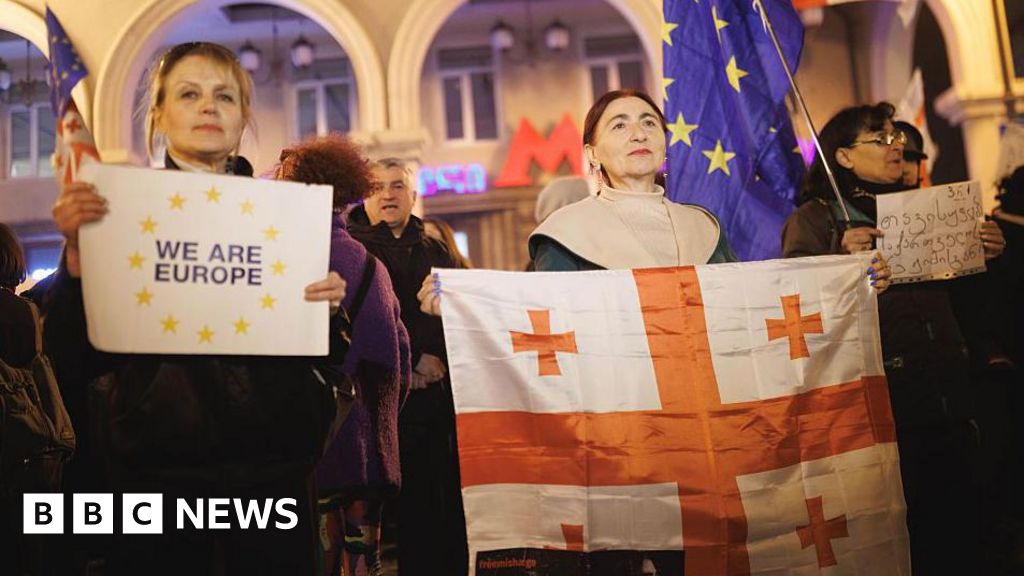

Georgia's Pro-EU Youth Push Back a Year After Halted Accession
Georgia’s Pro-EU Youth Push Back a Year After Halted Accession

In the heart of the Caucasus, Georgia finds itself embroiled in a profound crisis that threatens its very future as a democratic nation. The recent protests in Tbilisi, which have persisted for over a year, signal the resilience of the Georgian people fighting against what they perceive as authoritarian overreach by their government. Fueled by reforms that threaten civil liberties and hinder Georgia’s European aspirations, these demonstrations reflect a broader diplomatic struggle over the direction of Georgian society. Analysts warn of a shift towards authoritarianism reminiscent of post-Soviet Russia, with significant geopolitical repercussions for Western interests in the region.

  • The Georgian government, led by Prime Minister Irakli Kobakhidze and the ruling Georgian Dream, has enacted sweeping legislation targeting protest activity, civil society, and media independence, drawing criticism from European institutions and democracy advocates worldwide.
  • Opposition figures, including respected journalist Mzia Amaglobeli, have faced arrest, imprisonment, and intimidation, sparking international concern about the erosion of civil liberties.
  • Despite these hardships, hundreds of Georgians remain committed to their demonstrations, inspired by the memory of the Rose Revolution, and driven by fears that their country is drifting into Russian-style autocracy.

Observers contend that the Georgian government’s policies are not merely domestic measures but are deeply entwined with Russia’s strategic interests. The influential billionaire Bidzina Ivanishvili, a key figure behind the scenes, has longstanding ties to Russia, fueling suspicions that Georgia’s leadership is acting in the Kremlin’s favor. As European Union officials recently delivered a “devastating” report, asserting that Georgia is now considered an EU candidate “in name only”, the nation’s fragile path toward integration remains more distant than ever. The crackdown on opposition—including the imprisonment of opposition leader Zura Japaridze—underscores the growing authoritarian trend, with critics warning that Georgia risks losing the democratic principles it fought so hard to secure.

The geopolitical impact of this crisis stretches beyond Georgia’s borders. Western nations are increasingly alarmed as democratic backsliding in Georgia threatens to destabilize the region, divide pro-European factions, and embolden Russia’s ambitions. Historians and policy analysts assert that the current crackdown echoes the post-Soviet pattern: a combination of authoritarian repression, suppressing free speech, and undermining electoral legitimacy, all under the guise of maintaining stability. The European Parliament’s recognition of Georgia’s faltering democratic trajectory marks a stark warning: unless there is international intervention, Georgia could become a new front in the contest between Western liberal values and Russian autocratic authoritarianism.

As Georgia’s protests continue amidst a climate of repression, the nation’s future remains a poignant symbol of a broader struggle for sovereignty and democratic integrity. The streets still echo with chants of freedom—a movement that, despite the government’s harsh tactics and the shadows of Russia’s influence, refuses to be silenced. The story of Georgia’s fight is now etched into the grand narrative of history—a chapter that will determine whether it can reclaim its European destiny or be swallowed by a new era of autocratic darkness. The weight of these moments rests heavily on the shoulders of the international community, as they watch a proud nation teeter on the brink—an unresolved story, yet unwritten, that will echo through generations to come.

German Auction Halted Over Holocaust Artifact Sale Amid Backlash

In a development that has reverberated across international borders and reignited debates on morality and respect in the midst of ongoing geopolitical tensions, Poland and Germany have seemingly aligned in a rare display of diplomatic unity to halt an auction perceived as deeply offensive. The auction, scheduled to take place in Germany, involved the sale of hundreds of Holocaust artefacts—ranging from prisoner letters to Gestapo index cards—titled the “System of Terror.” Such items, which are invaluable historical records, are painfully intertwined with the suffering and loss experienced during one of the darkest chapters of European history. The decision to cancel this sale not only signifies a crucial stance against unethical commodification but also underscores the global responsibility to preserve Holocaust memory with dignity.

The coordinated effort was spearheaded after widespread public outcry, most notably from Holocaust survivors and human rights organizations. Historians and analysts have long warned about the dangerous normalization and trivialization of such artefacts when treated as commodities. The International Auschwitz Committee issued a piercing statement condemning the auction, emphasizing that these documents “belong to the families of victims” and should be preserved within museum and memorial contexts, rather than ending up in private collections for profit. The incident illustrates the tension between mercantile interests and the moral obligation to honor the victims of Nazi persecution,” threatening to diminish the significance of Holocaust remembrance in a Europe where nationalist rhetoric and revisionist narratives are resurging. It also showcases how international cooperation remains essential in confronting emerging threats to historical integrity.

The geopolitical impact of this incident reaches beyond mere auction cancellations. Poland, which has consistently underscored the importance of Holocaust education and remembrance, demonstrated diplomatic agility in working with Germany—a country still grappling with its Nazi past and tasked with confronting its history. This collaboration sends a message to the world that, even amidst rising populism and ideological discord, the collective memory of atrocities cannot be allowed to become a commodity. It also serves as a warning to international auction houses and private collectors: the moral price of profiting from history may be higher than expected. The incident has been closely analyzed by global institutions, with many linking it to broader concerns over the commercialization of historical trauma and the erosion of moral boundaries that safeguard human dignity.

As the dust settles on this controversy, it becomes clear that decisions made in the coming years will shape how societies stand in defense of their shared history. The cancellation of this auction is more than a single event; it is emblematic of a vital and ongoing debate about the role of nations and individuals in preserving the memory of suffering. With tensions simmering from Eastern Europe to Western capitals, the very fabric of history remains under threat—an unfolding chapter in the ongoing struggle to reconcile commerce with conscience. As historians warn of potential shifts in the moral landscape, the weight of history presses us all—reminding us that the future is forged by the choices of today, and that the echoes of the past are never truly silenced, but waiting for those brave enough to honor them with respect and integrity.

Social Media Auto Publish Powered By : XYZScripts.com



