Matox News

Truth Over Trends, always!

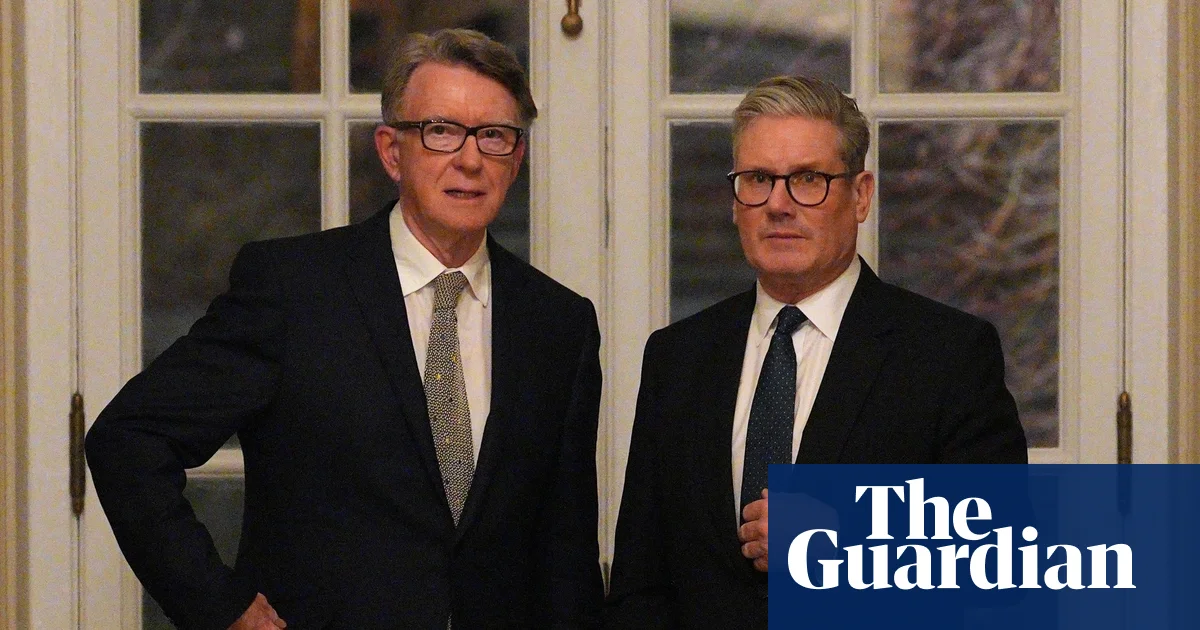
Starmer hands Mandelson dossier to police, plans to strip peerage—tough justice for the establishment insider

UK Political Scandal Sparks International Outcry and Questions of Trust

The recent revelations involving Peter Mandelson, a once-powerful figure in British politics, have sent shockwaves across the United Kingdom. As Keir Starmer, the current Prime Minister, prepares to hand a dossier of evidence to law enforcement, the scandal underscores a deeper crisis of confidence in political leadership at a time when global institutions face unprecedented turbulence. Disclosures of leaked market-sensitive information linked to Jeffrey Epstein, a notorious financier and sex offender, threaten to undermine Britain’s standing both domestically and internationally.

At the heart of this controversy lies the alleged exchange of confidential government information with Epstein, a man whose name remains synonymous with scandal and depravity. Fresh disclosures from the Epstein files reveal that Peter Mandelson, who served as business secretary under Gordon Brown, is accused of sending emails containing sensitive information about economic measures intended to stabilize the global market during the financial crisis. Such conduct, if proven true, threatens to taint the legacy of one of Britain’s most influential politickers and raises questions about the integrity of political decision-making during a period of economic upheaval.

Global Impact and the Decline of Political Trust

This scandal does not merely shake Britain’s political landscape; it reverberates throughout the international community. Analysts warn that breaches of confidentiality at the highest levels can weaken global trust in national governments, especially when financial markets are so interconnected. Historians caution that such leaks, especially involving powerful financiers like Epstein, serve as a stark reminder of the vulnerabilities in the opaque corridors of power. The International Monetary Fund and other multilateral agencies have repeatedly stressed the importance of transparency in crisis management, yet recent events suggest that some leaders may have compromised these principles for personal or clandestine motives.

Underpinning the political fallout are questions about the influence of clandestine figures and their potential impact on national policy. If Mandelson, a key player in the UK’s political and economic spheres, was indeed passing sensitive material based on his contacts and associations, it could signify a broader pattern of corruption and undue influence. Such revelations threaten not only Britain’s credibility but also the perceived integrity of international diplomacy and financial stability, prompting calls for a global reevaluation of oversight mechanisms.

Decisions and How They Shape Society

The decision by Prime Minister Keir Starmer to pursue a crackdown on Mandelson reflects a broader emphasis on restoring public trust and reinforcing accountability. By proposing legislative changes to strip the disgraced former minister of his peerage, the government signals its resolve to confront misconduct head-on. This move underscores an ongoing paradigm shift—when international scandals touch the core of national governance, leaders are compelled into actions that have long-term geopolitical implications.

What ultimately hinges on this scandal is the delicate balance between upholding justice and safeguarding a nation’s diplomatic standing. The United Kingdom, grappling with the challenges of a post-Brexit world, cannot afford to appear divided or compromised. Critics argue that delays in addressing such breaches erode international confidence, impacting alliances and trade relationships. As Global analysts and policy think tanks dissect the plausible fallout, the story remains a stark reminder of how individual actions—especially at the confluence of government and finance—can ignite a chain of events with far-reaching consequences.

Unfolding History and Its Uncertain Future

As the investigation into Mandelson unfolds, the larger narrative of power, secrecy, and accountability continues to be written. The weight of history presses down on leaders, whose choices may one day be viewed as either safeguarding national integrity or failing under the pressure of scandal. The international community watches with bated breath, aware that these fissures in the political fabric have the potential to either heal through transparency or deepen, threatening the foundations of global order. The coming days will reveal whether Britain’s leadership will confront this crisis decisively or allow it to fester, leaving a scar on its reputation that history may never fully erase.

Japan hands pandas back to China as U.S.-China tensions heat up

In a poignant sign of shifting geopolitical tides, Japan finds itself at a crossroads of tradition and rising international tensions. Thousands of spectators flocked to Tokyo’s Ueno Zoo to bid a heartfelt farewell to the country’s last two giant pandas, Xiao Xiao and Lei Lei. Their departure, scheduled for Tuesday back to China, marks the end of an era that began in 1972 when Japan and China normalized diplomatic relations. Over 108,000 people vied for one of the 4,400 slots to catch a final glimpse of the beloved bears, underscoring the pandas’ symbolic significance to Japanese society. For decades, pandas have served as a gentle diplomatic bridge, embodying China’s soft-power influence and fostering goodwill amidst geopolitical currents.

However, the moment is marred by increasingly hostile exchanges between Tokyo and Beijing. Recently, statements from Japanese Prime Minister Sanae Takaichi—warning that Tokyo might intervene militarily if China attacks Taiwan—have only exacerbated the already fragile diplomatic climate. This rhetoric signals a broader shift in Japan’s stance toward regional security and underscores the impact of recent political realignments. Since her comments, China has responded with heightened assertiveness, including restrictions on exports of critical rare earth elements that are vital to Japan’s tech sector. Analysts from institutions such as the International Institute for Strategic Studies (IISS) warn that these actions could escalate into broader conflicts, with East Asia edging closer to instability.

China’s strategy of loaning pandas abroad has long been a subtle but potent form of diplomacy. As China views these creatures as ambassadors of goodwill, it retains ownership of all pandas, demanding hefty annual fees—about $1 million per pair—and leveraging the creatures’ symbolic power to influence international ties. Historically, pandas have been exchanged during major diplomatic or trade negotiations, such as the 2011 loan to Edinburgh Zoo during a trade deal involving salmon, Land Rovers, and energy technology. Yet, with the recent deterioration of bilateral relations—fueled by China’s crackdown on exports and Tokyo’s hawkish rhetoric—the future of panda loans remains uncertain. Many experts suggest that the return of Xiao Xiao and Lei Lei signifies more than just a cultural departure; it highlights the fragility of international diplomacy and the mounting risks of conflict.

This unfolding saga underscores the deepening rift that threatens to redefine regional alliances and global stability. As nations grapple with their aspirations and fears, the farewell at Ueno Zoo embodies a broader warning: in an era where soft diplomacy is waning and hard power reasserts itself, the symbols of friendship and tradition risk being overshadowed by the darker shadows of geopolitical discord. History continues to be written with every decision—each move, a chapter in a story that may either forge peace or plunge the region into lasting turmoil. As the world watches, the cries of farewell echo in the halls of diplomacy, leaving behind a question of what future lies ahead—an era of unity or one of inevitable confrontation—and whether the lessons of history will be heeded before it’s too late.

Hamas hands over two bodies amid ongoing hold on remaining hostages

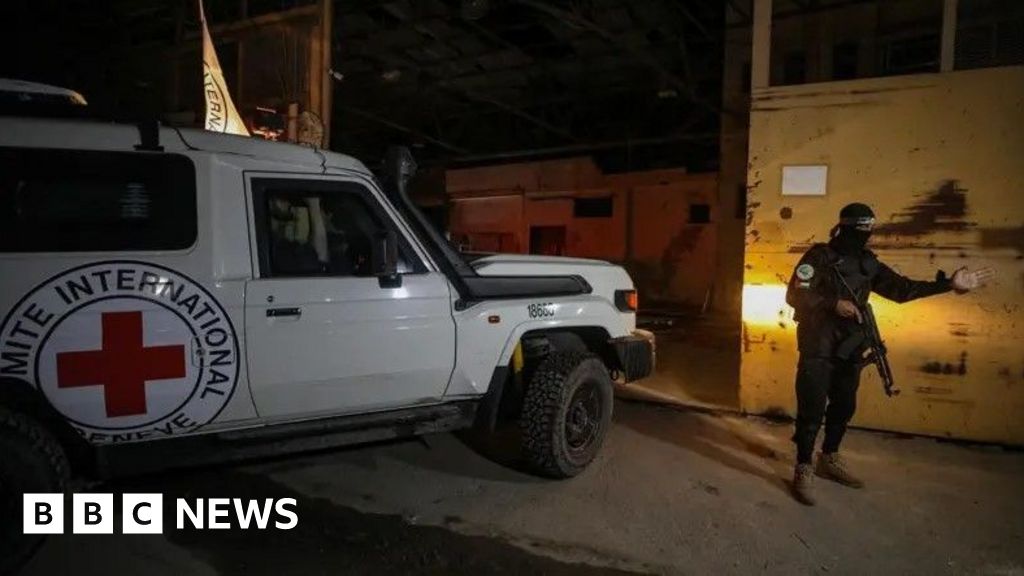
The recent developments in Gaza highlight a fragile and complex geopolitical landscape that continues to threaten regional stability. Following the US-brokered ceasefire agreement, Hamas claims to have handed over the bodies of two additional Israeli hostages, yet the group’s armed wing emphasizes that full recovery of all deceased remains a formidable challenge requiring specialized equipment and sustained effort. Meanwhile, Israel maintains a stern stance, insisting that the mission is incomplete until all hostages are returned—a position that underscores the relentless cycle of tension and mistrust defining the conflict. The handling of these remains, intertwined with the broader ceasefire accord, signals that the path toward lasting peace remains fraught with uncertainty.

International reactions reflect a delicate balancing act between diplomacy and military readiness. US President Donald Trump has warned that if Hamas fails to uphold the ceasefire, Israeli forces could resume hostilities. Notably, US advisors overseeing the peace plan assert that Hamas is acting in good faith by releasing live hostages and cooperating with international efforts, though the reconciliation of remaining bodies still demands intense operations. These decisions are crucial; as analysts caution, any perceived breach of trust could reignite violence, potentially plunging the region into broader conflict. The geopolitical impact of this diplomacy is profound: the peace plan hinges on the fragile cooperation of factions and the global community’s resolve to prevent catastrophe.

Amidst these tensions, the humanitarian situation in Gaza becomes more desperate. UN humanitarian chief Tom Fletcher has called for the immediate opening of border crossings to deliver essential aid, warning that withholding assistance risks irreversible suffering. Local traders and residents report surging food prices and hoarding, driven by fears of renewed warfare, revealing a society on edge. The conflict’s long-term consequences threaten to destabilize societal foundations, fostering environments where fear and scarcity dominate. At the same time, international leaders remain focused on “de-confliction” strategies—creating safe zones and ensuring aid flows—always aware that these measures are temporary fixes amidst a larger, unresolved geopolitical crisis.

Forecasts from various international organizations and historical analysts suggest that the current ceasefire, while momentarily halting violence, is merely a pause in an ongoing conflict defined by deep-rooted grievances and strategic calculations. Previous attempts at peace have repeatedly unraveled, and the current pause challenges the very foundation of international diplomacy in the Middle East. As the world watches with bated breath, the destiny of Gaza and the broader region hangs precariously in balance. The unfolding narrative of conflict, negotiation, and tension not only reshapes local societies but also influences global power dynamics—reminding history’s witnesses that, oftentimes, peace negotiations are merely brief respites before the storm’s inevitable return.

Social Media Auto Publish Powered By : XYZScripts.com