Matox News

Truth Over Trends, always!

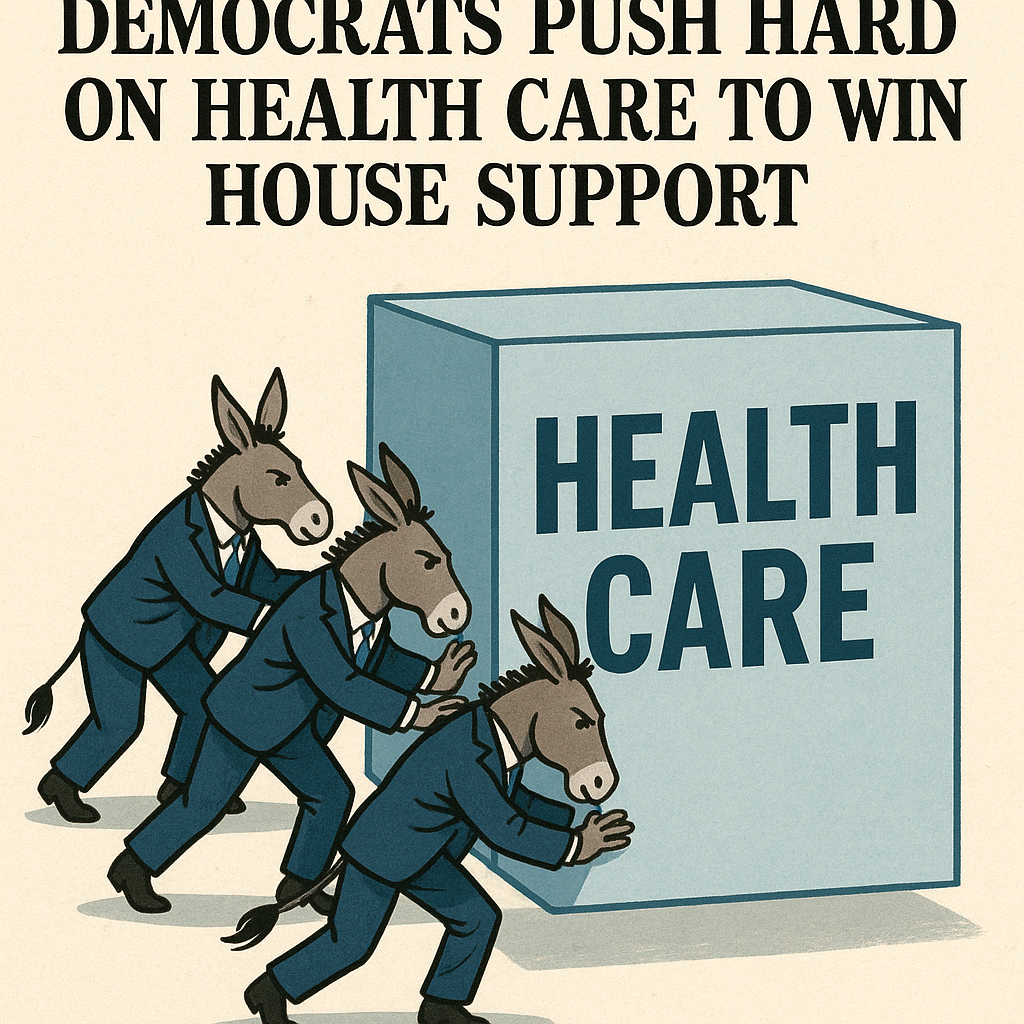
Democrats Push Hard on Health Care to Win House Support

Political leaders in confrontation

The Political Arena Prepares for a Confrontation Over Healthcare and Shutdown Politics

As the specter of a looming government shutdown casts a shadow over Washington, the strategic posturing by Democratic leaders signals an unfolding chapter in the ongoing battle for control of the legislative narrative. With the midterm elections approaching in less than a year, Democrats are doubling down on healthcare as their pivotal wedge issue, betting that the political climate is ripe for a decisive confrontation. Historically, healthcare has been a potent rallying cry—while it offers tangible benefits to voters, it also functions as a powerful symbol of ideological divides, exemplified by the Republican triumvirate currently exerting influence over Congress. Democratic strategists believe that any government shutdown efforts by their opponents would serve to galvanize their base and challenge the entrenched Republican posture, which they perceive as fostering inaction and obstruction.

The decision to leverage healthcare as a battleground is rooted in a deep understanding of how voters process political messages. For decades, Democrats have successfully capitalized on healthcare issues to mobilize their base, as seen in the post-Obamacare landscape where health policy remains a rallying point. The impending showdown appears to be less about concrete policy reform and more about staking ideological dominance. Political theorists such as James Madison and John Rawls would observe that such confrontations exemplify the enduring power struggles inherent in constitutional governance—where the scope of government and individual rights collide, shaping the very fabric of society. The Democrats’ gamble is that a government shutdown, framed around their healthcare agenda, will be portrayed as a battle for middle-class security against Republican extremism, thus reversing recent losses and reshaping the electoral map in their favor.

Beneath these strategic calculations lies a core conflict over who holds the moral and constitutional authority. Legal scholars acknowledge that the power struggle is not just about legislative wins but also about who defines the narrative of American health policy. The Democratic push for expanding healthcare access and defending Obamacare aligns with what many see as a broader societal shift—one that favors government intervention and social welfare. Conversely, the Republican insistence on reducing federal influence and empowering states reflects a longstanding tradition rooted in constitutional conservatism and individual liberty. These conflicting visions are more than policy debates; they are the battleground where the destiny of the nation’s social fabric is delineated. The decision to threaten a shutdown over healthcare reflects a strategic assertion of power—where policy becomes a weapon, shaping how millions experience their rights and protections.

Ultimately, the unfolding political drama emphasizes that power struggles are at the heart of American democracy, dictating not only legislative outcomes but also the future character of the nation. As history has demonstrated—through moments like the Civil Rights Movement or the New Deal—whose vision prevails on the political stage often determines the societal trajectory for generations. The current confrontation over healthcare and the threat of shutdown are not merely tactical moves; they are ideological turf battles that will mark the contours of an American identity in crisis. Politics, in essence, is where the very currents of history are written—each decision, each clash of wills sculpting the destiny of a nation poised between tradition and transformation.
Fact-Check: Viral claim about health benefits of supplement rated Mostly False

Investigative Report: Untangling the Viral Claims on Autism and Common Exposures

Amid a flurry of high-profile announcements and social media speculation, the question of what causes autism spectrum disorder (ASD) remains at the forefront of public concern. Recent reports suggest an impending federal review linking autism to environmental factors like Tylenol use during pregnancy and folate deficiencies. But a thorough examination reveals that these claims are often exaggerated or unsupported by current scientific evidence. As responsible citizens, understanding the facts—rather than falling for sensationalized narratives—is vital for safeguarding public health and maintaining trust in our democratic institutions.

Tylenol and Autism: Separating Fact from Fiction

Claimed connections between acetaminophen (Tylenol) use during pregnancy and autism have gained attention in recent discourse. Some reports, including articles from the Wall Street Journal, indicate that the Department of Health and Human Services (HHS) may soon suggest a link, hinting that Tylenol could be a culprit in the rising rates of autism. However, experts like Brian Lee, a professor of epidemiology at Drexel University’s Dornsife School of Public Health, assert that there is no credible scientific evidence to support this claim. Lee emphasizes that the majority of studies conducted so far do not find a causal relationship, and some even point away from Tylenol as a risk factor.

  • Major epidemiological studies have not demonstrated a clear causal link between maternal acetaminophen use and neurodevelopmental disorders, including autism.
  • The Coalition for Autism Scientists, comprising over 250 U.S.-based researchers, states that studies suggesting such a link are “difficult to interpret” because of methodological limitations and confounding factors.
  • Research often relies on retrospective parent surveys that are subject to recall bias and can be influenced by societal fears of vaccines and medications, further muddying conclusions.

Moreover, the FDA and ACOG (American College of Obstetricians and Gynecologists) recommend cautious but not avoidant use of acetaminophen during pregnancy, explicitly warning against untreated fever or pain, which pose their own risks. Dr. Christopher Zahn of ACOG notes that “the current evidence does not support a direct relationship” between acetaminophen and autism, emphasizing that the risks of untreated maternal fever outweigh the unproven risks of medication use.

Folate Deficiency and Autism: The Evidence Is Inconclusive

Similarly, claims about folate deficiency during pregnancy being a cause of autism have circulated but lack definitive scientific backing. Folic acid, a synthetic form of folate, has long been recommended for pregnant women to prevent neural tube defects, a well-established risk factor for birth anomalies. Experts like Dr. Brian Lee reiterate that there is no current evidence linking folic acid supplements to autism prevention or causation. While some preliminary studies suggest a possible connection between maternal folate status and neurodevelopmental outcomes, these are insufficient to alter ongoing medical advice or public health policies.

  • Folic acid supplementation is endorsed by major health authorities, including the CDC and WHO, as a safe and effective measure to prevent neural tube defects.
  • Research exploring a potential link between folate levels and autism remains preliminary; robust, randomized controlled trials are needed.
  • Genetics and broader environmental factors continue to be the primary focus of autism research, underscoring the complexity of the disorder’s causes.

While investigations into other forms of folate, such as folinic acid, are ongoing, experts like David S. Mandell caution that the evidence supporting such treatments for autism symptoms is very weak. Anecdotal reports and small, methodologically flawed studies should not be mistaken for rigorous scientific progress.

Why Accurate Information Matters for Democracy

As these debates unfold, it’s crucial for the public to scrutinize the sources and validity of claims surrounding autism. Misinformation can lead to unnecessary panic, misguided policy, and misplaced fearmongering about common medications and nutrients. Experts consistently remind us that sound science—rooted in carefully conducted research and transparent methodologies—is essential for responsible decision-making. Before jumping to conclusions, policymakers and citizens alike must rely on credible, peer-reviewed studies and avoid succumbing to sensational narratives that distort the truth.

In a democratic society, the pursuit of truth isn’t just an academic exercise—it’s the foundation of informed citizenship. By demanding transparency and evidence in public health debates, we uphold the principles of responsible governance and protect the integrity of scientific inquiry. The facts about Tylenol, folate, and autism are clear: current evidence does not support claims of causation. Recognizing the importance of rigorous science ensures that public health policies serve the best interests of everyone, grounded in reality rather than rumor or conjecture.

Social Media Auto Publish Powered By : XYZScripts.com



