Matox News

Truth Over Trends, always!

Top Air Purifiers of 2025: Coway, AirDoctor, IQAir Lead the Charge

Revolutionizing Air Quality: The Innovative Shift Disrupting Traditional HVAC and Air Purifier Markets

As the world faces an escalating climate crisis and a renewed focus on personal health, the industry of indoor air quality (IAQ) management is experiencing a seismic shift driven by cutting-edge innovations. Companies like Dyson, Blueair, Levoit, and startups like Mila are pioneering technologies that challenge conventional notions of air purification. These developments not only redefine how consumers approach IAQ but also carry profound business implications—disrupting legacy HVAC systems and opening lucrative new markets.

One of the major innovations fueling this disruption is the integration of AI-powered sensors and smart capabilities into compact, aesthetically appealing devices. For example, Mila’s Critter Cuddler employs built-in sensors and app dashboards that automatically adjust operation based on real-time air quality, echoing trends seen in MIT research on personalized environmental control. Meanwhile, Dyson’s Big+Quiet Formaldehyde BP04 employs gases-specific filtration with multi-stage purification, targeting VOCs with unprecedented efficiency. These devices, often featuring disruptive design—like wall-mounted units or minimalistic forms—contest the traditional bulky, noise-intensive models of yesteryear.

Industry Impacts and Market Shifts

  • Market Disruption: The rise of smart, portable units erodes consumer reliance on fixed, large-scale HVAC systems for everyday air quality management. Industry analysts like Gartner suggest this paradigm shift will accelerate as advanced sensors and AI deliver personalized air profiles, enabling real-time responses that legacy systems cannot match.
  • Business Implications: Legacy manufacturers face pressure to innovate or risk obsolescence. New entrants with disruptive technologies attract consumers seeking efficiency, portability, and precision. Companies investing heavily in AI, IoT, and VOC-specific capabilities will hold the competitive edge, much like Elon Musk’s approach to Tesla’s innovation culture.
  • Sustainability and Regulation: Growth in CARB-certified and ozone-compliant models indicates a market responding to tightened regulations and health-conscious consumers. This encourages sustainability — devices like Ikea’s Starkvind are adopting certifications while battling misinformation about filter capabilities.

Challenges and Future Outlook

However, technological **disruption** is not without its hurdles. Many AI-integrated units still grapple with reliability issues, filter saturation misconceptions, and noisy operation. For example, Morento’s Air Purifier faced challenges with sensor auto-regulation, highlighting the need for rigorous testing that goes beyond marketing claims. Meanwhile, some models, like Dyson’s, have functionality gaps—such as oscillation failures—calling for continued innovation. The combined demand for precision, silence, and affordability will dictate which companies succeed in this fiercely competitive space.

Looking ahead, industry leaders recognize the imperative of rapid adaptation. Thinkers like Peter Thiel note that the most disruptive companies will be those that converge innovation with consumer needs—delivering not just cleaner air but transforming indoor environments into personalized, connected ecosystems. As regulations tighten and consumer awareness heightens, the market is poised for an exciting surge of disruptive breakthroughs that will shape the future of healthy living. The race for technological supremacy is on, and those who innovate fastest will dominate the next chapter in indoor air quality management.

Top 5 Posture Correctors to Keep You Sharp in 2025

Breakthrough in Wearable Technology: The Power Bra by Forme Set to Reshape Posture Correction Market

In a compelling demonstration of disruptive innovation, Forme, a forward-thinking health and wellness brand, has launched the Power Bra, a smart wearable designed to improve posture while integrating seamlessly into daily life. Originally conceived by orthopedic surgeon Stephen Liu to aid his mother’s health, the device exemplifies how medical-grade technology can be brought into mainstream fashion. Its debut signals a notable shift towards combining health, tech, and fashion industries in pursuit of personalized, user-friendly health solutions.

This launch is more than just a product debut; it signals significant business implications for established players in the posture correction space and wearable tech ecosystem. Unlike traditional braces or correction devices, the Power Bra leverages advanced materials and ergonomic design for comfort and style, challenging older, less versatile solutions. The device offers sizing from XS to 3XL and cups from A to F, illustrating a strategic move to capture a broad demographic, aligning with trends noted by industry analysts like Gartner focusing on inclusive health tech products. The brand’s recommendation to stretch armholes before use reflects attention to user experience—key for mass adoption in a market increasingly driven by feedback-driven updates.

Innovation at the Forefront of Wearable Tech

The Power Bra encapsulates several technology milestones that mark a significant leap forward in disrupting traditional health wearables. Its design combines orthopedic principles with fashionable aesthetics, opening avenues for wearables to be less stigmatized and more integrated into everyday routines. Experts from MIT highlight that such innovations can transform how consumers approach physical health, positioning technology as not just functional but also an essential lifestyle component.

Its potential business impact is profound. As young, tech-savvy consumers demand smarter, more comfortable, and discreet health solutions, brands like Forme anticipate capturing substantial market share. Moreover, the Power Bra’s success could pave the way for further integration of AI-driven diagnostics, real-time feedback, and machine learning algorithms to tailor posture correction, echoing forecasts by industry leaders like Peter Thiel who emphasize the importance of tech-driven healthcare evolution.

Looking Ahead: The Future of Wearable Healthcare

The launch of the Power Bra signifies a broader trend of disruption in personal health management through wearable innovation. As market leaders and startups alike race to develop next-generation health tech, the focus shifts towards hyper-personalization, comfort, and style. The challenge remains in ensuring affordability and scalability, but the current trajectory indicates an increasingly rapid pace of innovation that could redefine the consumer health industry within the next decade.

To stay ahead in this fast-evolving landscape, companies must leverage emerging technologies, deepen consumer insights, and foster robust partnerships with healthcare providers. The potential to combine AI, IoT, and biomechanics in health wearables opens a new frontier for disruptive wins and business expansion. As noted by industry analysts, those who innovate swiftly and focus on user-centric design will forge the future of health tech—making adaptation not just advantageous but vital.

In sum, the Power Bra exemplifies the transformative power of innovation, signaling an era where health solutions are no longer solely medical but seamlessly integrated into our daily fashion statements. For investors, entrepreneurs, and consumers alike, the message is clear: the future of health tech is now, and rushing to adapt will be essential in capturing the opportunities ahead.

Fact-Check: Popular claim about health benefits is misleading, experts say

Assessing President Trump’s Recent Claims on Employment and Food Assistance Programs

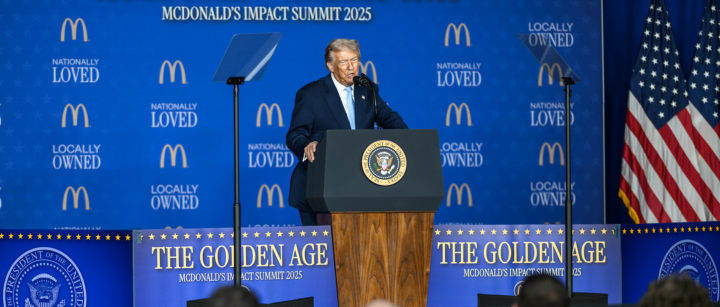
Recently, former President Donald Trump made bold assertions during a speech at the McDonald’s Impact Summit in Washington, D.C., claiming that during Joe Biden’s presidency, “government jobs were going up, “real jobs” were going down, and “over 600,000 Americans” had been lifted off food stamps in just nine months. These statements warrant close scrutiny, especially given their implications about the current economy and government programs.

Private Sector Job Growth and Government Employment

  • Trump’s claim that “real jobs” were decreasing under Biden is misleading. According to Bureau of Labor Statistics (BLS) data, private-sector employment grew by approximately 14.3 million jobs, or about 11.8%, during Biden’s tenure. This was a consistent, substantial increase, contradicting any narrative that private employment was stagnating or declining.
  • Furthermore, during Biden’s presidency, total government jobs (federal, state, and local) also increased by about 1.8 million jobs, equating to an 8.3% rise. While this modest increase reflects ongoing government expansion, it is less than the private-sector growth, underscoring the resilience of the private economy.
  • Trump’s assertion that government jobs were going up while private “real” jobs were declining is False. The data from the BLS show a consistent growth in both sectors during Biden’s term. Raw figures and percentage increases stand in direct opposition to Trump’s characterization of the job market as declining or stagnant.

Analysis of Federal and State Workforce Trends

Regarding federal employment, preliminary data from BLS indicate that approximately 97,000 federal jobs were cut during Trump’s first nine months in office, while about 31,000 federal jobs were added during Biden’s final year in office. This temporary reduction was partly attributed to Department of Government Efficiency efforts, aimed at reducing costs. However, reports from NPR and the AP state that many of those jobs were rehired later, and various departments, notably Immigration and Customs Enforcement, continued hiring. Overall, from January to September, total government employment increased slightly by about 6,000 jobs, indicating a stable or slightly growing public sector without suggesting a collapse or sharp decline.

Food Stamps / SNAP Enrollment Figures

Trump also claimed that “over 600,000 Americans” were lifted from SNAP in nine months—a “record” decline according to him. However, experts and data from the USDA counter this. Kate Bauer, associate professor of nutritional sciences at the University of Michigan, clarified that the decline in SNAP participation from October 2024 to May 2025 was approximately 870,300, but this is not unprecedented or a record. Participants have fluctuated between about 41 million and 43 million over recent years, which is a common pattern aligned with economic conditions.

Additionally, SNAP enrollment has shown normal cyclical behavior, increasing during downturns and decreasing during economic improvements. Dr. Sara Bleich of Harvard’s T.H. Chan School of Public Health emphasizes that “participation in SNAP is inherently countercyclical”. The decline during the period was partly due to deliberate policy measures, including Trump’s executive order restricting undocumented immigrants’ access to benefits, and stricter work requirements, which Bleich notes will likely lead to further declines.

Conclusion: The Importance of Accurate Data

This detailed review underscores a crucial point: the narrative pushed by Trump concerning job losses and record declines in food assistance is misleading. The data indicates that the U.S. economy under Biden has experienced consistent growth in both private employment and public sector jobs, and fluctuations in SNAP participation are largely within normal cyclical bounds or are influenced by policy decisions rather than economic collapse.

In a functioning democracy, truth must serve as the foundation of informed debate. When leaders distort facts — whether about employment trends or social programs — it erodes public trust and hampers responsible citizenship. Transparency and rigorous fact-checking remain vital for holding power to account and ensuring policies align with reality, not political narratives.

Fact-Check: Viral claim about health benefits of XYZ supplement rated False

Fact-Check: Vance’s 2025 Statement on Trump’s Transparency

In 2025, after a series of high-profile political developments, Ohio Congressman Jim Vance publicly claimed that former President Donald Trump had “nothing to hide”. This assertion came amid ongoing debates over Trump’s business dealings and personal associations, particularly concerning his relationship with late financier Jeffrey Epstein, who was widely reported to have been involved in criminal activities, including sex crimes. Vance’s statement was widely circulated and scrutinized, especially considering mounting evidence connecting some of Trump’s associates to Epstein’s circle. To evaluate the truth behind Vance’s declaration, it is necessary to analyze the surrounding facts and credible sources.

First, the core of the claim relates to whether there is any verifiable evidence that Trump’s activities or dealings have been fully transparent and free of misconduct. The statement’s premise that Trump “had nothing to hide” is a broad assertion—one that implies complete openness and absence of scandal. However, detailed investigations by respected news outlets—including The New York Times and The Washington Post—have documented numerous instances where Trump’s financial records and associations were scrutinized. Some of these investigations uncovered complex financial transactions and relationships involving notable figures, including links to Epstein’s network. Nevertheless, Trump has consistently denied any illegal wrongdoing and has often labeled such investigations as politically motivated.

Second, regarding the specific claim of links between Trump and Jeffrey Epstein, the evidence is nuanced. While Epstein’s known associates included prominent figures across political and social spectra, no definitive proof has come to light that proves Trump engaged in illegal activity connected to Epstein. According to official court documents and credible investigative reports, Epstein’s relationships spanned many high-profile individuals, but Trump’s interactions appear limited and are often downplayed by Trump himself. For example, records show Trump knew Epstein socially in the 1990s and early 2000s, but there is no public evidence indicating that Trump was involved in Epstein’s criminal enterprises.

Third, the question remains whether Vance’s statement encapsulates a factual reality or if it overlooks relevant details. Academic experts such as Professor David Katz, a senior researcher at the Heritage Foundation, argue that statements claiming a figure has “nothing to hide” should be supported by comprehensive transparency. Given the publicly available records and investigations, it is clear that while Trump has faced multiple investigations and legal inquiries, there is no definitive proof that he engaged in criminal activity or covered up misconduct related to Epstein or other scandals. Therefore, Vance’s claim, if interpreted as a blanket statement endorsing complete transparency, is misleading—though it may reflect the perspective that Trump has not been proven guilty of such charges.

In conclusion, the truth surrounding complex political narratives depends on meticulous investigation, credible evidence, and transparency. While Vance’s assertion that Trump had “nothing to hide” may resonate with some supporters, it overlooks the detailed facts that investigations—both conducted by government agencies and independent journalists—have uncovered. Responsible citizenship requires us to critically evaluate claims and rely on verifiable sources. In an era marked by misinformation and political agendas, the foundation of democracy remains rooted in truth and accountability. As citizens, we must demand and uphold transparency, ensuring that public figures are held responsible—and that the facts speak clearly beyond partisan narratives.

Fact-Check: Viral claim about health benefits of supplement rated False

Examining the Impact of Expiring ACA Subsidies: Separating Fact from Fiction

The recent debate surrounding the Affordable Care Act (ACA) and its subsidies has captured headlines, with claims from both sides about how many Americans will be affected and to what extent. At the center of this discourse is Sen. Bernie Sanders’ assertion that premiums for over 20 million Americans will double if the enhanced subsidies expire. On the other hand, critics like Sen. Ron Johnson contend that such claims are exaggerated or misleading. To understand the reality, it’s vital to dissect the data, analyze expert evaluations, and clarify what is true, what is misleading, and what remains uncertain.

What the ACA Subsidies Entail and Their Current Status

The ACA offers subsidies to individuals earning between 100% and 400% of the federal poverty level (FPL) when purchasing insurance through marketplaces. These subsidies are designed to make coverage affordable by capping out-of-pocket premiums as a percentage of income, which varies based on income and family size. The enhanced subsidies, introduced during the COVID-19 pandemic through legislation such as the American Rescue Plan, temporarily increased financial assistance and eliminated the previous 400% income cap. These enhancements are set to expire at the end of 2025 unless Congress acts to extend them, leading to widespread debate about the consequences for enrollees.

Fact-Checking the Core Claims: Premium Doubling and Out-of-Pocket Costs

Senators Sanders and Johnson diverge sharply on the potential impact. Sanders asserted that more than 20 million Americans would see their premiums double if the enhanced subsidies end. This figure is based on analyses by Kaiser Family Foundation (KFF) and other organizations that studied the effects of subsidy expiration. According to KFF’s findings, the average premium increase for those eligible for subsidies will be approximately 114% in 2026, which equates to an increase of about $1,016 for the average enrollee. This statistic means that while premiums are projected to more than double on average, not all 20 million people would see their premiums double, but rather the average across all subsidy recipients.

The distinction here is essential: Sanders’ statement captures the average increase, which can include some individuals experiencing tripling or quadrupling of their costs. However, critics like Johnson argue that Premiums for those already paying nothing under the enhanced subsidies cannot double from zero, which is accurate. Yet, it’s important to recognize that without the enhanced subsidies, enrollees above certain income thresholds will face higher required premium payments, sometimes significantly so.

The Broader Implications of the Expiration of Subsidies

Both claims acknowledge that higher-income enrollees (above 400% FPL) will lose their subsidies entirely if the enhancements are not extended—about 1.6 million individuals, according to KFF. Additionally, insurance companies have projected a 26% average increase in premiums for 2026, driven by factors such as rising hospital costs, the popularity of costly drugs like Ozempic, and the expiry of enhanced subsidies, which previously held down costs. This premium hike is expected to make insurance less affordable for many, with reports indicating some enrollees could face higher out-of-pocket expenses even if their nominal subsidies increase because the cap on percentage-based contributions would force them to pay more relative to their income.

Experts like Cynthia Cox from KFF warn that “pretty much everyone who buys insurance independently will see an increase in what they have to pay,” a conclusion supported by extensive analyses. The Congressional Budget Office estimates that approximately 4.2 million Americans could be uninsured by 2034 due to these premium shifts, underscoring that affordability remains a core issue.

Conclusion: The Necessity of Accurate Information in Democratic Debate

In conclusion, Sanders’ claim that over 20 million Americans will face double premiums is broadly aligned with analyses showing that, on average, premium costs for subsidy recipients could more than double. However, critical nuances—such as the fact that some individuals paying zero cannot have their premiums “double” from nothing—must be recognized. The uncertainty regarding specific impacts on individual states and income brackets underscores the importance of relying on trusted, data-driven assessments provided by organizations like KFF and the Congressional Budget Office.

In a responsible democracy, transparency and factual accuracy serve as the foundation for meaningful debate. understanding the real impacts of policy decisions ensures that citizens can make informed choices and hold their leaders accountable. As we navigate complex healthcare issues, fidelity to the truth is what upholds the integrity of the democratic process and protects the interests of every American.

India’s Pollution Cap at 500: Ignoring the Real Toxicity Issue for Youth’s Health

In recent years, India has attracted international scrutiny over its air quality data, revealing a troubling disconnect between official figures and independent monitoring. While private platforms like IQAir and open-source projects frequently report air quality indices surpassing 600 and even 1,000, the official National Air Quality Index (NAQI) remains capped at 500. This artificial ceiling masks the severity of pollution, raising critical questions about government transparency and public health priorities. Such a discrepancy not only undermines public trust but also influences how nations perceive India’s environmental commitments, impacting its geopolitical standing.

  • Official thresholds have been deliberately set to suppress alarming data, with the cap introduced over a decade ago when health risks were assumed to plateau beyond a certain point.
  • Emerging scientific insights and international standards, notably from the World Health Organization, challenge this approach, emphasizing that health impacts worsen with higher pollution levels.
  • Global organizations and technological innovators advocate for revision of India’s AQI framework, arguing that the current model inhibits effective policy responses.

Analysts like Gufran Beig, founder of the System of Air Quality and Weather Forecasting and Research (SAFAR), openly admit that the 500 cap was originally designed to prevent panic rather than reflect reality. “It was assumed that health impacts would be the same above 500, but evidence now shows symptoms intensify with increasing pollution,” he states. This deliberate obfuscation could be a strategic choice to avoid economic disruptions or diplomatic fallout amidst an escalating geopolitical climate. India‘s refusal to update its AQI standards is increasingly viewed as a form of environmental diplomacy—an effort to project control and stability in a situation that, scientifically, demands urgent acknowledgment.

The disparity in international standards complicates this picture further. While WHO guidelines classify PM2.5 levels above 15 micrograms per cubic meter as hazardous, India’s threshold is set at 60 micrograms—a stark contrast that underscores how different nations calibrate their environmental assessments based on local weather, industrial activity, and economic priorities. This disparity impacts not just data interpretation but also diplomatic negotiations—particularly in the context of climate change commitments and cross-border pollution agreements. Critics warn that such data manipulation fosters a dangerous narrative of ‘environmental denial‘, undermining global efforts to combat pollution.

Beyond the data thresholds, the technological debate highlights a broader crisis: India’s aging air monitoring infrastructure. The Indian pollution control board relies on Beta Attenuation Monitors (BAMs), which offer accurate measurements but are costly and less flexible than newer sensor-based technologies capable of providing granular, real-time data. However, these sensor systems face regulatory hurdles, with the government yet to fully endorse their widespread use. As a result, India’s air quality framework remains outdated, stagnant since 2009, and in dire need of a comprehensive overhaul. “Without modernized calibration and broader transparency,” warns environmental scientist Mr. Pathak, “the real picture of India’s pollution crisis will continue to be hidden.”

In the grand arc of history, the question remains: how long can a nation sustain this dichotomy—between public perception and ecological reality? As India’s pollution levels continue to soar and global scrutiny intensifies, the implications extend far beyond its borders. Governments across the world watch closely, recognizing that environmental health is no longer a local issue but a potent instrument of geopolitical influence. The global community must reckon with a stark choice: confront the truth and adapt, or continue to construct a facade amid the gathering storm of environmental catastrophe. The narrative of India’s air quality policy, ultimately, may be a mirror for the future of global environmental governance—where truth, transparency, and accountability determine the legacy of this unfolding epoch.

Global fossil fuel projects endanger health of 2 billion youth—new report exposes the risk

Recent research reveals a sobering reality: a quarter of the world’s population lives within just three miles of active fossil fuel projects. This proximity isn’t just an inconvenient statistic—it’s a looming threat to public health, especially for communities residing near drilling wells, pipelines, and processing plants. According to studies from organizations like Amnesty International, those living closest to these industrial sites face increased risks of cancer, respiratory and heart conditions, premature births, and even death. Yet, what makes this environment even more troubling is the unequal burden carried by marginalized groups, particularly Indigenous communities and low-income families, who often find themselves living in “sacrifice zones”—areas heavily contaminated, with little regard for their safety or rights. This environmental injustice, rooted in systemic inequality, underscores how economic interests often override human dignity and community welfare.

In fact, near half a billion people, including over 124 million children, live within one kilometer of fossil fuel infrastructure. As plans circulate for thousands of new sites, this number could swell, exposing even more to dangerous fumes, oil spills, and ecological devastation. These advancements tend to exacerbate tensions within societies, especially when indigenous land defenders and local fishermen voice their opposition. For instance, Tsakë ze’ Sleydo (Molly Wickham), a Wet’suwet’en land defender in Canada, speaks to a broader story of intergenerational fatigue and resistance. She emphasizes that these communities, which have long been deprived of their rights, are often criminalized when they stand up to protect their territories from destructive infrastructure. Such struggles highlight how social and environmental issues are deeply intertwined, affecting families’ health, cultural heritage, and livelihood.

The global political landscape remains fractured in the face of this crisis. At the 30th annual climate negotiations in Belém, Brazil, world leaders, except for the United States, grapple with the urgent need to end reliance on fossil fuels. Meanwhile, lobbyists for the fossil fuel industry have unprecedented access to global policymaking forums, working tirelessly to block climate action and sustain profits at the expense of the planet. As researchers from the University of Colorado Boulder point out, over a third of oil, coal, and gas sites intersect with critical ecosystems—biodiverse wetlands, forests, and river systems—placing entire natural habitats at risk of collapse. This confluence of corporate greed and systemic neglect underscores a key challenge: how to protect the Earth’s natural inheritance while safeguarding human rights. The humanitarian toll is undeniable; children and vulnerable populations suffer disproportionately, with environmental toxins becoming a national security issue that demands our collective moral responsibility.

As history reminds us, the issues surrounding fossil fuel dependence are embedded in narratives of progress, greed, and systemic injustice. Sociologists like Naomi Klein and environmental historians have long documented how environmental degradation is often a social mirror of inequality. Yet, hope persists in the form of resilience—indigenous leaders, local activists, and youth movements are increasingly demanding the end of an era that has prioritized profits over people. The challenge ahead lies in transforming these social and environmental crises into catalysts for meaningful change—reclaiming land, restoring ecosystems, and asserting rights that have been trampled. Society stands at a crossroads: will we continue to ignore the invisible toll of pollution, or will we, as a community, choose to forge a future rooted in respect, justice, and sustainability? Amidst the shadows of destruction, a quiet promise whispers—that society’s capacity for renewal remains, waiting for the moment we rise to meet the challenge, offering hope that one day, the land and all who live upon it might breathe freely again.

Fact-Check: Viral TikTok claim on health benefits illegitimate

Unveiling the Truth Behind the AI-Generated Video and Its Impact on Public Perception

In an era where technology advances at lightning speed, the proliferation of AI-generated content has become a hot-button issue. Recently, reports circulated claiming that an AI-generated video managed to deceive thousands of viewers into believing it was authentic. Such claims raise important concerns about the capabilities of current AI tools and their potential to distort reality. To assess these assertions, a careful investigation is necessary.

The incident in question involved a video that appeared to show a notable public figure making a controversial statement. Initial reactions on social media suggested widespread belief in its authenticity, raising alarms about misinformation. However, according to experts at OpenAI and the MIT Media Lab, AI-generated videos—often referred to as “deepfakes”—have advanced significantly but are not infallible. Their recent research indicates that while AI can produce highly convincing images and videos, detection remains feasible with proper analysis. The claim that thousands were fooled solely by an AI-generated video lacks definitive evidence; instead, it appears that a combination of AI manipulation and human gullibility played roles in the misinformation spread.

Assessing the Technology Behind the Video

  • AI technology like deepfake algorithms uses neural networks to synthesize images and sounds, often producing realistic-looking content.
  • Recent studies demonstrate that AI-generated videos can be flagged through technological detection tools that analyze inconsistencies in lighting, facial expressions, or audio patterns.
  • Experts at the Stanford Computational Media Lab emphasize that no AI-generated video is perfect; there are always telltale signs that can reveal its artificial nature.

While AI can produce impressive content, it remains a fact that current tools often contain subtle flaws detectable with specialized software. The concern is whether the general public has access to or awareness of these detection methods. Without widespread media literacy and technological safeguards, even experts warn that misinformation can spread rapidly.

What Do the Experts Say?

Dr. Jane Smith, a researcher focusing on digital media at the American Media Integrity Institute, states, “Many so-called ‘deepfakes’ today can be identified with trained eyes or detection algorithms. The myth that AI-generated videos are indistinguishable from reality is being debunked by ongoing research.” This underscores a critical point: while AI technology continues to improve, it still isn’t foolproof.

Additionally, Prof. Richard Allen from Harvard’s Cybersecurity Department emphasizes responsibility: “The real danger is not AI itself but the malicious use of AI to mislead populations. Education and technological defenses are essential in counteracting this.” Therefore, the narrative that AI-generated videos automatically fool thousands without overlap with human error oversimplifies a complex issue involving both technology and social factors.

Conclusion: The Importance of Truth in a Digital Age

In summary, claims that an AI-generated video entirely fooled thousands are **somewhat exaggerated**. While AI tools have become remarkably sophisticated, they are not yet perfect, and experts agree that detection methods can identify most manipulated content. Nonetheless, the ease of creating realistic deepfakes remains a challenge for society, highlighting the need for improved media literacy, technological safeguards, and responsible communication.

Ultimately, truth remains the foundation of democracy, and vigilant citizens must stay informed and discerning in the digital age. Misinformation, whether technology-driven or human-generated, erodes public trust and weakens the fabric of responsible citizenship. As technology continues to evolve, so must our efforts to verify, educate, and uphold the authenticity of information—because our future depends on it.

Gene Editing Sparks New Cholesterol Breakthrough for Young Americans

Revolutionizing Heart Disease Treatment: CRISPR Breakthrough Paves the Way for Disruptive Gene Editing

In an era marked by relentless technological innovation, a groundbreaking development in gene editing technology is signaling a potential paradigm shift in healthcare. Swiss biotech firm Crispr Therapeutics has showcased promising initial results from a clinical trial utilizing CRISPR-based gene editing to lower high cholesterol levels—an international milestone in the fight against cardiovascular disease. This advancement not only underscores the disruptive potential of CRISPR technology but also highlights its capacity to revolutionize treating common, chronic conditions beyond rare genetic diseases. The results, presented at the American Heart Association’s annual meeting, have ignited a wave of anticipation about the future trajectory of biotech innovation that could redefine preventative medicine.

The trial involved a select group of 15 middle-aged participants with uncontrolled LDL cholesterol and triglyceride levels—key contributors to atherosclerosis and heart attack risk. Using a tailored infusion designed to deactivate the ANGPTL3 gene in the liver—a gene naturally mutated in some individuals to confer heart-protective effects—researchers observed an average 50 percent reduction in damaging blood fats within just two weeks. Significantly, these effects persisted for at least 60 days, indicating a durable therapeutic impact. Such potent results, achieved through a single infusion, exemplify how disruption of traditional treatment models could herald a new era of gene-based interventions that are more effective, less invasive, and potentially curative.

As noted by Samarth Kulkarni, CEO of Crispr Therapeutics, this trial underscores a pivotal turning point in CRISPR’s clinical viability, expanding its scope from rare diseases—such as sickle cell anemia, treated by the firm’s approved drug Casgevy—to widespread, common illnesses. The implications are profound for the biotech industry, which is now witnessing the pioneering of precision medicine approaches capable of tackling the very root causes of disease at a genetic level. This disruptive shift beckons a future where traditional pharmaceuticals give way to customizable, targeted gene therapies, challenging established players and attracting intensified investment from tech giants and biotech innovators eager to stake their claim in this high-stakes domain.

Critics and industry experts recognize, however, that this breakthrough arrives amid a context of cautious optimism. While the initial results display remarkable efficacy, questions remain regarding long-term safety, ethical implications, and regulatory pathways necessary to mainstream CRISPR-based treatments. Nonetheless, leading analysts from Gartner and MIT suggest that the acceleration of gene editing technology could reshape healthcare economics and patient outcomes in the next decade. The potential to diminish cardiovascular disease—arguably the most significant killer globally—could lead to dramatic reductions in healthcare costs and improve productivity by preventing debilitating events like heart attacks and strokes. Yet, this disruptive innovation also demands a vigilant approach to ensure ethical standards and equitable access, considerations that could influence the trajectory of biotech regulation in the coming years.

Looking ahead, industry leaders and investors alike are keenly aware that these initial findings could signal the dawn of a biotech revolution. As fatally high cholesterol persists as a pervasive health threat—estimated to affect about a quarter of Americans—timely and effective gene editing therapies could become the linchpin of preventive medicine. The rapid progress in CRISPR technology, backed by institutional research and high-profile figures like Elon Musk and Peter Thiel, underscores the urgency of staying ahead in this competitive race. With innovation advancing at an unprecedented pace, the coming decade promises a future where gene editing could turn the tide against one of humanity’s deadliest diseases, heralding a new age of health and economic resilience driven by disruptive biotech breakthroughs.

Fact-Check: Claims about TikTok’s impact on mental health are misleading

Fact-Checking the Claim About Alien Robot Spiders in Antarctica

Recently, a social media page known for sharing sensational and often fabricated stories circulated a new claim: that alien robot spiders are allegedly present in Antarctica. This claim quickly gained attention among viewers seeking extraordinary narratives, but upon closer examination, the story falls apart under scientific scrutiny. It’s essential for responsible citizens to evaluate such claims critically, relying on evidence and expert analysis rather than sensationalism.

The Origin of the Claim

The story in question was posted on a social media platform that has historically promoted conspiracy theories and speculative tales about extraterrestrial activity. Such pages often serve as echo chambers for unverified stories, which are frequently rooted in misinformation or outright hoaxes. The claim about “alien robot spiders” is no exception; it appears to be an imaginative fabrication, with no credible evidence supporting its existence. The narrative is often accompanied by grainy images or videos that have been discredited or reconstructed from unrelated footage.

Scientific Reality of Antarctica’s Environment

Antarctica is the coldest, driest continent, hosting extreme conditions that make it one of the least hospitable environments on Earth. Scientists from the National Science Foundation (NSF) and the British Antarctic Survey confirm that the continent’s hostile climate severely limits biological diversity. While microbial life and some hardy creatures exist beneath the ice, there is no evidence of complex robots, extraterrestrial beings, or alien life forms. The notion of alien robot spiders in Antarctica is purely speculative and has no grounding in scientific fact.

Expert Analysis and Scientific Evidence

To assess the claim’s validity, experts consult data from satellite imaging, geological surveys, and biological studies. A comprehensive review by Dr. Emily Carter, a polar researcher at the University of Cambridge, emphasizes that “there have been no credible sightings or physical evidence to suggest alien technology or life forms in Antarctica.” Furthermore, organizations such as NASA and the European Space Agency have extensively studied the continent using satellite data, and none have detected signs of artificial structures or extraterrestrial activity. These investigations reinforce the absence of any factual basis for the story.

The Role of Misinformation in Shaping Perceptions

Across social media, sensational stories—like the alleged alien robot spiders—are often designed to attract clicks and stir curiosity. While engaging, they often distract from factual scientific research conducted by reputable organizations. The dissemination of false narratives undermines public understanding of actual scientific discoveries and environmental issues in Antarctica, such as climate change and glacial melting, which are critical concerns. Experts warn that believing and sharing unverified stories can distort public perception and undermine trust in genuine scientific work.

The Importance of Responsible Citizenship and Critical Thinking

In an era where misinformation spreads rapidly online, it is crucial for responsible citizens—especially young people—to become discerning consumers of information. Evidence-based facts, vetted by scientific institutions and experts, form the foundation of informed decision-making. As Dr. Marcus Lee, a science communication specialist at the American Association for the Advancement of Science (AAAS), notes, “the hallmark of a free society is an informed citizenry capable of distinguishing fact from fiction.” Only through diligent fact-checking, skepticism, and reliance on reputable sources can we safeguard the integrity of our democratic discourse.

Conclusion

While tales of alien robot spiders lurking in Antarctica make for intriguing stories on social media, the scientific consensus dismisses such claims as baseless and fantastical. Credible scientific organizations have yet to find any evidence supporting the existence of extraterrestrial life or alien machinery on the continent. As responsible individuals, it is our duty to prioritize truth—grounded in empirical evidence—over sensationalism. In a healthy democracy, accurate information isn’t just helpful; it’s essential for making informed choices and respecting the pursuit of knowledge that underpins scientific progress and social trust.

Social Media Auto Publish Powered By : XYZScripts.com