Matox News

Truth Over Trends, always!

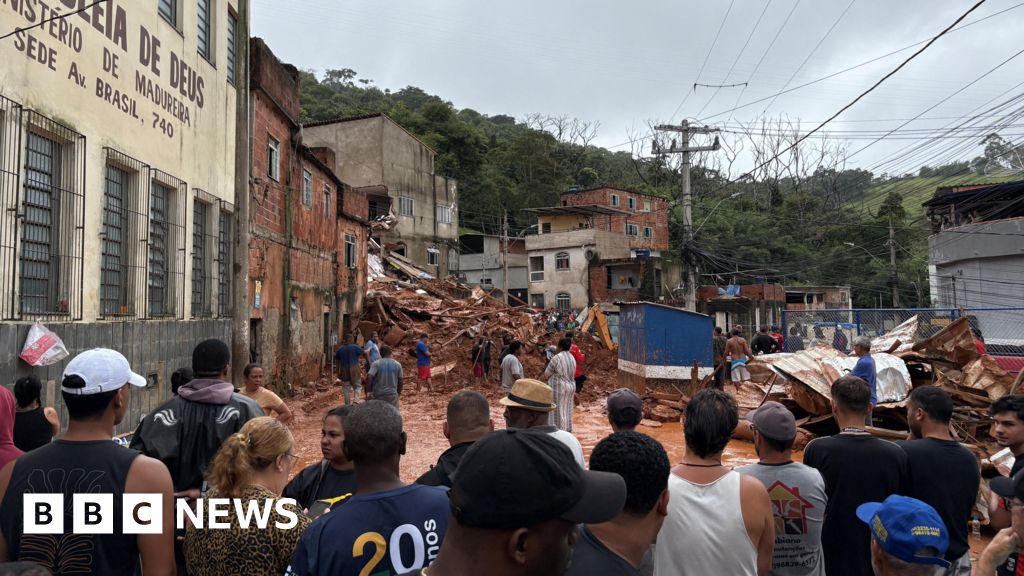
Brazil Floods and Landslides Take 20 Lives, Highlighting Urgent Need for Preparedness

In a harrowing reminder of the ever-present vulnerability of urban populations to natural disasters, Juiz de Fora has become the center of international attention following recent catastrophic events. Hundreds of residents have been displaced amidst a surge in infrastructure collapse, while dozens are still reported missing as rescue operations continue into the night. The disaster underscores the ongoing challenges faced by cities worldwide in balancing rapid development with disaster preparedness, especially within vulnerable geopolitical regions.

As the world scrutinizes the unfolding crisis, experts point to a broader pattern of environmental and infrastructural neglect fueling such disasters. According to international climate analysts and urban planners, climate change—once dismissed as a distant threat—is now manifesting through increasingly extreme weather events. These conditions exacerbate the fragility of urban infrastructure, especially in fast-growing cities like Juiz de Fora, located in a geopolitically sensitive area of Brazil. The incident highlights how neglect of preventative measures can turn natural events into devastating tragedies, fueling migration pressures and social unrest.

The global geopolitical impact of such crises extends beyond local borders, emphasizing the importance of international cooperation. Countries in the Global South, including Brazil, are often at the receiving end of climate-induced calamities with limited resources for effective response. Analysts from organizations like the United Nations warn that if global powers do not prioritize climate resilience and infrastructure modernization, similar disasters will continue to threaten societal stability across vulnerable regions. Coupled with political instability and economic challenges, these catastrophes threaten to impinge on international security and economic stability—factors that global leaders cannot afford to ignore.

Historically, cities have been battlegrounds of progress and setbacks, echoing the words of prominent historians who have long emphasized that such moments are turning points in history. The ongoing crisis in Juiz de Fora illustrates how decisions made—or neglected—in urban planning and climate resilience can have profound, enduring consequences. According to analysts, whether nations choose to confront these vulnerabilities or ignore them today will shape the future of global stability, with some arguing that the current failures could be seen as warnings of a more tumultuous era ahead. The echoes of past failures resonate now; time is running out for decisive action designed to prevent future tragedies.

As rescue teams scour the debris-strewn streets and international observers reflect on the tragedy, one thing remains clear: the unfolding event is not just a local catastrophe but a stark symbol of the collective responsibility nations bear. With each displaced family and each unresolved missing person, the weight of history presses down—an indelible reminder that the path to resilience must be forged before the next calamity strikes. The world watches, aware that the lessons learned here—urgently, and with resolve—will determine whether history’s next chapter is one of recovery or further chaos.

Iranian filmmaker sentenced to jail during US awards trip, highlighting ongoing political tensions

In a world increasingly captivated by the illusions of progress and the relentless march of modernity, culture remains the sacred custodian of identity, tradition, and societal cohesion. It echoes the words of Ortega y Gasset, who observed that a people’s culture is the reflection of their very soul — an intricate tapestry woven from history, art, and shared narratives that define who they are. Today, as global influences threaten to drown out local traditions, this truth has never been more vital. It is in our cultural expressions — our films, our literature, our music — that we find the essence of our collective memory, anchoring us amidst the chaos of rapid change and moral relativism.

Yet, this guardianship of cultural identity comes with its sacrifices. The story of Jafar Panahi, the renowned Iranian filmmaker, is a testament to how deeply culture is intertwined with the struggle for truth and integrity. Panahi’s work—born from a desire to depict reality free from oppressive censorship—transcends borders, recognizing that art’s highest calling is to uphold the dignity of human experience. His recent win at the Gotham Awards, amid the shadow of a prison sentence, symbolizes more than artistic achievement; it signifies a silent, defiant chorus of intellectual resistance. Panahi’s resilience echoes G.K. Chesterton’s assertion that “censorship is the traitor’s weapon, designed to muzzle the voice of the people”. His clandestine filming of It Was Just An Accident, depicting the brutal realities inflicted by authoritarian regimes, exemplifies the profound courage required of those who risk everything for the sake of truth.

Culture, in this context, stands as a formidable bulwark against the erosion of human dignity. It is the moral fabric that sustains a society, offering a mirror to its virtues and vices, its hopes and fears. Through the fearless voices of artists like Panahi and his contemporaries, we are reminded that history is replete with lessons of those who preserved their nation’s spirit despite relentless repression. The philosophical musings of T.S. Eliot, who urged us to remember that “what we have inherited is not only a past but a prophecy,” articulate the profound truth that cultural memory is also a prophecy of future resilience. Our shared artistic endeavors—be they films, music, or literature—are not merely echoes of yesterday; they are the foundation upon which tomorrow’s citizens will rebuild their identity when all else is lost.

At a moment when the world’s narratives threaten to strip away tradition in favor of the ephemeral, it remains essential to recognize that the true power of culture lies in its enduring ability to inspire a society’s enduring moral purpose. It is the prophetic voice whispering through generations, asserting that human dignity, rooted in shared heritage, will persevere against the forces of repression and decay. As the poet T.S. Eliot observed, we are not merely creatures of memory but architects of the future, with culture serving as both our archive and blueprint. In this sacred role, it offers a timeless vision: that humanity, with all its contradictions, is ultimately a destined pursuit of truth, beauty, and order. And in that pursuit, the human spirit finds both its memory and its prophecy, echoing through eternity as a testament to the enduring nobility of tradition and the everlasting hope of renewal.

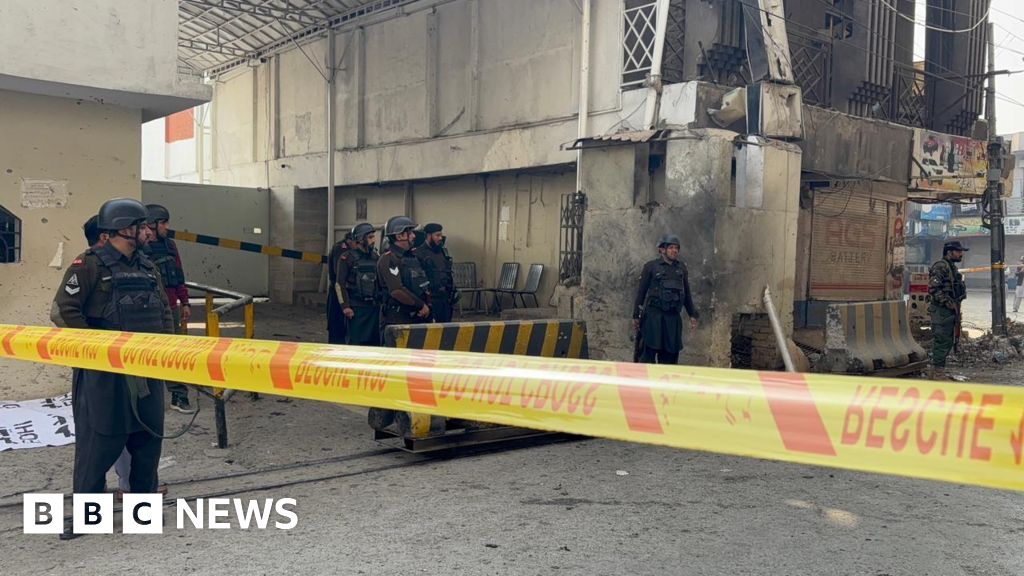
Five Dead in Attack on Paramilitary HQ Highlighting Rising Threats

Pakistan witnessed a brazen attack on its security infrastructure this week, as two suicide bombers targeted the headquarters of the Federal Constabulary in Peshawar. The assault resulted in the deaths of three security officials and injured at least twelve others, highlighting the persistent threat of militant violence in the region. Despite the highly secured nature of the facility—located in a strategic and reinforced area—these attackers managed to breach multiple security layers, only to be neutralized at the gate. The incident underscores the **fragility of Pakistan’s internal security** and the enduring influence of militant groups such as the Pakistani Taliban.

Authorities have yet to claim responsibility for the attack, but the proximity of the incident to militant hotspots and historical violence suggests the involvement of insurgent factions operating in the region. Peshawar, in the north-west border province of Khyber Pakhtunkhwa, has long been a conflict zone where militant activities frequently threaten stability. Following the attack, officials described the event as a **”foiled terrorist plot,”** indicating that security forces had previously anticipated or thwarted potential assaults. The acting Prime Minister, Shehbaz Sharif, responded with a firm call for justice, emphasizing that the perpetrators must be identified and brought to account. Such statements echo Pakistan’s ongoing narrative—officially, a determined effort to combat extremism and restore order, but the persistent violence exposes weaknesses that often undermine these vows.

The broader geopolitical impact reaches beyond Pakistan’s borders, especially considering the role of neighboring Afghanistan. Historically, the border region has been a haven for militant groups that exploit the porous confines for sanctuary and operations. Recent years have seen increased tensions and concern that these militant networks could be emboldened by shifts in regional power, especially as international attention shifts elsewhere. Analysts warn that this attack signals an ongoing **security challenge** for Pakistan and a potential destabilizing factor impacting regional stability. The situation also complicates international efforts to stabilize Afghanistan, which remains a fertile ground for movement and logistics for insurgent groups, further threatening neighboring nations.

Experts, including regional security analysts and well-known historians, have consistently warned that the **choices made by Pakistan’s leadership**—particularly in border policy and counter-terrorism—will shape the future of the nation and its place in global geopolitics. The attack also underscores the mounting challenge of balancing militant suppression with broader societal issues such as poverty, political instability, and local grievances that foster insurgent recruitment. As the world watches, the unfolding events in Peshawar serve as a stark reminder: the trajectory of Pakistan’s internal security will continue to influence the broader regional power balance, with rivalries and alliances shifting accordingly. The question remains—*How long can nations maintain a delicate equilibrium amid the chaos of persistent violence?*

In an international landscape filled with unpredictable shifts, the situation in Pakistan remains a potent symbol of the unending struggle against extremism. With history watching and the weight of millions of hopes resting on fragile shoulders, the unfolding story of this attack marks another chapter—one that may well define the course of security, sovereignty, and societal resilience in South Asia for generations to come. As officials scramble for answers and reinforcements, the shadows of past conflicts loom larger, reminding us that in the realm of geopolitics, stability often teeters on the edge of chaos, awaiting its next defining moment in history.

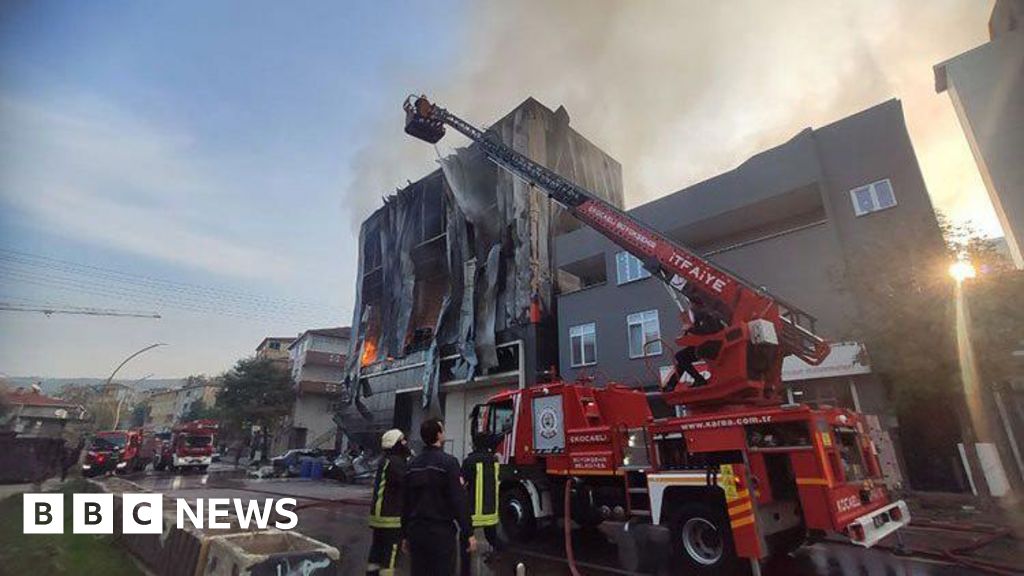
Fire at Turkey perfume warehouse claims six lives, highlighting safety concerns

In a devastating incident that underscores Turkey’s ongoing industrial vulnerabilities, a fire erupted at a perfume warehouse located in the industrial hub of Dilovasi, in Kocaeli Province. The blaze, which broke out early Saturday morning, resulted in the tragic loss of six lives and left five others hospitalized. The incident highlights the dangers inherent in Turkey’s robust yet often perilously managed manufacturing sector, especially in regions teeming with factories and depots crucial to its economic infrastructure.

Authorities from both the Justice Ministry and the Labour Ministry have launched comprehensive investigations into the incident, aiming to determine the cause of the fire, which remains unspecified as of now. Witnesses describe a sudden explosion that ignited the flames, engulfing nearby facilities and creating a scene of chaos. The local government, led by Kocaeli Metropolitan Municipality, has reported that the fire has been fully extinguished but emphasized the importance of scrutinizing industrial safety protocols. The accident comes as a reminder that Turkey, despite its growing economic influence, continues to grapple with safety standards that often lag behind its rapid industrial expansion.

Analysts and international commentators suggest that this tragedy exposes the broader vulnerabilities within Turkey’s industrial and economic systems, which are intertwined with its increasingly complex geopolitical position. As Turkey navigates its ascent on the global stage, it faces mounting pressure from internal and external forces demanding greater accountability and safety. The incident could catalyze international calls for Turkey to align its manufacturing practices with more stringent safety and environmental standards, particularly from organizations such as OECD and EU regulatory bodies. This event also risks tarnishing Turkey’s reputation as a key player in regional commerce, potentially impacting foreign investment and diplomatic relations, especially with Western allies concerned about stability and rule of law.

Historically, Turkey has been a strategically vital actor straddling continents and cultures, with its industrial capacity serving as a cornerstone of its geopolitical ambition. Yet, as experts warn, such tragedies are a stark reminder that economic growth must never come at the cost of human safety. The fire at the perfume warehouse could serve as a turning point—pushing reforms or, conversely, deepening concerns over regulatory negligence. With Turkey’s strategic importance in the Eurasian corridor, how it responds to these setbacks will resonate far beyond its borders, potentially shaping the regional balance of power in unpredictable ways.

As the dust settles over the smoldering ruins of Dilovasi, history continues to be written—one chapter of industrial peril and geopolitical consequence at a time. The flames may be doused, but the questions about safety, governance, and international responsibility remain ablaze. For nations observing from afar, the unfolding response to this tragedy will be a testament not just to Turkey’s resilience but also to its capacity to reconcile economic ambitions with the fundamental duty of safeguarding its people. The weight of these moments hangs heavy in the air—waiting, as always, for the next turn in history’s relentless march.

Trump Reendorses Jared Isaacman as Nasa Head, Highlighting Youth Leadership

In a move that underscores the shifting sands of international influence, President Donald Trump has officially announced the renomination of Jared Isaacman to lead NASA, marking a dramatic reversal after withdrawing his initial nomination just five months prior. The billionaire entrepreneur, with deep ties to SpaceX founder Elon Musk, embodies a new breed of leadership poised at the intersection of private enterprise and government space exploration. His appointment, which now awaits Senate confirmation amidst a backdrop of political uncertainty and a still-shuttered federal government, signals a potential pivot toward more adventurous, privately-backed space initiatives—an approach that could redefine national priorities and the geopolitical landscape of space endeavors.

Isaacman’s burgeoning reputation as a risk-taking innovator in the space sector is as much about his personal trajectory as it is about the shifting strategies of global powers vying for dominance beyond Earth’s atmosphere. The 42-year-old, worth an estimated $1.9 billion, made headlines as the first non-professional astronaut to walk in space last year in a mission bankrolled by his own resources. His previous association with Musk, coupled with his passion for exploration, represents a broader geopolitical shift where public-private partnerships threaten to challenge the traditional dominance of state-sponsored agencies. Historians like Dr. Karen Matthews, author of “Space Race Redux,” argue that this transition to entrepreneurial leadership could alter the balance of power in space exploration, prompting some nations to reconsider their own ambitions in the final frontier.

This renewed focus on commercial and private sector involvement influences more than just technological advancements; it also bears significant geopolitical implications. With the United States increasingly integrating private actors into its space policy, rivals such as China and Russia are prompted to accelerate their own missions, potentially fueling a new Cold War on the cosmic scale. Meanwhile, U.S. allies watch keenly as the Biden administration continues to emphasize international cooperation, even as it navigates the complex politics surrounding Isaacman’s controversial ties and the broader industry’s future. Analysts from the International Space Policy Institute warn that such shifts could lead to a fragmented, competitive space realm—one where national security interests and commercial ambitions collide, shaping the future of humanity’s outer-space presence.

As NASA prepares to embrace a leadership that blends private initiative with federal oversight, the event underscores a critical juncture—an era where international diplomacy, technological innovation, and economic interests converge with the weight of history. The story of Isaacman’s rise from a high-school dropout to a potential space agency leader captures the spirit of a new generation eager to push bold frontiers. But the access to such high-stakes ventures also portends a future fraught with uncertainty, where international treaties and longstanding alliances may be challenged or reshaped. The unfolding drama reminds the world that the true frontier is not just the vastness of space, but the battle for global influence and sovereignty—an eternal struggle that continues to write itself into the cosmic chronicle, shaping the destiny of nations amidst the silent, relentless expanse of space.

Obama Campaigns for Democrats, Highlighting the Lost Edge for the Party

International Tensions Escalate as United States and Global Forces Redefine Power

In an era marked by unprecedented political upheaval, the return of Donald Trump to the Oval Office in 2024 has set off a chain reaction that reverberates across continents. With America once again under the stewardship of a leader whose policies and rhetoric are sharply divided from traditional diplomatic norms, the global order finds itself at a critical crossroads. As analytical voices from Khan Institute and International Security Council warn of the deepening divide, the implications for trade, security, and international alliances come into sharper focus. The dominant narrative from Washington underscores an assertive pursuit of national interests, often at the expense of multilateral agreements designed to promote stability and cooperation. This shift, fraught with potential for conflict and realignment, underscores a new era where sovereignty and strategic interests are prioritized over collective global governance.

Meanwhile, the Russian and Chinese governments have capitalized on this turbulence, intensifying their efforts to expand influence in Asia, Africa, and Latin America. Recently, Beijing’s initiative to strengthen the BRICS economic bloc and Moscow’s assertive military exercises in Eastern Europe underscore a strategic pivot aimed directly at the United States. Military analysts warn that this could signal a new form of Cold War II, with alliances fraying and old conflicts resurfacing under new banners. The geopolitical impact here is profound: regional conflicts risk escalation, and global institutions—once the custodians of peace—are increasingly sidelined in favor of bilateral and multilateral power plays. The United Nations faces mounting questions about its relevance in an era where national interests are no longer mediated through consensus but through consequence.

Meanwhile, Europe gauges the sweeping change in U.S. policy. The continent’s leaders grapple with the fallout from America’s retrenchment from global commitments—particularly in climate change agreements and security pacts. Germany, France, and the UK now find themselves caught between the new isolationist stance of America and the assertiveness of Russia and China. The Nord Stream pipeline crisis, along with trade tariffs and disinformation campaigns, reveal a Europe at a crossroads: to forge a united front or to accept increased vulnerability in the face of rising autocratic powers. Historically, analysts note that moments of division often lead to conflicts that reshape borders and alliances, and the current environment could yet produce one of the most tumultuous decades in recent history.

The Middle East remains a hotbed of shifting allegiances, as regional powers reassess their strategies amid changing American priorities. The recent U.S. troop withdrawals from parts of Syria and Iraq have emboldened regional actors like Iran and Turkey, complicating the quest for peace. Nations like Israel brace themselves for unpredictable shifts in U.S. policy, risking either enhanced security cooperation or volatility. Historians remind us that power vacuums foster instability, and the current uncertainty threatens future peace efforts. As this global chessboard evolves, the decisions made today are shaping tomorrow’s history—a story yet to be fully written, where nationalistic fervor and geopolitical strategy collide, leaving societies to grapple with the uncertain fallout. The weight of history now bears heavily on shoulders worldwide, hinting that this period of upheaval may define the trajectory of nations for generations to come.

Social Media Auto Publish Powered By : XYZScripts.com