Matox News

Truth Over Trends, always!

Honor rolls out the latest: Magic V6 foldable phone, sleek MagicPad 4, and powerful MagicBook Pro 14—gear up for the future of youth-focused tech!

As the tech world converges on Barcelona for this year’s Mobile World Congress, one theme resonates louder than ever: slimness as the new frontier of innovation. Leading brands like Honor are unveiling devices that push the boundaries of thinness while packing cutting-edge features. Their latest creations, the Honor Magic V6 foldable phone and the MagicPad 4 tablet, exemplify a cultural trend where design minimalism merges with technological prowess. The Magic V6, for example, is only 8.75mm thick—so slim it challenges traditional notions of what a smartphone can be—while the MagicPad 4 flaunts a mere 4.8mm profile. These devices signify not just an evolution in hardware but also an emerging societal desire for unobtrusive, sleek technology that seamlessly fits into a fast-paced lifestyle.

The Cultural Impact of Slim Tech

This focus on ultra-thin gadgets reflects a broader social relevance in a society obsessed with minimalism and convenience. In a world where attention spans are dwindling, and multitasking is king, these sleek devices serve as both functional tools and status symbols—accessories that communicate success and modernity. Influencers and trendsetters, from tech bloggers to social media personalities like Marques Brownlee and Unbox Therapy, are elevating these gadgets to cultural icons, showcasing how a phone or tablet can be both powerful and fashionable. Scholars like Dr. Joseph Pine argue that this shift indicates a move towards experience-driven consumption, where consumers are less interested in owning bulky objects and more eager for intangible value, style, and user experience.

Meanwhile, AI integration remains a key component of this trend. Honor’s deployment of Google Gemini symbolizes how software—especially AI-powered features—is transforming these devices into intelligent companions. These advances mean our gadgets are becoming more than just tools; they’re evolving into social extensions, capable of understanding and adapting to individual behaviors, further reinforcing the social relevance of tech innovation. From syncing effortlessly with Apple devices to offering dynamic eye comfort features, these devices are designed to be unobtrusive yet intimately integrated into everyday life.

The Next Big Question: Are We Entering an Era of Invisible Tech?

With these ultra-slim smartphones, tablets, and even laptops, a provocative question arises: Are we approaching a future where technology becomes so seamlessly integrated into our lives that it becomes essentially invisible? The ongoing miniaturization signals a shift toward disappearing devices: gadgets so refined they practically vanish, leaving us with a pure, distraction-free experience. The social implications of this are profound. If our next devices are less about conspicuous presence and more about subtle integration, what does that say about our relationship with technology? Will this trend lead to a society where our devices are no longer objects of display but silent enablers of connectivity? And how will this influence future societal norms concerning privacy, dependency, or even our concept of identity?

As the tech industry channels its efforts into making hardware thinner and smarter, the ultimate challenge remains: how will societal expectations and behaviors adapt in this new era of invisible, AI-enhanced devices? The answers may redefine lifestyle trends for generations to come, challenging us to consider whether true innovation resides not only in what our gadgets can do but also in how seamlessly they blend into our lives, perhaps even before we notice they’re there.

Mark Carney sides with opposition leader to honor victims of Tumbler Ridge school shooting

In a stark reminder of the persistent challenges facing societies worldwide, the recent tragedy in Tumbler Ridge, Canada, has drawn international attention and provoked a wave of reflection on how nations respond to internal crises. During a solemn candlelight vigil, Prime Minister Mark Carney—a figure traditionally associated with financial diplomacy—offered heartfelt words of solidarity to the devastated community. His presence, alongside opposition leader Pierre Poilievre and indigenous leaders, signified a rare moment of political unity amid a deeply painful national event. This tragedy, now etched into the annals of Canadian history, spotlighted the domestic implications of violence and their reverberations across global geopolitical landscapes.

  • The attacker, an 18-year-old transgender woman, opened fire at Tumbler Ridge Secondary School, claiming five students and a teacher before taking her own life.
  • Victims’ families and community members received briefings and condolences from political leaders, emphasizing the importance of national cohesion in the face of internal strife.
  • Canadian authorities described the incident as a case of the perpetrator “hunting,” and police confirmed the chaos was not targeted at specific individuals but rather indiscriminate in its violence.

Despite the tragic details, international analysts underline a broader geopolitical resonance — especially as Canada grapples with internal divisions and its role on the global stage. The unity displayed by Carney and Poilievre, who momentarily set aside partisan differences, has been lauded as essential to preserving societal stability. Historically, moments of national trauma have tested the resilience of democracies and their ability to project strength abroad. As noted by geopolitical scholars, these internal fissures can be exploited by foreign adversaries to weaken a nation’s standing, particularly in a world growing more multipolar and volatile.

International organizations have watched closely, with some questioning whether domestic tragedies will influence Canada’s foreign policy or its diplomatic posture. The incident underscores how internal security issues are intertwined with international perceptions of a country’s stability. The recent upheaval in Tumbler Ridge acts as a microcosm of the challenges faced by Western democracies—balancing civil liberties and public safety. Former historians and analysts warn that such events serve as pivotal moments that could swing national policies, fuel security measures, and influence the narrative in international forums.

Looking forward, the community’s resilience, exemplified by the local leaders’ call for grace and perseverance, signals an enduring struggle with the social fabric of modern societies. As British Columbia’s Premier David Eby emphasized, the commitment to providing a safe environment for students to return to school reflects a broader commitment to national stability. Still, the scars of this tragedy remain, and the weight of history looms large. Will these events catalyze meaningful change or be overshadowed by future crises? Only time will tell. In the echoes of this tragedy, the world witnesses not just a nation mourning its children but a society at a crossroads—one extension of history’s long, turbulent journey toward understanding, strength, and enduring resolve.

Pedro Pascal and Meryl Streep honor Catherine O'Hara’s legacy
Pedro Pascal and Meryl Streep honor Catherine O’Hara’s legacy

Canadian Actress Passes Away at 71: A Cultural Legacy and Global Reflection

In a somber moment for the international arts community, Canadian comedic actress who had become a household name, died in Los Angeles on Friday at the age of 71 following a brief illness. Her passing not only marks the end of an era in entertainment but also underscores the enduring influence of Canadian talent on world-stage performance arts. As news filters across social media platforms and global news outlets, the significance of her career illuminates broader questions about the role of arts and culture in shaping national identity and international reputation.

Her career, marked by a unique blend of humor, intelligence, and social commentary, exemplifies how cultural figures serve as soft power instruments—transcending borders, influencing public discourse, and fostering cultural diplomacy. Her comedic voice echoed beyond Canada’s borders, resonating within United States audiences and inspiring international audiences through her work. Intertwined with her legacy is a narrative that exemplifies how entertainers from smaller nations can punch well above their weight in shaping global cultural perceptions. Experts, like cultural analysts and historians, have often noted that figures such as her act as informal ambassadors, elevating their native countries on the global stage amid competing narratives of international influence.

The international community, meanwhile, continues to grapple with the geopolitical shifts that redefine global cultural exchanges. The death of such an influential artist invites reflection on the precarious landscape of soft power, especially as global powers — notably the United States and China — vie for cultural dominance. This sentiment is echoed by institutions like the United Nations Educational, Scientific and Cultural Organization (UNESCO), which regularly emphasizes the importance of protecting and promoting cultural diversity. Yet, in the realm of entertainment, political and economic forces increasingly determine which narratives are amplified, often overshadowing the organic, grassroots cultural expressions that figures like the late actress embodied.

Her passing also underscores how decisions made by global institutions and nations influence the future of cultural exchanges. As filmmakers, performers, and creators navigate shifting international policies, nations like Canada and the United States are tasked with safeguarding their cultural assets while projecting influence. Analysts warn that neglecting these cultural drivers risks diminishing a nation’s soft power and global standing—factors that are now intertwined with national security and diplomatic leverage. History has repeatedly shown that cultural influence often precedes and sustains political might, making the loss of such iconic figures a matter of broader geopolitical concern.

As the world mourns her departure, it becomes evident that her life’s work exemplifies the enduring power of cultural legacy in an increasingly interconnected yet divided world. Her departure marks not just the end of a luminous career but the very closing chapter of a story that continues to unfold—one that witnesses the ongoing struggle for cultural relevance amidst shifting alliances, conflicts, and global ambitions. The weight of history presses forward, reminding us that in the grand narrative of nations and peoples, individual lives—like hers—are woven into the complex fabric of international influence, leaving a trace of their spirit in the tides of history yet to come.

Peterborough School Launches Water Safety Program to Honor Jack Lloyd’s Legacy

In communities like Peterborough, recent tragic events have ignited a vital conversation about the intersection of social issues, education, and family welfare. The drowning death of Jack Lloyd, a bright 16-year-old student, underscores the dangerous realities faced by many youth in areas abundant with natural water bodies. Jack’s untimely death at Crown Lakes Country Park has prompted his local schools and families to forge new initiatives aimed at preventing similar tragedies, highlighting the societal responsibility to prioritize water safety education.

Arguably, the incident sheds light on the demographic shift within the region, where many families nowadays grapple with limited access to formal swimming facilities, often relying on makeshift solutions. Hampton Vale Primary Academy’s response—a plan to install a portable, pop-up pool—serves as a community-driven effort to bridge this gap. Around 400 pupils will benefit from swimming lessons, an initiative championed by PE teacher Scott Collins, who emphasizes that such programs are “vital because of the number of lakes in the area.” This move reflects a broader societal acknowledgment that fundamental water safety skills are essential for youth resilience, particularly in regions where natural water hazards are prevalent.

Yet, societal challenges extend beyond mere infrastructure. The broader question revolves around the allocation of public resources and the role of local and national governments. Despite the Department for Education’s claim that core funding covers swimming lessons, Mr. Collins advocates for increased support, especially considering the costs associated with transportation and staffing. The $26,000 investment in Hampton Vale’s temporary pool exemplifies the financial hurdles faced by schools. Meanwhile, families like Jack’s have initiated campaigns to raise awareness and donate resources—highlighting the human toll behind policy debates. Jack’s family not only campaigns to highlight the risks of open water but is also raising funds for a youth club in his honor, demonstrating the community’s resilience and desire to turn tragedy into transformative action.

Understanding the social fabric woven through these efforts requires acknowledgement of the moral and ethical imperatives that challenge our society’s priorities. Historians and social commentators have long observed that families are the bedrock of societal stability; when they are strained by preventable tragedies, the ripple effects are profound, affecting education, community cohesion, and future generations. Society must address these gaps in safety, education, and resource provision to foster a future where youths can grow and learn with confidence and security. For in the quiet moments of reflection, society recognizes that each young life lost is a stark reminder of what remains undone—and what can still be salvaged through collective effort and renewed commitment.

Ultimately, society stands at a crossroads—bound by its social issues and moral duty to protect its children, yet hopeful that through resilience and shared responsibility, a society that values and prioritizes human life above all can emerge from its challenges. As communities mobilize around projects, campaigns, and policy demands, the enduring question remains: will society listen, learn, and commit to real change? And in this answer lies the hope that, just as a pool can be built on a schoolyard, so too can a society be constructed on foundations of care, awareness, and unwavering resolve to safeguard the future of its youth.

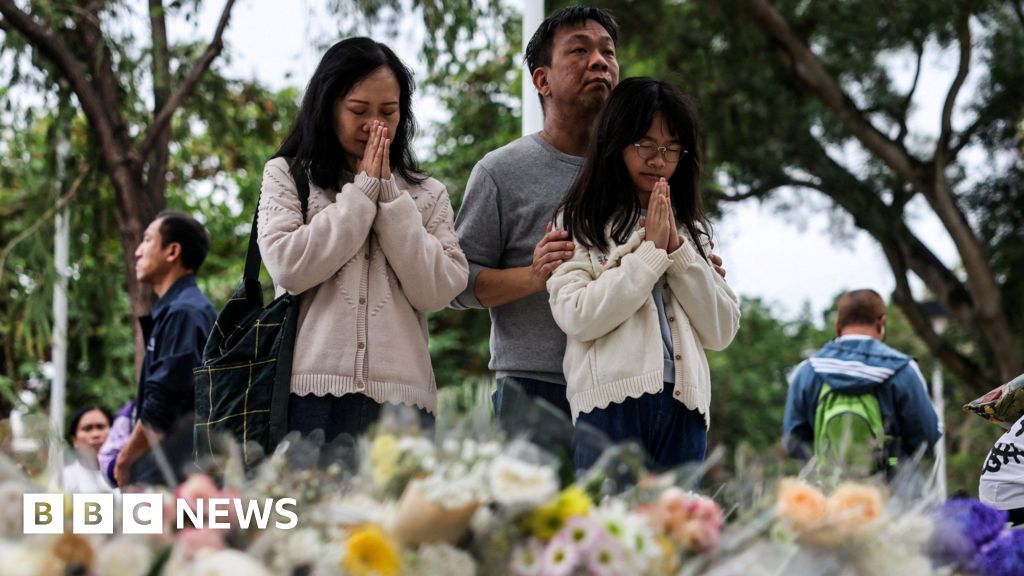
Death toll hits 146; thousands line up to honor victims

Tragedy Unfolds in Hong Kong: Deadliest Fire in Over 70 Years Claims 146 Lives

On what has become a nightmarish day for the Hong Kong-administrated territory, a catastrophic fire swept through multiple high-rise buildings in the Tai Po district, resulting in the loss of at least 146 lives. As authorities grapple with the devastating toll, the incident is sending shockwaves across the international community, exposing critical vulnerabilities in building safety protocols and igniting debates over regulatory oversight. The blaze, which began on Wednesday, rapidly engulfed seven of the eight tower blocks, forcing a massive firefighting operation that involved over 2,000 personnel and lasted until early Friday morning.

Initial investigations suggest that flammable materials, including plastic netting and bamboo scaffolding—standard in Hong Kong’s construction and renovation scene—may have substantially contributed to the fire’s ferocity. Fire officials reported temperatures soaring to 500°C (932°F), with flames spreading vertically and horizontally across interconnected towers, hampering efforts to contain the inferno. Shockingly, residents have raised concerns that fire alarms throughout the affected blocks were either malfunctioning or unheeded during the early stages of the blaze, exacerbating the tragedy. Arrests have been made—eight individuals detained on suspicion of corruption related to the renovation works, and three on manslaughter charges—highlighting potential negligence that may have played a pivotal role in the disaster’s escalation.

International Fallout and the Global Power Dynamics

  • The Chinese government, which maintains tight control over Hong Kong, has now faced intense scrutiny. Societies all over the world are watching with wary eyes as questions emerge about the effectiveness of Hong Kong’s regulatory agencies and the influence of corruption within the city’s development sector.
  • Foreign nations, including Indonesian and Philippine consulates, have reported multiple victims, underscoring the fire’s international human toll. The presence of foreign nationals among the dead complicates diplomatic relations and raises fears over safety standards for expatriates living in the region.
  • Global institutions like the United Nations, which frequently advocate for improved urban safety and disaster preparedness, are likely to face increased pressure to push for reforms, especially in densely populated urban centers vulnerable to similar calamities. This incident illuminates the ongoing challenges that advanced economies face in managing urban infrastructure, and some analysts warn that neglect and corruption are undermining decades of progress towards safer living environments.

How Decisions Shape Societies—A Critical Reflection

The fire at Wang Fuk Court is not merely an isolated tragedy but a reflection of broader issues endemic to modern urban development—namely, the prioritization of cost-cutting over safety, and the apparent apathy towards structural integrity, especially in government-subsidized housing. Historians note that Hong Kong has experienced devastating fires before, with the 1948 disaster claiming 176 lives and the 1918 Happy Valley Racecourse fire surpassing 600 casualties. Yet, each catastrophe has historically prompted fleeting reforms rather than systemic change, a pattern the current crisis risks repeating if urgent action is not taken.

International experts and organizations, including the World Health Organization and urban safety watchdogs, emphasize that these tragedies serve as harsh lessons in urban resilience. The atmosphere of corruption, coupled with lax enforcement and infrastructural shortcuts, directly endangers the very fabric of society. As protests and public mourning continue, the question remains: how many more lives will have to be lost before the collective will is galvanized into meaningful reform? The high-rise flames might have been extinguished, but the flames of accountability and vigilant civic oversight are yet to be kindled in earnest. This is a chapter that history will either condemn for negligence or commend for its resolve—either way, the story is still being written.

Sisu: A Bold Finnish Hero Faces Justice in a Gritty Sequel — A Fight for Honor and Revenge

In the modern cinematic landscape, few genres embody the essence of cultural resilience quite like the action film, especially those that draw heavily from historical and national symbols. The Finnish indie Sisu, directed by Jalmari Helander, epitomizes this phenomenon. Released in 2022 and subsequently gaining acclaim with its sequel Sisu: Road to Revenge, the film revitalizes a genre rooted in stoic endurance, raw heroism, and a persistent, uncompromising attachment to one’s homeland. Helander’s work, infused with a boyish enthusiasm reminiscent of childhood war games, underscores a cultural narrative: that the stories we tell ourselves about perseverance and victory are central to our identity and societal continuity.

Critics, including the writer at The Guardian, have appreciated Sisu for its economy of storytelling—an unpretentious, straightforward focus that echoes the philosophy of thinkers such as Ortega y Gasset, who emphasized the importance of individual vitality in shaping society. Helander’s narrative rejects the excesses of CGI spectacle in favor of practical effects and raw stunt work, cultivating a sense of authenticity that resonates powerfully with patriotic sentiments. The film underscores a vital cultural truth: that the stories of resilience, sacrifice, and cunning are how nations preserve their memory and forge their future. When Aatami—played with gritty defiance by Jorma Tommila—removes beams from his destroyed home or outsmarts Red Army foes, these images transcend mere entertainment. They become symbols—mementos of a collective identity grounded in perseverance.

Throughout cultural history, society has leaned on myths of heroism and survival to articulate its moral fabric. Critics like Chesterton have celebrated the appeal of stories rooted in fundamental human virtues. Today, Sisu channels this tradition, reminding viewers that the true strength of a nation lies in its people’s ability to endure and adapt, even under the most oppressive circumstances. The film’s celebration of the Finnish landscape—its sun-dappled vistas and rugged terrains—reinforces the idea that culture is a landscape of memory and prophecy. As T.S. Eliot observed, “The past should be altered by the present as much as the present is directed by the past.” Here, tradition is not static but a living, breathing force that guides a society’s moral compass—one rooted in the conviction that resilience is a form of rebellion against tyranny.

In an era often characterized by fragmentation, Sisu stands as a testament to the enduring power of cultural memory. Its focus on straightforward heroism, coupled with a reverence for tangible, practical effects, serves as a counterbalance to a Hollywood trend that often undermines genuine human effort with digital illusions. Helander’s work reveals that sometimes, the simplest stories—those of one man’s fight against overwhelming odds—resonate most deeply. Culture, after all, is both our collective memory and our prophecy. It defines who we have been and who we strive to become. As we consider these stories, we are reminded that humanity’s best hopes are born from resilience, from the unwavering belief that even in darkness, a spark of hope can illuminate the path forward—an enduring echo of the national spirit, calling us to remember and to anticipate a future forged in the fires of tradition and the forge of human will.

Global Pets Blessed in Honor of Saint Francis Feast Day

In a tradition that transcends borders and cultures, churches worldwide observed the Feast of Saint Francis of Assisi on 4 October. Celebrations encompass a unique blend of spiritual reverence and communal gathering, where the faithful bring their pets, livestock, and even farmyard roosters to be blessed, honoring the medieval saint known for his profound love of all creatures. This annual event not only emphasizes the importance of conservation and animal welfare but also underscores the enduring influence of religious practices on societal values. Yet, behind these heartfelt traditions lies a broader geopolitical fabric, woven with implications that resonate well beyond the pews.

Assisi’s patron saint remains a symbol of environmental stewardship and compassion. However, as nations grapple with rising climate change concerns and environmental policies, these celebrations subtly echo an ongoing debate about the role of religion versus secular governance in addressing ecological crises. Many international organizations, including the United Nations, have called upon communities worldwide to integrate spiritual values into their environmental commitments. Yet, such integration often prompts political tensions, especially when religious traditions challenge or complement state-led initiatives. Analyzing experts like Dr. Maria Lopez, environmental historian, suggests that these religious observances serve as a reminder of humanity’s moral responsibilities—a message that policymakers can leverage, or be challenged by, in their climate agendas.

The geopolitical impact of local customs, including the Feast’s recognition, extends into diplomatic realms. Countries with dominant religious identities or long-standing ecclesiastical influences tend to use such traditions to reinforce cultural identity and international standing. Conversely, secular or atheist-leaning regimes sometimes criticize or marginalize these events, citing secularism as vital to social cohesion. In regions like Europe, where Christianity historically shaped societal norms, these ceremonies reinforce the cultural fabric that defines national identities. Meanwhile, in parts of the global south, such celebrations bolster religious authority and social order amidst political upheavals. International bodies such as the Council of Europe monitor these dynamics, wary of how religious festivities may influence policy and societal cohesion in diverse communities.

As history’s pages turn, the significance of the Feast of Saint Francis of Assisi remains clear—it symbolizes more than venerable traditions; it embodies the ongoing struggle between tradition and modernity, faith and reason, sovereignty and global interconnectedness. The powerful symbolism of animals being blessed in a time of environmental peril serves as a potent reminder that societal choices today will echo through the corridors of history. Whether they inspire sustainable change or deepen divides, these cultural expressions are testament to a world’s continuous search for meaning amid rapid change. In this unfolding narrative of human resilience and conflict, the weight of history presses heavily upon the present, urging future generations to reflect: in the silent prayers for animals, what profound lessons of stewardship and unity are truly being voiced? The pages of history continue to turn, and the world watches, uncertain of what the next chapter will hold.

Honor Magic 8 Pro drops a new AI button — tech gets smarter for the next-gen user

Honor Launches the Magic 8 Series: Aiming to Disrupt the Premium Smartphone Arena

In a move highlighting ongoing innovation within the competitive premium smartphone segment, Honor has unveiled its flagship Magic 8 series, combining cutting-edge hardware with emerging AI functionalities. The Magic 8 Pro, set to debut initially in China before arriving in Europe, underscores the company’s ambition to challenge industry titans like Apple and Samsung through strategic innovation and disruptive design. Priced at over €1,000 ($1,200), the Magic 8 aims to deliver flagship-level performance with a focus on AI enhancements, camera prowess, and processing power.

Key to its disruptive approach is the phone’s integrated AI button, a feature that signals a shift in how smartphones prioritize user experience through AI-driven functionalities. Honor clarifies that this button is dedicated solely to AI-related tasks, suggesting a future where smartphones become more intuitive and personalized. Coupled with the latest Qualcomm Snapdragon 8 Elite Gen 5 processor—an upgrade also adopted by the upcoming Xiaomi 17 series—the Magic 8 Pro is positioned as a powerhouse built for high-performance AI applications and demanding workflows. Analysts from Gartner project that such hardware integrations will become industry standard, transforming mobile devices into portable supercomputers.

The business implications of this positioning are clear: Honor is not merely offering a smartphone but is disrupting the traditional flagship formula by emphasizing AI innovation and disruption in user interface paradigms. Additionally, new features like Magic Color, an AI-powered tool for dynamically restyling images and videos using different color palettes, exemplify how AI is being woven into core smartphone capabilities. These enhancements not only elevate the user experience but also open avenues for revenue through app ecosystem upgrades, AI-driven services, and possibly subscription models, echoing trends seen in tech giants like Apple and Google.

With plans to introduce a range of models—including the anticipated Magic 8 Ultra and Mini—Honor is betting on sustained innovation to consolidate its position in the high-end mobile space. The upcoming unveiling of the Magic Pad 3 Pro, also powered by the Snapdragon 8 Elite Gen 5, signals an integrated ecosystem push that could redefine consumer expectations for interconnected devices. Industry experts suggest that the rapid rollout of these advanced models may accelerate a broader industry shift towards AI-centric hardware, with firms like MIT and Stanford emphasizing AI’s role as the next major leap in mobile tech evolution.

Looking forward, the competitive edge for Honor and similar disruptors hinges on their ability to leverage disruptive AI applications and hardware innovations to outpace established incumbents. As giants continue to refine their own flagship offerings, the importance of AI-driven features and high-performance chips will only intensify. The coming months could mark a pivotal moment, where tactical innovation and bold business strategies determine the future landscape of premium mobile technology. For tech enthusiasts and industry watchers alike, the race to dominate the AI-powered mobile future has begun—and the speed of innovation is unlikely to slow down anytime soon.

UK Claims Badge of Honor in Airport Ransomware Bust, Disrupts European Travel

Emerging Ransomware Threats Signal New Era of Disruption in Critical Infrastructure

Recent cyberattacks targeting key transportation hubs have underscored a rapidly evolving threat landscape, highlighting the necessity for robust cybersecurity innovation at the enterprise and government levels. While initial reports about a ransomware incident disrupting air traffic across an entire continent remain sparse in detail, cybersecurity experts are analyzing the tools behind the attack, revealing a disturbing trend in low-cost, highly accessible ransomware-as-a-service (RaaS) platforms fueling these disruptive events. Such tools, including Hardbit and Loki, have historically been categorized as smaller-scale threats, yet their deployment in this context suggests a paradigm shift—one where the barriers to orchestrating massive infrastructure outages are steadily falling.

Kevin Beaumont, a well-respected cybersecurity researcher, noted on Mastodon that the attack involved a seemingly basic ransomware tool, Hardbit, which exemplifies the ongoing democratization of cyber weapons. This ease of access, enabled by RaaS models, means that even relatively low-skilled cybercriminal groups can launch disruptive assaults that threaten essential services. Meanwhile, sources cited by BleepingComputer suggest a variant called Loki might have been involved—a malware family known for its versatility and increased sophistication in bypassing security measures.

Disruption and Business Implications

The impact of such ransomware incursions extends beyond immediate chaos, signaling a fundamental shift in the risk profile of critical sectors like aviation, logistics, and utilities. For businesses, the implications are profound:

  • Enhanced need for next-generation security solutions capable of detecting and neutralizing RaaS-based attacks
  • Investment in preventive infrastructure that can withstand supply chain interruptions caused by cyber warfare
  • Development of resilience strategies to minimize downtime and protect customer interests

Experts from institutions like Gartner caution that the proliferation of accessible ransomware tools, combined with their deployment against infrastructure-dependent industries, could herald a new wave of economic and social instability. As Elon Musk and Peter Thiel have emphasized, the race to innovate and defend against such threats is accelerating, urging tech firms and policymakers alike to prioritize disruptive cybersecurity innovations in the coming years. The threat landscape now demands a proactive stance rather than reactive fixes, with a focus on building immunity against increasingly sophisticated cyber threats.

Looking Ahead: A Critical Juncture for Tech and National Security

The current incidents serve as a wake-up call for all stakeholders—governments, corporations, and the tech community—to act urgently. The convergence of innovation, disruption, and geopolitical considerations implies that the coming decade will be pivotal in shaping resilient digital ecosystems. As malicious actors leverage inexpensive, easily accessible tools, the necessity for cutting-edge AI-driven cybersecurity solutions and multi-layered defense architectures becomes undeniable. The question is not if further disruptions will occur, but when—and how swiftly the technology sector can adapt to safeguard the backbone of our modern societies.

This evolving threat landscape underscores that in the race for technological supremacy, those who fail to innovate risk falling behind—and potentially suffering catastrophic consequences. The future hinges on bold, forward-thinking cybersecurity strategies that can counteract the disruptive potential of accessible RaaS malware, ensuring vigilance and resilience in our interconnected world.

Social Media Auto Publish Powered By : XYZScripts.com