Matox News

Truth Over Trends, always!

Honor’s Robot Phone is dropping later this year — tech just got even cooler for the next-gen.

Honor Unveils Robot Phone and humanoid robots at MWC 2026: A Disruptive Leap in Tech Innovation

The Mobile World Congress 2026 in Barcelona marked a significant milestone as Honor announced and demonstrated its pioneering efforts in robotics and mobile technology with the debut of the so-called Robot Phone. While details remain scant, the showcased device signifies a bold step toward integrating advanced AI and robotics into consumer electronics, signaling a potential shift in how technology interacts with everyday users. The demonstration featured a working prototype capable of holding AI-enabled conversations, movably folding back, and mimicking human gestures—hallmarks of disruptive innovation aimed at positioning Honor firmly in the forefront of next-generation device development.

During the event, Honor also exhibited a humanoid robot, which impressed spectators with its agility, including dance routines and backflips—albeit with some ambiguity about whether the robot was remotely teleoperated or acting autonomously. Demonstrations of the robot haltingly waving and shaking hands hinted at rapid advancements in robotics behavior, but also highlighted lingering questions about the maturity and reliability of such machines in real-world applications. This dual showcase underscores a broader industry trend toward integrating autonomous robotics into consumer platforms, promising to redefine service, security, and entertainment sectors. Notably, Honor’s willingness to reveal these prototypes signals an industry-wide pivot toward robotics as a core strategic area, with the potential to challenge incumbent tech giants entrenched in mobile and AI markets.

Market analysts and industry leaders, including Gartner and MIT researchers, underscore the business implications of these developments. The convergence of AI-enabled smartphones and humanoid robotics is poised to accelerate the disruption of traditional industries, from customer support to personal assistants. Honor’s pivot into robotics — coupled with the planned release of the Robot Phone expected in China later this year — exemplifies how innovative companies are leveraging rapid technological advances to carve out unique market niches. This strategic move could catalyze a new era of integrated AI ecosystems, where devices are not just tools but partners capable of complex interactions and autonomous functions.

As the industry hurtles toward this future, stakeholders face the dual challenge of harnessing the immense potential of robotics and AI while managing the risks associated with interoperability, safety, and ethical deployment. Experts like Elon Musk and Peter Thiel emphasize that the coming decade will be pivotal; failure to adapt quickly to the disruptive wave of AI and robotics could render current market leaders obsolete. With Honor’s latest prototypes nudging the boundaries of what’s technologically feasible, it is clear that the race for control of this new frontier is intensifying. The urgency for established corporations and startups alike to innovate at breakneck speed has never been greater. The industry’s trajectory suggests that those who lead in AI-powered robotics and ubiquitous intelligent devices will dominate the next wave of global tech dominance, making the immediate future one of unparalleled opportunity and strategic risk. The clock is ticking — the future belongs to the bold, the innovative, and those willing to disrupt.”

Netflix’s Selena Documentary Honors Her Inspiring Legacy While Respectfully Addressing Tragic Endings | Cultural Highlights

Remembering Selena Quintanilla: The Cultural Legacy of a Star Gone Too Soon

In the tapestry of American cultural history, few figures evoke both admiration and tragedy as poignantly as Selena Quintanilla. Her story transcends mere fandom, embodying the vital connection between culture, identity, and societal aspirations. As the Queen of Tejano Music, Selena’s ascent was a reflection of a vibrant, evolving Latin American identity in the United States—a testament to how tradition and modernity can intertwine to forge a new, powerful cultural expression. Her untimely death at just 23, murdered by her employee Yolanda Saldívar in 1995, was not merely a personal tragedy but a cultural rupture, one that left a void in the heart of her community and a question about the price of fame for those who dare to challenge societal boundaries.

Yet, Selena’s life, as documented through recent works like Netflix’s Selena y Los Dinos: A Family’s Legacy, underscores her profound influence not only as an artist but as a symbol of youthful perseverance and cultural authenticity. Director Isabel Castro’s intimate portrayal reminds us that cultural icons are not just commodities but custodians of tradition—carriers of stories that define who we are and who we aspire to be. The documentary captures Selena’s blend of raw talent and authentic charm, revealing her as a young woman who balanced the demands of burgeoning superstardom with the enduring spirit of her roots. Her early years fronting her family band, despite sacrifices like missing out on childhood friendships, echo Ortega y Gasset’s notion of the artist as a creator of reality, shaping culture through persistent effort and authentic expression.

The Power of Culture as Identity and Prophecy

  • Selena’s music was not solely entertainment but a bridge to affirm her community’s identity—reclaiming Hispanic traditions in a rapidly Americanizing landscape.
  • Her fashion and style became symbols of cultural pride, offering a modern reinterpretation of heritage that resonated deeply with her fans.
  • Her personal journey, including her pursuit of fluency in Spanish and her romantic union with Chris Pérez, exemplified the human desire to reconcile tradition with modernity—an ongoing dialogue between past and future.

Philosophers like T.S. Eliot have noted how culture mirrors inner life, serving as both memory and prophecy. Selena’s story encapsulates this duality: her songs echo the collective memory of her community, while her aspirations and personal growth hint at a future where Hispanic-American culture continues to evolve and influence the national tapestry. The tragic rupture—her murder— reminds us that the preservation and nurturing of cultural identity are fragile, yet fragile things often bear the deepest meaning. Her legacy persists not just in her music but in the cultural currents she helped shape, urging young people today to see their roots as a source of strength and innovation.

Culture as Humanity’s Living Memory

In the final moments of Castro’s documentary, Selena’s father gazes upon her museum, a shrine not just to a star, but to the enduring power of cultural memory. “They took her life,” he says quietly, “but we’re going to keep her alive through her music.” It is a reminder that culture is both a living memory and a prophecy of what humanity can achieve when rooted in tradition yet open to transformation. As Chesterton once celebrated, the true wonder of culture lies in its capacity to turn the past into a living voice, whispering to each new generation that human greatness is born from the reverent preservation of memory and the fearless pursuit of future horizons.

In this ongoing dance between memory and prophecy, Selena’s story remains an emblem of resilience. Her luminous presence, captured in song and spirit, guides us to remember that our cultural roots are not anchors of the past but rather the wings with which we reach toward tomorrow—a testament that, in the sanctuary of tradition, humanity’s best ideals are preserved, celebrated, and endlessly reborn. And so, her story—like all true culture—calls us to see that we are both the heirs and the prophets of our collective human narrative, forever reaching toward the horizon of what we might become.

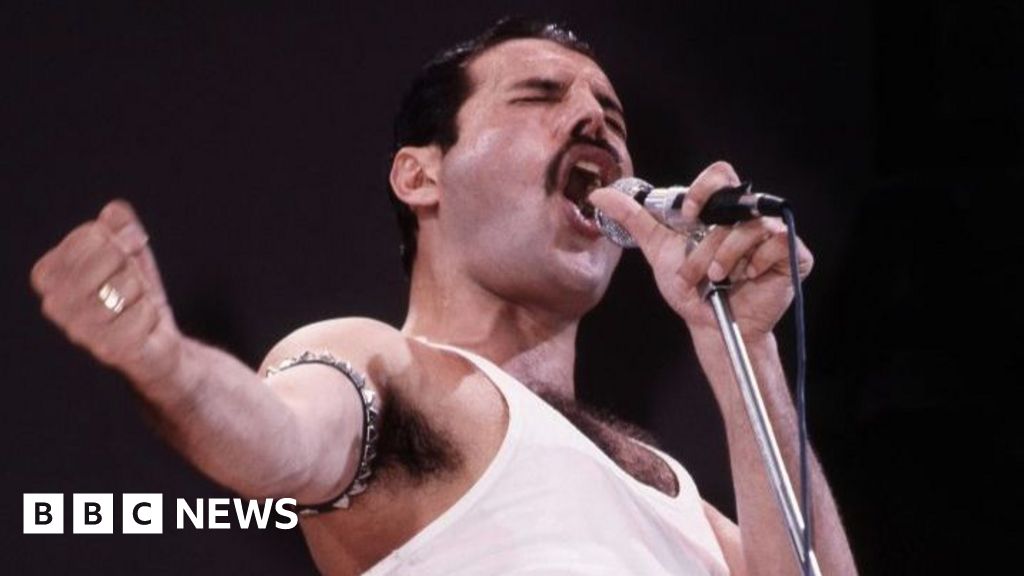
Royal Mint honors rock icon Freddie Mercury with exclusive collectible coin—celebrating a legendary artist for a new generation

Culture remains the heartbeat of a society’s identity, its tradition, and its collective memory. In an era characterized by rapid change and fleeting trends, institutions like The Royal Mint serve as custodians of something enduring—preserving symbols that connect generations across time. The recent issuance of a commemorative Freddie Mercury coin, timed to honor the 40th anniversary of his legendary Live Aid performance, exemplifies this profound intersection of culture and history. Here, a tangible artifact encapsulates not only Mercury’s extraordinary vocal talent but also the enduring spirit of the values he embodied—passion, innovation, and a resolute dedication to artistry. It reminds us that in every note played and every story told, culture becomes the vessel through which a society maintains its sense of purpose, resilience, and legacy.

The design of the coin itself acts as a symbolic capsule, depicting Mercury mid-performance, his head thrown back in expressive energy—a portrait that captures “passion and the joy he brought to millions,” as his sister Kashmira Bulsara expressed. Encircling it, a musical stave ranging from bass to treble speaks to Mercury’s **four-octave vocal range**, a reminder of the transcendental power of musical mastery. The inclusion of his autograph further personalizes this tribute, asserting that the cultural icon is immortalized not just as a performer but as an enduring symbol of individual excellence. The studded armband etched into the coin, reminiscent of Mercury’s **Live Aid** outfit, evokes a moment of cultural convergence—where style, performance, and cultural activism intertwine. This coin. like much of great art, functions as both milestone and prophecy, anchoring our memories while hinting at future generations’ understanding of the human pursuit of greatness.

Reflecting on Mercury’s significance, the philosopher José Ortega y Gasset might argue that such cultural artifacts echo the human tendency to transform the ephemeral into the eternal. Mercury’s artistry, epitomized during the Live Aid spectacle, became an act of cultural rebellion—a celebration of autonomous expression in the face of a world yearning for hope. The rare acknowledgment of such figures underscores a broader truth: cultural icons are catalysts for societal cohesion and moral imagination. As Tocqueville observed about democracy, it is a system that elevates the individual, transforming personal brilliance into collective heritage. Mercury’s contribution, now enshrined in metal and memory, exemplifies how culture mediates between personal identity and societal continuity, creating a shared narrative in the tumult of human history.

In contemplating this homage, one finds that the true significance of culture extends beyond recognition; it serves as a prophetic voice—a herald of values, a keeper of traditions, and a mirror of aspirations. As Chesterton noted, “Art is the signature of man,” and Mercury’s image on this coin affirms that our cultural endeavors are an expression of the divine flame within ourselves—an echo that resonates across time. When we celebrate figures like Mercury, we acknowledge that culture is both memory and vision: a record of our triumphs, a forerunner of our hopes. Through these symbols, humanity whispers its stories into the eternity of history, shaping the future with the melodies of the past, forever entwined in a dance of remembrance and prophecy—a testament that, in the grand symphony of existence, culture remains the most profound testament to our shared human voyage.

Australia News: NSW Nationals Drop Net Zero; Keating Honors Laws — Youth Voice Matters

In a world increasingly shaped by the relentless march of geopolitical shifts and domestic reckonings, recent events underscore a decisive moment in the unfolding fabric of history. Australia, often viewed as a microcosm of broader global trends, finds itself at a crossroads as regional political forces realign on crucial issues like climate policy and national identity. Meanwhile, the passing of iconic figures like John Laws reminds us how media personalities have historically shaped societal discourse, bridging the gap between politics and the everyday citizen in an era when radio was king. The legacy of individuals like Laws and the recent political maneuvers collectively illustrate the profound influence of communication and decision-making on national trajectories.

At the heart of international concern is the abandonment of commitments to net zero emissions by 2050—a stance taken rigorously by the NSW Nationals in Australia, following their federal counterparts’ lead in a move that threatens to fracture the stable fabric of coalition politics. The decision, driven by internal party discussions and influenced by a thinktank aligned with Senator Ross Cadell, signals a direct challenge to the global climate agenda endorsed by many Western nations.

  • Government officials and analysts have warned this rollback could hinder international efforts to combat the climate crisis, and threaten Australia’s diplomatic standing in climate negotiations.
  • The decision sparks a rift within the Coalition, specifically testing the resolve of opposition leader Mark Speakman, who has faced mounting pressure amidst poor polling and internal dissent.

The geopolitical impact of this shift extends far beyond national borders. Countries watching Australia’s retreat from climate commitments may perceive a broader trend of de-escalation or skepticism toward global climate initiatives, especially in regions where economic and energy independence are prioritized over environmental concerns. Experts like economists and environmentalists have issued stark warnings that such domestic decisions undermine international climate accords and could embolden other nations seeking to resist similar targets, thereby threatening the collective effort to mitigate the effects of climate change. Moreover, Australia’s internal debate reflects a national societal divide—those pushing for environmental credentials versus those emphasizing regional economic interests—highlighting how domestic policies can send ripples through the international diplomatic arena.

Meanwhile, the death of John Laws, dubbed the “king” of radio before the rise of the digital age, signifies a pivotal chapter in the history of media influence. Keating’s tribute underscores how Laws partnered with policymakers to educate Australia’s middle ground crowd on complex social and economic matters. This dynamic exemplifies how influential personalities have historically shaped public perception and policy, wielding power that transcends mere entertainment. As history presses forward, the media’s role in transmitting societal values and political discourse remains central, even as new digital platforms challenge traditional broadcasts. Recognizing these shifts urges societies worldwide to reflect on the enduring impact media figures have historically played—and continue to play—in shaping national identity and policy directions.

As these stories unfold—whether through the deliberate reevaluation of environmental commitments or the remembrance of media giants—the pace of history seems to accelerate, leaving societies to confront the weight of choices made today. Decisive shifts in policy, politics, and perception are not isolated events but rather the vital threads of an evolving narrative, heavily influenced by those who lead and those who listen. With each decision, with each passing figure, the tapestry of history is rewoven—sometimes a step forward, often a step into uncharted, uncertain territory. And as nations navigate the turbulent waters of change, the foundations of tomorrow’s history are being laid today—silent witnesses to the ongoing story of power, influence, and the enduring quest for a future shaped by choices of unparalleled importance.

Blue plaque honors Thomas the Tank Engine’s creator at his home

As Britain commemorates the 80th anniversary of the beloved Thomas the Tank Engine series, it serves as a stark reminder of how cultural icons rooted in heritage can shape societal identity and influence international perceptions. The recent unveiling of a historic plaque at the Rev W Awdry’s former residence in Stroud exemplifies a broader recognition of the profound impact that cultural figures can have across generations. The ceremony, part of the Railway 200 celebrations, highlights not only nostalgia but also underscores a nation’s investment in preserving its history amid the tumult of global geopolitics.

From the vantage point of international commentators, the enduring success of Awdry’s literary universe, further amplified by televised adaptations, demonstrates the power of cultural diplomacy. Renowned historians note that such stories serve as international bridges, often creating a sense of shared history and values. The ongoing fascination with a fictional island like Sodor, and its real-world commemorations, shows how a nation’s cultural exports can transcend borders, fostering admiration and soft power. Nonetheless, these cultural landmarks also reflect how decisions about heritage preservation and cultural promotion can be manipulated within larger geopolitical narratives, especially when countries seek to project influence under the guise of cultural diplomacy.

Meanwhile, European and global organizations such as Historic England emphasize that heritage isn’t static but a living component of national pride. Duncan Wilson, the agency’s chief executive, eloquently described the significance of the foundation laid by Awdry’s stories as a “global phenomenon rooted in the magic of steam trains,” a narrative that resonates universally. These initiatives parallel the strategic efforts of nations to mobilize cultural assets as a form of resilience and soft power amid geopolitical shifts. Critics argue, however, that the over-commercialization of such icons risks diluting their genuine historical value, turning beloved stories into mere commodities in a rapidly shifting international order.

The geopolitical impact of heritage decisions extends beyond cultural diplomacy into the realm of international stability. As emerging powers like China and Russia galvanize their own cultural narratives to bolster national identity, Western nations face a crucial task in balancing heritage preservation with strategic interests. The symbolism of an old house or a stained glass window might seem insignificant, but these tokens become battlegrounds for influence, echoing the larger conflicts over history, national pride, and sovereignty. As history continues to unfold, the legacy of such icons remains a testament to how societies craft their narratives — a narrative that, in today’s world, is more contested than ever, leaving the future’s story written not just in books, but in the very fabric of international powerplays.

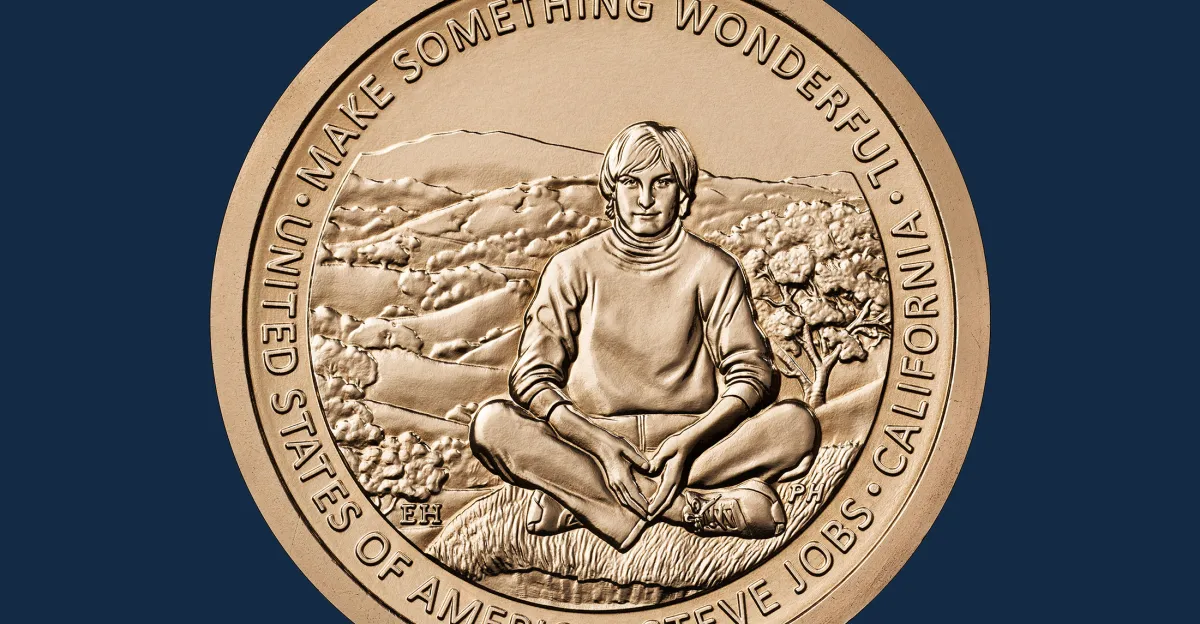
Steve Jobs graces—$1 coin debut honors tech visionary

US Mint Unveils Steve Jobs Commemorative Coin, Signaling Innovation’s Cultural Significance

The United States Mint has announced a new $1 coin honoring the visionary co-founder of Apple, Steve Jobs. This move underscores how cultural icons of innovation are increasingly embedded into national identity, reflecting a broader societal shift emphasizing technological disruption and entrepreneurial spirit.

Designed to depict a young Jobs against a California landscape, the coin captures the essence of innovation with a quote: “Make something wonderful,” from 2007. Priced at $13.25 and available from 2026, this initiative forms part of a multi-year project launched in 2018, aimed at celebrating American innovation through commemorative coins. Each state can nominate icons aligned with its industrial heritage, illustrating a decentralized recognition of technological contributions, with Wisconsin’s selection of the Cray-1 supercomputer highlighting America’s pioneering role in computing.

Implications for Disruption and the Business Ecosystem

This initiative exemplifies how governments are increasingly recognizing disruptive innovation as a core element of national legacy. The choice of Steve Jobs, often hailed as a disruptor who revolutionized multiple industries, signals a strategic alignment with the ethos of technology-driven growth. As noted by industry analysts at Gartner, such symbols serve both as cultural milestones and as branding tools that reinforce innovation as a national value.

By immortalizing figures like Jobs, the U.S. Mint is effectively positioning itself at the intersection of cultural recognition and the business landscape, fostering a narrative that innovation is at the heart of America’s identity. This trend is echoed by tech entrepreneurs and thought leaders like Elon Musk, who emphasize the importance of celebrating pioneers who push the boundaries of technology. In the context of a rapidly evolving market landscape, such symbolic gestures could influence investor sentiment and inspire emerging entrepreneurs to pursue disruptive technologies.

The Forward-Looking Perspective: Innovation as the New National Currency

The integration of icons like Steve Jobs into official national symbolism signals a potential paradigm shift. As noted by MIT’s Leading Innovation Report, disruption is no longer confined to startups but has become woven into national narratives. The timing is crucial; with the global competitive landscape intensifying, governments and industries must accelerate their recognition of technological pioneers or risk falling behind in the _____ race for dominance in AI, quantum computing, and other transformative sectors.

As market analysts warn that failing to embrace and promote innovation might erode future competitiveness, technological disruption warrants urgent investment and policy support. The historic inclusion of Jobs underscores a broader imperative: to galvanize a new generation of innovators inspired by legacy figures, ensuring the U.S. remains at the forefront of innovation-driven economic growth. The countdown to 2026 is not just about a coin—it’s a strategic move emphasizing that in today’s world, the currency of the future is innovation itself.

Emil Ferris Honors Classic Horror Comics in ‘My Favorite Thing Is Monsters’—A Bold nod to underground culture

In the evolving narrative of human creativity, culture functions as both the mirror and mold of our collective identity. It is the language through which societies internalize their history, values, and aspirations, shaping the very fabric of their existence. As Ortega y Gasset suggested, we are not merely individuals navigating a blank universe but are profoundly embedded within the traditions that galvanize our sense of self. This is evident in modern art and literature, where the reinterpretation and expansion of classic motifs serve to renew our cultural heritage, making it resonate with contemporary sensibilities.

Take, for instance, the daring reimagining found in the *second volume* of *My Favorite Thing Is Monsters*. Here, the artist Ferris elevates figures from Fuseli’s haunting masterpiece beyond its original frame, transforming them into active participants within a fictional universe. These figures cease to be static representations of gothic horror; instead, they morph into *cover artists* for *“Ghastly,”* a horror comic conceived within a private notebook. This act of creative expansion echoes the philosophical insight of Chesterton, who posited that tradition is the democracy of the dead—an ongoing conversation across generations. The figures, once confined to a canvas, now become vital players in a living, breathing cultural dialogue that bridges past fears with present fantasies, illustrating how art breathes new life into timeless motifs.

Such reimagining embodies the profound role of cultural continuity in asserting societal identity. It challenges the notion that tradition is static; rather, it underscores that culture is a vessel for renewal, a reservoir from which society draws strength and meaning. This process also exemplifies Tocqueville’s insights into democracy’s capacity for fostering the collective voice—each reinterpretation and creative reinvention serving as a testament to our shared heritage. In a world increasingly driven by rapid change, the enduring relevance of cultural icons reminds us that tradition sustains us, anchoring us to enduring values even as we explore novel expressions of human imagination.

Ultimately, culture embodies both memory and prophecy—the echoes of those who came before and the visions of those yet to come. It is through this dynamic interplay that societies preserve their essence while forging paths into the future. As T.S. Eliot reflected, true culture is rooted in the tension between preservation and innovation, where the past informs the present, and the present shapes what is to come. Culture becomes the poetic landscape where history’s shadows and hope’s light blend—an eternal testament to humanity’s capacity for both remembrance and rebirth. It is here that our collective soul resides, a luminous thread in the tapestry of human destiny, continually weaving our shared story toward an infinite horizon.

Social Media Auto Publish Powered By : XYZScripts.com