Matox News

Truth Over Trends, always!

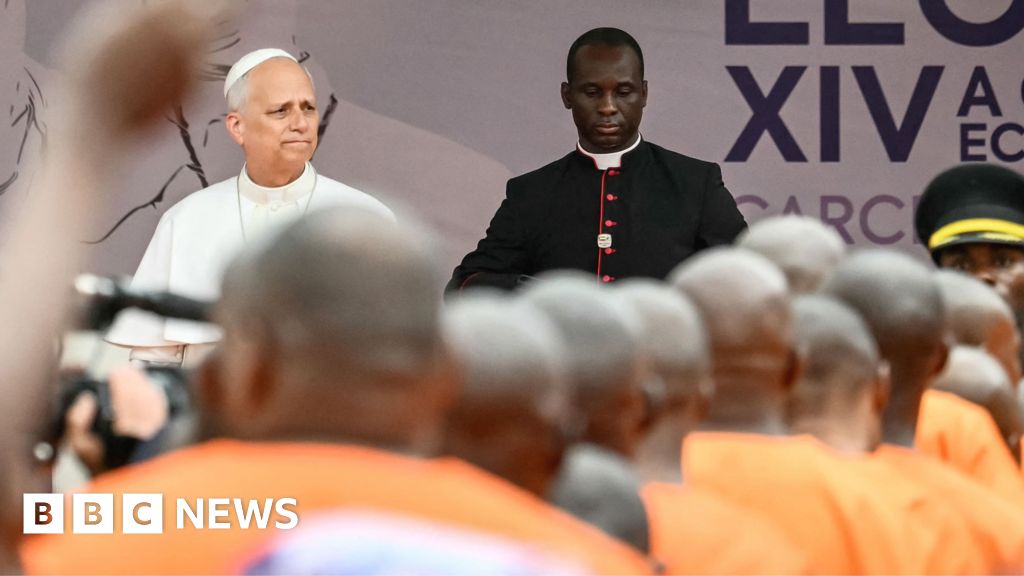
Pope Leo Slams Human Rights in Equatorial Guinea Prisons Amid Africa Tour

In a striking display of diplomatic fervor and moral clarity, the Pope delivered a frank and passionate speech during his recent tour of Africa. This tour, widely watched by international observers, underscores the Vatican’s strategic intent to influence not just religious spheres but also geopolitics across one of the world’s most Dynamic continents. The address came at a pivotal moment, as African nations grapple with an array of economic, social, and security challenges, making the Pope’s message resonate beyond faith, echoing in halls of power and influencing policy debates.

Historians and geopolitical analysts have long noted that such papal visits serve as more than acts of spiritual outreach; they act as catalysts for diplomatic dialogue and soft power projection. The Pope’s appeal to solidarity, moral responsibility, and the promotion of justice signals a conscious effort to shape the intersection of faith and geopolitics in Africa. The speech was delivered amidst a complex landscape of regional conflicts, economic struggles, and fragile political stability—factors that inevitably impact global stability. Major international institutions, including the United Nations, interpret such gestures as vital moments that can sway public opinion, influence aid initiatives, and potentially foster peace in turbulent zones.

  • In his speech, the Pope emphasized the importance of social cohesion and moral leadership in addressing endemic poverty, corruption, and regional conflicts. These messages are seen as a direct challenge to corrupt regimes and external actors who exploit Africa’s resources and vulnerabilities.
  • The speech also touched on environmental issues, calling for responsible stewardship of Africa’s vast natural wealth. This rhetoric aligns with efforts by global powers and multinational corporations whose investments are often contested and frequently criticized for their impacts on local communities.
  • Analysts argue that the Pope’s stance may ignite a new phase of moral activism within Africa, fostering a push for reforms that could redefine relationships between African states and other global actors.

However, the geopolitical impact of the Pope’s visit extends beyond moral appeals. How nations respond to these calls for justice and reform will influence the continent’s future trajectory, as well as global power dynamics. African leaders facing internal dissent may either leverage the Pope’s moral authority to rally support or dismiss it as external meddling. Meanwhile, international organizations such as the UN and African Union remain watchful, recognizing that stability in Africa is pivotal for broader international security and economic prosperity—especially amid the ongoing ripple effects of regional conflicts and the shifting alliances in global diplomacy.

As the echoes of his words fade into history, the true weight of this moment remains uncertain. The continent stands at a crossroads, with choices that will reverberate through generations. The Pope’s passionate plea serves as a reminder that history, with all its complexities and contradictions, continues to unfold in Africa—where every decision is a step toward either chaos or cohesion, liberation or despair. These are not just words—they are the seeds of tomorrow’s legacy.

Sam Altman’s World aims to revolutionize human verification — kicking off with Tinder.

Revolution in Digital Identity Verification: World Unveils Expansive Innovations

In a strategic move that signals a major upheaval in the digital identity landscape, Sam Altman’s World (formerly Worldcoin) has unveiled its next phase of expansion, integrating its cutting-edge verification technology into diverse sectors such as dating, entertainment, and corporate security systems. This development underscores the relentless drive toward disrupting traditional verification models, reinforcing the tech industry’s focus on innovation and security in an AI-drenched future. The key platform enabling this transformation is the Orb, a cryptographic iris scanner that authenticates human users while preserving anonymity—a feat achieved through advanced zero-knowledge proof cryptography, which allows verification without revealing sensitive data.

Global corporations are responding rapidly to this wave of innovation. Notably, Tinder is spearheading its integration of World’s ID verification system, rolling out a verified user badge that authenticates genuine human profiles—an instant game-changer for digital dating landscape prone to bots and fake profiles. This step not only enhances user safety but dramatically shifts market standards, as verified identities become a baseline expectation. Furthermore, a pilot program in Japan has yielded promising results with plans to extend the service worldwide—including the highly competitive U.S. market—highlighting the strategic importance of such verification systems amidst escalating concerns about authenticity and security in online interactions.

  • Enhanced user trust via verified profiles in social apps
  • Potential for new monetization streams through verified experiences and premium features
  • Mitigation of bots and fake accounts in digital spaces

Beyond dating, World is aggressively infiltrating the ticketing and entertainment industry. Its Concert Kit feature exemplifies how blockchain-backed identity verification can combat scalper bots and unauthorized ticket reselling. Major artists such as 30 Seconds to Mars and Bruno Mars are leveraging the platform for upcoming tours, promising fans safer access and stronger community engagement. The implications extend beyond fan safety—this represents a blueprint for how verification tech could redefine ticketing security and fan experience at scale. Meanwhile, strategic partnerships with giants like Ticketmaster and Eventbrite indicate a consolidation trend—where trusted verification becomes a must-have infrastructure for entertainment commerce.

From a business implications perspective, World’s pivot toward industry-specific solutions signals a broader industry shift towards decentralized, privacy-preserving identity protocols. Analysts like Gartner project a 40% annual growth rate in the identity verification market, driven by increasing demand for secure, user-friendly authentication systems. Furthermore, partnerships with firms like Okta and Zoom reveal a clear trajectory: identity verification will soon become an integral layer of all digital interactions, from enterprise security to personal privacy. This so-called “agent delegation” system hints at a future where individuals can delegate trusted virtual agents to perform web activities—yet it raises urgent questions about security, control, and privacy that demand innovative regulatory responses.

However, scaling remains a challenge. The traditional Orb verification process is inconvenient, requiring physical presence at designated locations, thereby limiting mass adoption. Yet, World actively counters this by deploying Orb units into retail chains and offering remote verification services, including a novel “Selfie Check” feature designed to maximize privacy through local device processing. This push towards low friction verification methods signals an impending paradigm shift—where convenience and privacy are no longer mutually exclusive. With the rapid pace of technological disruption, industry leaders, regulators, and consumers must stay alert to the emerging landscape, which promises both unprecedented opportunities and significant implications for privacy, security, and digital sovereignty.

In Conclusion

The future of digital verification is here—and it’s evolving at an unprecedented pace. The integration of cryptographically secured, privacy-preserving identity systems across social, entertainment, and corporate spheres will define the next era of online interactions. Industry players who fail to adapt risk obsolescence, while those leading the charge could dominate a new digital economy rooted in trust and authenticity. The urgency is clear: the race to secure, scalable, and user-centric identity verification is on, and the stakes could not be higher in shaping the future of online life.

Iranians rally together, forming human chains at bridges and power plants to stand up for their future

The tension in the Middle East has once again escalated sharply following recent threats from former US President Donald Trump against key civilians and critical infrastructure in the region. In response, Tehran has urged its citizens to gather and remain vigilant outside potential US and Israeli targets, signaling a shift toward heightened military preparedness and a potentially volatile escalation of regional conflicts. This provocative move has drawn condemnation from international observers, but also underlines the volatility of a geopolitical landscape that is increasingly unpredictable amid the ongoing rivalries and alliances shaping the region.

Historian and geopolitical analysts emphasize that such rhetoric and actions risk creating a cycle of escalation reminiscent of past conflicts that have destabilized the area for decades. The call for mass gatherings outside sensitive sites indicates a strategic attempt by Iran to project strength and resilience in the face of external threats, but it simultaneously raises the likelihood of miscalculations that could lead to wider confrontations. This response must be understood within the larger context of years of sanctions, covert operations, and regional proxy wars, which continue to fragment national sovereignty and threaten global stability. The United Nations and various international organizations have expressed concern over the potential for conflicts to spiral out of control, warning that such developments could spark a broader regional war with catastrophic consequences.

Experts caution that recent threats and citizen mobilizations serve more than just a symbolic purpose. They underscore the necessity of understanding the geopolitical impact of this escalation. As U.S. and Israeli leaders continue to push policies perceived as hostile in Tehran, the Iranian government seems determined to demonstrate that its defense capabilities are robust and that it is prepared to retaliate in kind if provoked further. Such brinkmanship could threaten to unravel the fragile balance of power in the region, with neighboring states caught in the crossfire and global powers reevaluating their commitments to peace and stability. Diplomatic efforts, while ongoing, appear increasingly strained as the shadow of conflict lengthens over the horizon.

International voices, including prominent analysts and organizations like HSBC’s geopolitical research team, warn of the long-term consequences: the resurgence of hostilities might lead to an era of heightened insecurity and economic disruption across the Middle East. History has demonstrated that such moments—marked by inflammatory rhetoric and military posturing—often open the door to unforeseen conflicts. As the world watches, the region’s fate lies precariously in the balance, remnants of diplomacy fraying at the edges. With each passing day, the decisions made today could forge a new chapter in the history of global conflict, a chapter written in the blood of innocent civilians and the rubble of broken societies. The weight of history presses heavily on the shoulders of leaders and nations alike, as the chaotic dance of war and peace continues to unfold amid the sands of a region on the brink.

NSW Government Under Fire: Human Rights Group Probes Racial Discrimination Allegations

In a developing chapter of Australia’s ongoing struggles with racial and religious tensions, the Australian Human Rights Commission has launched an investigation into allegations of racial discrimination involving the state’s multicultural policy machinery. The complaint, brought forward by the Alliance Against Islamophobia and the Periyar Ambedkar Thoughts Circle of Australia (Patca), targets Steve Kamper, the New South Wales Minister for Multiculturalism, signaling a concerning escalation in internal community disputes with potential geopolitical repercussions. The complaint centers on claims that Kamper and his department failed to properly investigate reports from Muslim and caste-oppressed Hindu groups, raising legitimate questions about the effectiveness of multicultural policy enforcement in a nation increasingly divided along ethnic and religious lines.

Analysts emphasize that this controversy provides a crucial turning point for Australia’s multicultural narrative. The complaint alleges that government agencies not only dismissed the concerns of marginalized groups but also continued to endorse the Hindu Council of Australia’s role within the NSW Faith Affairs Council—an advisory body to the government representing multiple faith communities. This raises the fundamental issue of how state institutions are tasked with managing religious and ethnic pluralism in a landscape increasingly torn by identity politics. Furthermore, the complaint suggests that the department omitted references to caste-based discrimination and Hindu nationalist extremism from official reports—an omission that critics say underscores a dangerous attempt at its marginalization or denial, which could embolden extremists and encourage social fragmentation.

International security analysts warn that such internal disputes within Australia’s diverse communities could have broader geopolitical impact. As nations like China and India continue their strategic maneuvers across the Indo-Pacific, internal cohesion in Western democracies becomes pivotal. Some observers worry that unresolved issues like caste discrimination and religious extremism could fuel social division, making Australia susceptible to external influence or internal destabilization. Historian Dr. Liam Hamilton notes that “the handling of these sensitive issues will not only determine Australia’s internal stability but also influence its diplomatic posture in a volatile regional environment.” The scene reflects a broader challenge for global democracies: how to reconcile diversity with national unity amidst growing geopolitical tensions.

As the debate intensifies, community leaders are warning of deepening divisions, with some Hindu nationalist factions reportedly spreading divisive rhetoric through social media platforms. The Human Rights Commission’s investigation emerges at a critical juncture—an opportunity for Australia to reaffirm its commitment to social cohesion and equal protection under the law. Whether the government chooses to confront these internal fissures head-on or continues its policy of cautious appeasement could determine the future fabric of Australian society. In this unfolding narrative, the weight of history and the contemporary struggle for harmony hang in fragile balance, foreshadowing a future where the nation’s multicultural model may be tested like never before, under the watchful eyes of the world.

Human remains unearthed in hunt for kidnapped Sydney teen, police confirm

The recent developments in Australia have captured international attention, not just for the tragic human loss but for what it signifies amidst a landscape of geopolitical uncertainty. The case involves the shocking discovery of presumed human remains on the outskirts of Sydney, linked to the senseless kidnapping and probable homicide of an 85-year-old man, Chris Baghsarian. What initially appeared as a local criminal act has now morphed into a reflection of broader societal chaos, with security and law enforcement agencies across the globe watching closely.

This incident underscores the importance of strong national security policies in an era marked by unstable regional dynamics. The mistaken kidnapping, involving elements of organized crime connected to a Sydney crime family, raises questions about the fragility of law and order within developed nations. International analysts argue that localized acts of violence, if left unchecked, can serve as catalysts for broader social destabilization. The incident’s connection to a family linked to organized crime further highlights how societal fractures in even the most stable democracies can be exploited by criminal syndicates.

From a geopolitical perspective, this domestic turmoil occurs against a backdrop of shifting global alliances and regional tensions. The United States and China are engaged in a battle for influence, with regional stability in Asia-Pacific a key battleground. Such events in Australia could be exploited by adversaries seeking to undermine the perceived stability of allied nations. Experts warn that chaos within a vital ally like Australia might weaken its capacity to act as a counterbalance to China’s strategic ambitions in the Indo-Pacific, thereby affecting regional and global security.

Historic commentators and international watchdogs emphasize the importance of swift, decisive action to contain such threats, warning that domestic instability can serve as a pretext for foreign intervention or influence. The Global Crime and Security Forum recently issued a statement urging nations to bolster internal security frameworks, citing incidents like this as warning signs of potential vulnerabilities. As Sydney navigates through the fallout, the incident becomes a stark reminder that societal resilience hinges on the strength of institutions and a unified social fabric. The unfolding crisis in this island continent is a reflection of how interconnected our world truly is; a rupture in one society can ripple across borders, altering the course of history. As history continues to be written in these troubled times, the question remains: will nations rise to the challenge of defending not just their borders but the very social bonds that hold civilization together? Or will internal discord accelerate into a new chapter of international chaos, with all eyes turned toward Sydney’s darkening horizon?

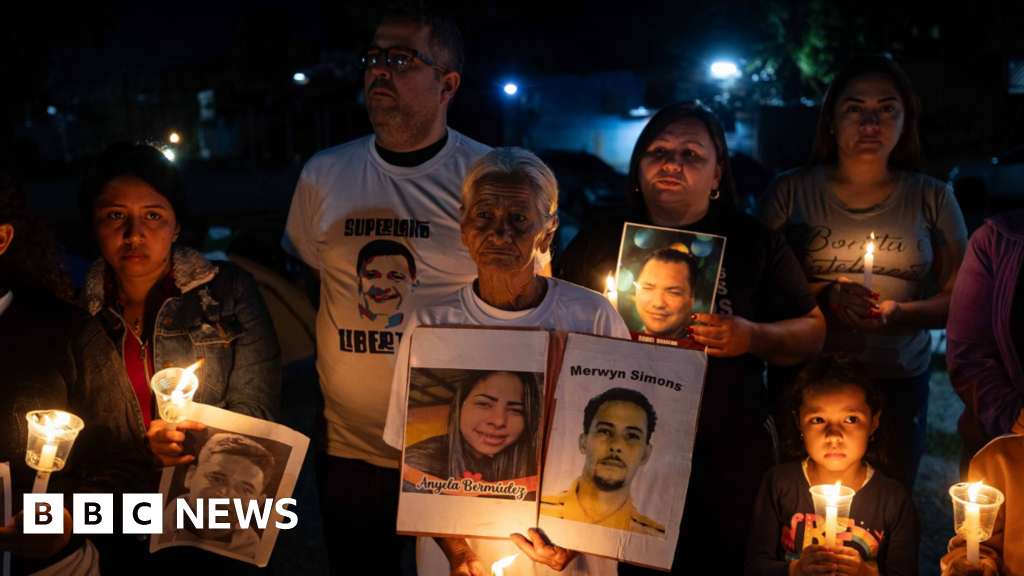
Venezuela Releases Dozens of Political Prisoners, Human Rights Group Reports

Venezuela’s Political Prisoner Releases: A Tactical Move Amid Growing International Tensions

In a striking development that underscores the ongoing geopolitical struggle between the United States and Venezuela, reports indicate that at least 80 political prisoners have been released from captivity. According to a leading Venezuelan human rights organization, these releases are largely attributed to pressure exerted by Washington, which recently seized Venezuelan President Nicolás Maduro in a covert operation in New York and took him to stand trial on drug trafficking charges. This move by the US signals a significant escalation in its approach to Bolívarian politics, aiming to destabilize the Maduro regime and shift regional power dynamics.

Since the drug-trafficking raid, Caracas has been under mounting international scrutiny. Venezuelan interim President Delcy Rodriguez claimed that more than 600 prisoners had been freed—an assertion swiftly contested by Foro Penal, a reputable human rights group, which stated that the figure has likely been inflated. Meanwhile, the group has confirmed the release of 156 political detainees since early January—many of whom remain in limbo without formal charges dropped, effectively barred from speaking publicly. Such measures highlight the Venezuelan government’s ongoing efforts to diffuse internal dissent while managing international image.

Legal limbo and suppression continue to haunt many of those released. Gonzalo Himiob, a lawyer representing Foro Penal, emphasized on social media that the number of freed prisoners might increase as verification continues. This cautious optimism comes amid accusations from human rights activists who contend that the regime’s motivation is less about justice and more about manipulating international perception. The impending phone call between Rodriguez and the United Nations High Commissioner for Human Rights reflects a fraught attempt to legitimize the releases while navigating accusations of political repression. Critics argue that the Venezuelan government has long exploited arrests to silence critics and suppress opposition—especially following the disputed 2024 presidential election, which Maduro claimed victory amid widespread allegations of fraud.

This scenario reveals a delicate geopolitical balancing act. While the US aims to weaken Maduro’s influence, its intervention risks further destabilizing Venezuela—potentially opening the door to greater chaos and regional insecurity. Analysts warn that international pressure could push Caracas to double down on authoritarian measures, using the guise of political openness as a façade for continued repression. Historically, such tactics have created a volatile environment, fostering lawlessness and deepening societal divisions. The situation remains volatile, with the weight of history pressing down; the steps taken today might echo through generations, defining whether Venezuela’s future will be marked by renewed hope or irreversible decline.

AI Breaks New Ground, Matching Human Experts in Language Analysis for the First Time

AI-Driven Breakthrough Challenges Long-Held Beliefs on Language and Reasoning

In a landmark development that could redefine the landscape of artificial intelligence and linguistic analysis, recent research from Gašper Beguš of UC Berkeley and colleagues has demonstrated that large language models (LLMs) possess an unprecedented ability to analyze language with a sophistication previously thought impossible. Challenging the longstanding view propagated by critics such as Noam Chomsky, which claimed that AI models lack genuine reasoning capabilities in language, this breakthrough signals a radical shift in disruption potential across industries relying on natural language processing (NLP).

The core of this discovery lies in the models’ ability to understand and manipulate language structures akin to those used in advanced linguistic theory. Researchers subjected several LLMs to a comprehensive linguistic test designed around Chomsky’s Syntactic Structures, focusing on complex features such as recursion and sentence diagramming. Astonishingly, at least one model surpassed expectations by accurately generating tree diagrams, resolving ambiguous meanings, and analyzing deeply nested phrases — feats that had long been considered exclusive to human linguists. This finding is more than a scientific curiosity; it signals that AI systems are rapidly approaching human-like reasoning in language, with profound consequences for innovation and disruption.

Implications for Business and Industry

As AI models achieve an understanding of language comparable to graduate-level linguistics, the implications extend far beyond academia. Industries such as customer service, content moderation, legal analysis, and even advanced AI-driven education are poised for transformation. Companies that harness these capabilities could develop smarter, more intuitive chatbots capable of understanding context and nuance at a human level, disrupting existing tools that rely on keyword matching or superficial comprehension.

  • Enhanced Reasoning: Models can now perform sentence analysis, resolving multiple interpretations simultaneously.
  • Advanced Language Processing: Recursive structures and complex syntax are now within reach.
  • Market Disruption: Traditional NLP tools could be rendered obsolete by models capable of truly understanding language.

Notably, experts such as those from Gartner and MIT’s AI labs have predicted that this evolving capability will accelerate automation across sectors and lead to a paradigm shift in how AI interacts with humans. Such advancements will demand new standards for AI transparency and control, warning of the potential for unchecked automation if not carefully managed.

Future Trajectory and Urgency

The pace of these innovations underscores an urgent need for stakeholders — from policymakers to entrepreneurs — to recognize that the future of AI in language is now being shaped. As Elon Musk and Peter Thiel have repeatedly emphasized, disruption is accelerating at an exponential rate, and remaining complacent could lead to strategic obsolescence. The breakthrough highlighted by Beguš and his team is a testament to how disruptive innovation continues to defy traditional expectations, signaling that the era of AI understanding language at a human level may be closer than anticipated.

With industry giants and startups alike racing to leverage such advancements, competitors who invest early and prioritize innovation will dominate. The question remains: are organizations prepared to navigate the rapidly shifting landscape of AI-powered language technology, or will they be left behind in the wake of transformative disruption? As the industry moves forward, one thing is clear — the race for linguistic mastery in AI has entered a new, exhilarating phase, demanding relentless innovation and strategic foresight.

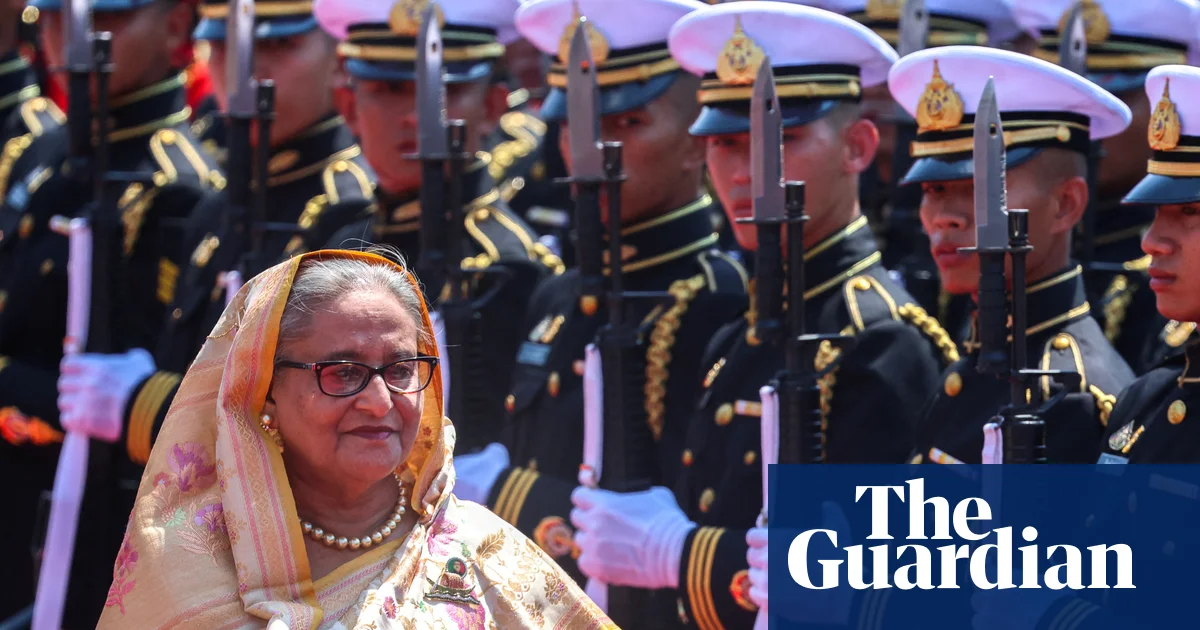
Bangladesh's Sheikh Hasina Faces Death Sentence Over Human Rights Violations
Bangladesh’s Sheikh Hasina Faces Death Sentence Over Human Rights Violations

The recent sentencing of Bangladesh’s former prime minister Sheikh Hasina to death in absentia has sent shockwaves across the global geopolitical landscape. Convicted by a Dhaka tribunal for crimes against humanity related to a brutal crackdown on student-led protests, this verdict underscores a turbulent chapter in the nation’s ongoing struggle with authoritarianism and political instability. As international institutions and human rights organizations weigh in, the case exemplifies a broader shift in how emerging democracies are navigating the preservation of justice amid internal conflicts and external pressures.

  • The tribunal accused Hasina of incitement, ordering executions, and negligence—charges rooted in her alleged direct involvement in a deadly crackdown that left up to 1,400 dead during a year-long uprising.
  • Despite her vehement denial, claiming the proceedings as a “politically motivated charade,” the verdict has ignited fierce reactions, including nationwide protests and heightened security alerts in Dhaka.
  • Her exile in India and the refusal of extradition by New Delhi reflect the complex, multi-layered geopolitics at play, where regional alliances influence justice and accountability.

From the perspective of global analysts, this case reveals a pattern of rising authoritarian tendencies cloaked under the guise of judicial reform. Historians warn that such politically charged trials risk destabilizing fragile democracies, especially when the judicial process is perceived as a tool for political retribution. The United Nations has expressed concern over the death penalty, emphasizing that international standards demand fair trials and judicial transparency. Yet, the tribunal’s transparency—broadcast live and scrutinized by observers—has not assuaged critics who see the proceedings as a spectacle designed to eliminate political rivals rather than deliver justice.

In the wider geopolitical context, India’s role remains ambiguous. While claiming neutrality, New Delhi’s refusal to extradite Hasina underscores its strategic calculus—balancing regional stability against Islamabad’s interest in destabilizing Bangladesh through influence over opposition factions. Consequently, neighboring countries are closely watching the unfolding political storm, with many fearing that escalation could destabilize the region further. With China and the United States weighing competing interests, Bangladesh finds itself caught in a geopolitical tug-of-war that could have ripple effects across South Asia and beyond.

The verdict also reaches into the societal realm, stirring deep wounds among families of the slain protesters. For many, including Golam Rahman, whose son Nafis was shot during the crackdown, justice is a long-awaited step towards catharsis. Yet, the pensive shadows of repression remain, with critics warning that a harsh, punitive crackdown might suppress dissent temporarily but exacerbate long-term instability. The upcoming election, now stripped of most opposition parties, will be a litmus test of Bangladesh’s political future—whether it will drift further into authoritarianism or attempt genuine reform amidst swirling chaos.

As Hasina’s supporters and critics ultimately face at the crossroads of history, the global community remains vigilant. The unfolding story of Bangladesh is emblematic of a world where rising nationalism, regional rivalries, and internal strife threaten to rewrite the narrative of democracy and justice. In this moment of palpable tension, it is clear that the repercussions of this verdict—whether a step towards justice or a catalyst for further turmoil—will resonate far beyond the boundaries of Dhaka, shaping the course of history in South Asia and challenging the foundations of international law itself. Only time will reveal whether Bangladesh’s future will be molded by the rule of law or the relentless tides of political upheaval, as a nation stands on the precipice of its own destiny, teetering between the shadows of oppression and the hope for lasting change.

Social Media Auto Publish Powered By : XYZScripts.com