Matox News

Truth Over Trends, always!

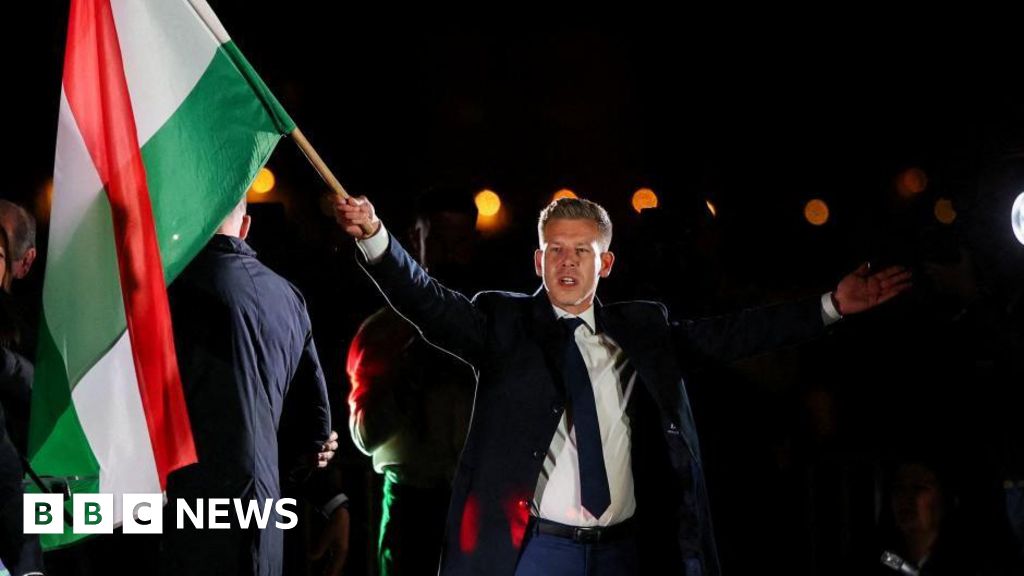
Orbán's grip broken as Péter Magyar's landslide reshapes Hungary
Orbán’s grip broken as Péter Magyar’s landslide reshapes Hungary

Hungary’s Pivot and the Erosion of EU Unity

Once a vocal critic of Soviet occupation, Hungary under Viktor Orbán has shifted dramatically in its geopolitical stance. Historically, Orbán’s rhetoric reflected a disdain for authoritarianism rooted in Russia’s past dominance over Eastern Europe. Yet, in recent years, Hungary has aligned more closely with Russian President Vladimir Putin, fostering an environment where strategic interests have overshadowed post-Cold War democratic values. This realignment is underscored by Orbán’s vehement support for Russian energy supplies, especially the continued importation of cheap Russian oil and petrol, which has ignited discontent across the European Union (EU). The EU’s efforts to mitigate reliance on Russian energy—a move deemed critical for national security—have been undercut by Orbán’s policies, effectively challenging the bloc’s unity and resilience.

The support Orbán offers Russia is not merely about energy; it symbolizes a broader geopolitical posture that resists EU-led efforts to confront Russia’s military actions in Ukraine. In defiance of EU policies, Hungary has reneged on an agreement to provide a €90bn financial loan to Ukraine, a stark demonstration of the country’s prioritization of pragmatic ties over collective European solidarity. International analysts warn that such unilateral decisions weaken the collective EU response to Moscow’s geopolitical ambitions and embolden Russian efforts to destabilize Eastern Europe further. Historians caution that Hungary’s current trajectory reflects a broader resilience of revisionist powers challenging Western consensus, raising fears of a fragmented Europe unable to meet the threats posed by resurgent Russia.

The International Ripple Effect and the Erosion of Democratic Norms

The international fallout of Hungary’s policies extends well beyond Europe. Organizations like NATO and the European Union face mounting pressure to reconcile diplomatic engagement with a member that appears to drift away from shared democratic principles. The EU’s internal divisions are increasing as Hungary’s stance complicates efforts to present a united front against authoritarian expansion. Global security analysts, including those at the International Crisis Group, warn that Hungary’s shift signals a dangerous precedent—one where economic pragmatism and nationalist narratives threaten to unravel the foundations of Western alliances.

Furthermore, Hungary’s rapproachment with Russia raises questions about the future geopolitical landscape in Eastern Europe and the North Atlantic alliance. The decisions of governments like Orbán’s have profound consequences, affecting not only regional stability but also shaping the broader contest between Western liberal democracies and resurgent authoritarian regimes. As history reveals, the choices nations make today set the stage for future conflicts and alliances—lessons that many experts believe are being rewritten with alarming speed. Leaders and analysts alike recognize that Hungary’s current course, often justified as national sovereignty or pragmatic economics, may well awaken a new era of geopolitical instability rooted in the failure of old alliances to adapt swiftly to emerging threats.

The Weight of History and the Future in the Balance

As the world watches these unfolding developments, the legacy of Hungary’s leadership hangs in the balance. The decisions made in Budapest reverberate through international corridors and influence the fates of neighboring nations. The specter of history—marked by the fall of empires and the rise of new powers—looms large. Will Hungary’s pragmatic diplomacy become a gateway to renewed cooperation, or will it entrench division and conflict? The global community faces a pivotal moment; one where the decisions of today echo into a future fraught with uncertainty, and where the stakes are nothing short of the preservation of order in a turbulent, reshaping world. As history yet unfolds, the next chapters will reveal whether the bonds of allyship and shared ideals can survive the relentless march of geopolitical realignments or whether they will be forever fractured, leaving behind a scarred continent in a world increasingly defined by shifting allegiances and unresolved conflicts.
Hungary defends national interest by guarding gas pipeline, rejects false-flag accusations

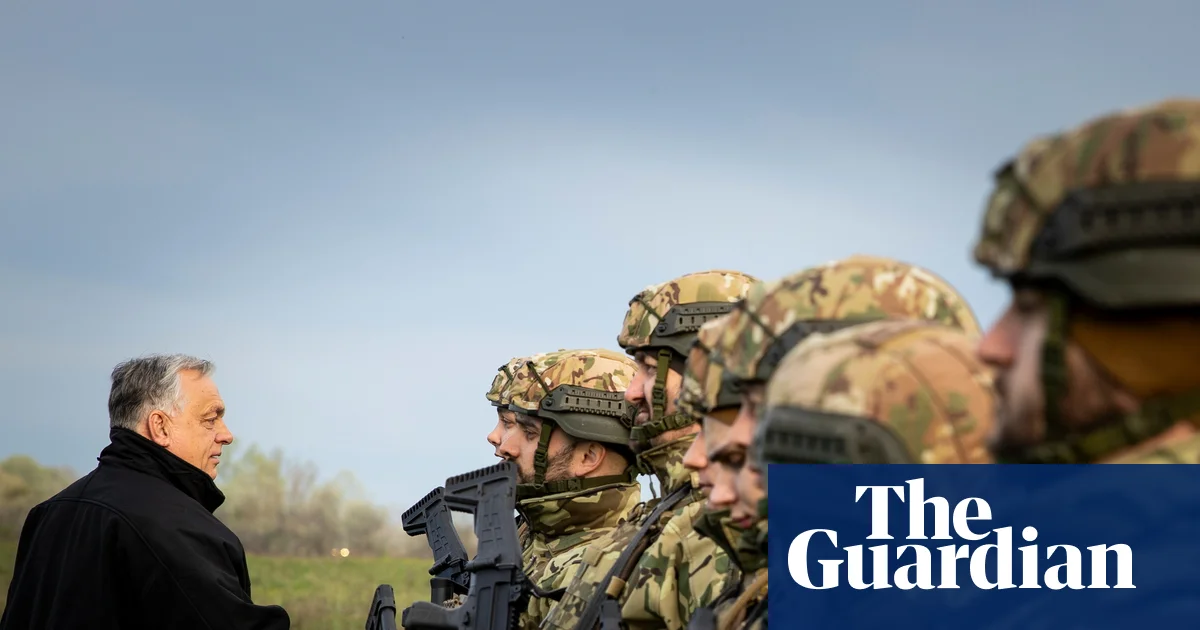
In a striking development that underscores the fragility of central Europe’s geopolitical landscape, Hungary has officially placed its critical gas pipeline along the Serbian border under military protection amid escalating tensions and accusations of a false-flag operation. Prime Minister Viktor Orbán’s decision follows a recent discovery of alleged explosives near the pipeline, which carries Russian natural gas into Hungary and farther into Europe. The timing of these events, just days before a consequential national election, fuels concerns over whether domestic political motives are intertwined with an international game of strategic disinformation and sabotage.

Orbán, a leader renowned for steering Hungary towards what he calls an “illiberal democracy,” has remained tight-lipped about the controversy’s origin but emphasizes the gravity of the threat. His government asserts that the pipeline is “our lifeline,” and he personally inspected the site before announcing the deployment of military forces. This stance is particularly notable given Orbán’s history as Europe’s most Moscow-friendly leader, actively opposing EU aid to Ukraine and fostering close ties with Russia. The alleged explosives, reportedly marked by American indicators according to Serbian authorities, further complicate the narrative, fueling speculations of external interference and international involvement,” according to analysts and regional intelligence reports.

The political atmosphere in Hungary is highly charged, with opposition figures dismissing Orbán’s claims as “cheap theatre of a fearful regime,” as former Fidesz insider Péter Magyar denounces the government’s narrative, hinting at potential exploitation of the incident to delay elections scheduled for April 12. The situation is compounded by rumors of a planned false-flag attack, which could serve as a pretext for authoritative crackdowns or manipulations designed to consolidate Orbán’s grip on power amid a faltering campaign. Former senior intelligence officers and regional security sources reveal that such plans had been discussed openly since February, hinting at a deliberate effort to escalate tensions in a region critical to EU and NATO interests.

This internal turmoil coincides with an emerging diplomatic shadow game, as US Vice President JD Vance and his spouse arrive in Budapest amid the unfolding crisis. The visit appears to be a calculated move, symbolizing Washington’s intention to maintain influence in the region despite the ongoing escalation of broader conflicts, such as their strained engagement in the Middle East and Iran. Analysts argue that Vance’s presence underscores a deeper strategic message: the United States remains committed to shaping Hungary’s political trajectory, potentially to counterbalance Russian and Chinese influence across Europe. “Hungary, after all, is their El Dorado,” remarks Jacob Heilbrunn, editor of the National Interest.

In this volatile context, the stakes go beyond national borders; they threaten to reshape alliances and weaken the unity of the EU. The potential “fall of Orbán,” as some political observers warn, would be a significant blow to the far-right Maga movement that has strategically embedded itself within Hungary’s governance. Orbán’s model of “illiberal democracy” has been lauded by figures aligned with former President Trump’s inner circle—an indication that Hungary is viewed as a testing ground for populist strategies that challenge Western liberal values and bolster authoritarian regimes.

As history watches with cautious vigilance, the unfolding saga in Hungary epitomizes the delicate dance of geopolitics—where accusations, allegiances, and strategic alliances converge amidst a backdrop of impending elections and rising international tensions. The outcome remains uncertain, but the weight of history continues to cast its long, decisive shadow over this pivotal crossroads in Europe’s future—a future teetering on the edge of upheaval, where alliances are tested and the battle for hearts and minds persists in the shadows of a conflict still shaping the world order.

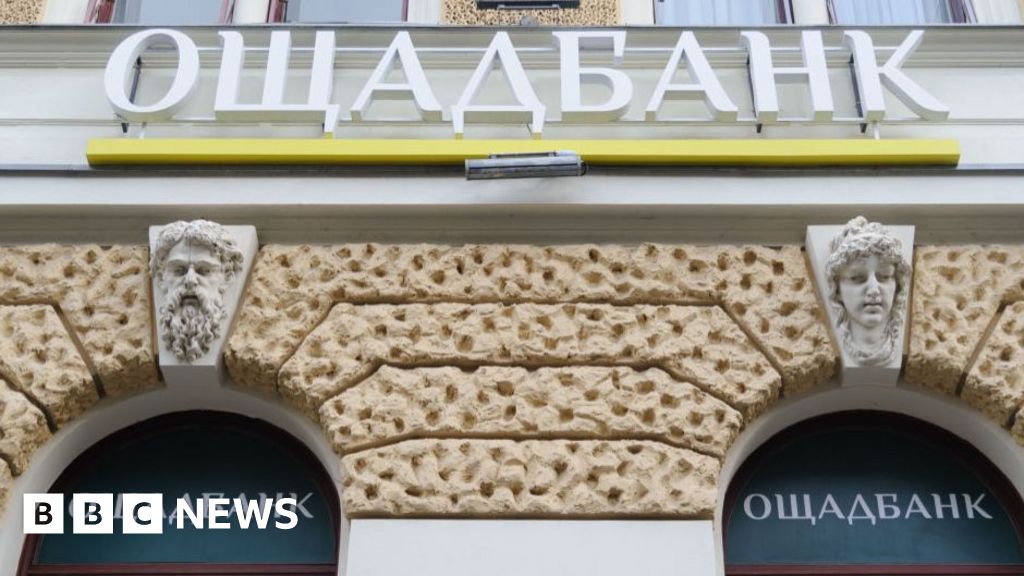
Hungary to Expel Ukrainian Bank Employees Amid Escalating Tensions with Kyiv

In a development that threatens to reshape regional stability, Hungary has announced the detention of several workers on suspicion of involvement in a large-scale money laundering scheme. This move comes amid a rapidly escalating diplomatic dispute, with the Hungarian government asserting that the accusations are both credible and deserving of stern action, while critics suggest the situation may be entangled in broader geopolitical tensions.

The situation has ignited a fierce row between Hungary and the country or countries implicated in the allegations, with the Hungarian authorities asserting that the detained individuals were linked to organized crime networks operating across national borders. This stance reflects a broader pattern of Hungary adopting a stringent approach to illegal financial activities, a stance often justified as a safeguard for national sovereignty and economic security. However, the timing and framing of the arrests have fueled suspicions of political motivations, especially as international actors weigh their responses.

The international community, including organizations such as the European Union and the United States, is closely watching the unfolding crisis. Analysts from institutions like the International Monetary Fund warn that unchecked corruption and criminal enterprise in Hungary could threaten the financial stability of the entire region. Meanwhile, some observers argue that this incident signals a deeper geopolitical pivot, with Hungary asserting its independence amidst growing influence from Russia and China. The sharp rhetoric and arrests represent not just a fight against crime but also a symbolic assertion of national sovereignty in an era of competing global powers.

Historian and geopolitical analyst Dr. Mark Reynolds emphasizes that such internal security measures often serve as a reflection of larger strategic shifts. “This is a pivotal moment—these actions are more than just law enforcement,” he notes. “They are about how nations perceive threats to their sovereignty and economic stability in a world where international alliances are in flux.” As the European Union demands transparency and accountability, Hungary’s stance can be seen as a broader assertion of its sovereignty, often in defiance of what it perceives as external interference. The consequences of this confrontation could extend far beyond the immediate criminal case, potentially impacting Hungary’s European integration and its position within NATO.

As the world watches, the unfolding crisis underscores the fragile balance of international power. The detained workers, the diplomatic fallout, and the geopolitical accusations are more than just headlines—they are part of a complex web of influence and resistance. The decisions made today will shape not only Hungary’s internal policies but also the broader geopolitical landscape, reminding all nations that the struggle over sovereignty, influence, and security remains the defining challenge of our era. The story is still being written, and the pages ahead will determine whether this clash signals a new chapter of cooperation or a deeper fracture in the global order—an enduring echo of history’s ongoing battle for dominance and independence.

Social Media Auto Publish Powered By : XYZScripts.com



