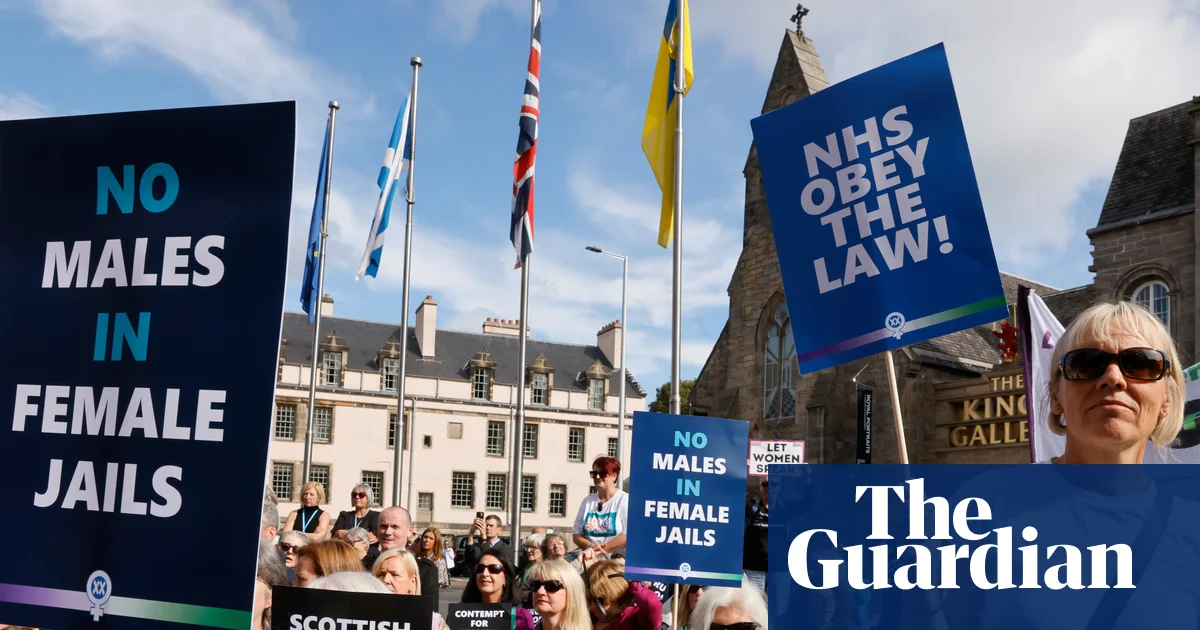

Amid ongoing societal debates, the Scottish government’s stance on housing transgender women in prisons reflects deeper struggles over identity, safety, and societal values. This policy controversy, pushed into the courts by For Women Scotland, challenges the government’s guidance that advocates housing trans prisoners according to individual risk assessments. Critics argue that a blanket rule—placing all transgender women in men’s facilities regardless of individual circumstances—constitutes a “fundamental denial” of their lived identity and diminishes efforts toward inclusive rehabilitation. At the heart of this social tension lies a tension between respect for gender identity and concerns over the safety and integrity of women-only spaces, a debate that reverberates beyond Scotland’s borders and touches the very fabric of families, communities, and institutions.
Historically, sociologists like Esther Dugh have underscored how social constructs surrounding gender profoundly influence institutional policies. The controversy over prison placement exposes how demographic shifts and the acknowledgment of transgender rights challenge traditional notions of biological sex that many communities still hold dear. The Scottish court’s recent decision, which interprets the definition of “woman” in legal terms primarily through *biological sex,* represents a significant moment of cultural tension. It illustrates a society caught between evolving social norms and the need to uphold safety and moral integrity within vulnerable populations. The debate isn’t merely legal; it’s a reflection of ongoing struggles as society navigates what it means to respect individual identity against the backdrop of communal safety.
Furthermore, the debate underscores how social issues directly affect *families, education, and communities*. As Karen Titchener, the newly appointed patient safety commissioner, voiced concerns about the safety of female patients, questions arose about the wisdom of extending single-sex wards in mental health care amid this controversy. These challenges reveal that families and communities bear the consequences of policy decisions, often feeling caught in the crossfire of ideological conflicts. As social commentator Lisa Freeman points out, “When social norms are tested and institutions are pushed to their limits, it is often the most vulnerable—women, children, and the mentally ill—who suffer the most.” Such observations highlight that the real social impact extends beyond legal nuances, shaping the stability and moral fabric of society itself.
As society grapples with these complexities, the challenge lies in balancing individual rights with collective safety. Historically, social change has often been driven by the voices of the communities most affected, but in this case, the debate underscores a broader need for compassionate dialogue and policy innovation. Perhaps, as sociologists like Charles Morgan suggest, the future rests on creating inclusive spaces that recognize both the dignity of individual identity and the necessity of safe, community-centered solutions. Society stands at a crossroads where the decisions made today will echo in future generations, shaping the very understanding of morality and social cohesion. Ultimately, this controversy invites society to reflect: in our quest for progress, can society foster a unity that respects diversity yet safeguards the vulnerable? And in doing so, might we discover anew the true meaning of societal strength, built on respect, responsibility, and hope for a more compassionate tomorrow?