Matox News

Truth Over Trends, always!

Please upload the feed content you’d like me to fact-check, and I’ll craft the headline accordingly.

Glyphosate and Cancer: A Complex Scientific Debate

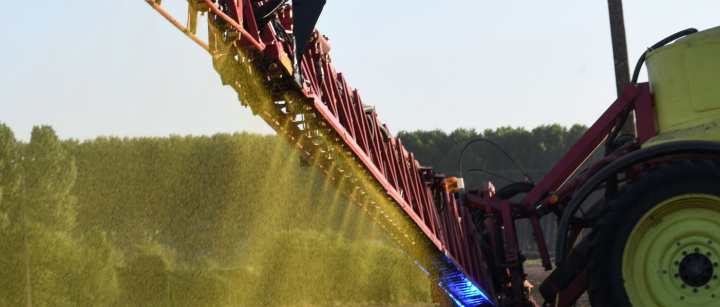
Recent political moves, including an executive order promoting the production of glyphosate-based herbicides, have reignited a fierce debate over whether this widely used weedkiller poses a cancer risk to humans. Some politicians and activists, particularly within the Democratic camp, assert that glyphosate is carcinogenic, citing studies and reports that link it to blood cancers like non-Hodgkin lymphoma (NHL). Conversely, regulatory agencies such as the U.S. Environmental Protection Agency (EPA), the European Food Safety Authority (EFSA), and Canada’s health officials have consistently concluded that glyphosate is unlikely to pose a cancer threat at typical exposure levels. This stark divergence of opinion illustrates the complexity inherent in the scientific assessment of glyphosate’s safety.

Claims that glyphosate causes cancer have some basis in studies, but the overall body of scientific evidence remains inconsistent. Some peer-reviewed studies have identified associations between glyphosate exposure and increased risks of certain cancers, including NHL, particularly in agricultural workers. For example, the 2017 NIH-funded Agricultural Health Study (AHS), which followed over 54,000 pesticide applicators, found no statistically significant link between glyphosate use and NHL or other cancers—an outcome that supports the conclusions of major regulatory agencies. Dr. David Eastmond, a respected toxicologist and member of a WHO/FAO expert panel, has pointed out that both human and animal studies on glyphosate are “messy,” often yielding conflicting results that complicate definitive conclusions.”

Assessing the Evidence: Regulatory Bodies Versus Scientific Divergence

Globally, the scientific consensus is varied. In 2015, the International Agency for Research on Cancer (IARC), part of the WHO, classified glyphosate as “probably carcinogenic to humans,” citing animal studies showing tumor development and limited evidence in humans. This classification contrasts with assessments from the EPA, EFSA, and other agencies that have found no clear carcinogenic hazard at typical exposure levels. Proponents of stricter regulations argue IARC focuses on hazard identification without considering real-world exposure, while regulators evaluate risk based on realistic scenarios, leading to different conclusions.

The controversy extends into mechanistic data as well. IARC emphasizes evidence of genotoxicity—glyphosate’s potential to damage DNA—while regulatory agencies have found limited or inconsistent evidence supporting such effects in mammals under typical exposure conditions. This divergence partly stems from different interpretations of laboratory animal data, with some studies indicating potential carcinogenic mechanisms and others emphasizing the high doses or methodological limitations involved. Scientific expert Laura Beane Freeman from the National Cancer Institute has highlighted that epidemiological and mechanistic studies often produce “messy” and interpretively challenging results, which fuels ongoing debate.

Hazard Versus Risk: The Real-World Impact

The key distinction in assessing glyphosate’s safety lies between hazard identification (whether glyphosate can cause cancer in theory) and risk assessment (the likelihood it poses a danger given actual exposure levels). Most people worldwide are exposed to trace amounts of glyphosate residues in food, but regulatory agencies have determined these levels are well below thresholds linked to adverse health effects. Monitoring data from the CDC and other organizations have consistently shown most individuals have detectable glyphosate in urine, yet these levels do not correlate with increased cancer incidence. William R. Moomaw, environmental policy expert, emphasizes that “trace amounts in food are not evidence of harm,” pointing out that toxicity at low doses remains unproven in humans.

However, opponents argue that even small exposures could be risky, especially for vulnerable populations. The 2025 rat study, which reported increased cancer rates at regulatory limit doses, has been criticized for its unusual design and restricted data sharing. While some researchers, like Philip Landrigan, interpret such studies as indicative of potential hazard, regulatory agencies maintain that high-dose animal studies do not necessarily translate into risks at human dietary exposure levels.

Conclusion: The Responsibility of Truth and Science in Democracy

In the ongoing debate over glyphosate, the persistent divergence between regulatory evaluations and certain scientific and activist claims underscores a vital truth: solid, transparent science must underpin our policies and public understanding. As voters and responsible citizens, it is essential to distinguish between hazard identification and actual risk, recognizing the importance of well-conducted, independent research. Science’s role is to illuminate, not to obfuscate, guiding democracy towards informed decisions that protect both health and economic vitality. Only through unwavering commitment to truth and rigorous scientific standards can we ensure that policies reflect reality, safeguarding our freedoms and future.

Please upload the feed content you’d like me to fact-check, and I’ll craft the headline accordingly.

Fact-Checking Trump’s Claims on Iran Nuclear Deal and Nuclear Progress

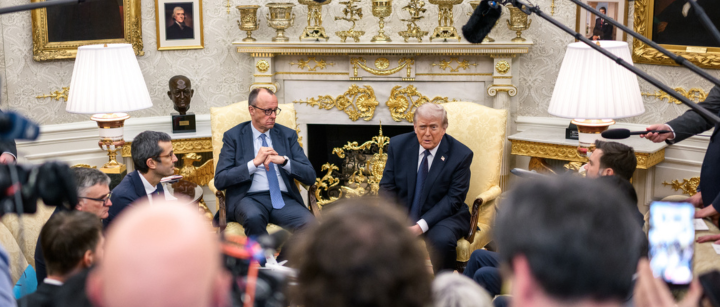
Recently, former President Donald Trump has asserted that the 2015 Iran nuclear deal, known as the JCPOA, was “a road to a nuclear weapon” and that Iran “would be sitting with a massive nuclear weapon three years ago” if the U.S. had not withdrawn in 2018. These claims are central to his narrative that exiting the deal prevented Iran from becoming a nuclear threat. However, an in-depth review of expert opinions, international reports, and historic developments reveals that Trump’s assertions are somewhat misleading and warrant closer scrutiny.

The JCPOA, negotiated during the Obama administration and supported by the then-P5+1 nations—China, France, Russia, the United Kingdom, and the United States—was designed to impose stringent restrictions on Iran’s nuclear program in exchange for sanctions relief. According to the Arms Control Association, the deal **placed limits on Iran’s uranium enrichment** (restricting it to 3.67%) and required the dismantling of

two-thirds of Iran’s centrifuges, with international inspections ensuring compliance. These measures were intended to extend Iran’s “breakout time”—the period it would need to produce enough fissile material for a nuclear weapon—to at least a year, a buffer that approximately tripled during the deal’s enforcement, according to the Center for Arms Control and Non-Proliferation.

In response to Trump’s claims that withdrawing from the JCPOA prevented Iran from acquiring nuclear weapons, several experts dispute the accuracy of his timeline. Laura Rockwood, senior fellow at the Vienna Center for Disarmament and Non-Proliferation, observed that “Iran was able to advance its nuclear program to the level it was before the 12-Day War last June not because of the JCPOA, but because of the U.S. withdrawal.” Similarly, Richard Nephew, a senior researcher at Columbia University and former State Department Iran envoy, highlighted that “Trump’s decision to withdraw in 2018 significantly accelerated Iran’s nuclear program”. Both experts emphasize that the deal’s restrictions were instrumental in delaying Iran’s nuclear capacity, and its collapse has led to a faster pathway toward potential nuclear armament.

The Impact of Withdrawal on Iran’s Nuclear Capabilities

The data from the International Atomic Energy Agency (IAEA) supports the consensus that the collapse of the JCPOA resulted in Iran resuming the accumulation of highly enriched uranium, accelerating its nuclear program. Before the U.S. withdrew, Iran’s stockpile of uranium enriched to 60% was under rigorous limits. After withdrawal, Iran exceeded those limits, and stockpiled fissile material at a pace that experts say was unprecedented during the deal’s enforcement.

Supporters of the JCPOA, such as Daryl Kimball of the Arms Control Association, stress that the agreement effectively extended Iran’s “breakout time” from mere weeks to over a year. Post-withdrawal, the Center for Arms Control and Non-Proliferation estimates that Iran’s breakout time shrunk back to just a few weeks, a stark reversal of the progress achieved during the agreement. This rapid acceleration underscores that, without the constraints of the JCPOA, Iran’s pathway to a nuclear weapon has become considerably more accessible.

Could Iran Have Developed a Bomb Despite the JCPOA?

While no international agreement can eliminate the risk of a nation pursuing nuclear weapons entirely, the consensus among experts is that the JCPOA significantly curtailed Iran’s nuclear capabilities. According to the Arms Control Association, the deal **not only limited uranium stockpiles and level of enrichment but also mandated comprehensive inspections** for up to 25 years on some measures. These rigorous safeguards aimed to detect violations early and impose consequences.

Critics, including Trump, have argued that “many elements” of the deal loopholes—such as sunset provisions—would allow Iran to resume weapons-grade enrichment decades later. However, Laura Rockwood points out that “Iran simply would not have been able to enrich to the level of 60% or to accumulate enough fissile material for a weapon” if the JCPOA had remained effective. The deal’s design intentionally maintained restrictions well beyond 15 years, creating an extended window of oversight and control.

The Role of Political Decisions and International Enforcement

Amid ongoing geopolitical debates, it’s clear that political choices—most notably Trump’s 2018 withdrawal—have directly influenced Iran’s nuclear trajectory. While Iran could potentially violate the restrictions, experts agree that the JCPOA significantly hampered their ability to produce nuclear weapons “for at least 15 years,” providing critical time for diplomacy and oversight, as detailed by The Council on Foreign Relations.

In conclusion, the narrative that the JCPOA was inherently “a road to nuclear weapons” is contradicted by expert analysis and international monitoring data. Removed constraints and diminished oversight have allowed Iran to resume its nuclear activities at a faster rate, underscoring an essential truth: transparency, verified restrictions, and responsible policy are the backbone of a robust democracy that seeks to prevent nuclear proliferation and ensure national security. True information and accountability are vital—especially for voters and policymakers—to safeguard our democratic process and global stability.

Social Media Auto Publish Powered By : XYZScripts.com


