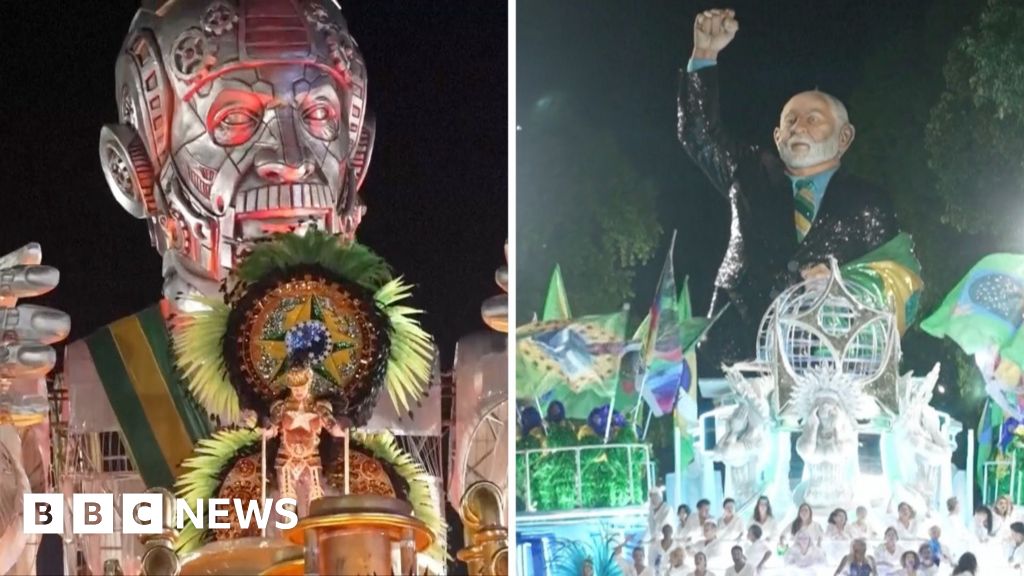

In an extraordinary display of cultural expression intertwined with raw politics, Brazil’s vibrant Rio de Janeiro Carnival once again served as a stage where history and modern conflicts collide. The opening parade, known for its colorful spectacle and cultural showcases, featured a tribute to President Luiz Inácio Lula da Silva that has stirred intense debate both domestically and internationally. The samba school Acadêmicos de Niterói presented a visual narrative tracing Lula’s rise from impoverished childhood in the Brazilian northeast to his influential decades as a metalworker, union leader, and ultimately, leader of the nation. Yet, despite its cultural significance, this tribute was notably awarded last place in the competition, signaling underlying tensions within Brazil’s political climate as the October presidential election looms large.
Observers highlight that the timing of the tribute has drawn criticism from opposition factions who argue it could be an early electioneering tactic. Critics contend that publicly honoring Lula during such a politically charged season blurs the lines between cultural expression and campaign manipulation, potentially violating campaign rules designed to ensure electoral fairness. As Brazil’s opposition groups gear up for a highly contested ballot, the controversy underscores the fragile state of democracy in a nation deeply divided along ideological and economic lines. Some international analysts warn of the broader geopolitical impact—Brazil’s internal politics are increasingly seen as a bellwether for regional stability in Latin America, with Lula’s presidency being scrutinized for its potential to shift alliances and regional diplomatic strategies.
Meanwhile, another samba school, Unidos do Viradouro, claimed victory in the carnival’s competition with a tribute to their legendary drum director, further exemplifying how cultural events in Brazil now serve as proxies for larger societal debates. The symbolism embedded within these performances is not lost on international political observers, who note that carnival — far from just entertainment — has become a mirror reflecting the nation’s internal struggles. Scholars from prominent think tanks and the United Nations have analyzed how such displays influence public perceptions of leadership, governance, and national identity.
As the world watches Brazil’s vibrant streets and the unfolding political saga beneath its dazzling costumes, the stakes extend beyond entertainment. The decision to honor Lula publicly amid mounting allegations of electoral interference signifies a potential turning point in Brazil’s democratic journey, one that could resonate across the continent. As history continues to unfold in samba beats and political rhetoric, the outcome of Brazil’s October elections may yet redefine the country’s trajectory—its path a narrative written by both the voices inside its borders and those observing from afar. In the shadows of Rio’s carnival festivities, the weight of history quietly awaits its next act, reminding the world that at the heart of this spectacle lies a nation at a crossroads—one where every decision reverberates with the potential to alter the course of history itself.