Matox News

Truth Over Trends, always!

Three Youths Nabbed in India Over Major $800K Bank Robbery

Indian Authorities Thwart Major Heist, Underscoring Growing Security Challenges

In a dramatic display of law enforcement agility, India recently averted a significant security breach that could have had profound economic repercussions. A daring heist in Bengaluru, involving armed men posing as Central Bank officials, resulted in the theft of approximately 70 million rupees ($800,000). This incident—marked by meticulous planning and bold execution—sheds light on the complex security vulnerabilities confronting not only India but many nations striving to protect their financial infrastructure amid a rising tide of organized crime. The rapid police response and subsequent arrest of three suspects reflect a resolve to combat such threats, but the case also highlights the ongoing need for global intelligence sharing and improved security protocols.

The heist unfolded in broad daylight, with perpetrators executing a calculated deception by impersonating authorities, thus exploiting public trust and procedural complacency. According to authorities, the gang changed vehicles, employed fake registration plates, and targeted locations with minimal CCTV coverage—an indication of their sophistication and understanding of security gaps. The suspects, including a former employee of a cash transport company and a police constable, highlight a concerning nexus of insider involvement and criminal enterprise. Investigations are still ongoing, with police officials emphasizing the importance of tracking down the remaining stolen funds and dismantling the broader network behind the operation. Analysts warn that such brazen attacks expose systemic weaknesses that could inspire copycat crimes across India and beyond.

This incident also raises critical questions about the regulation and monitoring of cash transit operations. Experts and international organizations, including the World Bank and regional security analysts, have raised alarms on the laxity in compliance and oversight, which criminals exploit to conduct high-stakes robberies. The authorities’ focus on reviewing standard operating procedures—such as the routes taken by cash vehicles and their timing—points to a necessary strategic shift. If unchecked, similar tactics could be adopted elsewhere, threatening financial stability in emerging markets and undermining confidence in the banking sector. The interconnected nature of modern crime requires multinational cooperation and intelligence sharing to prevent these breaches from escalating into larger, destabilizing threats.

As India grapples with this internal security threat, the broader geopolitical landscape is also shifting. The incident underscores how organized crime, sometimes aided by corrupt officials, can destabilize economies and threaten national sovereignty. Historically, analysts like Dr. Lisa Chen from the International Security Institute have warned that such crimes are often intertwined with larger geopolitical ambitions, including funding insurgencies or destabilizing neighboring nations. The arrest of the police constable involved demonstrates a troubling challenge: the infiltration of criminal elements into the very institutions meant to safeguard societal stability. Runs on cash security protocols and inter-state coordination are indications that scalable, international-level police reforms are imperative for maintaining national integrity.

The Boundary of Justice and the Unfolding Struggles Ahead

Bangladesh’s latest security breach provides a stark reminder to the world that while police actions may temporarily restore order, the root causes of organized crime are far from eradicated. This incident could be a harbinger of more daring operations, especially as criminal syndicates become increasingly sophisticated and connected across borders. The relentless efforts of law enforcement agencies worldwide will determine whether this is merely a blip or part of a dangerous trend threatening the stability of entire regions. As historians and security experts observe these developments, one thing remains clear: the battle for security, sovereignty, and societal resilience is ongoing, and history’s next chapter is yet to be written.


Should India Count Castes? Debating the Impact on Youth and National Unity

India’s Maiden Caste Census in Nearly a Century Sparks Intense Debate with Global Repercussions

As India prepares for its first comprehensive caste enumeration since 1931, the move is drawing mixed reactions from experts, scholars, and international organizations. Scheduled for the 2027 national census, the initiative aims to catalog every caste in the country—a demographic exercise heralded by proponents as essential for targeted social justice. Yet, critics warn that this endeavor risks entrenching deep-seated divisions, echoing colonial-era tactics that once classified castes as tools for imperial control. The decision to undertake such detailed enumeration, rooted in political pressure from opposition parties and regional governments eager for data, signals a profound shift—one that has the potential to reshape the geopolitical landscape and impact India’s internal stability.

Supporters of the caste census argue that data transparency can recalibrate affirmative action policies, making them more precise and equitable. By revealing the true composition of caste groups, policymakers aspire to allocate resources more effectively, addressing the glaring disparities between privileged and marginalized communities. Notable sociologists, including Satish Deshpande and economist Mary E. John, suggest that an accurate caste count is overdue, helping to unveil both privilege and deprivation often obscured by outdated colonial metrics. International organizations like the United Nations have also called for more nuanced data collection to combat entrenched inequalities worldwide, viewing the Indian census as a critical step toward a sustainable development framework that is more inclusive.

However, the project is far from without controversy. Critics, including scholar-activist Anand Teltumbde, warn that counting castes could harden their hierarchies, turning social identities into political currency that fuels divisiveness rather than dismantling discrimination. Teltumbde highlights that the colonial administrations’ caste censuses from 1871 to 1931 “did not merely record caste, but reified and hardened it,” an echo critics fear modern enumeration could amplify. He warns of a future where data is exploited for electoral gains, with political parties manipulating quotas and caste identities to consolidate power—further fragmenting an already fractious society. This perspective echoes the vision of B.R. Ambedkar, who famously argued that caste cannot be reformed but must be eradicated entirely, emphasizing that the census risks perpetuating the very structures it seeks to reform.

Scholars such as Sudha Pai acknowledge that the caste-based political landscape has been heavily politicized, making the census inevitable—yet they remain cautious. Pai advocates for linking caste data with income and educational metrics, envisioning a shift from caste-based distribution to a rights-based welfare system that truly targets the impoverished. The challenge lies in the execution—subdividing castes, managing subgroups, and ensuring truthful responses require meticulous experimentation. Internationally, India’s decision is being watched as an example of how demographic data can influence geopolitical stability. Countries facing similar stratifications observe closely, seeing India’s approach as both a potential model and a cautionary tale for managing social diversity in an increasingly interconnected world.

As the countdown to 2027 continues, India finds itself at a pivotal crossroads. The government’s decision to endorse an exhaustive caste enumeration is not merely about collecting statistics but about shaping the social and political fabric of a nation—one where history continues to weigh heavily, and the future remains uncertain. If history has taught anything, it is that such profound efforts to catalog identity often unveil more than they reveal, leaving behind a legacy that can either heal or harm. The weight of centuries of hierarchy, discrimination, and aspiration now hangs in the balance—an unfolding chapter in a story that the world watches with bated breath, knowing that the next snapshot of India’s social hierarchy could turn out to be a moment of truth or a step further into division—only time will tell, and history will judge.

Google Maps gets a major boost for India with Gemini updates and safety alerts

Google Elevates Maps with Gemini AI Integration in India: A Game-Changer for Digital Navigation

In a bold move to disrupt traditional navigation paradigms, Google has begun integrating its innovative Gemini AI technology into Google Maps, specifically tailored for the Indian market. This strategic deployment signifies a major leap in AI-powered navigation, transforming how millions of users plan routes, access real-time safety alerts, and explore localities. The rollout, which commenced in the U.S. and is now expanding to India, underscores Google’s relentless drive to lead in disruption and innovation—with national localization and contextual awareness at its core.

By embedding Gemini—a sophisticated generative AI model—into Maps, Google is redefining user interactions. The new features include contextual route suggestions, hands-free AI assistance, and comprehensive location details. Miriam Daniel, Google Maps’ vice president, emphasizes that localization extends beyond language translation; it involves adapting to India’s unique geographical, linguistic, and cultural landscape. The service will support nine Indian languages initially, ensuring broad accessibility while enhancing the navigational experience. This approach enables hyper-personalized guidance, empowering users with smarter, more intuitive routes.

The business implications of this innovation are profound. Google’s partnership with India’s National Highways Authority of India (NHAI) exemplifies a strategic move to harness near real-time data for enhanced safety. New features include accident-prone zone alerts supported by visual and audio warnings, designed in collaboration with local authorities. Such safety-centric updates are not only crucial for user trust but represent a strategic shift toward integrating AI with infrastructure data—ushering in a new era of disruption in transportation safety systems. Furthermore, proactive notifications about route disruptions and delays, extended to major urban centers like Delhi, Mumbai, and Bengaluru, position Google Maps as an indispensable tool for urban mobility—reshaping the very business model of how navigation services generate revenue and user engagement.

While these technological strides highlight Google’s aggressive innovation agenda, concerns over reliability persist—in particular, instances like the tragic accident involving an unfinished bridge in Uttar Pradesh have cast shadows over trust in digital navigation systems. Google’s proactive approach, including partnerships with local agencies to improve data accuracy, exemplifies an industry-wide recognition that trust and safety remain critical to long-term disruption. Industry analysts such as Gartner suggest that this fusion of AI and real-world data signifies a pivotal shift, driving a new wave of smart, adaptive infrastructure—though not without inherent risks. As AI continues to evolve, so does the industry’s need to address safety, accountability, and transparency standards.

Future Outlook: The Race Toward Ubiquitous, AI-Driven Navigation

Looking ahead, the integration of Gemini AI into Google Maps signals a seismic shift in how digital navigation intersects with daily life. With ongoing enhancements like voice-supported flyover navigation and speed limit alerts, Google is setting the stage for a future where AI doesn’t just assist but actively manages and predicts real-world conditions. Analysts from MIT and industry veterans like Peter Thiel underscore that this trajectory—marked by rapid innovation and disruptive potential—requires startups and incumbents alike to accelerate familiarity with AI-driven solutions or risk obsolescence.

This year’s developments underscore an undeniable trend: The future belongs to those who leverage AI to transform infrastructure, safety, and mobility. Market shifts favor proactive adaptation, and companies that ignore this wave risk falling behind. Awaiting just beyond the horizon are enhanced autonomous systems, smarter cities, and seamless, real-time digital-physical integration. As Google’s initiative demonstrates, the imperative is clear: disruption is accelerating, and the race to dominate the AI-powered landscape is more urgent than ever.

Air India crash survivor: "I'm the luckiest guy alive"
Air India crash survivor: “I’m the luckiest guy alive”

Unfolding Tragedy Sparks Broader Geopolitical Reflection

In a tragic incident that has sent shockwaves through the international community, a **Boeing 787** flight en route to **London** from **Ahmedabad** collapsed shortly after takeoff, engulfed in flames that claimed the lives of 169 Indian nationals, 52 Britons, and 19 others on the ground. The incident underscores not only a profound human tragedy but also a critical juncture that tests international protocols and diplomatic ties. As survivors like Viswashkumar Ramesh recount their harrowing experiences, the underlying question of aviation safety and accountability takes center stage, with international implications.

The preliminary report from India’s Aircraft Accident Investigation Bureau indicated that fuel was cut off from the engines mere seconds after takeoff—a suspiciously rapid failure that suggests potential flaws in safety procedures or maintenance. This revelation has prompted global aviation authorities to scrutinize airline operations, prompting calls for stringer oversight in an era where **security and accountability** are paramount. Critics and international analysts warn that such incidents are a stark reminder of the vulnerability of emerging markets’ infrastructure, which often lacks the rigorous safety standards prevalent in **Western countries**. The aftermath threatens to escalate into a broader debate on international aviation regulations and their enforcement across nations with diverse standards.

Turning point: A Test of Diplomacy and Justice

The human dimension of this crisis is deeply intertwined with broader geopolitical impacts. India’s President Narendra Modi publicly expressed condolences, while calls for accountability have quickly become intertwined with diplomatic interactions between **India** and **the United Kingdom**. The families of victims, such as Mr. Ramesh, are demanding justice and transparency, emphasizing that “the highest levels” of airline responsibility must be held accountable. International organizations like the **International Civil Aviation Organization (ICAO)** have already signaled their intention to monitor the investigation, highlighting the incident’s potential to influence global aviation policy.

Historians and analysts warn that when crucial safety failures occur in high-profile international accidents, they risk fueling trust deficits between nations, especially when the airline in question is owned by a conglomerate such as the Tata Group, which itself is a symbol of burgeoning **India’s economic rise**. The tragedy presents a challenge to **India’s global image** as an emerging power, underlining that rapid development must be matched with stringent safety standards. Meanwhile, the UK government is pressed to consider how its nationals are protected abroad, emphasizing the need for robust diplomatic channels to support families in crisis.

Calls for Action: Justice, Repair, and the Path Forward

The aftermath has seen relentless calls for **proper accountability** and reparation, especially from victims’ families who protest the insufficient financial aid offered by airline authorities. **Air India**, owned by Tata Group, has offered a meager interim compensation of £21,500, which critics argue falls far short of meeting the immediate needs of grieving families and survivors suffering physical and psychological trauma. Experts warn that delay and dismissive responses only deepen the wounds and underline the systemic flaws in crisis management. The families are demanding a direct dialogue with airline executives, asserting that “whoever is responsible at the highest level” must face their grief and accountability. Such cries for justice could potentially ignite broader discussions on corporate responsibility and international oversight, as the global community watches with bated breath.

As the investigation continues, the weight of history presses upon all involved. Governments, corporations, and international regulators are at a pivotal crossroads, with the potential to either fortify the safeguards that protect millions or to succumb to complacency. Today’s fragile action may carve out a legacy of reform, or it may fade into the shadows of unresolved tragedy. Yet, the profound question remains: how will humanity respond amid the relentless unfolding of this story—one that is only beginning to reveal its long-term echoes across geopolitical boundaries?

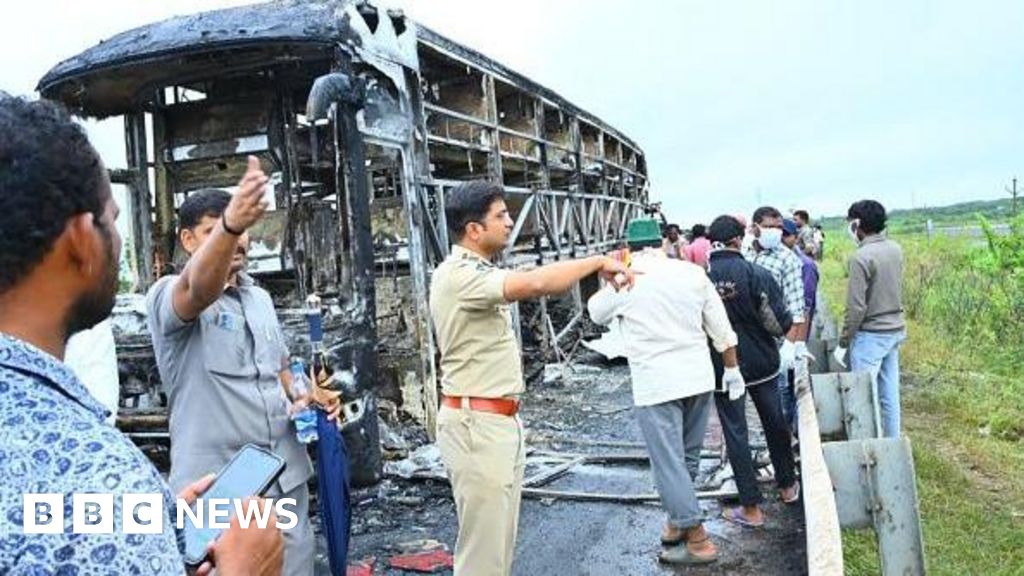
India Bus Fire: Smoldering Smartphones Fuel Massive Blaze

The recent tragic bus fire in India has reignited urgent questions about the nation’s safety protocols, infrastructure resilience, and the broader implications for its economic and geopolitical stability. The incident, which claimed at least 20 lives and was intensified by hundreds of smartphones onboard, underscores the perilous combination of outdated safety standards and the rapid technological integration within a rapidly developing economy. As investigators probe the cause, the specter of negligent oversight looms large—raising alarms that extend beyond national borders and signaling an urgent need for systemic reform.

Initial reports indicate that the blaze erupted after a collision involving a motorcycle, which ruptured the fuel tank and triggered a devastating explosion. However, forensic officials have pointed out that the flames’ ferocity was significantly exacerbated by the presence of lithium-ion batteries in hundreds of smartphones, valued at millions of rupees, being transported from Hyderabad to Bengaluru. This underscores a broader industrial predicament: lithium-ion batteries, while vital for today’s consumer electronics, pose grave fire risks when damaged. Their propensity for thermal runaway—an uncontrollable rise in temperature—can cause fires that defy conventional firefighting methods, with catastrophic consequences. This incident exemplifies how the intersection of burgeoning e-commerce logistics and inadequate safety controls can lead to tragedy, with potential ripple effects across South Asia’s supply chains.

  • The fire’s devastation was compounded by the explosion of electrical batteries used for the bus’s air conditioning system, according to local fire officials, who described fragments of bones and ash amidst the wreckage—a stark reminder of the event’s brutality.
  • Authorities are investigating whether negligent driving or poor maintenance contributed, especially considering the bus driver fled the scene and the motorcyclist, who was involved in the crash, is among the deceased.
  • India’s widespread issues with overcrowded buses and lax safety regulations remain a longstanding concern, with the nation recording the highest number of road accident fatalities globally last year. Such incidents reveal systemic vulnerabilities that threaten both domestic stability and international perceptions of India’s infrastructure capabilities.

The embedded challenges extend far beyond individual tragedies, echoing broader geopolitical consequences. As analysts and international organizations observe, India’s persistent safety lapses threaten its rising economic stature and foreign investment prospects. The incident serves as a haunting reminder that, while India seeks to position itself as a global economic hub, its internal systemic issues—corruption, outdated regulations, and underfunded safety standards—put its trajectory at risk. As noted by geopolitical experts, the *stability of infrastructure and safety standards directly influences international confidence*—a critical factor as India assumes greater responsibilities within the BRICS alliance and as a pivotal player in the Indo-Pacific strategic landscape.

Looking ahead, the incident raises vital questions about the how decisions made today will shape the future of South Asia. Will there be meaningful reforms in safety protocols and supply chain security? Or will economic ambitions overshadow caution, risking more tragedies and undermining efforts for sustainable growth? Once a symbol of cultural resilience, India now finds itself at a crossroads—where the weight of history demands improved accountability and infrastructural resilience. The fire’s ashes serve as a grim portent of what may come if systemic shortcomings remain unaddressed, leaving future generations to grapple with the consequences of today’s perilous neglect. The unfolding narrative reminds the world that as history continues to be written, every decision bears the power to either forge a resilient nation or fuel the flames of chaos and destabilization.

Social Media Auto Publish Powered By : XYZScripts.com