
Matox News

Truth Over Trends, always!

V&A to Spotlight Schiaparelli: The Art, Style, and Innovation Shaping Tomorrow’s Trendsetters

In 2023, fashion’s fascination with extravagance and outré design reached a new peak as Kylie Jenner took to the marble steps of Paris’s Petit Palais, donning an eye-catching outfit featuring a fake lion head attached to her dress. While her statement look might have raised eyebrows at first, it spotlighted a broader shift in cultural values: the rising celebritainment-driven phenomenon of turning fashion into a form of theatrical self-expression. This isn’t just about high society’s whimsy; it’s a vivid reminder of how social media saturation has propelled fashion into a hyper-stylized, image-conscious arena where every look becomes a statement—often fleeting but endlessly viral.

What’s truly notable, however, is that this trend has deep roots in the legacy of icons like Elsa Schiaparelli. The V&A’s latest exhibition on the legendary Italian designer makes this connection clear: today’s BIG moments in fashion—be they red carpet crushes or TikTok trend cycles—are echoes of Schiaparelli’s original approach to culture creation. As Roseberry, designer derrière Schiaparelli’s modern revival, puts it, Elsa was not just a dressmaker but an image-maker and culture creator. Her collaborations with avant-garde artists like Salvador Dalí and her innovative trompe l’œil techniques continue to influence contemporary designers like Martin Margiela and Rei Kawakubo. This synergy between art and fashion exemplifies how design is intertwined with broader societal narratives.

Elsa Schiaparelli and Salvador Dalí collaboration, 1938
Skeleton dress, designed by Elsa Schiaparelli and Salvador Dalí, 1938. This piece exemplifies her mastery of surrealist design, a hallmark that continues to inspire haute couture today.

Fast forward to 2024, and the impact of Schiaparelli’s daring aesthetic is palpable in the brand’s haute couture collections. A recent show featured whimsical pieces like glittery robot babies and trompe l’œil leather and knitwear hybrids that seem to defy conventional textile logic. The brand’s knack for blending wit, humor, and wearable art has secured its status as a cultural powerhouse while resonating with a new generation eager for authenticity tinged with spectacle. Influencers like Bella Hadid and Teyana Taylor have been seen sporting these inventive looks on red carpets, making Schiaparelli a staple of the social media-era wardrobe.

  • The “Schiap pack”—a term affectionately coined in fashion circles—references the brand’s signature couture looks that continue to dominate Instagram feeds and TikTok videos.
  • Designs feature tongue-in-cheek accessories like brass necklaces shaped like lungs or crystal thongs, emphasizing the brand’s mastery of humor balanced with high fashion.
  • The V&A’s retrospective aims to draw over half a million visitors, showcasing how the brand’s edgy, provocative style has seeped into mainstream consciousness, redefining what it means to be trendsetting.

While the spectacle of fashion’s current moment is truly flamboyant, the underlying question remains: are we witnessing a passing trend driven by social media’s short-lived attention span, or is there a deeper cultural shift towards viewing fashion as performance art and personal identity? As designers like Roseberry continue to weave the threads of history and modernity, the next big question becomes: will the future of style embrace even more technological integration and boundary-pushing creativity, or will it settle into a more sustainable, understated aesthetic? The answer might well determine whether fashion continues to serve as a mirror of social values—oscillating between absurdity and authenticity—or transforms into something entirely new.
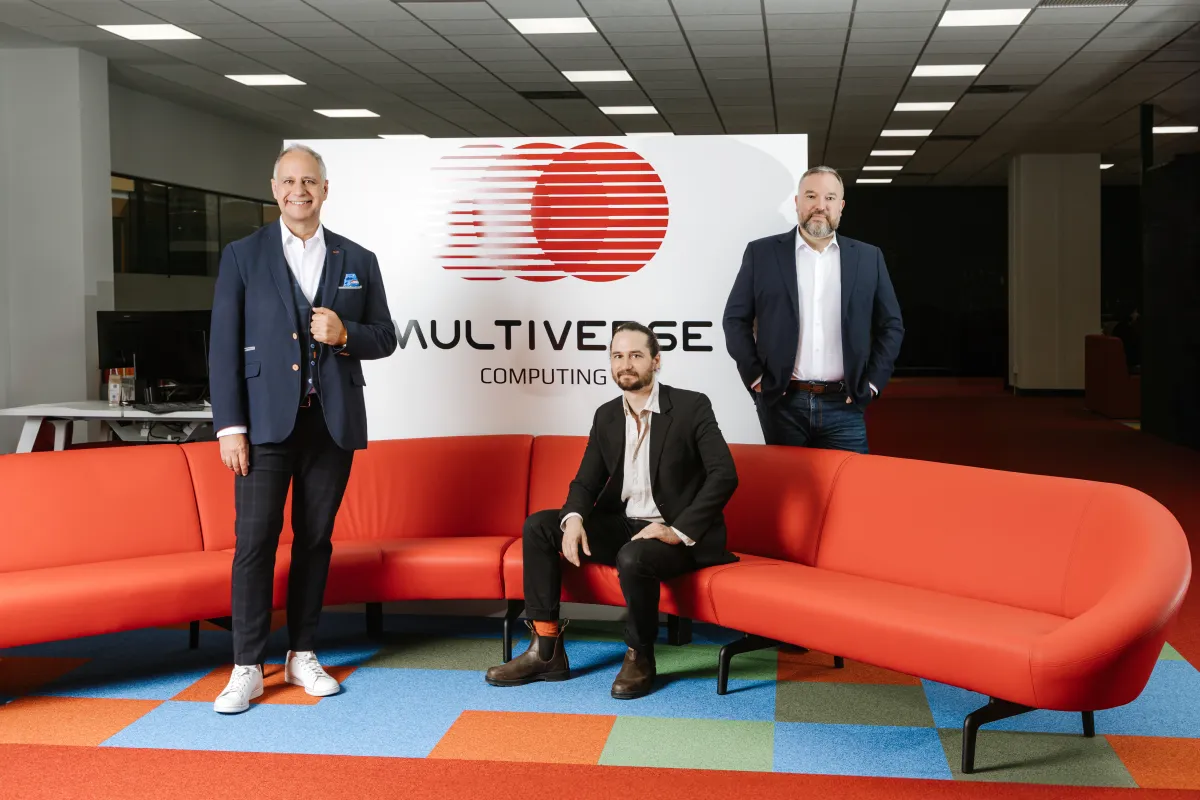
Spanish ‘Soonicorn’ Multiverse Computing drops free compressed AI model for next-gen innovation

European AI Innovator Multiverse Computing Disrupts Large Language Model Industry with CompactifAI

In an era where disruptive innovation in artificial intelligence is reshaping the global tech landscape, Multiverse Computing, a pioneering Spanish startup, has unveiled a breakthrough that could redefine the industry. Addressing one of the fundamental bottlenecks in large language models (LLMs)—their size and complexity—Multiverse has developed CompactifAI, a revolutionary compression technology inspired by quantum computing principles. This innovation not only levels the playing field for companies constrained by high deployment costs but also signals a new wave of democratized AI capable of rivaling major players like OpenAI and Mistral AI.

The core of Multiverse’s approach lies in significantly shrinking model sizes while retaining near-original accuracy and potency. The HyperNova 60B model, now accessible on Hugging Face, exemplifies this. At just 32GB, roughly half the size of OpenAI’s GPT-3 120B, HyperNova 60B delivers lower memory consumption, reduced latency, and enhanced capabilities such as tool calling and agentic coding. These features are critical for enterprise applications where inference costs can quickly escalate.

  • Smaller model footprint
  • Lower operational costs
  • Enhanced real-time performance
  • Advanced tool integration

Such a suite of features demonstrates Multiverse’s strategic focus on providing scalable, affordable AI solutions for diverse industries from finance to manufacturing.

Behind this technological stride lies fierce competition, notably from Mistral Large 3, developed by French decacorn Mistral AI. Both startups exemplify how European innovation is challenging U.S. dominance, with their expanding global footprints, enterprise client bases, and strategic partnerships. Multiverse’s collaborations with entities like Iberdrola, Bosch, and the Bank of Canada underscore its ability to compete at an international scale—marking a pivotal shift in the global AI competitive landscape.

Economic implications are profound. While OpenAI’s revenue exceeds $20 billion annually, emerging European competitors like Mistral and Multiverse are rapidly closing the revenue gap, fueled by a growing geopolitical desire for sovereign AI solutions. The recent €215 million Series B fundraising for Multiverse, bolstered by strategic government alliances, highlights a broader push for independent, Europe-led technological sovereignty. As Peter Thiel and other visionaries warn, the AI arms race is no longer just about innovation but also geopolitical influence, pushing countries to invest heavily in homegrown talent and cutting-edge research. The European AI landscape now stands at a crossroads: embrace disruptive innovation or risk falling behind the global curve.

Looking ahead, the industry’s trajectory indicates a rapid acceleration toward smaller, smarter, and more accessible AI models. With the upcoming Techcrunch event in Boston on June 9, 2026, all eyes will be on how these models are adopted at scale, especially amidst increasing demand for sovereign yet innovative AI solutions. Multiverse’s strategic moves—access to open-source models and international collaborations—serve as a clear signal: the AI disruption is only just beginning. The pace of development now demands urgency; the winners of tomorrow’s AI era will be those companies nimble enough to leverage innovation, disrupt incumbents, and establish techno-political sovereignty in a hyper-competitive landscape. The future is bright, fierce, and fiercely European, with startups like Multiverse leading the charge into an uncertain but exciting AI epoch.

Is AI Layoff Spin or Genuine Innovation? | TechCrunch

AI-Driven Restructuring Sparks Industry Disruption

The year 2025 has set a new precedent in the technology sector with over 50,000 layoffs attributed directly to artificial intelligence (AI), according to recent reports. Major corporations such as Amazon and Pinterest publicly cited AI as the primary motivator behind significant workforce reductions. However, analysts and industry experts are raising critical questions about the veracity of these claims, exposing a broader trend of ‘AI-washing’—where companies leverage AI narratives to mask economic struggles or strategic reorientations.

Emerging data from Forrester’s January report highlights that numerous firms announcing AI-related layoffs do not possess mature AI applications or implementations capable of supporting those roles, pointing starkly to a disconnect between corporate narratives and operational realities. Layering innovation onto corporate restructuring often appears to be less about genuine automation progress and more about manipulating investor perceptions, complicating the landscape for followers and competitors alike.

This climate underscores a broader warning from thought leaders such as Elon Musk and Peter Thiel, who emphasize the urgency for businesses to differentiate between true technological disruption and superficial ‘buzzword’ adoption. As Molly Kinder of the Brookings Institute remarks, framing layoffs as AI-driven is a “very investor-friendly message”, especially when the alternative might be acknowledging deeper financial issues. The trend indicates that AI is fast becoming a strategic tool for window dressing rather than a concrete engine of productivity—an alarming development for a sector that prides itself on innovation.

Implications for Competitive Edge and Market Dynamics

The widespread use of AI as a scapegoat for layoffs threatens to undermine the credibility of tech giants, potentially stalling disruptive innovation at a time when the industry is ripe for scaling up real AI integrations. Companies that genuinely pioneer AI-driven efficiencies could gain a decisive advantage, disrupting traditional business models and setting new benchmarks for productivity and customer experience. Conversely, those engaged in superficial AI initiatives risk losing investor confidence and market share to nimble competitors with authentic disruptive capabilities.

According to Gartner, organizations that focus on developing mature AI ecosystems—including end-to-end automation, advanced data analytics, and intelligent decision-making—are positioned to overhaul industry standards. But the key to this transformation hinges on industry-wide transparency and commitment to genuine innovation rather than temporary headlines. The disruptive potential rooted in AI can catalyze a new wave of competitiveness but demands bold leadership and strategic foresight.

A Future Shaped by Authentic Innovation

Looking ahead, the importance of authentic AI applications in driving business transformation cannot be overstated. The industry faces a critical choice: embrace transparency and invest in genuine, scalable AI solutions or fall behind in a race increasingly defined by trust, agility, and real technological advancement. As market dynamics accelerate, the window for superficial efforts closes swiftly. Forward-thinking companies will prioritize building resilient, innovative AI infrastructures—those that disrupt rather than deceive—setting the stage for a new era of competitive dominance in the digital economy.

In this rapidly evolving landscape, the companies that lead with integrity and innovation will be best positioned to capitalize on the disruptive power of AI, ensuring their survival and growth amidst turbulent market shifts. As industry experts warn, the race to true automation and technological mastery is not just about staying relevant—it’s about shaping the future of enterprise itself.

Data centers fuel a new era for gas—powering the future of innovation

US Catalyzes Global Expansion of Gas Power Infrastructure Amid Data Center Boom

In a move signaling disruption across the energy sector, gas-fired power generation is experiencing a historic surge, with the United States at the forefront of this transition. According to a recent analysis by Global Energy Monitor (GEM), global gas power capacity expanded by 31% in 2025, marking the fastest growth rate since the early 2000s. Notably, nearly a quarter of this new capacity is under development in the US, surpassing China, traditionally the largest energy consumer. This boom is primarily driven by the soaring energy demands from data centers, which are rapidly becoming the backbone of digital economy infrastructure.

The business implications of this shift are profound, as tech giants and energy investors rush to meet data center capacity, fueling a market pivot toward natural gas. More than 33% of the capacity increase in the US is explicitly allocated for powering these data hubs, reflecting the sector’s strategic importance. Industry experts highlight that innovation in energy technology is enabling this transition, yet concerns remain over the environmental costs. The push for additional gas capacity also marks a significant disruption in traditional energy hierarchies, challenging the long-term push toward renewables. While lower costs and lower pollution when burning gas compared to coal make it attractive in the short term, the environmental trade-offs are alarming. Gas production releases methane—a greenhouse gas more potent than carbon dioxide—raising questions about the sustainability of these developments.

Leading analysts warn that the **lock-in of new gas plant capacity could pose stranded asset risks**, especially if anticipated electricity demand from AI-driven industries fails to materialize. Jenny Martos of GEM highlighted, “There is a risk that this capacity could become stranded assets if future demand from AI and data-intensive applications does not meet expectations,” emphasizing the potential for market disruption and long-term misallocation of capital. Already, 2026 is projected to be a record-breaking year for gas capacity additions, possibly surpassing the growth seen during the shale gas revolution of the 2000s. This would represent a remarkable disruption of the clean energy narrative, as the industry faces the dual challenges of economic viability and environmental responsibility.

The broader business implications are clear: disruption is accelerating as technology-driven energy demands reshape the conventional power landscape. Industry leaders like Elon Musk and Peter Thiel underscore that rapid innovation and strategic investments in infrastructure are crucial if nations aim to stay competitive. Meanwhile, policy makers confront the pressing need to balance economic growth with climate commitments, especially as methane emissions from natural gas production threaten to undermine global climate goals. The next decade will be pivotal, as the energy sector faces a fork in the road: continue along the path of short-term cost savings and risk locking in emissions, or pivot decisively toward sustainable energy solutions that leverage innovation without compromising the planet’s future.

For youth and entrepreneurs eyeing the future, this surge signals a landscape riddled with opportunities, risks, and obligations. Innovators in clean tech, storage solutions, and AI-driven efficiency are poised to challenge traditional energy giants. Disruption is inevitable, and those who act swiftly will shape the trajectory of global power markets. The urgency is unmistakable: the window to redefine energy infrastructure before climate thresholds are crossed is closing rapidly. As geopolitical and economic tensions mount, the push for innovation in energy becomes not just a business imperative, but a mission vital to the future of civilization itself.

Level Up Your Kitchen: The Ninja Crispi Glass-Bottom Air Fryer is $40 Off on Amazon—Style Meets Innovation for Young Foodies

In an era where convenience and style blend seamlessly into daily routines, the latest kitchen innovation is captivating the youth demographic with its blend of technology and lifestyle appeal. Enter the Ninja Crispi Air Fryer—the newest must-have gadget that’s stirring a virtual buzz, partly fueled by savvy discounts like the recent $40 price cut from Amazon, bringing it down to a tempting $139. This device isn’t just about cooking; it represents a shift in social behavior, one where kitchen tech transcends functionality to become a statement of modern, health-conscious living.

What makes the Ninja Crispi particularly compelling isn’t solely its sleek design or its competitive price point—it’s the multifunctionality. Two different size options cater to a variety of culinary needs. The 6-cup glass-bottom bowl can quick-serve snacks like fries or veggies in as little as 7 minutes, perfect for the fast-paced lifestyle of younger consumers. Meanwhile, the 4-quart option allows for more ambitious recipes, like baking a whole chicken accompanied by vegetables, making it ideal for budding home chefs eager to experiment without the mess of traditional ovens.

Beyond its impressive capabilities, the device’s innovative materials underscore a broader cultural shift—embracing not just speed but safety and durability. The borosilicate glass, similar to the renowned Pyrex, guarantees thermal shock resistance, addressing safety concerns around high heat. Coupled with heat-protected feet that allow the device to sit atop any countertop—except plastic—the Ninja Crispi perfectly exemplifies the modern desire for appliances that combine performance with aesthetic and social relevance. As influencers and food bloggers showcase its versatility on TikTok and Instagram, the device’s cultural impact goes beyond the kitchen, becoming a symbol of a lifestyle that prizes efficiency and style.

This trend also signals a broader societal movement towards individualized culinary experiences. Young consumers are no longer satisfied with simple cooking—they seek devices that allow creative expression while fitting into their *socially conscious* identities. According to sociologists like Dr. Sarah Post, this shift marks a generation that balances health, convenience, and sustainability, often favoring products that are easy to clean and durable. The Ninja Crispi’s dishwasher-safe glass bottoms and sturdy construction make it appealing for a demographic that prioritizes both time-saving and environmental consciousness. Moreover, the affordable pricing and targeted marketing—highlighting the gadget’s ability to “reheat fries in 7 minutes”—resonate deeply with the social media-savvy youth who seek instant gratification without sacrificing quality or their image.

As the trend continues to grow, the burning question remains: will this be just a fleeting gadget or the beginning of a culinary revolution? With more brands pushing similar features and influencers touting their health benefits and sleek design, the next big question must be: how will this influence future kitchen designs and consumer habits? Will traditional cooking appliances eventually fade into the background, replaced by compact, multi-use devices like Ninja Crispi that embody a lifestyle of speed, safety, and social relevance? Or are we witnessing the dawn of a new era where the boundaries between technology, wellness, and social identity continue to blur in unexpectedly disruptive ways?

Iconic US Architect Passes Away at 96: A Legacy of Innovation

The World Loses a Legend: Frank Gehry’s Passing Signals a Turning Point in Cultural and Geopolitical Reflection

In a moment that echoes through the corridors of modern architecture and cultural history, Frank Gehry, the pioneering force behind some of the most avant-garde structures of our time, has passed away at the age of 96. Widely regarded as a cerebral rebel of design, Gehry’s work challenged conventional norms, pushing the boundaries of form and materials in ways that inspired a new generation of architects. His death has prompted both a reflection on his revolutionary impact and a broader contemplation of how individual legacies shape the cultural identity of nations. As analysts and historians analyze his career, it is clear that Gehry’s influence extends far beyond aesthetics, forming part of a complex geopolitical tapestry intertwined with the cities and societies he transformed.

Gehry’s signature style—marked by its deconstructivist approach—shattered symmetry, embracing unconventional geometric forms and unfinished materials. The Museum of Bilbao, with its iconic titanium-clad curves, not only redefined the city’s skyline but set a new standard for urban regeneration and cultural diplomacy. When Bernard Arnault stated that Gehry “bestowed upon Paris his greatest masterpiece,” it underscored how Gehry’s work served as a soft power tool for nations seeking to elevate their global stature through architectural innovation. Gehry’s structures, ranging from Chicago’s Jay Pritzker Pavilion to the Louis Vuitton Foundation in Paris, are symbols of national pride and cultural vitality. International organizations like the UNESCO have long lauded such landmarks for their role in fostering economic development, tourism, and soft diplomatic ties. Gehry’s death not only diminishes an individual artist but underscores the fragility of cultural capital in a world increasingly driven by geopolitical rivalries and economic interests.

  • The recognition by the Pritzker Prize in 1989, often called the Nobel of architecture, cemented Gehry’s status as a visionary who challenged traditional aesthetics.
  • His receipt of the Order of Canada in 2002 and the Presidential Medal of Freedom in 2016 signified his influence transcending borders, embodying a global recognition of his innovative genius.
  • Contemporary analysts argue that Gehry’s revolutionary approach reflects broader societal shifts toward embracing diversity in thought and form, a trend that aligns with the strategic ambitions of both democratic and authoritarian regimes seeking to foster national pride.

Similarly, Gehry’s career trajectory—begun in post-war Toronto and carried into the digital age—mirrored the rise of globalization and cultural exchange. His defiance of traditional architectural principles was a metaphor for a world unsettled by conflicting interests, shifting alliances, and the quest for identity in an era of rapid change. The lessons from Gehry’s work emphasize that architecture and public spaces are more than aesthetic statements—they are battlegrounds for soft power and national narrative. International organizations are increasingly emphasizing the importance of cultural diplomacy, understanding that design and symbolism matter in the geopolitics of elites and everyday citizens alike.

As the sands of history continue shifting, Gehry’s death leaves behind a moment of reflection—how will nations continue to shape their identities? Will they prioritize innovative cultural monuments or fall into the trap of sameness and stagnation? These questions echo in the minds of policymakers, artists, and global citizens alike. In a world teetering on the brink of new alliances and confrontations, Gehry’s legacy reminds us that architecture is not just about structures but about the stories societies choose to tell. His passing leaves a void, yet it also ignites a renewed urgency—a reminder that in the grand narrative of history, the architects of our future are still writing their stories, one bold design at a time, as the weight of history’s unfolding chapters presses on.”

US and UK Strike Bold Zero-Tariff Pharma Deal to Boost Future Innovation

The Future of Pharma: UK and US Seal a Historic Trade Deal

In a move that signals a new chapter in global healthcare innovation, the United Kingdom and the United States have recently forged a groundbreaking agreement designed to safeguard the vital link between pharmaceutical exports and national security. Under this pact, the UK will maintain zero tariffs on medicines exported into America for three years, even as it gradually increases its investment in healthcare and research. This strategic decision is not only a boost for the UK’s life sciences sector but also a testament to the importance of embracing the shifting landscape of global commerce.

The agreement emerges amid mounting global pressure and ongoing negotiations, with the UK’s Business Secretary Peter Kyle emphasizing that it “guarantees” that medicines worth over £5 billion annually will enter the US tariff-free. This move comes in response to previous threats by US President Donald Trump, who, in 2023, had expressed intentions to slap tariffs of up to 100% on branded drug imports — a stark warning to the UK’s robust pharmaceutical industry. The recent deal reflects a strategic balancing act: the UK will slightly increase the prices it deems acceptable for new treatments by 25%, and plan to ramp up NHS spending on medicines from 0.3% to 0.6% of GDP over the next decade, ultimately fostering an environment conducive to innovation while securing export stability.

How This Impacting the Personal and the Broader Economy

This development is more than a political maneuver—it has profound implications for individual health and national economic resilience. For the average citizen, it translates to increased access to cutting-edge medicines and therapies, ensuring that the wellness revolution continues unimpeded by tariff disputes. It underscores a collective desire for a system where progress isn’t hindered by protectionist measures, but instead propelled by collaboration and innovation. Moreover, the deal promises to bolster employment and investments, as UK-based pharmaceutical companies are freed from burdensome tariffs, paving the way for continued research breakthroughs and enhanced manufacturing capacity in the US market.

It’s worth noting that the UK government, in the face of internal budget pressures and international competition, has committed to increase its investment in research and development, signaling a shift towards fostering a **well-rounded, globally competitive biotech environment**. Experts like William Bain from the British Chambers of Commerce have welcomed the move, highlighting that it creates an “environment conducive” to ongoing investment, research, and exports, which are essential for maintaining global competitiveness in healthcare. Conversely, critics voice concerns about the potential for increased NHS spending to strain already stretched resources, urging the government to balance innovation with sustainability.

Looking Beyond Borders: A Reflection on a Connected Future

This story is a reflection of a *changing world*—one where **adaptability and strategic alliances** are paramount**. The US’s vigilant stance on safeguarding its domestic manufacturing, paired with the UK’s desire to remain a **life sciences hub**, demonstrates the importance of resilience in a **hyper-connected global economy**. As U.S. companies like Bristol Myers Squibb pledge to amplify their investments, and UK giants like AstraZeneca recalibrate their strategies, the overarching theme is clear: the future belongs to those who bridge borders with innovative trade agreements and shared visions. For the individual looking to cultivate personal wellbeing amidst this evolving landscape, the message is inspiring—

embrace change, pursue knowledge, and champion progress. When nations collaborate and prioritize innovation, the journey toward better health and prosperity becomes not just a dream but a tangible reality — one fueled by resilience, strategic foresight, and unwavering determination.

Blue Origin booster lands safely, showing strength and innovation during launch

Blue Origin’s Historic Launch Signifies Shifting Power Dynamics in Space

In a notable development that signals the intensifying competition for supremacy beyond Earth’s atmosphere, Blue Origin, the space enterprise owned by billionaire Jeff Bezos, successfully launched its New Glenn rocket from Florida. This mission, which carried two NASA spacecraft destined for Mars, underscores the strategic importance of commercial space ventures as nations and corporations vie for dominance in the final frontier. The successful landing of Blue Origin’s reusable booster on a floating Atlantic platform marks a crucial milestone, echoing the pioneering spirit that has historically fueled geopolitical influence.

This event underscores a broader shift in international space policy and power. NASA and private companies like Blue Origin and SpaceX are increasingly at the forefront of space exploration, redefining the boundaries of global influence. While SpaceX pioneered reusable rocket technology in 2015, Blue Origin’s recent achievement signals a rapid evolution in the commercial space sector, intensifying the race to establish military, economic, and scientific dominance. Many analysts, including those from the International Space Institute, see this as a compelling reminder that space has become the latest theatre for geopolitical leverage, where control of extraterrestrial infrastructure could translate into future global power.

Consequences of Commercial Space Expansion

As nations and private entities expand their reach into space, the geopolitical landscape is shifting. Historically, the United States has maintained a strategic lead—first through NASA’s Apollo program and later through space shuttle missions. However, the entrance of corporations like Blue Origin suggests a new paradigm—where private enterprise is becoming a pivotal actor in shaping future international order. This decentralization of space exploration creates both opportunities and risks, particularly concerning the potential for weapons proliferation, resource extraction, and sovereignty claims in space. While the Outer Space Treaty of 1967 remains the baseline legal framework, many experts warn that current policies are ill-equipped to regulate the fast-paced development of commercial space activities, potentially leading to a new kind of global conflict with extraterrestrial stakes.

  • The successful launch of Blue Origin’s New Glenn represents more than technological progress; it reflects a strategic move that could tilt the balance of power, especially if space becomes a domain for military and economic competition.
  • Private companies’ advancements catalyze a geopolitical narrative where traditional superpowers must adapt rapidly or risk losing dominance.
  • Major international organizations, including the United Nations Office for Outer Space Affairs, are under mounting pressure to update treaties and enforcement measures, balancing innovation with security concerns.

Unfolding Narratives: The Future of Humanity’s Extraterrestrial Ambitions

With each launch, global powers are rewriting history—shaping a future where space exploration is not solely the pursuit of academia or government agencies, but a strategic chessboard for economic control and military advantage. Many see the recent Blue Origin milestone as a turning point: a reminder that the “final frontier” is becoming a contested domain where alliances shift and new actors emerge with each technological breakthrough. As the world watches this space race escalate, one question remains —will international cooperation prevail, or will the battlefield for celestial dominance turn into a new arena of conflict? The weights of history hang heavy as humanity’s gaze turns upward, where the seeds of peace or chaos are quietly sown in the silence of space, now a vital frontier for those daring to shape the destiny of nations and societies for generations to come.

Black Musical Theater: Celebrating 200 Years of Cultural Resilience and Innovation

In the great tapestry of human civilization, culture functions as both the mirror of our collective identity and the canvas upon which we project our future aspirations. On the cusp of pivotal moments in history, artists and cultural pioneers have often assumed the mantle of societal architects, shaping and reflecting the values, struggles, and triumphs of their epoch. The founding of Amas Musical Theater in 1968 by LeLaine LeNoire exemplifies this parallel—it was not merely an act of artistic enterprise but a declarative stance on the importance of cultural diversity and representation in American society. Her initiative, infused with purpose, sought to elevate multiethnic casting, thereby enriching the cultural dialogue and affirming the integral role of identity within the American narrative.

Much like the Greeks of ancient times, who consecrated myth and drama as essential facets of civic life, modern cultural innovators understand that the arts serve as repositories of memory and beacons of prophecy. The success of productions like “Mama, I Want to Sing!” and “Bubbling Brown Sugar” signals a turning point—a recognition that authentic stories rooted in diverse experiences contribute to the moral and aesthetic fabric of society. These works, born amidst tumultuous social change, echo the timeless insight of thinkers like G.K. Chesterton: that tradition, which preserves the best of our collective past, must evolve to include the voices previously marginalized. In this context, cultural renaissance is intertwined with the assertion of rightful identity, a vital act of cultural self-preservation amid an ever-changing world.

The importance of such cultural endeavors extends beyond entertainment; they forge a profound connection between society’s fabric and the individuals anchoring it. A nation’s cultural output, as Tocqueville observed, reveals the undercurrents of its democracy, exposing the virtues and flaws woven into its institutions. In this regard, Amas Musical Theater and similar initiatives symbolize a democratization of culture—a recognition that art is not just a luxury, but a vital expression of societal sovereignty. They remind us that by celebrating roots and forging new traditions, society cultivates resilience and continuity, allowing forgotten histories to reemerge and guiding humanity towards a future mindful of its heritage.

Ultimately, culture emerges as both memory and prophecy: a living archive charting the human journey and a visionary force shaping what is yet to come. As the poet T.S. Eliot might have suggested, in our pursuit of harmony between past and future, we discover “the still point of the turning world”—a place where the echoes of tradition inform the aspirations of tomorrow. Our shared cultural history is a testament to our resilience, an ongoing dialogue that sustains not merely individual identities but the spirit of civilization itself. To engage with this heritage is to participate in a sacred act of rebirth, forging a path where the memory of yesterday guides the prophecy of tomorrow, reflecting the eternal human endeavor to find meaning and coherence amid chaos.

Hackers Break Free the Kinect: A Win for Gamers and Innovation

Revolution in Tech: How Open Source and Innovation Disrupt Legacy Systems

Over the past decade, the trajectory of innovative technologies has demonstrated a recurring pattern: initial failure often leads to profound disruption. The Microsoft Kinect, launched in 2010 as a flagship motion-sensing gaming device, exemplifies this trend. While its consumer application—evoking immersive gameplay—failed to meet expectations, its underlying technological foundation became a blueprint for a broad spectrum of disruptive innovations that transcended entertainment.

Today, the Kinect’s infrared depth sensing and gesture recognition capabilities are being leveraged in robotics, medical imaging, and AI-driven applications. The open-source community—notably spearheaded by hackers and developers like Kyle Machulis and Memo Akten—reclaimed this technology from corporate lock-in, transforming it into a versatile tool for democratized experimentation. Their clandestine work with open source drivers revealed that cost-effective access to sophisticated hardware could catalyze accelerated R&D and democratize innovation on a global scale.

Open Source: The Catalyst for Disruption and Business Transformation

The community-driven effort to reverse engineer Kinect was driven less by profit and more by a desire to break barriers. In 2010, the OpenKinect project emerged, igniting a wave of experimentation that showcased how accessible hardware could revolutionize various sectors. Beyond gaming, Kinect-inspired devices now facilitate real-time obstacle detection for autonomous robots, enable contactless surgical scans in healthcare, and serve as powerful tools for educational and artistic endeavors.

  • Lowered barriers for entry into advanced tech spaces
  • Enabled rapid prototyping and open innovation ecosystems
  • Birthed new markets for perception and interaction hardware

Furthermore, the business implications of this disruption are profound. Tech giants like Apple incorporated Kinect’s core sensors into their consumer devices, especially for facial recognition and 3D mapping, solidifying their place in next-generation device ecosystems. Meanwhile, consumer-level access to open-source hardware continues to foster a new breed of startups that challenge traditional R&D models, hinting at a future where corporate innovation will increasingly depend on community-driven advancements.

Future Horizons: Artificial Intelligence Paving the Way for New Disruptions

As the open-source community continues to democratize access to hardware like Kinect, the next frontier appears to be in artificial intelligence. Experts such as Peter Thiel and institutions like MIT predict that AI will serve as the principal driver behind the next wave of disruptive breakthroughs. What began as a punk-rock, hacker-driven movement for open hardware is now evolving into a full-blown AI renaissance: models are becoming more accessible, open data is proliferating, and entrepreneurial ventures are capitalizing on this trend.

However, this new era poses significant challenges and warnings. A growing concentration of AI development within corporate giants could threaten the open innovation spirit that fueled Kinect’s revolution. The risk isn’t just technological stagnation; it’s the potential for a monopolization of future technological breakthroughs, stifling the entrepreneurial spirit that historically pushed the boundaries of what’s possible. Enthusiasts like Elon Musk and Peter Thiel advocate for safeguarding open ecosystems—reminding us that the future of technology depends on the community’s ability to innovate ahead of the curve.

Ultimately, the parallels between the Kinect revolution and the burgeoning AI ecosystem underscore a key reality: innovation is best nurtured outside the corridors of corporate control. As open communities push forward, rapidly iterating and sharing knowledge, they threaten to reset the paradigm of technological progress—making it more accessible, more disruptive, and more aligned with the values of youthful explorers eager to shape the future. The clock is ticking; those who embrace this spirit now will define the next era of technological supremacy.

Social Media Auto Publish Powered By : XYZScripts.com