Matox News

Truth Over Trends, always!

Tim Cook: The Innovator Who Carried Apple Forward, But Not the Jobs Vision

Apple’s Next Act: From Efficiency to Innovation Under New Leadership

Once synonymous with radical innovation, Apple has undergone a significant transformation over the past decade. The legacy of Steve Jobs forged a path characterized by groundbreaking products like the iMac and the iPhone—technologies that redefined entire markets. However, since Tim Cook took the helm in August 2011, the company’s focus shifted towards operational excellence, optimizing supply chains, and scaling existing product lines to maximize revenues. While this strategy fueled unprecedented growth—making Apple’s valuation surpass that of major oil giants—it also has come under increasing scrutiny as critics question whether this shift signals a plateau in true innovation.

Under Cook’s leadership, Apple became a juggernaut of incremental innovation. The introduction of alternative iPhone models, such as the Plus, Mini, and Pro variants, exemplifies diversification within a proven product category rather than radical disruption. Moreover, the ascendance of services—ranging from iCloud to Apple Music and the App Store—has become a formidable revenue driver. Service revenue now ranks second only to iPhone sales, surpassing Macs, iPads, and wearables combined. This aligns with trends identified by industry analysts from organizations like Gartner, who warn that reliance on services and incremental upgrades could eventually hinder Apple’s growth trajectory unless disruptive innovation is reinvigorated.

Recent legal challenges, notably the Epic Games lawsuit over App Store practices, underscore ongoing industry tensions regarding platform control and antitrust concerns. While Cook’s team was instructed to loosen its grip, the company’s response—marked by slow and insufficient reforms—illustrates a strategic tension: the balance between maintaining market dominance and adapting to regulatory pressures. As Apple faces mounting global regulatory scrutiny, the industry is watching eagerly for signs of Apple’s future innovation capabilities beyond supply chain mastery and operational efficiencies. According to MIT scholars and tech policy analysts, this could be a pivotal moment where Apple either breaks the mold or stagnates within its comfort zone of incremental gains.

Looking ahead, the upcoming departure of Cook hints at a potential new chapter for Apple. The newly appointed VP of Hardware Engineering, John Ternus, promises a fresh approach focused on hardware innovation. The first notable product is the MacBook Neo, an affordable yet powerful device leveraging Apple’s proprietary silicon—an emblem of Cook’s legacy of developing a self-sufficient, supply chain resilient hardware architecture. As industry experts from Harel Gadot at Gartner suggest, this particular move could be the harbinger of the next wave of disruptive products from Apple, if combined with a bold vision that embraces risks and leapfrogs traditional market categories. The challenge for the new leadership will be transforming Apple’s reputation from a master optimizer to a pioneer of technological breakthroughs again, a move that could redefine the industry’s future.

In an era marked by rapid technological shifts—from AI to quantum computing—waiting on the sidelines is not an option. Apple’s ability to harness its operational prowess while spearheading disruptive innovation will determine whether it continues to be a transformative leader or settles into the role of a well-oiled machinery. Industry watchers and investors alike will be evaluating whether the new era of leadership can rekindle Apple’s pioneering spirit—ushering in a future where the company not only masters efficiency but also leads technological revolutions that shape the 21st century.
Robot Takes the Mic: Melbourne Innovator Turns AI into Comedy Gold for the Next Gen

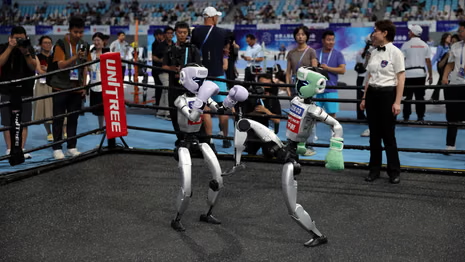
In an era where **technology** continues to reshape every facet of **lifestyle** and **entertainment**, a groundbreaking initiative from the University of Melbourne is probing the very limits of **artificial intelligence** (AI) in the realm of **comedy**. Led by Dr. Robert Walton, a dean’s research fellow in the **Faculty of Fine Arts and Music**, this project seeks to determine whether **robots** can go beyond mere **physical mishaps** and develop a genuine sense of **humor**. Unlike the stereotypical clumsiness that often elicits laughter at robots’ expense—think of those viral clips of Boston Dynamics’ malfunctioning machines—Walton’s goal is to explore the potential for **AI** to *intentionally* make us laugh, tapping into the core skills of **timing**, **reading the room**, and **visual humor**. Thanks to a substantial Australian Research Council grant of roughly $500,000, Walton will train a team of ground-based **robots**, ranging from 40 centimeters to two meters tall, to hone their *visual* comedic skills alongside human collaborators.

This initiative marks a conscious departure from memetic AI humor derived from language models like **ChatGPT**, which often mirror *underwhelming* jokes, reminiscent of those found in **Christmas crackers**. Instead, Walton emphasizes that humor rooted in **non-verbal communication**—such as **physical comedy** and **timing**—may be the key to unlocking believable **machine humor**. By observing how **robots** sense movement, establish **connection**, and respond to gestures like **head tilts** or **laughter**, Walton aims to understand how machines might eventually *adapt* to mimic human **behavioral cues**. The project’s ultimate aim isn’t merely to entertain but to garner insights on how **human-robot interactions** can evolve, with all their **risks and benefits**.

Indeed, this investigation touches on profound questions about **authenticity**, **creativity**, and the very essence of **humanity**. Notable **cultural figures** like comedian and musician **Tim Minchin** have pointed out that what makes **comedy** truly compelling is the **flaws**—the imperfections and **agency** of **the artist** behind the act. Human **comedians** bring their **personal experiences**, **struggles**, and **mistakes** into their routines, crafting a moment of **authentic connection** that technology has yet to replicate convincingly. The **Melbourne comedy festival** director, Susan Provan, echoes this sentiment, emphasizing that **originality** arises from **lived experiences** and **spontaneous interactions**—elements that many believe define the **soul** of **comedy**. Walton’s project recognizes these facets, exploring whether **robots** can simulate this **authenticity** or if they will simply be **clumsy imitators**, providing humor through their **failures** rather than their **intentions**.

  • Reflect on the blend of **technology** and **lifestyle** as an avenue for **self-improvement** and **well-being**;
  • Consider how **training** in **humor** could be applied in fields like **caregiving** or **public interaction** to foster **empathy** and **connection**;
  • Embrace the idea that **innovation** must be paired with **ethical caution**—exploring both empowering potential and **threats** associated with **AI** transforming **entertainment** and **personal interaction**.

As Walton’s work unfolds, it invites us to reflect not just on what **technology** can do but what it **should** do. The journey from **robots fall** to the potential of a **believable** comedian embodies a broader societal quest: fostering a **lifestyle** that balances **innovative progress** with **authentic human essence**. This pursuit underscores an enduring truth—**the human spirit** thrives in spontaneity, mistakes, and the genuine **connection** with others. While AI may someday learn the **timing** and **gestures**, it remains to be seen whether it can truly emulate those **imperfections** that make us *laugh*, *cry*, and *feel alive*. Perhaps, in the end, the most profound comedy—like life’s richness—resides in embracing our **flaws** and the **journey** of perpetual discovery.

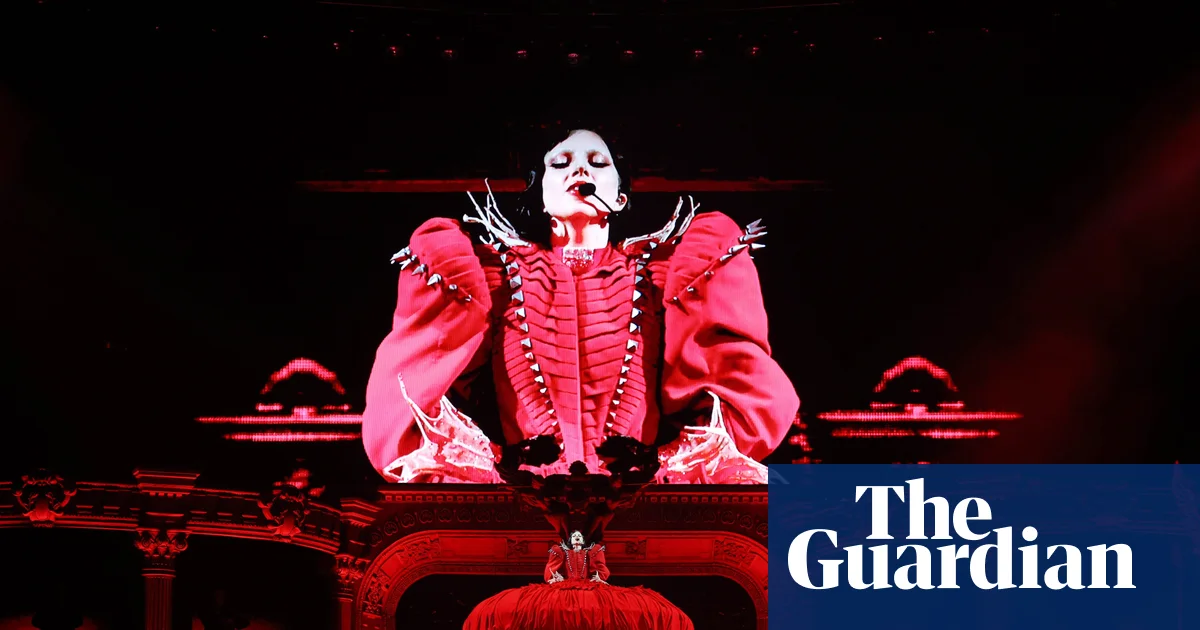
Australian innovator, 26, crafts iconic Lady Gaga costumes, blending engineering brilliance with trendsetting style

In a world where fashion continues to evolve as a potent form of social expression and cultural commentary, a new vanguard of designers is breaking the mold of traditional haute couture. Enter Samuel Lewis, a Melbourne-based visionary whose work blurs the lines between art, performance, and technological innovation. His recent collaborations with Lady Gaga exemplify how contemporary style now functions as a canvas for societal narratives, pulling viewers into a vortex of spectacle and meaning. Whether it’s a stage costume fashioned to resemble moving art or a dress inspired by decayed fabrics hinting at societal fragility, Lewis’s creations speak to a cultural shift toward embracing the expressive power of the extraordinary.

What makes this trend particularly compelling for impressionable youth is its cultural impact—it’s not just about designing visually stunning outfits but about challenging perceptions of beauty, identity, and social norms. Inspired by icons like Debbie Harry and the rebellious euphoria of rock and grunge eras, Lewis’s work embodies a renewed fascination with the imperfection, decay, and chaos that characterize our era. His aesthetic, heavily influenced by 70s rebel culture and 80s goths, employs intricate constructions—dresses within dresses, formidable corsetry—that are as much a statement of resilience as they are a fashion choice. Influencers, sociologists, and fashion critics such as Cameron Silver argue that these bold choices serve to democratize fashion’s social relevance, transforming celebrities into living artworks that challenge the boundaries of conventional style.

Designed to withstand the physical demands of stage performances and photo shoots, Lewis’s pieces symbolize how online visibility and social media have democratized access to high-end creative work. From the Philippines to South Korea, his rising international profile underscores how the internet has become a launching pad for local talent to reach global audiences. Brands and consumers alike are leaning into this digital revolution, seeking authentic, boundary-pushing styles that speak to the youthful psyche—styles that say, “This is who I am, and I’m not afraid to show it.” As influencers like Julia Fox and girl group Blackpink demonstrate, the avant-garde now sets trends in everyday life, shaping social attitudes and collective identity through their daring fashion statements.

Looking ahead, the next question on everyone’s mind is whether this relentless pursuit of the extraordinary will still serve traditional ideas of beauty or radically redefine societal standards. As Lewis prepares to launch his debut collection—an eclectic mix of made-to-order and ready-to-wear pieces inspired by the idea of “finding magic in everything without caring what it is”—the challenge remains profound: can fashion continue to be a cultural catalyst for societal conversations without sacrificing the accessibility that makes it relevant to youth? With celebrities and performers at the forefront of this movement, the real story might just be: Are we witnessing the birth of a new societal language through fashion—one that is less about superficial appearance and more about embodying a collective identity that’s as complex and layered as the art it produces? That remains the ultimate question for the future to answer.

Social Media Auto Publish Powered By : XYZScripts.com