Matox News

Truth Over Trends, always!

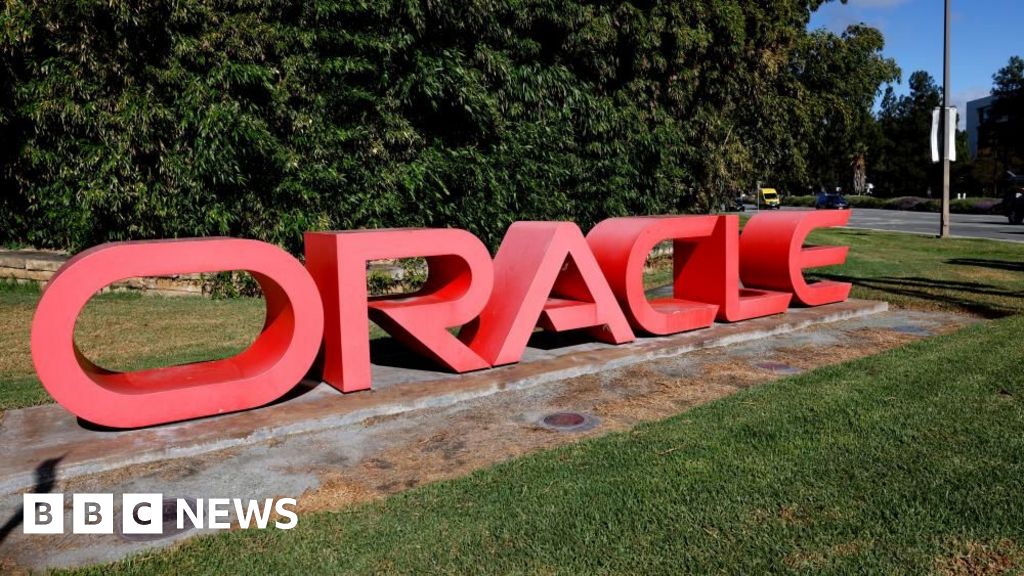
Oracle shares drop as earnings raise AI bubble doubts among young investors

Oracle’s Earnings and the Shifting Dynamics of Global Tech Power

In the wake of recent disappointing quarterly figures, Oracle, a titan in the cloud computing industry, saw its shares plummet over 10% in after-hours trading. The company’s revenue for the quarter ended in November stood at $16.1 billion, edging just below analyst expectations of $16.2 billion. Despite this marginal shortfall, Oracle’s overall revenue growth of 14%—bolstered by a 68% spike in its AI division—underscores the relentless expansion and strategic pivoting of America’s tech giants amid a tumultuous market.

What elevates Oracle’s recent developments from mere financial metrics is its strategic alliance with OpenAI, the outfit behind ChatGPT. In September, Oracle inked a deal to furnish $300 billion in computing power over five years, positioning itself as a crucial infrastructure provider in the AI race. This move has catapulted Larry Ellison into the spotlight, briefly making him the world’s richest man. International analysts have lauded this partnership as a major step in the global AI race, signaling America’s intent to maintain supremacy in this critical technological frontier. However, Ellison’s call for “chip neutrality”—buying AI chips from any manufacturer—has raised eyebrows regarding the underlying sector competition, especially with dominant players like Nvidia.

Risks, Rewards, and the Geopolitical Chessboard

Behind the veneer of growth lies a complex web of financial strategies and geostrategic maneuvers. Critics on Wall Street warn that Oracle’s substantial debt from bond sales—an unprecedented $18 billion—raises concerns over sustainability and overexposure to a volatile AI sector. As international organizations and analysts like Jacob Bourne voice caution, some experts see this as a reflection of the broader American tech sector’s pursuit of dominance at all costs. The narrative echoes tensions in U.S.-China relations, where global AI and tech leadership now serve as proxies for geopolitical influence, echoing classic competition over technological superpower status. Inner circles in Washington, as well as international think tanks, increasingly perceive these tech battlegrounds as pivotal to future global power alignments.

Meanwhile, Oracle’s political and economic initiatives include notable investments by the Ellison family, outspoken supporters of Donald Trump. Their acquisitions of Hollywood assets like Paramount and active bids for Warner Brothers Discovery reflect an intertwining of technological, financial, and geopolitical interests that stretch far beyond the data centers themselves. As historian and geopolitical analyst John Mearsheimer warns, such concentrated financial power and strategic investments bolster legacy industries while challenging the global cultural order, especially in an era where information warfare and media influence have become critical weapons of statecraft.

Implications for the Future and a Wary World

The unfolding chapters of Oracle’s ambitions and the broader AI arms race are a stark reminder that technology is now intrinsically linked to geopolitical stability or chaos. The decisions made today—whether purchasing chips from Nvidia or distributing AI infrastructure—are shaping the contours of future conflicts and alliances. International observers, from the United Nations to regional economies in Europe and Asia, watch with bated breath as these titanic shifts ripple through the fabric of global society. What remains uncertain is whether these technological pursuits will serve the cause of human progress or become catalysts for a new era of unchecked dominance and confrontation.

As history continues to unfold in this epoch of rapid innovation and rising strategic tensions, the world stands on the brink of a new chapter. The intricate dance of corporate power, political influence, and technological innovation holds the potential to forge a new global order—and just as easily, to unravel the fragile fabric of peace. In these moments, the destiny of nations is written not just in the boardrooms or server farms but in the choices of leaders who shape the future—an era where every decision echoes across decades, leaving a legacy that future generations will scrutinize and debate. The unease lingers: what new wars of influence, technological or otherwise, are already quietly taking shape in the shadows of this digital revolution?

Why Young Investors Are Going All-In on ‘Zombie’ Startups

Innovation Disrupts SaaS Landscape: Bending Spoons’ Bold Moves Signal New Business Paradigm

The recent surge in corporate acquisitions and strategic capital raises by Italian tech firm Bending Spoons exemplifies a significant shift in how innovative companies are redefining the SaaS and software industry landscape. In a groundbreaking 48-hour window, Bending Spoons announced the acquisition of AOL—a giant once thought to be relic of the digital past—and simultaneously raised an astonishing $270 million. These maneuvers propelled its valuation to a staggering $11 billion, quadrupling its size compared to early 2024 figures, and showcasing a bold strategy for disruption and dominance in a competitive tech ecosystem.

Critically, this rapid ascent underscores shifting industry dynamics where disruption is driven by innovative consolidation rather than traditional startup growth. This echoes the emerging thesis espoused by venture strategist Andrew Dumont, CEO of Curious, who champions a “buy, fix, and hold” playbook centered on revitalizing stagnating software assets—what he terms “venture zombies.” This model, increasingly embraced by forward-thinking investors, is leveraging cost-effective acquisitions of underperforming yet valuable companies to generate swift profitability and subsequent reinvestment. Dumont’s approach signals a notable departure from conventional growth-at-all-costs strategies, emphasizing cash flow and operational efficiency over aggressive expansion.

Business Implications of the Revival Ecosystem

Analyzing this trend reveals a broader paradigm shift in the industry. Traditional SaaS valuations—often pegged on 4x annual revenue—are giving way to a low-bid market where stagnant companies can be acquired for as little as 1x revenue, presenting a lucrative battlefield for business revitalization. Dumont emphasizes that cost-cutting and strategic pricing can immediately push these firms toward profit margins of 20-30%, turning “venture zombies” into valuable cash-generating assets. His portfolio model leverages these earnings to fund further acquisitions, creating a cycle of disruption from within.

  • Acquiring companies with legacy challenges but latent profitability
  • Achieving rapid operational turnaround through strategic cost management
  • Reinvesting cash flows into new or existing assets to accelerate portfolio growth

The implicationsare profound: businesses that once relied solely on venture capital for growth are now turning to tactical consolidations, thereby creating new pathways for innovation and disruptive expansion. As Dumont explains, “Our whole model is to buy these companies, make them profitable and use those earnings to grow the business.” This approach challenges the entrenched Silicon Valley narrative, emphasizing profitability and operational efficiency as keys to sustaining competitive advantage.

Tech Giants, Analysts, and Future Trajectories

Experts from institutions like Gartner warn that disruption fueled by strategic consolidation will accelerate as AI-native startups continue to erode the market share of outdated, VC-backed incumbents. Industry insiders observe that the “hold forever” strategy is becoming increasingly relevant in a landscape where innovation is measured by the ability to iterate rapidly, revitalize old assets, and leverage capital efficiently. With forward-looking figures such as Elon Musk and Peter Thiel emphasizing disruption as a necessity for survival, the coming years are poised to witness an intensification of this trend—where the winners are those who embrace aggressive reinvention from within.

Looking ahead, the rapid valuation growth of companies like Bending Spoons is not merely an isolated phenomenon but a bellwether for a broader shift where innovation, strategic asset management, and operational agility constitute the new pillars of tech industry dominance. As the digital economy evolves, businesses must adapt swiftly or risk being eclipsed by nimble, value-driven consolidators. The urgency is clear: disruption is not optional—it’s essential for survival.

Is the Shutdown a Silver Lining? Your IPO Gets a Boost as Investors Jump In

SEC’s New IPO Fast-Track Strategy Signals Shifting Regulatory Landscape

In a move prompted by the recent government shutdown, the U.S. Securities and Exchange Commission (SEC) has introduced a significant procedural adjustment that could fundamentally alter the landscape of initial public offerings (IPOs). As detailed in official SEC press releases, companies now have the option to utilize an obscure automatic approval process—originally designed as a procedural backstop during regulatory staffing shortages—to expedite their IPO filings. Most notably, this process allows firms to bypass the traditional requirement of disclosing pricing information, signaling a disruptive recalibration of market transparency norms.

With approximately 90% of SEC staff furloughed, startups and late-stage tech firms can now file their IPOs and see them become effective after a mere 20 days—an unprecedented acceleration that could turn the tide of disruptive innovation in capital markets. While this automatic process always existed, its enhanced adoption during the shutdown underscores a broader industry trend: firms are increasingly willing to operate in regulatory gray zones to access capital swiftly. Although the SEC retains legal authority to demand amendments post-filing, the risk calculus shifts, empowering companies to prioritize speed and market entry over full disclosure. This raises questions about the future of market transparency and investor protection amid growing regulatory flexibility.

The business implications of this development are profound, spotlighting a potential paradigm shift that could upend traditional IPO models. Startups aiming for rapid market entry can now leverage this loophole to circumvent protracted review processes—perfectly aligned with the aggressive timelines pushed forward by visionary entrepreneurs like Elon Musk and Peter Thiel. Moreover, the move hints at a broader willingness within regulatory agencies to adapt in real-time to economic upheavals, a sign that disruption is extending beyond technology to encompass financial markets and regulatory frameworks. Major institutions such as Gartner and MIT’s Sloan School have emphasized that innovation often accelerates amid crisis, and this latest pivot exemplifies that dynamic.

However, strategic caution remains essential. While the immediate benefits are alluring for burgeoning companies, the potential long-term ramifications threaten to undermine investor confidence and market stability. Industry analysts warn that a sustained reliance on this ‘automatic’ approval process could lead to less rigorous oversight, fostering an environment ripe for speculative bubbles and market manipulation. As the regulatory landscape becomes more agile, the onus is on companies and investors alike to exercise vigilance — acknowledging that rapid capital access must be balanced against sustainable growth and long-term transparency. This regulatory flex illustrates a critical inflection point: the future belongs to those who innovate not only in technology but also in navigating the evolving terrain of governance and market integrity.

Looking ahead, the swift adoption of such policies signals that industries must remain alert to emerging opportunities and risks. As both regulators and market players adapt dynamically—propelled by technological advancements and shifting economic realities—the window closes quickly for those who hesitate. The coming months could redefine how America’s capital markets operate, emphasizing disruption, innovation, and strategic agility as key drivers in global competitiveness. For visionary entrepreneurs and investors, this moment embodies an urgent call to action: harnessing regulatory shifts to accelerate growth, while safeguarding the foundational principles of transparency and trust. The future belongs to the bold—those willing to lead through the chaos of change.

Andy Burnham warns investors: UK must stop relying on foreign lenders to stay strong

In a striking development that underscores the fragile state of Britain’s economic and political landscape, recent comments by Andy Burnham, the mayor of Greater Manchester, have sparked intense debate on both domestic and international stages. Burnham, a prominent figure within the Labour Party, has called for an end to the UK’s dependence on foreign lenders, advocating for measures such as increased taxation, public housing programs, and the nationalization of utilities to fund expanded public services. However, his stance has met with fierce resistance from City investors and international lenders, who warn that such policies could exacerbate the UK’s debt problems and trigger a renewed bond market crisis.

Global Financial Instability and the UK’s Mounting Debt Concerns

As yields on UK government bonds soar, reaching levels not seen since early September, the financial markets are visibly uneasy. The interest rate on 10-year bonds has climbed to 4.726%, while long-term 30-year gilt yields have surged to 5.54%, approaching a 27-year high. Analysts such as Kathleen Brooks, head of research at XTB, warn that these rising yields reflect mounting political risks and lacked confidence among international lenders. Historically, the UK’s 10-year yield was less than 1% in 2021, highlighting a stark shift driven by recent political discourse and fiscal uncertainty.

Historian and financial analysts emphasize that bond markets are often a mirror for a nation’s broader geopolitical stability and fiscal prudence. The escalation in borrowing costs signals more than just economic worries; it represents a deeper concern regarding Britain’s political direction—one that could have wide-reaching geopolitical repercussions. Rising debt costs constrain government options, forcing future leaders to navigate a treacherous landscape of fiscal austerity or confront the economic chaos that may follow from reckless spending or destabilizing policies.

Implications for United Kingdom’s Geopolitical and Economic Futures

The current crisis also underscores the broader vulnerabilities of the West’s fiscal model—particularly as London’s leadership debates how to fund expansionist social agendas amidst global economic turbulence. The specter of a bond market crisis rekindles memories of past financial upheavals, raising questions about London’s ability to maintain its status as a global financial hub. Meanwhile, the possibility of Burnham’s colleagues, including whispers of a challenge to Sir Keir Starmer’s leadership, indicates internal party divisions that threaten to destabilize the UK’s political fabric even further.

  • The UK’s fiscal trajectory is now under intense scrutiny from international financial institutions.
  • Growing bond yields threaten to spill over into higher borrowing costs for consumers and businesses alike.
  • Political rhetoric, especially from figures like Burnham, risks inflaming market fears, potentially accelerating economic destabilization.

These developments unfold at a critical juncture for Britain, with history warning that unsustainable debt levels and political missteps can quickly spiral into larger crises that reverberate globally. Analysts observe that, as the UK navigates this tumult, the challenges faced are emblematic of a shifting international order where economic resilience and political stability are now inextricably linked.

As markets tremble and leaders ponder their next move, the unfolding narrative of Britain’s economic saga leaves us with a haunting realization: the decisions made today will write the chapters of tomorrow’s history, shaping the geopolitical landscape for generations to come. The weight of this unfolding story rests heavily on the future—not just of a nation, but of a world awaiting the next move in a game of high-stakes financial diplomacy and political resolve.

Social Media Auto Publish Powered By : XYZScripts.com