Matox News

Truth Over Trends, always!

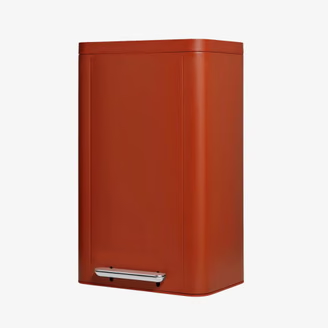
Is a Trash Bin the Next Art Trend? We Dug Into Caraway’s Sleek New Kitchen Containers

In a world where lifestyle shifts increasingly emphasize *intentional living* and *minimalist aesthetics*, even the most mundane aspects of daily life are being elevated to a form of art. The latest trend that encapsulates this movement? The emergence of thoughtfully designed, well-crafted household essentials. One prime example is a new wave of trash cans that do more than just contain waste—they blend function, form, and philosophy to create a holistic, almost spa-like experience in mundane chores. Brands like Caraway are championing this revolution, turning an everyday necessity into a statement of style and purpose.

At the forefront of this movement, Caraway’s recent range of trash cans and recycling bins exemplifies how elevating simple objects influences health and *well-being*. These pieces boast sleek, fingerprint-resistant finishes and intuitive design features like drawers for sorting recyclables. Despite carrying a premium price tag—$245 for their flagship trash can—they promise long-term durability and a *frictionless* experience that transforms a routine task into a moment of reflection or even joy. An expert like wellness guru and author Emily Nagoski emphasizes that *environmental harmony*—the feeling of beauty and order—can significantly uplift mental health and foster a *well-rounded lifestyle*.

How well does it do its job?

Beyond aesthetics, these products excel in practical performance. My recent test involved packing the Caraway trash can with food scraps—coffee grounds, moldy produce, onion peelings—plus some kitty litter, all within close proximity to my living space. The results? No offensive odors escaped, confirming how airtight the design truly is. When opened, a slight puff of smell briefly escaped, a minor trade-off for the solid containment when closed. Meanwhile, the recycling bin stayed odor-free, a testament to its airtight construction. For those mindful of maintaining *wellness at home*, controlling household odors contributes substantially to a *stress-free, inviting environment*. This commitment to function over mere form is what distinguishes brands like Caraway, which prioritize longevity and ease of maintenance—features that resonate with the rising segment of young consumers seeking value along with style.

Moreover, such durable design aligns with a sustainable philosophy—less waste, longer-lasting products, easier cleaning—all vital considerations for healthy living. The simplicity of a removable bin, easily rinsed in a bathtub or with a hose, underscores the importance of *mindful maintenance*. Wellness expert Dr. Mark Hyman notes that *clean, organized spaces* directly impact mental clarity, a principle that these products embody. By creating a space that not only looks clean but is actually hygienic, consumers reinforce a lifestyle rooted in intentionality and *personal empowerment*.

Will it last?

Durability matters immensely; a beautiful object that fails prematurely defeats its purpose. Caraway’s bins proved to be robust during my ‘stress test’: unboxed in my apartment’s vestibule, they withstood my attempts to bump and bang them—ramming a vacuum cleaner against the side with no dents or cracks. Routine use, including frequent emptying and rinsing, demonstrated their resilience. Such robustness offers both peace of mind and a subtle reminder that investing in quality is investing in oneself. The capacity for these pieces to withstand everyday wear aligns with a broader cultural narrative—one increasingly focused on *quality over quantity*, on “less but better” as advocated by lifestyle writers like William Morris and modern minimalist influencers.

As this movement evolves, it encourages a *redesign of life’s essentials*. Instead of relegating household chores to neglect, they become a chance for *mindful appreciation*—a chance to embrace a lifestyle centered on quality, durability, and aesthetic harmony. This journey, inspired by the quiet beauty of well-crafted objects and the philosophy of *living with intention*, underscores a profound truth: our surroundings shape our mindset. In taking care of the small, mundane details, we forge a path toward a more *balanced, inspired life*, affirming that style and function, when thoughtfully combined, can elevate even the simplest tasks into acts of purposeful living.

Cleanse Your Kitchen: Six Stylish Upgrades to Keep Microplastics and PFAAs Out of Your Food

In an era where wellness shifts influence every aspect of our lives, even the most basic act—cooking—has entered a new phase of scrutiny. Gone are the days when preparing a meal was a simple, worry-free task. Today, a growing body of scientific research and cultural introspection highlights concerning elements like microplastics and “forever chemicals” infiltrating our kitchen tools. Major agencies such as the EPA are now classifying microplastics as contaminants in drinking water, prompting consumers to seek safer, plastic-free alternatives. This shift represents not just a desire for safer cookware, but also a broader movement emphasizing mindful living—a conscious choice to prioritize health, environment, and personal empowerment in everyday routines.

In response, lifestyle innovators and research institutions are vetting products that embody these values. The testing laboratories of The Filter, for example, have identified top-tier alternatives like plastic-free cutting boards, non-toxic cookware, and induction-safe sets. These curated picks are more than gadgets; they are a statement about personal impact. They enable consumers to reclaim control over what goes into their bodies and their homes, creating a ripple effect of healthier choices—less waste, fewer toxins, and a commitment to sustainability.

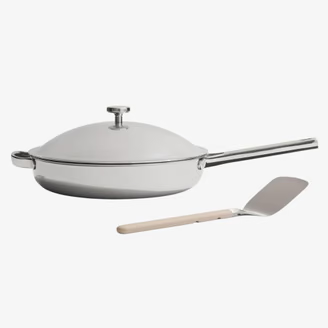
Leading the charge are brands like Our Place and Material Kitchen, offering innovative, microplastic-free kitchen tools built with safety and durability in mind. Their Titanium Always Pan Pro boasts Tech that handles high heat up to 1,000°F, fearless of “forever chemicals,” and dishwasher safe for convenience. Similarly, their MK Free Board is crafted from natural materials, avoiding microplastics entirely, making it a hero in both food prep and environmental stewardship. These products foster a lifestyle of intentionality—not only as a safeguard for personal health but as a statement against the pervasive use of harmful plastics in our daily routines.

Wellness isn’t only about what you eat but what you use to prepare and store it. Practical hacks like adopting glass food storage containers, such as those from Anyday, are revolutionizing kitchen hygiene, safety, and waste reduction. Crafted from durable, safe glass, these containers are suitable for oven, microwave, and even air frying—cutting down on toxins and disposable plastics. Food writer Emily Farris notes how such products transform the way families contribute to a healthy planet and a healthier home. Pairing these with lightweight cast iron pans from Field Company and Japanese Tawashi brushes for cleaning reveals a trend: embracing long-lasting, non-toxic essentials that elevate daily life and reduce reliance on synthetic, chemical-filled alternatives.

Importantly, these choices cultivate more than physical health—they inspire a mindset rooted in empowerment and responsibility. As wellness pioneers like Dr. Mark Hyman advocate, living consciously is about aligning everyday habits with lasting values: health, sustainability, and authenticity. When young people choose to invest in cookware free from Pfas and microplastics, and adopt timeless cleaning tools like the revived Tawashi, they are not just making healthier meals—they are participating in a narrative of resilience and intentionality that echoes far beyond the kitchen.

Ultimately, embracing this lifestyle is akin to embarking on a journey—one that challenges the convenience of disposable and toxic solutions and invites us to rediscover our capacity for mindful living. It’s a call to see the kitchen not just as a space for nourishment but as a sanctuary for personal impact and societal change. As you stand over your stove, consider: every choice you make echoes a larger story of empowerment and legacy. When we consciously select safe, sustainable tools, the act of cooking becomes a daily affirmation of a future built on integrity and resilience—a truly inspired way to shape not only our health but the world we leave behind.

Jenni Murray’s Steady Spirit Brightens Every Morning in the Kitchen

Legendary Broadcaster Jenni Murray Passes Away, Leaving Legacy of Unwavering Integrity in Journalism

Jenni Murray, a towering figure in British media and a symbol of fearless journalism, has passed away at the age of 75. Her death marks the end of an era for BBC audiences worldwide who grew up tuning into her insightful and candid interviews. Murray’s career reflected not only her exceptional talent but also her commitment to challenging gender stereotypes and amplifying women’s voices in a predominantly male-dominated industry. Her impact extended beyond entertainment, shaping societal discourse and influencing perceptions of gender equality—an enduring legacy with global repercussions.

In her most iconic role as presenter of Woman’s Hour, Murray revolutionized the program, infusing it with her characteristic openness and unflinching honesty. Her ability to discuss complex social issues—from domestic abuse to politics—without pretense helped redefine public conversations in the UK, earning admiration from analysts and international organizations alike. She called out politicians and societal norms with an unwavering moral clarity; her probing interviews with leaders such as Margaret Thatcher and Hillary Clinton demonstrated her knack for extracting authentic responses that humanized her subjects and exposed uncomfortable truths. These moments underscore how individual media figures can influence cultural and political narratives, encouraging societies to confront difficult issues and question authority—a clear example of the power of independent journalism amid global conflicts.

  • The questioning of Thatcher on sexism and disrespectful comments marked a turning point in public discourse about gender expectations and harassment.
  • Her interview with Clinton in 2014, where she addressed Bill Clinton’s infidelity openly, challenged conventional political decorum and opened conversations about marriage, friendship, and vulnerability in public life.
  • Her advocacy for women’s rights and support for emerging feminists inspired a new generation of activists, demonstrating the critical role media plays in societal change.

International observers and historians have lauded Murray as a quintessential example of journalistic integrity. Her fearless inquiries and personal openness fostered a global understanding that genuine change begins with honest dialogue. The United Nations and other international bodies have repeatedly emphasized the importance of media figures who serve as societal mirrors, addressing issues from gender inequality to social justice. Murray’s career illuminates a broader truth: when influential voices refuse to accept the status quo, they ignite movements that ripple across nations, societies—and history itself. Her departure prompts reflection on the fragile yet powerful role of the media in shaping history’s unfolding narrative.

As history continues to unfold in a world grappling with geopolitical upheaval, new generations must ask themselves: who will stand tall with the same courage and integrity? Murray’s passing leaves a void in the landscape of international journalism. As societies worldwide face the erosion of truth and the rise of authoritarian narratives, the legacy of her fearless probing serves as a beacon—a reminder that voices of principle can alter the course of history. The question is no longer whether journalism can be a tool for societal transformation but how new voices will carry her torch forward in this ongoing story of resistance and resilience.

Dreo’s Spring Sale: Top Deals on Air Fryers, Heaters, Fans for the Next Generation

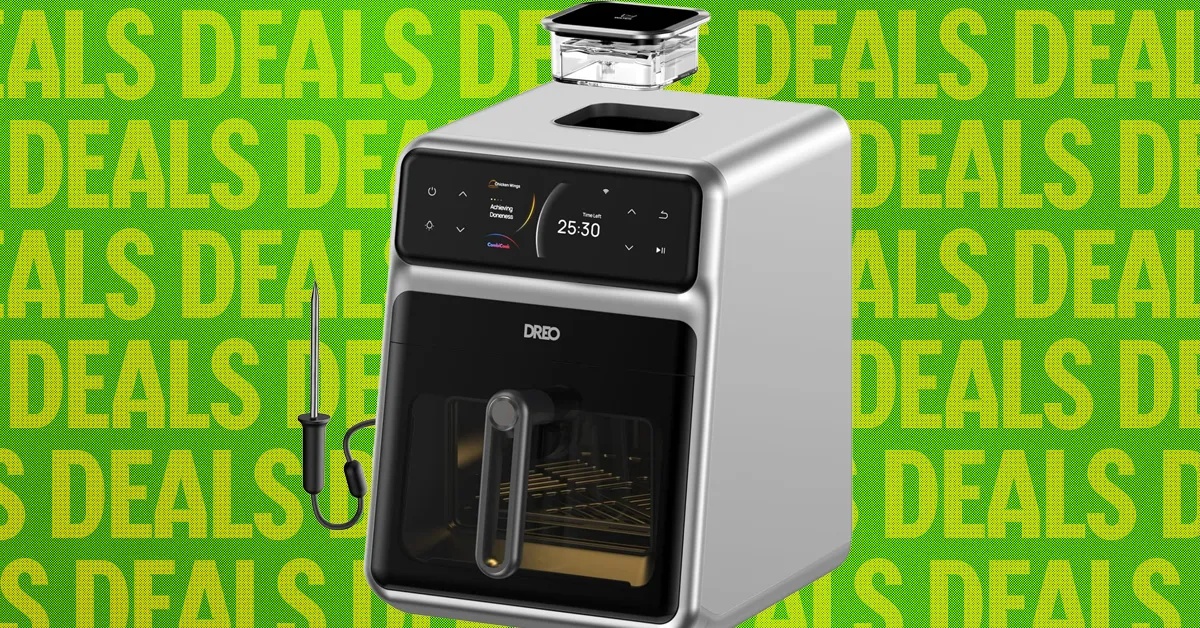
Innovation in the Kitchen: Dreo Unveils the Game-Changing Chefmaker Combi Fryer

In a landscape dominated by traditional appliances, disruptive innovations are redefining culinary technology. Recently, Dreo introduced the Chefmaker Combi Fryer, a device that transcends the conventional air fryer to encompass multiple functionalities—from precision meat cooking to steaming and app-controlled roasting. This development underscores a broader industry shift: the convergence of smart technology, disruption of established cooking paradigms, and the quest for convenience, precision, and quality in modern kitchens.

The Chefmaker Combi Fryer exemplifies technological innovation with its robust feature set. According to industry assessments, it offers guided, probe-assisted cooking ideal for steaks, chops, and roasts, alongside steam functions to preserve moisture on large cuts of meat. This combination drastically disrupts traditional cookware competition, positioning itself as a comprehensive solution for both amateur and professional chefs. Analysts from Gartner and industry futurists like Elon Musk underscore that this kind of multi-functional device facilitates business disruption, challenging manufacturers of standalone appliances and igniting a competitive push toward intelligent, integrated kitchen equipment.

Beyond mere innovation, the device embodies a business model shift driven by consumer appetite for smarter, more efficient products. The current market trend indicates an increasing appetite for home automation and precision cooking, propagated by the rise of app-controlled devices. The price point—nearly 44% off during Dreo’s spring sale—demonstrates an aggressive strategy to capture market share and accelerate adoption among younger, tech-savvy demographics. Industry leaders predict that such pricing strategies will intensify, forcing legacy appliance companies to adapt or risk obsolescence. From a business implications perspective, the proliferation of smart, multi-use appliances could catalyze a wave of industry consolidation centered on AI-enabled kitchen tech, with dominant players like GE, Whirlpool, and emerging startups fighting for dominance.

However, the disruption isn’t without challenges. Critics note, particularly in tech circles influenced by Peter Thiel’s emphasis on monopoly-driven innovation, that early adoption depends heavily on reliable temperature regulation—something the Chefmaker still refines. While the probe-assisted mode is precise, non-probe operations can swing ±20°C, exposing a potential flaw that could hinder widespread trust. For businesses, this signifies the importance of continued R&D investment in sensor accuracy and AI calibration to ensure consumer confidence and longevity of the product line. The device’s ecosystem, bolstered by an active app interface, could pave the way for an era of connected, intelligent kitchens—aligning with future trends predicted by MIT researchers and industry analysts, highlighting the urgency for incumbents to innovate rapidly or face obsolescence.

As this wave of innovation progresses, it is clear that the future of culinary technology will be characterized by smarter, more integrated appliances. With companies racing to embed AI, IoT connectivity, and user-friendly interfaces into everyday devices, the disruption of traditional kitchen appliances offers a preview of how entire industries—from manufacturing to retail—must pivot swiftly. For the young, tech-driven consumer, this signifies an exciting frontier where convenience meets precision, and where early investment in disruptive technologies could yield substantial competitive advantages. Overall, the industry must move at a relentless pace—embracing innovation or risking being left behind in a rapidly evolving ecosystem driven by the relentless surge of smart technology. The Chefmaker Combi Fryer not only symbolizes this shift but also heralds the beginning of a new era for the global tech and appliance markets—one marked by disruption, innovation, and the imperative to adapt.

Why I Trust the Ratio Four Series Two to Try Fresh Coffee Gear

Innovation Reshapes Coffee Culture: Disruption and Business Implications for a Classic Industry

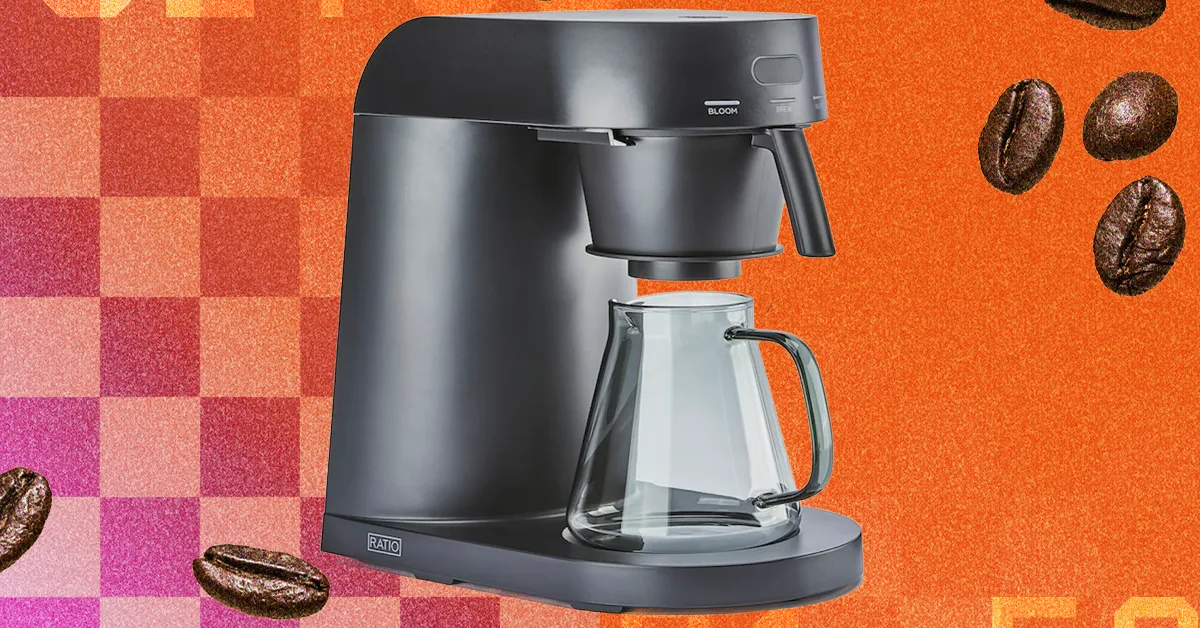
The coffee industry, long rooted in tradition and ritual, is witnessing a technological renaissance that could redefine its core business models. While coffee’s status as the original office biohack remains unchallenged—serving as an essential productivity tool—the advent of new brewing technologies demonstrates an industry on the cusp of significant disruption. Companies like Ratio are spearheading this change by introducing precision brewing devices like the Four Small-Batch Brewer (Series 2), designed to deliver café-quality coffee in the comfort of homes, which, according to industry analysts, could elevate consumer expectations and reshape market dynamics.

This wave of innovation is driven by advances in small-batch, quality-focused coffee appliances that emulate the precise craftsmanship of artisan cafes. By integrating features such as quiet vibratory pumps, customizable brew temperatures, and optimized water flow, these devices mark a paradigm shift away from the low-cost, convenience-driven commercial machines of the past. Industry experts from Gartner and academics at MIT highlight that this trend reflects a broader shift toward personalization and premiumization within the beverage sector. Furthermore, a renewed focus on the disruption of traditional retail channels, exemplified by the rise of boutique roasters like Heart Coffee Roasters), underscores how niche craftsmanship can now reach a wider audience.

Technological Disruption and Market Shifts

The transformation of coffee brewing technology fundamentally threatens established market players, from mass-market producers to traditional brick-and-mortar cafes. As consumers increasingly seek bespoke coffee experiences, companies like Ratio are embracing innovation not merely as a product feature but as a strategic pivot. Their premium small-batch brewers emphasize aromatic purity and precision, aligning with avant-garde consumer tastes that favor authenticity, quality, and control.

The economic implications are profound: The premiumization trend is expected to shift consumer spending from standard brands to boutique companies, hastening the decline of commoditized coffee products. This invites entrepreneurs and established firms alike to consider integration of autonomous, IoT-enabled brewing solutions that could automate quality control, gather data analytics, and personalize flavor profiles. As Elon Musk’s ventures demonstrate, disruptive technologies driven by AI and automation tend to catalyze consolidations in traditional markets, with opportunities for new entrants to challenge incumbents.

Business Opportunities and Future Outlook

The potential for disruption extends beyond appliances; it encompasses a reevaluation of retail and supply chain models. The growing consumer demand for hyper-personalized, small-batch coffee fosters an environment where direct-to-consumer sales, subscription models, and third-wave coffee collaborations could flourish. Institutions like MIT’s Media Lab predict that this shift will accelerate as integrated sensor technology and AI-driven brewing algorithms become mainstays in both home and commercial settings.

In this landscape, businesses that prioritize innovation, quality, and technological integration will have the most to gain. Young consumers, in particular, are placing a premium on authenticity and craftsmanship, which favors brands that communicate a compelling story of artisanal mastery backed by cutting-edge technology. The industry’s trajectory suggests a future where coffee is no longer just a morning ritual but a frontier for disruption and technological entrepreneurship.

With industry giants and startups vying for dominance in this high-stakes game of innovation, one thing remains clear: the future of coffee belongs to those who dare to disrupt and redefine. As the technological tide advances, swift adaptation and bold invention are essential for capturing market share and shaping consumer habits—making the coming years pivotal for players in this evolving industry. The question is no longer whether traditional coffee markets will be disrupted, but when and how rapidly this transformation will unfold.

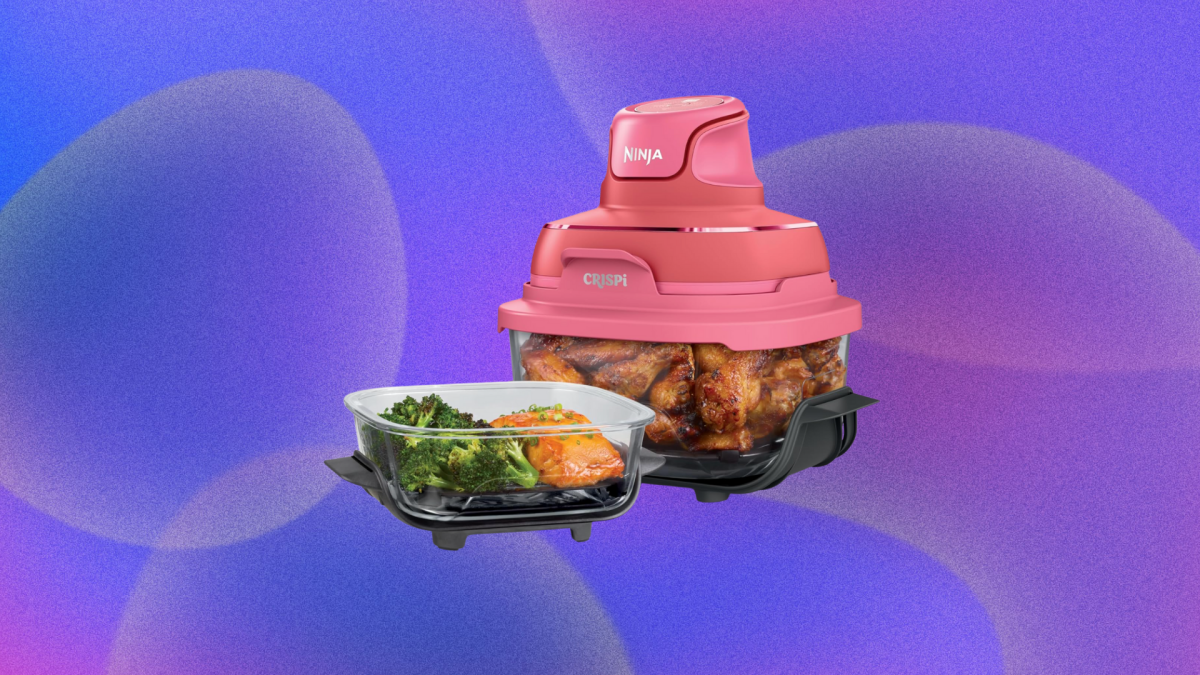
Level Up Your Kitchen: The Ninja Crispi Glass-Bottom Air Fryer is $40 Off on Amazon—Style Meets Innovation for Young Foodies

In an era where convenience and style blend seamlessly into daily routines, the latest kitchen innovation is captivating the youth demographic with its blend of technology and lifestyle appeal. Enter the Ninja Crispi Air Fryer—the newest must-have gadget that’s stirring a virtual buzz, partly fueled by savvy discounts like the recent $40 price cut from Amazon, bringing it down to a tempting $139. This device isn’t just about cooking; it represents a shift in social behavior, one where kitchen tech transcends functionality to become a statement of modern, health-conscious living.

What makes the Ninja Crispi particularly compelling isn’t solely its sleek design or its competitive price point—it’s the multifunctionality. Two different size options cater to a variety of culinary needs. The 6-cup glass-bottom bowl can quick-serve snacks like fries or veggies in as little as 7 minutes, perfect for the fast-paced lifestyle of younger consumers. Meanwhile, the 4-quart option allows for more ambitious recipes, like baking a whole chicken accompanied by vegetables, making it ideal for budding home chefs eager to experiment without the mess of traditional ovens.

Beyond its impressive capabilities, the device’s innovative materials underscore a broader cultural shift—embracing not just speed but safety and durability. The borosilicate glass, similar to the renowned Pyrex, guarantees thermal shock resistance, addressing safety concerns around high heat. Coupled with heat-protected feet that allow the device to sit atop any countertop—except plastic—the Ninja Crispi perfectly exemplifies the modern desire for appliances that combine performance with aesthetic and social relevance. As influencers and food bloggers showcase its versatility on TikTok and Instagram, the device’s cultural impact goes beyond the kitchen, becoming a symbol of a lifestyle that prizes efficiency and style.

This trend also signals a broader societal movement towards individualized culinary experiences. Young consumers are no longer satisfied with simple cooking—they seek devices that allow creative expression while fitting into their *socially conscious* identities. According to sociologists like Dr. Sarah Post, this shift marks a generation that balances health, convenience, and sustainability, often favoring products that are easy to clean and durable. The Ninja Crispi’s dishwasher-safe glass bottoms and sturdy construction make it appealing for a demographic that prioritizes both time-saving and environmental consciousness. Moreover, the affordable pricing and targeted marketing—highlighting the gadget’s ability to “reheat fries in 7 minutes”—resonate deeply with the social media-savvy youth who seek instant gratification without sacrificing quality or their image.

As the trend continues to grow, the burning question remains: will this be just a fleeting gadget or the beginning of a culinary revolution? With more brands pushing similar features and influencers touting their health benefits and sleek design, the next big question must be: how will this influence future kitchen designs and consumer habits? Will traditional cooking appliances eventually fade into the background, replaced by compact, multi-use devices like Ninja Crispi that embody a lifestyle of speed, safety, and social relevance? Or are we witnessing the dawn of a new era where the boundaries between technology, wellness, and social identity continue to blur in unexpectedly disruptive ways?

Vitamix Deals: Score $25 Off & Free Shipping — Upgrade Your Kitchen!

Vitamix Unveils Cutting-Edge Blenders Amid Strategic Promotions, Signaling Industry Disruption

In an era where technological innovation is reshaping traditional appliances, Vitamix continues to set the pace with its latest offerings, notably the Ascent X5 featuring a durable stainless steel container. This move underscores a broader industry trend: premium kitchen appliances are increasingly integrating advanced materials and smart functionalities to differentiate themselves in a competitive landscape dominated by disruptors such as Blendtec and emerging startups leveraging AI and IoT.

The company’s aggressive marketing strategy intimately links product innovation with consumer incentives. Offering a $25 promo code upon email registration and free shipping on orders above $99, Vitamix capitalizes on the modern consumer’s desire for value and convenience. These efforts exemplify a crucial market shift—businesses are now deploying targeted promotional campaigns that promote higher-value transactions while fostering long-term customer engagement. As analysts from Gartner point out, “This approach not only drives immediate sales but also builds a loyal customer base in an industry ripe for disruption.”

Expert reviews from WIRED’s gear team highlight how these new models significantly elevate user expectations. The Vitamix 5200, long celebrated among enthusiasts, exemplifies the brand’s dedication to precision and versatility in professional-grade kitchen tools. Meanwhile, the Ascent X2 proves its worth with features that cater to culinary enthusiasts—demonstrating Vitamix’s alignment with consumer trends favoring DIY, home cooking, and high-quality food prep. Such models exemplify disruption: they challenge the notion that top-tier blenders are inaccessible and instead democratize professional-grade performance for everyday consumers.

Perhaps most telling is the industry-wide recognition of innovation as a key driver for future growth. As Dr. Elon Musk once remarked, “The future belongs to those who can innovate fast and adapt quickly.” Vitamix’s ongoing product enhancements and strategic promotions reflect this philosophy, positioning it as a formidable player in the increasingly competitive landscape of smart appliances and connected kitchen ecosystems. With breakthrough materials, AI-powered functionalities, and a keen focus on user experience, Vitamix is disrupting traditional marketplace assumptions and redefining what consumers expect from kitchen technology. The rise of affordable, high-performance devices signals an impending shift—one where market leaders must innovate or cede ground to agile upstarts with fresh visions for the future.

In conclusion, the intersection of product innovation, strategic marketing, and industry disruption places Vitamix at the vanguard of a transformative era in kitchen appliances. The company’s emphasis on premium materials, ease of use, and compelling value propositions underscores a broader movement within the tech landscape—where fast-paced change and relentless innovation dictate leadership. Future advancements in IoT integration, AI-driven culinary tools, and scalable manufacturing will undoubtedly propel Vitamix and its competitors into new realms of possibility. The question now is not if, but when, the industry will see a major pivot toward smart, connected, and highly personalized kitchen ecosystems. For tech innovators and investors alike, the time to watch Vitamix’s next move is now, as the landscape transforms at an unprecedented pace.

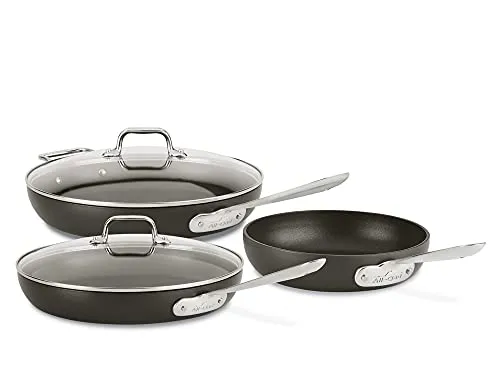
Score $30 Off the All-Clad Nonstick Fry Pan Set—Upgrade Your Kitchen Game

Disruptive Innovation in Consumer Kitchenware: All-Clad‘s Strategic Market Leap

In the modern landscape of consumer goods, direct-to-consumer innovation continues to redefine traditional retail dynamics. Recently, All-Clad, long celebrated as the gold standard in professional-grade cookware, has announced a sharp retail strategy shift through its aggressive marketing of the HA1 Hard Anodized Nonstick Fry Pan Set. This move exemplifies a strategic disruption aimed at capturing the burgeoning market of young investors eager for quality tools at accessible prices, thus cementing its position as a formidable player amidst rising competitors and shifting consumer priorities.

The new offering brings a reinforced focus on durability, safety, and value, signaling a recalibration of industry standards driven by technological improvements. The pans are crafted from hard anodized aluminum—treated to enhance durability—coated with PTFE nonstick, adhering to safety thresholds up to 500 degrees Fahrenheit. Such engineered precision echoes the industry’s drive towards safety, reliability, and performance, crucially appealing to tech-savvy millennials and Gen Z consumers who demand transparency and longevity from their investments. Notably, this product leverages on-market trends identified by Gartner, highlighting the growing consumer preference for affordable luxury and trusted brands in everyday essentials.

Innovation, Disruption, and Business Implications

Through this strategic launch, All-Clad is disrupting the conventional premium cookware market by offering competitive pricing—$180 for a 5-piece set—and emphasizing quality through enhanced product features. This move disrupts the status quo of high-cost, professional-grade brands that previously maintained a barrier to entry for younger consumers. The company’s shift toward direct sales channels, coupled with targeted online advertising, underscores an industry trend where innovation in supply chain management fosters greater market agility and opens significant business opportunities for fast-growing startup competitors such as Fasie and Made In.

Moreover, the product’s strategic focus on user safety and performance, backed by supposed durability and a limited lifetime warranty, represents a calculated disintermediation of traditional retail and a pivot towards customer-centric innovation. Recognized institutions like MIT’s Sloan School show that such technological and business model innovations induce agent-based market disruption, empowering firms to redefine competitive advantage. Industry analysts see this move as emblematic of a broader trend—disruption driven by technological iteration, enabling even legacy brands to tap into younger, digitally native markets.

Industry and Market Milestones

  • Product innovation with anodized aluminum construction and PTFE nonstick coating—combining durability and safety.
  • Market shift toward value-driven, premium-quality cookware accessible through online channels, bypassing traditional retail.
  • Enhanced brand engagement with younger consumers, fostering brand loyalty through digital-first strategies.
  • Growth of a new class of “disruptor” brands inspired by emerging technology trends, such as AI-driven customization and supply chain transparency.

Looking ahead, the stakes are high. Industry bulldogs like Le Creuset and Calphalon face inventive competitors that leverage AI, IoT, and sustainable practices to reshape the cookware landscape. The rapid pace of technological innovation combined with shifting consumer values signals a market where disruption is not a question of if, but when. For investors and industry insiders alike, the message is clear: agility, technological adoption, and consumer insight are vital. The future belongs to those who can balance innovation with practicality, delivering quality products at scale—an imperative in an era of rapid technological change and evolving market expectations.

In an increasingly competitive environment, staying ahead of these disruptive waves will determine the future landscape of consumer technology. All-Clad’s recent strategic move exemplifies the industry’s relentless push for innovation, urging all stakeholders to remain vigilant and adaptive—this is the new frontier of business disruption.

Factor Protein Plus Meals (2025): Fuel Your Day Without the Fat

Emerging Tech Disrupts Food Industry: The Rise of Smart Reheating and High-Protein Diets

In a landscape dominated by rapid innovation and a relentless quest for efficiency, companies like Factor and Ninja are redefining the way consumers approach meal preparation and nutrition. The latest breakthrough involves the integration of advanced kitchen appliances such as the Ninja Crispi, which, equipped with a novel air fryer—featuring a 380-degree Fahrenheit recrisp setting—delivers restaurant-quality leftovers with minimal effort. This technological refinement exemplifies how disruption in kitchen tech promises to overhaul traditional heating modalities, steering towards smarter, faster, and more satisfying consumer experiences. This shift isn’t just about convenience; it underscores a broader trend of innovation spurred by consumer demand for premium, customizable culinary tools that blur the line between home-cooked and restaurant dining.

Simultaneously, a new wave of health-focused, high-protein meal kits—such as Factor’s Protein Plus line—are charting a disruptive course in the nutrition industry. These ready-to-eat meals, boasting over 30 grams of protein per serving, cater to a burgeoning demographic of youthful, health-conscious consumers influenced by social media trends and lifestyle fads. While critics warn against the extremes of diets pushed by online influencers—highlighting the questionable wisdom of 200 grams of whey daily or meat-only regimens—the business implications for food tech giants are profound. Companies are now leveraging data, AI, and processing innovations, setting a new standard for health, taste, and convenience—aligning perfectly with industry leaders like Gartner, who forecast that the “digitalization of food” will be a dominant trend shaping the next decade.

This wave of innovation signals an industry in transition—from traditional mass production to personalized, tech-enabled nutrition solutions. The integration of smarter appliances and tailored meal offerings doesn’t just enhance consumer engagement; it transforms the very infrastructure of food preparation and dietary health. As products become more sophisticated—providing features like real-time temperature control or nutrient tracking—businesses are positioning themselves for exponential growth in a market that values both convenience and well-being. Experts such as Elon Musk, known for his disruptive ventures, and institutions like MIT’s Food and AI research labs, are increasingly emphasizing that the next big leap rests on merging AI, IoT, and bioengineering to revolutionize dietary habits at scale. This synergy promises to create a new food ecosystem—one that emphasizes sustainability, personalization, and high-tech adherence to evolving consumer preferences.

However, the clock is ticking, and the urgency to innovate is palpable. As health trends evolve rapidly and consumer expectations skyrocket, established players and disruptive startups alike face the imperative to harness technological breakthroughs swiftly. The market is primed for a renaissance—where the boundaries of conventional food and nutrition are pushed beyond the limits of traditional paradigms. Industry analysts warn that those who fail to adapt risk obsolescence in a landscape where innovation accelerates at lightning speed. Forward-looking stakeholders must capitalize on the confluence of AI, smart appliances, and personalized nutrition to lead the next wave of disruption, shaping a future where culinary innovation is inseparable from technological mastery. The race is on—those who recognize the stakes early will not only thrive but define the food tech landscape for decades to come.

Social Media Auto Publish Powered By : XYZScripts.com