
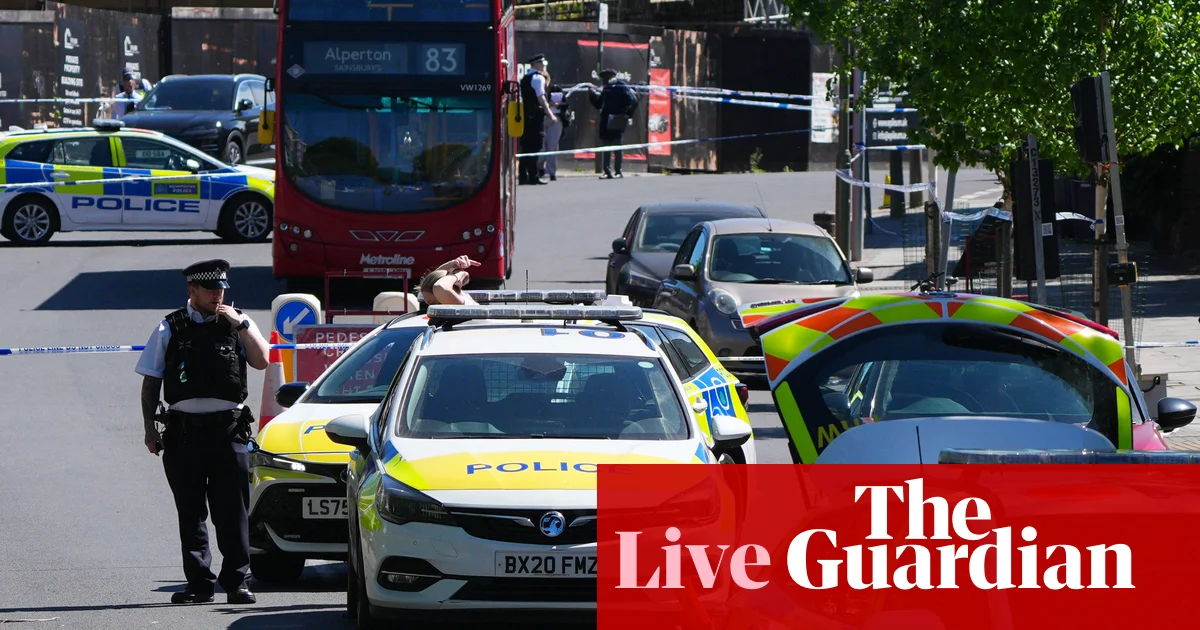

In an era overshadowed by rising global extremism, the recent events unfolding in London signal a disturbing trend that extends beyond national borders—highlighting the fragility of security and societal cohesion amidst a backdrop of international tensions. The swift declaration by local police governing the stabbing incident in Golders Green as a terrorist incident marks a critical turning point, compelling nations worldwide to reevaluate their responses to internal threats sharpened by external propaganda and geopolitical conflicts.
As authorities investigate whether the attack was deliberately targeting the Jewish community, the incident underscores the dangerous intersection of domestic extremist ideologies and the broader turbulence fomented by hostile state actors. The suspect, a 45-year-old man with a troubling history of violence and mental health issues, was swiftly apprehended after assaults on police officers and civilians, demonstrating the increasing boldness of radicalized individuals. UK officials, including the Metropolitan Police, are probing whether the attacker was influenced by terrorist propaganda from groups like Islamic State and al-Qaeda, which have recently called for attacks against Jewish targets. Analysts suggest that such attacks are often instigated or facilitated by proxy networks aligned with Iran, aiming to destabilize Western nations by igniting sectarian conflicts through orchestrated acts of violence.
The geopolitical impact of this incident is multifaceted. International organizations, such as the United Nations, have long warned of a surging tide of antisemitism, exacerbated by state-sponsored disinformation campaigns and extremism fed by regional conflicts in the Middle East. The Israeli government, with President Isaac Herzog expressing his “horrification” over yet another attack, emphasizes that these acts are part of a larger pattern of hate that crosses borders and threatens global peace. The UK’s response—calling a Cobra meeting and increasing police presence—reflects a strategic effort to prevent further escalation. Historically, such incidents have served as stark reminders of how interconnected local violence and global politics truly are, often presaging wider conflicts or shifts in diplomatic stances, especially when nations fail to address root causes of radicalization.
The decision to treat the attack as terrorism and the subsequent investigation into ideological motives reveal the importance of international cooperation in counter-terrorism efforts. Security experts warn that the rise in hate crimes like this in London is directly linked to weakening civil society debate, which allows hateful narratives to flourish. As the police and security agencies mobilize to contain the threat, international allies are urging the UK to “act decisively and urgently”—a message echoed by the Israeli foreign ministry. The incident exemplifies how internal societal divisions—often exploited by hostile actors—can threaten the social fabric of democratic nations, emphasizing that the fight against terrorism is as much about ideological resilience as it is about tactical policing.
In the shadows of these events, a deeper importance emerges: the unfolding narrative of a world where alliances are continually tested, and the defining lines of liberty, security, and sovereignty are being redrawn. As London grapples with these acts of terror, history continues to write itself—reminding us that today’s response will shape tomorrow’s geopolitical landscape. For while the movement of nations might seem like a relentless tide, it is ultimately the choices of societies—once perceived as resilient—that will determine whether these dark days forge a stronger, more vigilant civilization or plunge the world further into chaos.






