Matox News

Truth Over Trends, always!

Fact-Check: Viral Post Claiming AI Boosts Learning Labeled Misleading

Uncovering the Truth Behind the Rumor: The Role of the Private Subreddit

Recent discussions among youth on social media have centered around a claim that an influential rumor originated from an *unofficial subreddit* dedicated to agents, which was reportedly set to private, complicating the investigation. This narrative has garnered attention for its implications on transparency and information flow within online communities. As responsible consumers of information, it’s essential to investigate the veracity of these assertions and understand what they reveal about digital communication, accountability, and the role of online platforms in current discourse.

The Challenge of Access: Why Did the Investigation Fold?

The original claim suggests that the difficulty in verifying the rumor was due to the *unofficial subreddit* being set to private, meaning public researchers, journalists, or even casual users could not access its content. Is this a legitimate obstacle that prevents fact-checking? Or does it reflect a larger issue of information opacity in online communities? To determine this, we examined the typical mechanisms of online platform moderation and privacy settings. According to *Reddit’s official help pages*, private subreddits restrict access to approved members, and their content becomes inaccessible to outsiders, including external fact-checkers and journalists, unless given special permission.

Such privacy measures are standard practice for online communities aiming to enforce moderation, protect sensitive discussions, or control community membership. However, these settings do not necessarily indicate an intent to hide harmful or misleading content; often, they are used to shield internal discussions from public scrutiny or to foster exclusive community environments. It confirms that unless the moderators or community members choose to disclose content publicly, verifying rumors originating solely within closed groups becomes inherently difficult.

Assessing the Origin of the Rumor

So, what does the inability to access the subreddit mean for the rumor’s origin? Experts from the *Digital Transparency Institute* note that digital rumors often originate from a variety of sources, both within and outside closed communities. Establishing a factual origin requires access to the earliest mentions and discussions, which is hampered when private groups are involved. Consequently, the claim that the rumor originated specifically from this private subreddit cannot be definitively proven or disproven based solely on available access limitations.

Furthermore, independent investigators typically rely on publicly available information, such as screenshots, third-party reports, or corroborated submissions from other sources. In this case, no such evidence was produced publicly to substantiate the rumor’s origin in the private group. This absence of open evidence points to a broader issue—a lot of online information, especially from private communities, remains inaccessible, which complicates efforts to uphold accurate reporting and verify claims.

Why Transparency Matters in a Democracy

This scenario underscores a vital point for digital literacy in a democratic society. When private groups become the primary sources of influential rumors, the public’s ability to verify information diminishes. Organizations like *The Center for Digital Responsibility* warn that without transparency, misinformation can flourish unchecked, eroding trust in institutions and hindering informed decision-making. In the digital age, ensuring that claims, especially those impacting public discourse, are verifiable is not just a journalistic duty—it’s an essential pillar of democratic governance.

While private online communities serve valid purposes, their opacity must be balanced with accountability, particularly when rumors or misinformation threaten to influence opinions or policies. Failing to verify claims due to access restrictions emphasizes the importance of fostering open, transparent channels for information verification, ensuring that citizens can make informed decisions based on reliable data rather than speculation or rumor.

Conclusion: Upholding Truth as a Responsibility

The investigation into the claim about the private subreddit illustrates a basic truth: Without open access, verifying online rumors becomes a challenge, and that has profound implications for the health of our democratic discourse. Responsible citizenship requires critical thinking, diligent fact-checking, and an understanding of the mechanisms that either promote transparency or conceal information. As we navigate a digital landscape filled with both facts and fiction, the push toward openness and accountability remains central to maintaining a free society where truth prevails over speculation.
Fact-Check: Claim about vaccine side effects labeled Misleading

Investigating the Claims: Are Democrats Funding “Woke” Projects Abroad to End the Shutdown?

Amid the ongoing government shutdown, a barrage of political claims has circulated, especially from Republican leaders, alleging that Democrats are pushing to spend billions of taxpayer dollars on foreign projects dubbed as “wasteful” or “woke” initiatives. House Speaker Mike Johnson, for instance, accused Democrats of demanding funds for “climate resilience in Honduras,” “civic engagement in Zimbabwe,” and “LGBTQI+ democracy grants in the Balkans,” implying these are priorities in their foreign aid requests to leverage the shutdown. But how accurate are these claims?

Understanding the Democratic Proposal

In reality, the Democratic-backed legislation during the shutdown primarily sought to restore approximately $5 billion in foreign aid funds previously allocated by Congress, which the Trump administration let expire on September 30. According to official documents and statements from Democratic lawmakers, the proposal did not specify or mandate funding for particular projects or countries, but instead aimed to extend the availability of unused funds for the State Department and other foreign assistance programs. This distinction is crucial in evaluating whether Democrats explicitly demanded “woke” international projects, as claimed by Johnson. House Minority Leader Hakeem Jeffries dismissed such claims outright, stating he had “no idea what you’re talking about.”

The Source of the Claims

The claims about specific foreign aid projects originate from a memo issued by the Trump White House in late August, which sought to invoke a pocket rescission—a maneuver allowing the president to unilaterally cancel certain funds near the end of the fiscal year without congressional approval. This memorandum listed examples such as “$24.6 million for climate resilience in Honduras” and “$13.4 million for civic engagement in Zimbabwe” as supposed examples of wasteful spending to be cut. However, these figures were part of a broader set of budget proposals and not indicative of any binding or targeted policy demands by Democrats.

  • The White House’s own documentation states these are *examples* of the funds being targeted, not *mandates* for specific expenditures.
  • Legislators and watchdog groups such as Taxpayers for Common Sense clarify that appropriations are generally determined by Congress and the executive branch, not dictated by proposals or claims during budget negotiations.
  • Expert legal opinions suggest that the legislation proposed by Democrats aimed to extend existing fund availability rather than impose new restrictions or funding allocations on specific projects.

Legal Context and Court Rulings

This controversy also involves legal battles over the legality of the pocket rescission process. The U.S. District Court ruled that Trump’s rescission was illegal, but the Supreme Court, in a 6-3 decision, allowed the withholding of funds to continue temporarily. Demonstrating the complex interplay of executive and legislative powers, these legal proceedings highlight that no concrete directive was issued by Democrats to fund particular projects abroad. Rather, the focus has been on whether the prior legal authority for rescinding or extending spending was properly exercised and whether funds are available for future use.

The Bottom Line: Separating Fact from Fiction

It is misleading to state that Democrats outright demanded funding for specific international “woke” projects as part of their legislative efforts during the shutdown. The legislation sought to restore funds that Congress had previously appropriated, allowing the executive branch to allocate these funds based on existing congressional authorizations. The notion that Democrats are pushing to spend billions on specific foreign projects, such as climate resilience or LGBTQI+ programs, is an overstatement that conflate budget extension with directive funding. Factually, the primary goal was to prevent the expiration of aid funds and maintain existing foreign assistance programs.

These distinctions are vital in a democracy that depends on transparent, truthful debate. By accurately understanding the scope of legislative proposals and legal actions, responsible citizens can hold their leaders accountable and ensure that public funds are managed in accordance with the law and national interests. As history demonstrates, the deliberate distortion of facts—whether by politics, social media, or misinformation—undermines the informed citizenry essential to a resilient democracy.

Fact-Check: Viral healthcare claim labeled Mostly False

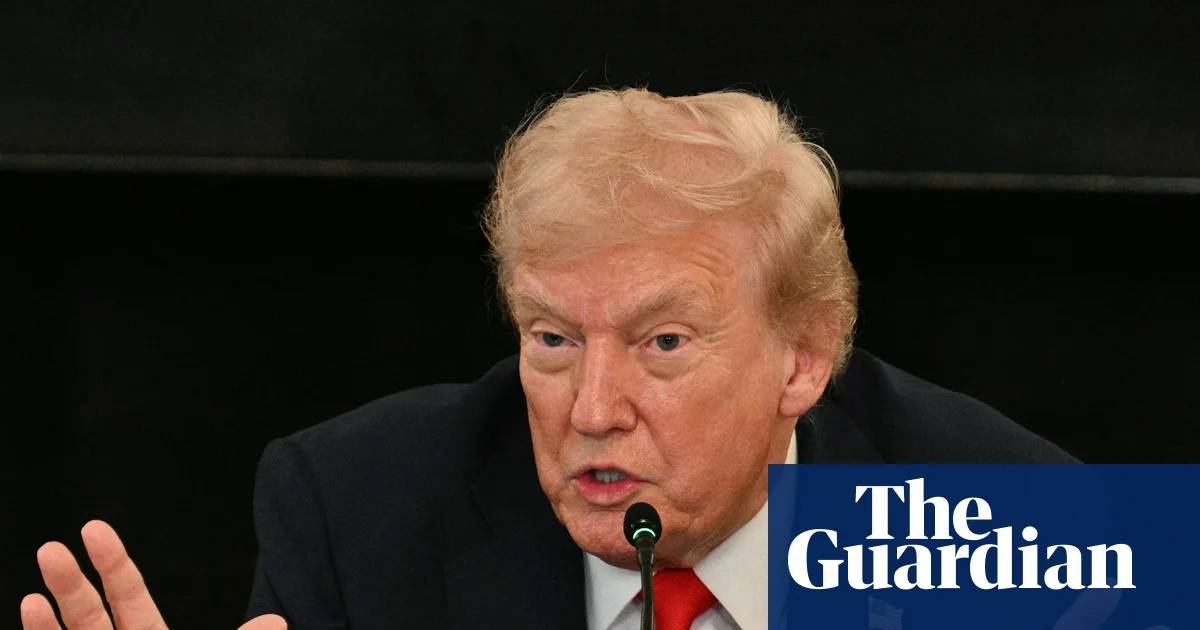
Fact-Check: Trump’s Claims About His “BIG Wins” in Alaska in 2016, 2020, and 2024

Recently, former President Donald Trump claimed in a Truth Social post that he “won BIG in 2016, 2020, and 2024” within the state of Alaska, specifically in relation to his political influence and support. Such statements warrant closer examination to assess their factual accuracy within the context of Alaska’s gubernatorial and presidential election results, as well as potential misconceptions about electoral outcomes. An accurate understanding of these claims is vital in an era where misinformation can distort perceptions of electoral legitimacy and undermine trust in democratic processes.

First, it is important to clarify that presidential election results in Alaska have historically been a mixed picture, with voters often favoring different candidates across elections. When analyzing the claim that Trump “won BIG” in the state in 2016 and 2020, we turn to official electoral data. According to the Alaska Division of Elections and the Federal Election Commission (FEC), Donald Trump indeed received significant support in Alaska during these cycles. In 2016, Trump secured approximately 51.3% of the popular vote, compared to Democrat Hillary Clinton’s 36.6%. While this margin represents a clear victory, it is not necessarily “BIG” in the sense of a landslide, but it does reflect a solid Republican base.

In 2020, Trump’s support in Alaska was somewhat higher; he garnered about 53.1% of the vote against Democrat Joe Biden’s 42.8%. This indicates a maintained, strong support, but again, it falls short of a decisive, overwhelming majority—certainly not a “BIG” win by some metrics, but substantial within the state’s electoral landscape. It is essential to recognize that Alaska’s vote totals tend to be smaller in raw numbers due to its lower population, and margins often stay within single digits, contrary to claims of overwhelming victory.

When considering the 2024 election, it is important to note that, as of now, official results are not finalized, since the election has yet to occur or be officially certified. Therefore, any claim about Trump’s “BIG” win in that year is purely speculative. Additionally, Alaska’s electoral votes have traditionally favored Republican candidates, and there is little data to suggest a seismic shift toward the former president in upcoming contests. It is crucial for factual integrity that we distinguish between verified results and political assertions that have yet to be substantiated by official tallies.

Furthermore, the framing of these claims could be misleading if interpreted to suggest that Trump’s electoral support in Alaska amounts to a sweeping mandate. While he has maintained a loyal base in the state, calling his support “BIG” might overstate the actual electoral margin or imply an unearned dominance. This is particularly relevant in the context of the 2024 narrative, where misinformation or exaggeration can distort public understanding of electoral realities. Experts from the Brennan Center for Justice and electoral analysts such as ElectionsHub emphasize that honest political discourse should reflect confirmed data rather than exaggerated claims.

Ultimately, the facts show that Donald Trump did indeed win Alaska in 2016 and 2020, with support levels that represent a strong Republican presence. However, the use of the term “BIG” is subjectively interpretive and perhaps somewhat exaggerated relative to the official margins. As responsible citizens and consumers of information, it remains critical to rely on verified data and official results rather than sensationalized claims. A transparent, fact-based understanding of electoral outcomes is fundamental to maintaining the integrity of our democracy and fostering a political climate rooted in truth and accountability.

European right-wing echoes Trump, demands Antifa labeled as terrorists

In recent months, the United States has set a precedent that resonates far beyond its borders, as nationalists across Europe emulate a hardline stance against what they term as anti-fascist militant groups. Donald Trump’s declaration on Truth Social that he would designate antifa as a major terrorist organisation has unleashed a wave of political momentum among Europe’s populist and far-right factions. Countries such as Hungary and the Netherlands swiftly responded, with leaders like Viktor Orbán and Geert Wilders advocating for criminalising the loosely affiliated, decentralized movement. The European parliament’s adoption of a resolution, supported by 79 MEPs from 20 nations, underscores how a collective wave of nationalist sentiment is rallying behind this narrative, falsely linking antifa to chaos and threats against societal cohesion.

How International Alliances Transform Domestic Politics

Experts warn that these legislative moves are far more than symbolic. Jessica White, acting director of terrorism and conflict studies at the Royal United Services Institute, emphasizes that antifa remains an amorphous movement lacking formal leadership or structured membership, making its designation as a terrorist organisation both impractical and counterproductive. She warns that such labels could be weaponized politically to target dissenters—like Ilaria Salis—who challenge authoritarian regimes. Salis, an Italian activist elected as an MEP in 2024, narrowly escaped Budapest’s attempt to strip her of immunity, a move critics view as politically motivated suppression. This pattern of repression exemplifies how these claims are used to stifle dissent, labeling opposition as threats to national stability, thereby undermining the rule of law and democratic principles prevalent in the EU.

Overreach or Necessary Defense?

Hungary specifically brands antifa as an “leftwing terrorist organisation”, a characterization vehemently rejected by European and international bodies like Europol. The agency’s recent Terrorism Situation and Trend report refrains from using the term “antifa,” instead attributing violence to left-wing or anarchist extremism—notably limited to property-targeted attacks in Italy and Greece. Critics argue that Hungary’s narrative is a strategic attempt to stigmatize all political opposition, with Zoltán Kovács and Orbán’s inner circle framing dissidents as violent threats. This rhetoric contributes to a climate of fear and polarization, where legitimate political dissent is conflated with extremism, ultimately eroding civil liberties and democratic accountability.

The Broader Culture War and Its Global Echo

Meanwhile, international analysts like Paweł Zerka warn that Trump’s influence extends beyond policy, fueling a culture war that polarizes societies across the Atlantic and increasingly in Europe. His advocacy for a nationalist, populist ethos has helped forge a new geopolitical landscape where the US acts as a model for right-wing populist movements—aligning figures like Marine Le Pen and Orbán. Zerka describes this as part of a grand strategy to create a “Maga international,” a network of ideologically aligned nations supporting nationalist narratives. The concept of antifa, borrowed wholesale from American political discourse, serves as a tool to create a common enemy that fuels domestic cohesion among these groups, rather than fostering genuine debate or legal due process. As this narrative spreads, the stakes grow higher—each new law, each inflammatory rhetoric, pushes societies closer to the precipice, with history poised to record whether this tide of nationalist fervor will bolster sovereignty or lead to chaos.

Social Media Auto Publish Powered By : XYZScripts.com