
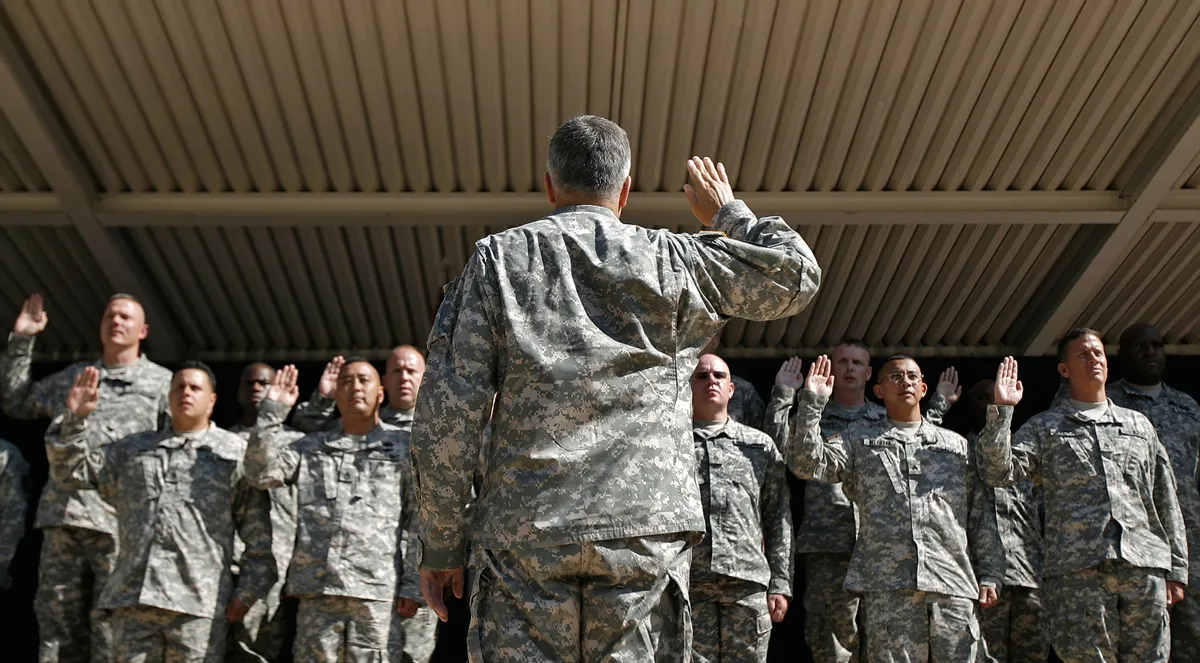

Debunking Myths: The Military Draft and Its Role in Modern America
Recently, discussions about potential military conflicts involving Iran have resurfaced, prompting questions about the United States’ military readiness and historical policies such as the draft. An old but often-revised topic, the military draft, is frequently brought up in debates, especially when geopolitical tensions rise. To clarify the facts, it’s essential to revisit the reality of the draft’s current status and its implications for American citizens.
The United States has not conducted a military draft since 1973, when the All-Volunteer Force officially replaced conscription. This shift was a response to widespread opposition to the draft during the Vietnam War and was formalized under the Selective Service Act of 1948. While the law still requires men aged 18 to 25 to register with the Selective Service System, the U.S. has maintained an all-volunteer military since then. This means that, at present, there is no active draft and no immediate plans for reinstatement, barring significant legislative change.
The idea that the draft could be rapidly reintroduced in response to a potential Iran conflict is largely a misconception. Experts from the Cato Institute and military historians confirm that, although the Selective Service System remains operational, it has not been activated since the Vietnam era and would require congressional approval to mobilize. Current military strategies rely heavily on the professionalized, volunteer force, which has been credited with greater operational efficiency and morale. According to Defense Department officials, reinstituting the draft would involve not only legislative steps but also significant logistical and political challenges, including public approval, which remains uncertain.
Controversy and Public Opinion
Public sentiment plays a crucial role in any potential reactivation of the draft. Historically, Americans have shown strong resistance to conscription. A 2020 Gallup poll indicated that only around 50% of Americans support reinstating a draft in the event of war, reflecting a cultural shift towards standing military forces. This public attitude acts as an informal check against quick reactivation, even amidst international crises. Policymakers acknowledge this reality. Senators and defense experts emphasize that any move to reestablish conscription would encounter significant political hurdles, including questions about fairness, ethics, and public readiness.
The Importance of Truth in Military Policy
Given the current geopolitical uncertainties surrounding Iran, some commentators might stir fears that a draft could suddenly be imposed. However, the facts speak clearly: the U.S. Army, Navy, Air Force, and Marines operate with a dedicated volunteer force unmatched in professionalism. The assertion that the draft remains a viable, immediate option is misleading. Responsible citizens and policymakers should base discussions on verified data instead of sensationalism. It is essential for democracy that policies are transparent, and the public remains accurately informed about the tools and laws governing national security.
Conclusion
In summary, the U.S. military draft is not an active component of national defense policy today, nor is it currently under consideration for rapid deployment. The persistent myth that the draft can be swiftly reintroduced during international crises, such as tensions with Iran, ignores the legal, political, and cultural reality of American military strategy. Ensuring that citizens are equipped with the facts is vital for a functioning democracy, where responsible decision-making depends on an informed populace. As debates over foreign policy heat up, clarity remains our best tool in safeguarding freedom and sovereignty.







