
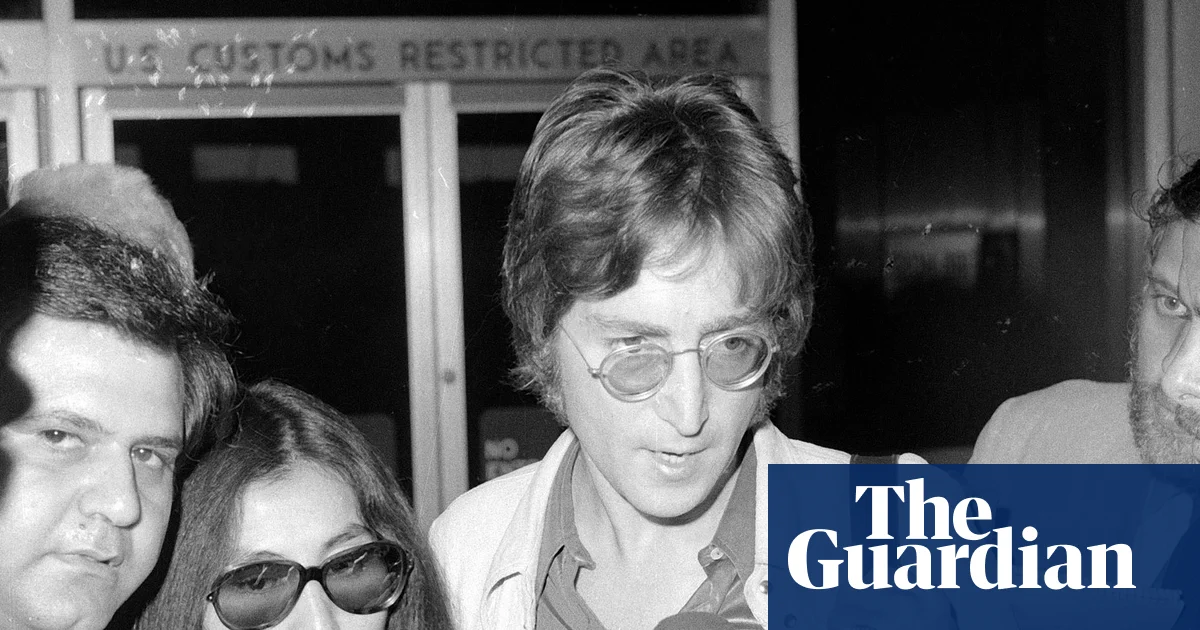

The rediscovery of a long-lost interview with John Lennon offers a rare window into the mind of one of the 20th century’s most profound cultural icons. Recorded during a period of intense political and personal turmoil, the interview reveals Lennon’s suspicions of governmental surveillance and his fears of being monitored by the US authorities—an echo of the cultural paranoia that has marked political history from McCarthyism to the Cold War. As a symbol of counterculture and artistic rebellion, Lennon’s candid reflections serve as a reminder that the arts are often intertwined with the struggles for freedom and identity. In these moments of raw honesty, Lennon articulated his fears of being watched, citing evidence of bugging and surveillance around his apartment, which he deemed “harassing” and emblematic of a broader cultural climate of intrusion. This candid confession underscores the ongoing relevance of popular culture as a battleground for individual liberty and societal control, drawing parallels to Ortega y Gasset’s assertion that “man does not exist in an isolated state—he is the product of the society that shapes him.”
Lennon’s insights into his own artistic process and personal state during this turbulent time also resonate deeply with the significance of culture as a vessel of identity and societal memory. Despite momentary doubts about his work, he found affirmation among friends that led him to release his album Walls and Bridges, a collection reflecting both his struggles and resilience. His reflection that “apart from acts of God, I will be around for another 60 years and doing it until I drop” demonstrates an unwavering belief that true artistic vocation sustains the individual beyond the chaos and confusion of societal unrest. Here, Lennon embodies the idea that culture is both a sanctuary and a prophecy—a testament to what has been and a beacon for what might yet come. As T.S. Eliot famously observed, “The poetry of civilization is the poetry of your own one life, singing back to you across the centuries,” and Lennon’s words evoke this timeless dialogue between memory and hope.
Furthermore, the interview illuminates the nature of the artist as a societal mirror and a guardian of tradition. Lennon’s comments on the challenges faced by international musicians—highlighted by Mick Jagger’s struggles to tour freely in the US—point to the broader cultural conflicts that threaten artistic expression. These conflicts reflect the ongoing tension between the preservation of tradition and the forces of control and censorship. Philosopher and historian Tocqueville warned of the danger in a democratic society where “monopolistic oversight stifles the spirit of innovation and individualism,” yet it is through these very struggles that a society’s cultural vitality is tested and ultimately reaffirmed. Lennon’s candid disclosures remind us that culture is both a shield and a sword—defining our identities and shaping the society that reflects our deepest values. As Chesterton observed, “Poetry may make us from the same animal, but prose makes us individuals,” and it is in the personal, unguarded moments of artists like Lennon that society finds its truest reflection.
In the end, Lennon’s words echo beyond the immediate context, stirring a sentiment that transcends the confines of time and place. Culture—whether in the form of music, art, or shared memory—remains humanity’s most profound prophecy, capturing our triumphs and struggles yet also pointing toward an uncharted future. Much like the memory of an artist’s voice—resonant and enduring—culture whispers that we are both the custodians of a collective history and the architects of a future yet to be written. It is, as T.S. Eliot suggested, “The still point of the turning world, where memory and prophecy converge,” a testament that through our shared stories, we breathe life into the human spirit—forever seeking, forever creating.






